
ABA therapy in Brooklyn has no single price: your 2026 out-of-pocket cost depends on the provider’s charges, the services your child receives, and your insurance benefits. An hourly quote alone does not establish your total responsibility; ask whether assessments, supervision, caregiver sessions, and cancellation charges are included.
- How much does ABA therapy cost in Brooklyn? Request a written estimate tied to your child’s services and insurance.
- Compare ABA therapy estimates by covered services, family responsibility, and billing terms—not hourly charges alone.
- Autism Learn & Play serves Brooklyn families seeking autism services and community programs for children ages 2–18.
- Choose goals that support your child’s communication, comfort, independence, and participation—not pressure to appear less autistic.
Why this matters
You need a plan your family can sustain, not just a quote that looks manageable at first glance. Before agreeing to services, separate the provider’s charges from what your health plan covers and what you must pay yourself.
The goals deserve equal attention. If school support is part of your planning, read about connecting your child’s IEP to ABA therapy goals so you can discuss overlapping priorities without assuming that school and insurance funding work the same way.
How much does ABA therapy cost in Brooklyn?
The useful number is your estimated family responsibility for a clearly described treatment plan—not a general Brooklyn average. Ask for a written breakdown that identifies the services, billing frequency, and payment terms. For a 2026 estimate, confirm that both the provider’s terms and your insurance information apply to your current plan year.
Use this breakdown when you speak with a provider. These are questions to verify, not charges to assume every practice applies.
| Part of the estimate | What to ask | Why it matters |
|---|---|---|
| Initial assessment | Is the assessment billed separately, and does it need authorization? | Starting services can involve a different billing process from ongoing visits. |
| Direct sessions | What service is being billed, and how is session time recorded? | A session description should match the estimate and proposed schedule. |
| Clinical supervision | Is supervision included or billed separately? | The direct-session quote might not describe every billed service. |
| Caregiver participation | Are parent meetings or caregiver sessions separately billed? | You need to understand both the financial and scheduling commitment. |
| Insurance responsibility | What deductible, copayment, or coinsurance applies? | The provider’s charge and your responsibility are different amounts. |
| Noncovered charges | What happens after a cancellation, missed visit, or denied claim? | Written policies explain responsibilities outside routine covered care. |
Ask the provider to distinguish an estimate from a payment guarantee. Insurance eligibility, authorization, and claim payment are separate checks; a benefits conversation is not a substitute for understanding your plan’s terms.
Compare payment arrangements, not just quotes
Different payment arrangements change what you need to verify. None is automatically the best fit for every family.
| Arrangement | Best for | Practical benefit | Limitation to check |
|---|---|---|---|
| In-network insurance billing | Families whose plan covers the proposed services with a participating provider | Lets you evaluate care against the plan’s negotiated terms | Deductibles, authorization requirements, and other conditions still matter. |
| Out-of-network insurance billing | Families considering a provider outside their plan’s network | Gives you another provider arrangement to investigate | Reimbursement, upfront payment, and balance-billing responsibility require careful confirmation. |
| Self-pay | Families arranging payment directly with a provider | Makes the provider’s written agreement central to budgeting | You need to understand all charges and whether insurance reimbursement is available at all. |
Confirm the payment arrangement before you compare providers. A quote for direct self-payment is not the same thing as an estimate of your responsibility after insurance.
Why ABA therapy costs vary
Your estimate should explain the factors behind it. Ask about these differences rather than treating every proposed schedule as interchangeable:
- Services included. Establish whether the estimate includes assessment, direct sessions, supervision, and caregiver meetings.
- Session schedule. Ask how the proposed frequency and session length connect to your child’s needs, and how schedule changes affect billing.
- Insurance terms. Confirm network status, covered benefits, deductible responsibility, and authorization conditions with your insurer.
- Payment arrangement. Establish who submits claims, when payment is due, and what happens if insurance does not pay.
- Location and logistics. Ask where sessions happen and whether any location-related charges apply. Separately consider your travel and caregiving commitments.
- Changes to care. Ask when the plan is reviewed and how a new assessment, schedule, or authorization changes the estimate.
A longer schedule is not, by itself, evidence of a better fit. Ask the clinician to explain the proposed approach in plain language and include your child’s communication, sensory needs, and existing commitments in that discussion.
How do you get an estimate you can actually use?
Use the same questions with each provider so the answers are comparable. Keep the written estimate beside your insurer’s benefit information rather than relying on a verbal summary.
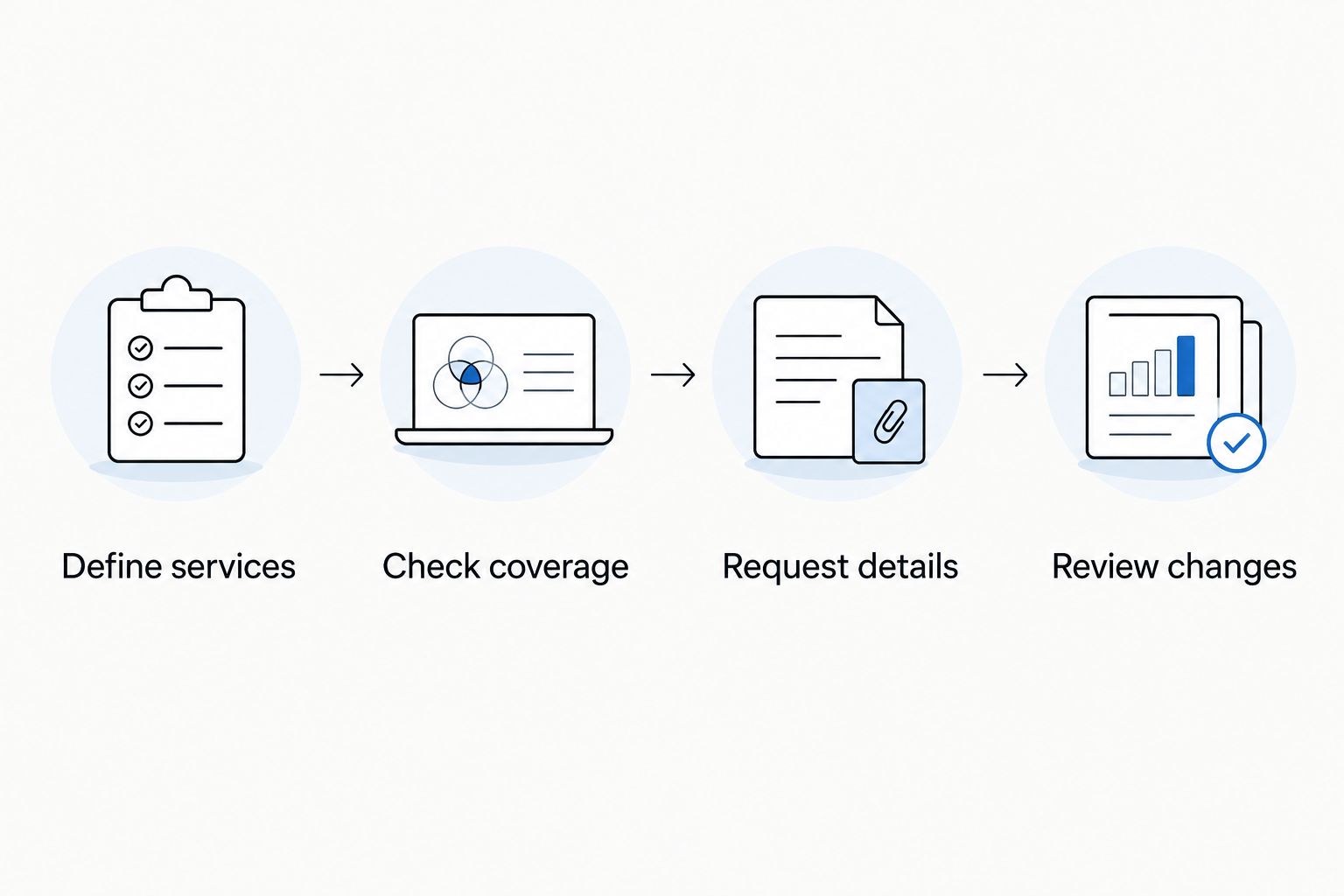
- Define services. Request the proposed services, session setting, schedule, and goals. Ask what is still subject to assessment.
- Check coverage. Give your insurer the provider’s billing information and proposed service details. Ask about network status, authorization, and your payment responsibility.
- Request details. Ask the provider to identify included services, separately billed services, payment timing, and cancellation terms.
- Review changes. Ask how you will be notified before the schedule or financial agreement changes. Keep a copy of the terms you accept.
Keep the names of the people you speak with and any insurance reference information they provide. If the provider’s explanation conflicts with the insurer’s explanation, ask both parties to clarify the specific service before committing to it.
Questions for your insurance plan
When checking your 2026 benefits, identify the exact plan and the child receiving care. Do not assume another family’s coverage describes yours, even if you recognize the insurer’s name.
Ask your plan:
- Is this provider in network for the proposed services under my specific plan?
- What assessment, referral, documentation, or authorization requirements apply?
- How is my responsibility calculated for each proposed service?
- Is the authorization tied to particular services, dates, or a provider?
- What happens if the provider changes the proposed schedule?
- How do I get a written explanation of a coverage decision?
Your insurer explains benefits; your provider explains the proposed care and billing agreement. You need both explanations before you have a useful budget.
How should your child’s age affect the discussion?
Autism Learn & Play provides services for children ages 2–18. Within that age range, your child’s interests, communication preferences, and daily routines deserve individual attention; age alone does not determine an appropriate schedule.
For a younger child, ask how sessions incorporate play, familiar routines, breaks, and caregiver participation. Ask how the clinician recognizes discomfort when a child cannot easily explain it in spoken words.
For a school-age child, discuss school demands, travel, homework, rest, and time with friends. A proposed therapy schedule should come with a clear explanation of how it fits those commitments.
For a teenager, include the young person directly in decisions wherever possible. Ask how goals reflect their priorities, privacy, interests, and growing independence rather than simply continuing an earlier childhood plan.
What should you expect before agreeing to sessions?
Ask the provider to explain what an ordinary visit would involve: who participates, what activities are proposed, how breaks work, and how your child can communicate that something is uncomfortable. Request concrete examples rather than accepting a broad promise about progress.
Also ask how the provider responds when your child does not want to participate. A financial agreement does not replace an ongoing conversation about your child’s comfort, preferences, and goals.
Is ABA therapy covered by insurance in Brooklyn?
Coverage depends on your specific health plan and the services proposed. Confirm the benefit directly with your insurer, including network status and authorization requirements, before treating a provider’s estimate as your final responsibility.
Ask whether an approval covers the full proposed plan or only particular services and dates. Keep renewal requirements with your other care paperwork so you know what needs checking before the approval ends.
Does a nonprofit provider mean ABA therapy is free?
Nonprofit status does not establish a family’s charges or insurance responsibility. Ask for the provider’s actual payment terms rather than inferring them from its organizational structure.
Autism Learn & Play is for Brooklyn families seeking autism services and community programs for children ages 2–18. Its nonprofit status describes the organization, not a promise of free treatment; contact info@autismlearnplay.org to ask about services, billing arrangements, and the information needed for an estimate.
Can community activities replace ABA therapy?
Community activities and therapy serve different purposes. Choose an outing or group for the experience it offers—such as shared interests and opportunities to meet peers—not as an assumed substitute for an individually discussed therapy plan.
Ask organizers about the age group, caregiver participation, sensory environment, communication supports, and options for taking a break. These questions help you judge fit without assuming that an activity described as inclusive meets every child’s needs.
Leave room in your family’s planning for enjoyment that is not tied to a treatment goal. Friendship, play, and time together deserve consideration alongside appointments.
Before you agree to a 2026 care plan
Check that the written plan answers these questions in language you understand:
- What services are proposed, and why do they fit your child’s priorities?
- What is included in the estimate, and what is separate?
- What has your insurer confirmed, and what still requires a decision?
- Who is responsible for payment if a claim is denied?
- What are the cancellation, rescheduling, and ending-service terms?
- How will you and your child participate in reviewing the plan?
If an answer is unclear, request clarification before signing. You can ask for time to review documents and discuss the plan with the people involved in your child’s care.
FAQ
How much does ABA therapy cost in Brooklyn with insurance?
Your out-of-pocket cost depends on your plan’s benefits, the provider’s network status, and the services billed. Ask your insurer and provider for a written explanation of your responsibility for the proposed care.
Can I get an ABA therapy estimate before agreeing to treatment?
Ask for a written estimate before agreeing to services. Request a clear distinction between assessment charges, proposed ongoing services, and items that cannot be finalized until the assessment is complete.
Does insurance approval mean I will owe nothing?
Insurance approval does not establish that you owe nothing. Confirm deductible, copayment, coinsurance, and any services outside the approval with your insurer.
Is an ABA assessment included in the session quote?
Do not assume an ABA assessment is included in a session quote. Ask the provider whether it is separately billed and whether your plan requires authorization for it.
Does my child need the same ABA schedule as another child?
Your child’s schedule should be individually explained, not copied from another child’s plan. Ask how the proposed services reflect your child’s goals, communication, comfort, school commitments, and rest.
Does Autism Learn & Play offer services for teenagers?
Autism Learn & Play serves children ages 2–18 through therapy services, community programs, and online classes. Ask the organization which services fit your teenager’s needs and what payment arrangements apply.
What should I do if insurance denies a proposed service?
Request the insurer’s written explanation and review it with the provider. Ask your plan about its review or appeal process and clarify your financial responsibility before agreeing to disputed services.
One last thing
The most useful question is not just what a session costs, but what you are agreeing to. For your 2026 planning, request the care plan and financial agreement together, then check that they describe the same services.
Your child deserves support that respects their individuality, and you deserve clear answers without pressure. A manageable plan leaves space for questions, breaks, friendships, and family life.
Related guides
- Family support groups for autism in Brooklyn
- ABA therapy for nonverbal toddlers
- Social skills games for autistic teens
- Autism-friendly museums and attractions in NYC