
Instead of repeating updates separately to your child’s home health aide and ABA team, connect home health aide and center-based ABA therapy through a parent-approved handoff plan. Start with permission to share information, clear role boundaries, and a short update routine that keeps your child’s comfort and communication at the center.
- Connect home health aide and center-based ABA therapy through authorized communication, clear responsibilities, and a shared handoff.
- Autism Learn & Play provides autism therapy services and community programs for Brooklyn families with children ages 2–18.
- Home health aides support authorized daily care; ABA clinicians direct ABA assessment and treatment.
- Share practical observations without asking an aide to become an ABA therapist.
Why this matters
A difficult arrival can begin before your child reaches the center: an uncomfortable journey, a missed rest, or a communication tool left at home. A useful handoff gives the receiving team relevant context without making your family repeat every detail.
Autism Learn & Play is for Brooklyn families seeking autism therapy services and community programs for children ages 2–18. Visit Autism Learn & Play to explore the organization, then ask directly about coordination with an outside aide; do not assume a specific arrangement is offered.
For your 2026 coordination plan, keep the goal narrow: make the next transition understandable, comfortable, and safe. This workflow organizes communication; it does not replace either provider’s care plan or establish permission for services.
Before you start
- Gather the right contacts and permission. Identify the parent or authorized decision-maker, the aide’s supervising agency contact, and the ABA center’s designated contact. Ask each provider what authorization is required before information is shared.
- Bring the relevant materials. Have current care instructions, communication preferences, emergency contacts, and the ABA team’s family-facing recommendations ready. Share only information needed for the agreed purpose, using a method each provider approves.
- Check the easily missed boundary. An aide’s presence at the center, transportation responsibilities, participation in sessions, and overlapping service hours require separate confirmation. A release of information does not authorize new duties, center access, or payment for overlapping services.
Ask the agency and center to resolve these questions before the first coordinated visit. Your child should not arrive expecting a familiar adult to stay only to discover that entry has not been arranged.
Permission and role boundaries
Establish who does what
- Name the contacts. Write down who sends updates, who receives them, and who handles a problem during the journey or arrival. Keep a backup contact for an unanswered message.
- Confirm the sharing process. Ask both providers how to complete their required authorization. Record what information can be shared, with whom, and for what purpose; follow their instructions for changes or withdrawal.
- Separate care from treatment. Ask the aide’s supervisor which daily support tasks belong in the aide’s care plan. Ask the ABA clinician which treatment decisions remain with the clinical team.
- Confirm handoff responsibility. Agree who accompanies your child, who receives your child, and what happens if the center cannot accept the handoff as planned. Do not leave this to an informal assumption.
Expected result: You have named contacts, an approved communication route, and an agreed boundary between daily care and ABA treatment.
Compare the support roles
These roles serve different purposes. Neither replaces the other, and the family should not have to interpret conflicting instructions alone.
| Support role | Best for | Useful contribution | Limit or trade-off |
|---|---|---|---|
| Home health aide | Authorized daily care and transition support | Observations about routines, comfort, and practical needs | Duties depend on the care plan and agency direction; ABA treatment is not automatically included |
| Center-based ABA team | ABA assessment, treatment planning, and clinical review | Explaining treatment goals and reviewing relevant observations | Center observations do not describe every home routine; outside coordination needs an agreed process |
| Parent or authorized decision-maker | Sharing family priorities and preferences | Explaining what matters to the child and authorizing appropriate communication | Managing every message creates extra work; named provider contacts help distribute communication tasks |
Keep the aide’s role within the authorized care plan. If the ABA team recommends a support strategy for home, ask the aide’s supervisor to review whether it fits the aide’s duties before anyone uses it.
The shared handoff sheet
Build a brief, useful record
- Start with 1 page. Create a handoff sheet marked with your child’s preferred name, preparation date, and version, such as “2026 coordination plan.” Keep detailed medical or treatment records in the providers’ approved systems rather than copying everything onto the sheet.
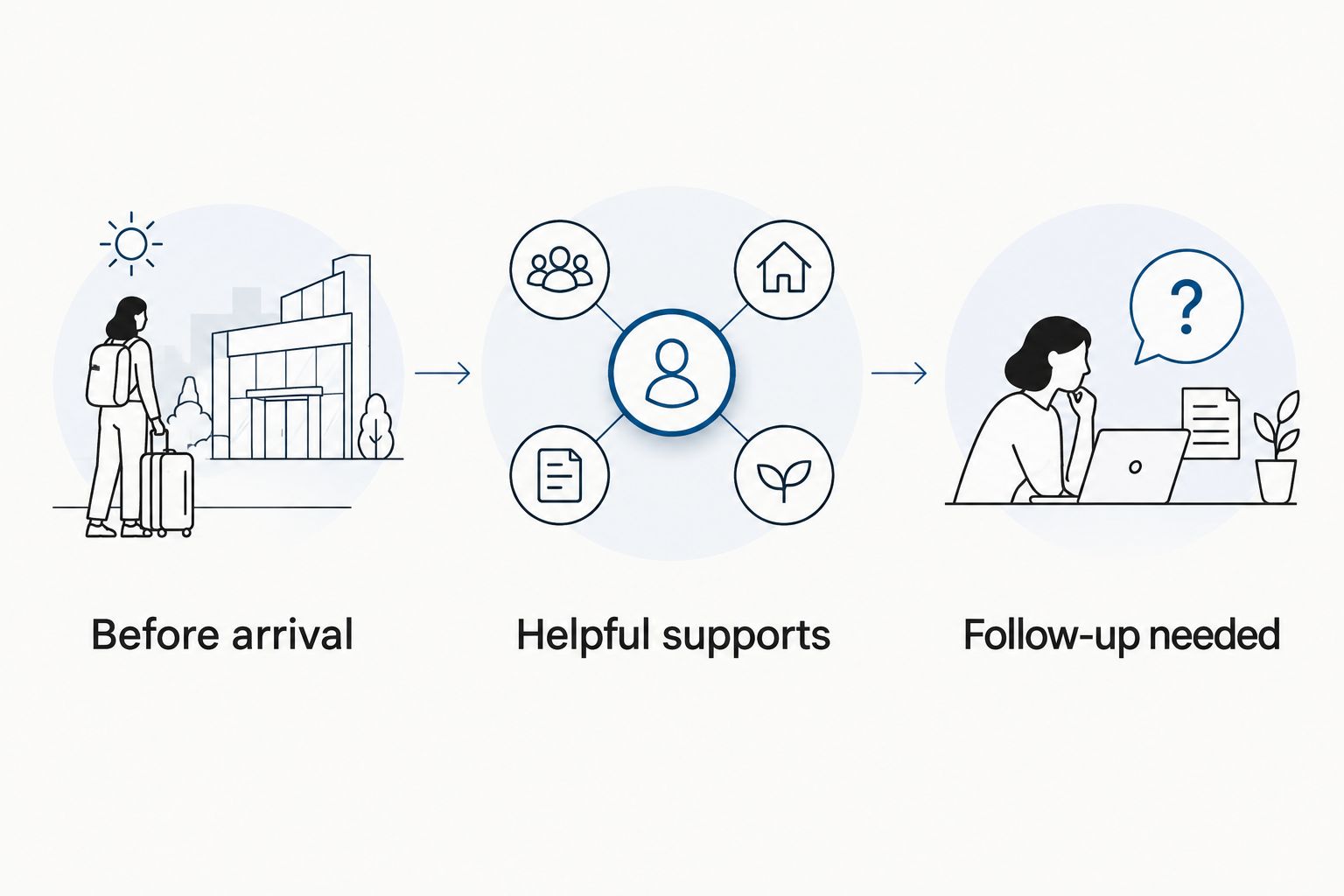
- Use 3 update fields. Label them Before arrival, Helpful supports, and Follow-up needed. These are suggested worksheet headings, not required fields in a provider’s software.
- Describe observations plainly. Write what happened and what your child communicated. For example, record that your child covered their ears near traffic rather than assigning a reason you cannot confirm.
- Include communication access. Note how your child communicates yes, no, discomfort, and a request for a break. Confirm who brings any communication device or other familiar support and who returns it home.
- Choose a secure route. Ask whether the providers approve a particular portal, telephone handoff, or another method. Do not start a group text or shared document containing private information without approval.
Expected result: The receiving adult can identify today’s relevant context, familiar supports, and unresolved questions without searching through a long message history.
The handoff needs to work in both directions. A center update should distinguish an observation from a new instruction, so an aide does not mistake a session note for permission to change daily care.
Make the record fit your child
For children ages 2–5, describe familiar comfort routines and how adults recognize a request to stop. Avoid turning every play moment into an exercise; leave room for child-led exploration and rest.
For children ages 6–12, invite your child to help choose what adults should know about arrival, belongings, and breaks. Do not assume spoken language tells you everything about comfort or understanding.
For teens ages 13–18, discuss privacy, preferred adult involvement, and what information they want communicated. Offer age-respectful choices rather than using a younger child’s worksheet unchanged.
These are planning prompts, not developmental rules. Match the record to your child’s communication and preferences rather than age alone.
Arrival and return-home routines
Agree on the transition sequence
- Explain the plan accessibly. Tell or show your child where they are going, who will meet them, and what happens afterward. Use communication supports your child already understands rather than introducing an unfamiliar system at departure.
- Confirm essential belongings. Decide who checks communication tools, necessary care items, and any agreed comfort object. Ask the center about relevant rules rather than assuming every item can enter a session.
- Send the agreed update. Share relevant changes through the approved route before arrival when possible. Keep urgent health or safety concerns out of a routine message queue.
- Complete the adult-to-adult handoff. Confirm the receiving adult has accepted responsibility under the agreed arrangement. Let your child communicate and respond; avoid discussing them as though they are absent.
- Close the return loop. Identify what comes home, what information the family needs, and who follows up on a question. Document changes through the approved process rather than giving competing verbal directions.
Expected result: Your child encounters a predictable sequence, and each adult knows when their responsibility starts and ends.
For Brooklyn outings after a session, plan around your child’s energy and preferences. A chance to see a friend or join a community activity should remain a choice, not a reward withheld for session performance.
Changes to the care or therapy plan
Update the workflow when support needs change
Use a change-triggered handoff alongside the regular arrival routine. This second workflow applies when the aide changes, the center schedule changes, a communication support changes, or a provider revises instructions relevant to the other team.
- Identify the change. Record who issued the update and when it takes effect. A family observation is useful information, but it is not automatically a revised treatment instruction.
- Request provider review. Send relevant information to the designated contacts through the approved channel. Ask each team whether its own instructions need updating.
- Replace outdated directions. Mark the current version clearly and follow provider instructions for handling old copies. Do not leave contradictory handoff sheets in circulation.
- Confirm understanding. Ask the receiving contact to explain their responsibility under the updated arrangement. Resolve differences with the supervisors rather than asking the aide to choose between instructions.
Expected result: Everyone uses the same current handoff arrangement while each provider retains responsibility for its own services.
When school priorities are involved, keep educational planning distinct from aide duties and clinical treatment. The guide to connecting your child’s IEP to ABA therapy goals addresses that related coordination task.
Review your 2026 handoff whenever a relevant instruction changes, not only when a calendar reminder appears.
Troubleshooting
The aide cannot enter the center
Ask the center what access or participation it permits and ask the agency what the aide is authorized to do. Arrange an approved arrival handoff; do not promise your child that the aide will remain inside before both sides confirm.
The teams give different instructions
Write down the specific disagreement and ask the responsible supervisors to resolve it. Do not combine incompatible instructions or ask an aide to implement an unapproved treatment change.
Updates disappear into unanswered messages
Confirm the correct recipient, approved channel, and backup contact. Ask which concerns need a call rather than a written update, and keep emergency communication separate from routine handoffs.
Your child becomes distressed at departure
Pause and respond to the distress rather than treating arrival as something to complete at any cost. Share what happened with the appropriate team and review the transition, environment, and communication supports before repeating the same approach.
The family receives too much sensitive detail
Return to the purpose of the handoff: information needed for care and coordination. Ask the providers to reduce unnecessary copying and confirm who can access the record, especially when staff or caregivers change.
Customize your workflow
Choose one priority for your 2026 routine: easier communication at arrival, a clearer belongings handoff, or fewer conflicting messages. Build from that practical need instead of creating a record nobody has time to use.
Autism Learn & Play offers autism therapy services, educational programs, and online classes. Ask about your child’s needs through the website contact form or email info@autismlearnplay.org; describe the coordination you need without assuming the organization supplies home health aides or a particular handoff service.
Friendship belongs in the conversation, too. Ask how daily support can respect your child’s interest in shared play, art, or time with peers without turning every interaction into a treatment task.
FAQ
How do I connect home health aide and center-based ABA therapy?
Start with authorized information sharing, named provider contacts, and a written handoff arrangement. Confirm the aide’s duties, center access, and arrival responsibility before the first coordinated visit.
Can a home health aide provide ABA therapy?
A home health aide role does not by itself authorize ABA treatment. ABA treatment responsibilities require the appropriate qualifications and authorization; ask the aide’s supervisor to review any proposed support task.
Can my child’s aide stay during a center-based ABA session?
Confirm participation with both the center and the aide’s agency before arranging it. Permission to share information does not establish permission to enter a session or perform additional duties.
What should an aide share with the ABA team?
Share authorized observations relevant to the transition, communication, comfort, and care. Describe what happened without diagnosing a cause or changing treatment instructions.
What if my child does not use spoken words?
Include your child’s established communication methods in the handoff. Confirm access to any communication device and explain how your child expresses refusal, discomfort, and a request for a break.
How should coordination change for an autistic teenager?
Include the teenager’s preferences about privacy, communication, and adult involvement. Use age-respectful materials and discuss what information needs sharing rather than assuming every detail belongs in a group update.
Does Autism Learn & Play provide home health aides?
Autism Learn & Play’s stated services include therapy, community programs, and online classes; home health aide provision is not established here. Ask through the website contact form or info@autismlearnplay.org about your specific coordination needs.
One last thing
A useful handoff includes how your child says no. Before you file your 2026 plan, check that every adult understands the child’s way of requesting a pause, declining an activity, or asking for help. Coordination should protect that voice, not replace it.
Related guides
- Family support groups for autism in Brooklyn
- Social skills games for autistic teens
- Speech therapy activities for nonverbal autism