Best overall: AAC-supported choice-making. Best for connecting with peers: collaborative building. Easiest setup: shared book browsing. This 2026 guide ranks speech therapy activities for nonverbal autism by their practical use at home and during outings; Autism Learn & Play provides speech therapy and community programs for autistic children ages 2–18 in Brooklyn.
- AAC-supported choice-making leads this guide to speech therapy activities for nonverbal autism because it gives children a direct way to express preferences.
- Collaborative building offers shared play without requiring spoken words or eye contact.
- Shared book browsing works without special equipment; follow your child’s interests rather than testing vocabulary.
- Autism Learn & Play provides speech therapy and community programs for autistic children ages 2–18 in Brooklyn.
Why this matters
The useful question is not whether an activity produces a spoken word. It is whether your child has an accessible way to express something that matters: a preference, a refusal, a question, or an invitation to play.
Here, nonverbal means not using spoken language to communicate reliably. Some families prefer nonspeaking. Neither term tells you what a child understands, and speech is not the only valid way to communicate.
Treat this 2026 ranking as a menu, not a treatment plan. A speech-language pathologist can help you select communication supports that match your child's movement, sensory preferences, language understanding, and existing communication methods.
What makes the best speech therapy activities for nonverbal autism?
- Accessible communication: Your child can respond through gestures, pointing, pictures, signing, or an AAC system—not speech alone.
- A meaningful purpose: The activity gives your child something useful to communicate, beyond answering an adult's questions.
- Child-led participation: Your child can choose, change direction, watch, decline, or stop.
- Sensory flexibility: You can adjust sound, touch, movement, and materials without losing the activity's purpose.
- Age-respectful interests: Materials suit your child's interests and age, rather than assuming everyone enjoys preschool toys.
- Everyday usefulness: The same communication opportunities fit meals, family routines, community outings, and time with friends.
You do not need every activity on this list. Choose the one that fits a real situation your child already enjoys, then make communication easier within that situation.
Speech therapy activities at a glance
AAC means augmentative and alternative communication: ways to communicate alongside or instead of speech. The American Speech-Language-Hearing Association's AAC guidance recognizes methods including gestures, communication boards, and speech-generating devices; choosing a system requires attention to the individual user's needs.
| Rank and activity | Best for | Standout feature | Key limitation |
|---|---|---|---|
| 1. AAC-supported choice-making | Expressing everyday preferences | Connects a message to an immediate choice | A limited board can leave out what the child actually wants |
| 2. Shared book browsing | Low-preparation interaction | Creates opportunities to comment without a quiz | Uninteresting books turn it into an adult-led task |
| 3. Child-led action play | Communicating continuation and stopping | Makes actions and their meanings easy to connect | Repeated prompting can interrupt enjoyment |
| 4. Collaborative building | Connecting with peers | Gives children a shared project | Competition over materials can disrupt participation |
| 5. Photo-based outing planning | Preparing for community experiences | Makes destinations and choices visible | Photos do not explain every part of an unfamiliar outing |
| 6. Everyday routine messaging | Self-advocacy during daily tasks | Practices useful messages such as help and finished | Adults can accidentally turn routines into tests |
1. AAC-supported choice-making: best for everyday preferences
AAC-supported choice-making lets your child indicate what they want using their existing communication method. Offer meaningful alternatives, model the relevant words or symbols, and respond to the child's message without requiring a spoken repetition.
For an introductory activity, offer 2 genuine choices, such as drawing or building. If your child already uses an AAC system, keep the full system available rather than replacing it with a smaller board for adult convenience. Include a way to reject both options or suggest something else.
Make the choice real
A choice between two things your child dislikes is not useful practice. Start with familiar interests, and notice gestures, reaching, looking, signing, or device use without assuming every movement is an intentional selection.
For younger children, objects can make choices concrete. Older children and teens deserve choices about their own music, activities, clothing, and plans—not only adult-selected toys.
AAC-supported choice-making pros:
- Fits ordinary family decisions.
- Accepts communication without spoken words.
- Gives your child a reason to express a preference.
AAC-supported choice-making cons:
- Adult-selected options can restrict the message.
- Symbols and access methods require individual attention.
Best for: Children who need a clearer way to express everyday preferences.
Verdict: Choose AAC-supported choice-making as the default starting point when it matches your child's communication access.
2. Shared book browsing: best for low-preparation interaction
Shared book browsing means exploring a book together without turning each page into a question. You can comment, point, model a message, or follow the picture your child notices.
Start with a book your child chooses. Photo books, comics, nonfiction, and illustrated stories all belong here; the right material depends on interests, not an assumed developmental label. If your child wants to revisit one page, stay there.
Comment more, test less
Instead of repeatedly asking what something is, say something about it: the dog is sleeping, the vehicle is large, or the character looks surprised. Offer access to messages such as funny, different, again, and finished through the child's communication system.
A child can participate by turning pages, pointing, making a sound, or sharing space. You do not need to require eye contact or an answer before continuing.
Shared book browsing pros:
- Uses materials you already have.
- Supports commenting as well as requesting.
- Adapts to different ages and interests.
Shared book browsing cons:
- Adult questioning can crowd out participation.
- Reading together is not appealing to every child.
Best for: Families seeking an activity with little setup and flexible participation.
Verdict: Choose shared book browsing when your child enjoys pictures, stories, or factual topics; skip books that feel like homework.
3. Child-led action play: best for communicating again and stop
Child-led action play connects communication with a visible action: rolling a ball, moving a toy vehicle, making a puppet jump, or repeating a playful movement. Follow what your child enjoys, then model messages that help them direct the action.
Keep 2 messages equally available: again and stop. Add different or help when those messages fit. Stop means stop, even if you planned to practice something else.
Leave room without withholding
A natural pause creates space for participation. It should not become a demand that your child perform before receiving something they need or accessing a preferred communication tool.
Do not withhold food, comfort, or an AAC device to produce a response. If your child continues playing without sending a clear message, you can model language and keep the interaction enjoyable.
Child-led action play pros:
- Links messages to actions your child can observe.
- Makes stopping part of communication practice.
- Allows movement instead of seated work.
Child-led action play cons:
- Noise or movement can be uncomfortable.
- Excessive pauses can make play frustrating.
Best for: Children who enjoy repetition and want influence over a shared activity.
Verdict: Choose child-led action play when the action is welcome; skip any version that pressures your child to perform.
4. Collaborative building: best for connecting with peers
Collaborative building gives children something to do alongside each other: make a track, assemble a puzzle, construct a model, or create a shared drawing. Spoken conversation is not required for participation.
Offer messages such as my turn, your turn, here, help, and different. An adult can demonstrate these messages, support access to materials, and accept parallel participation rather than insisting that everyone interact in the same way.
Give each child a meaningful role
One child might select pieces while another places them. Another might watch first or contribute a single part. Ask before assigning roles, and keep a separate project available if sharing becomes uncomfortable.
For teens, use age-respectful materials and interests. A shared design or hobby project can fit better than a toy chosen only because it is commonly used in therapy.
Collaborative building pros:
- Creates a shared focus beyond conversation.
- Allows different ways to contribute.
- Gives practical reasons to request help or share ideas.
Collaborative building cons:
- Shared materials can create conflict.
- Adult-directed turn-taking can feel restrictive.
Best for: Children interested in a shared activity with a sibling or peer.
Verdict: Choose collaborative building for peer connection; allow separate materials and parallel play.
5. Photo-based outing planning: best for community preparation
Photo-based planning uses pictures of an intended destination, activity, or route to discuss what an outing involves. It is a communication activity when your child can express preferences and concerns—not simply receive instructions.
For Brooklyn outings in 2026, use actual destination information rather than assuming a venue is quiet, accessible, or sensory-friendly. Ask the organizer about noise, waiting, bathrooms, exits, and whether families can step away.
Build a simple outing sequence
Use 3 steps as an optional starting structure:
- Choose: Show meaningful outing options and accept rejection.
- Prepare: Discuss what is known and ask what your child wants to bring.
- Review: Afterward, invite messages about liked, disliked, again, or different.
The pictures support the conversation; they do not guarantee comfort. Keep the child's communication system accessible during the outing, including while moving between spaces.
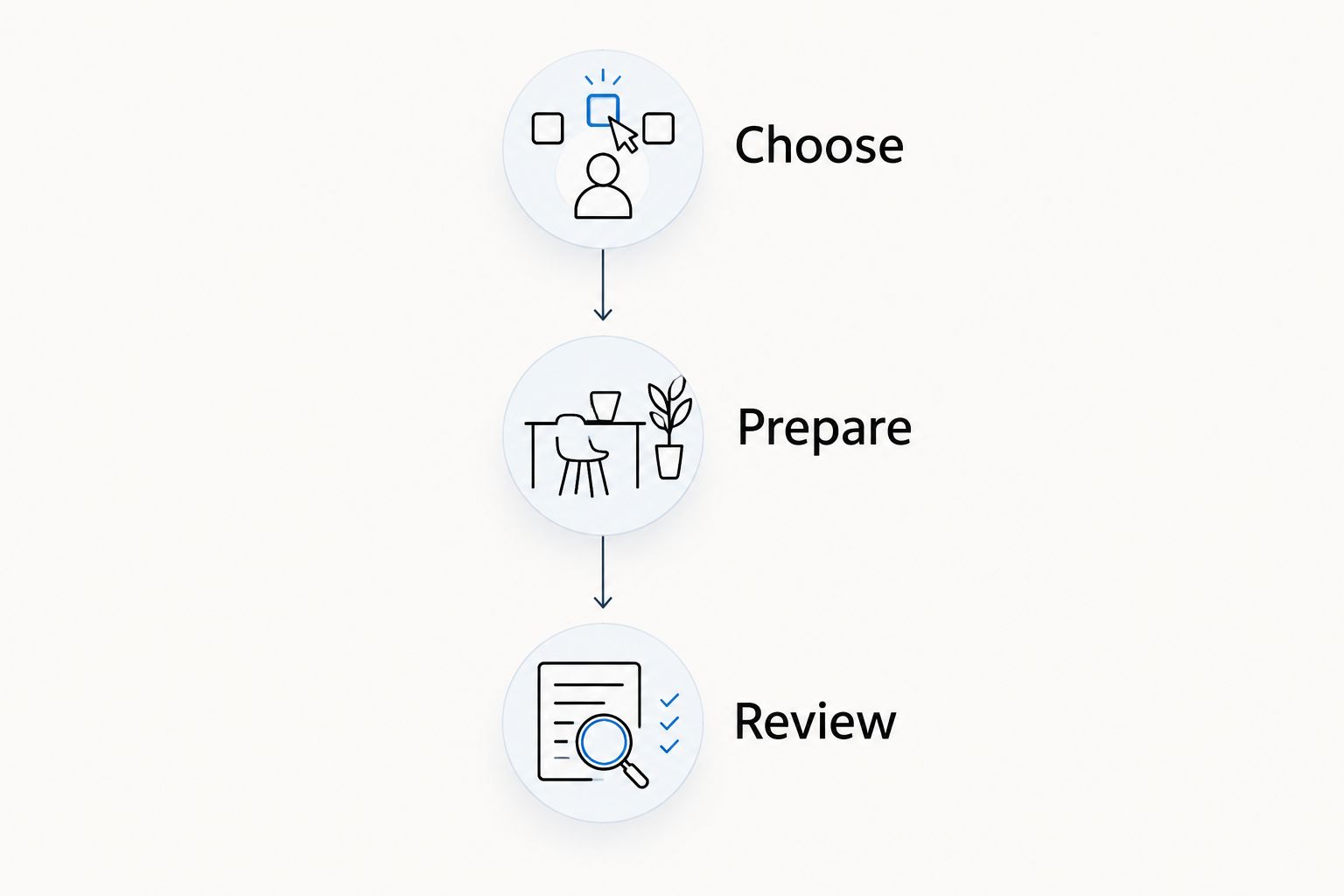
Photo-based outing planning pros:
- Connects communication with real community experiences.
- Gives your child input before leaving home.
- Creates a way to discuss an outing afterward.
Photo-based outing planning cons:
- Photos cannot show every sensory detail.
- Plans still need flexibility when circumstances change.
Best for: Families preparing for an unfamiliar activity or community visit.
Verdict: Choose photo-based planning to invite your child's input, not to promise a predictable outing.
6. Everyday routine messaging: best for self-advocacy
Everyday routine messaging makes useful communication available during dressing, preparing materials, tidying, or another familiar task. Model messages such as help, not that, wait, and finished at moments when they have a real purpose.
Choose 1 familiar routine to begin. That is a practical starting suggestion, not a prescribed therapy dose; your child's speech-language pathologist can help you decide how to adapt it.
Respond to the message
If your child communicates help, provide help. If they reject an item, acknowledge the rejection and explore an alternative where possible. When a necessary task cannot stop, explain what can change rather than ignoring the message.
For older children, include personal preferences and privacy. Communication practice should not make a teenager's daily life feel like a continuous lesson.
Everyday routine messaging pros:
- Uses situations that already occur.
- Includes refusal and help-seeking.
- Keeps messages connected to practical needs.
Everyday routine messaging cons:
- Adults can overprompt familiar tasks.
- Some routines involve limited choices or time pressure.
Best for: Children who need accessible ways to ask for help or express boundaries.
Verdict: Choose everyday routine messaging when adults will listen and respond, rather than score each attempt.
How these activities are ranked
This 2026 ranking prioritizes communication access, meaningful purpose, child-led participation, sensory flexibility, age-respectful interests, and everyday usefulness. It is an editorial guide to activity selection, not a comparison of treatment effectiveness or a promise of speech development.
AAC-supported choice-making leads because expressing a preference has an immediate purpose. The remaining activities each fill a different need: easy interaction, directing play, peer participation, outing preparation, or self-advocacy.
Which activity should you choose?
Start with AAC-supported choice-making inside an activity your child already enjoys. If your child already expresses preferences clearly, choose another purpose: commenting during book browsing, contributing to a shared project, or asking for help during a routine.
Autism Learn & Play is best suited to Brooklyn families seeking speech therapy and community programs for autistic children ages 2–18. When discussing speech therapy activities for nonverbal autism with Autism Learn & Play, share your child's interests, current communication methods, sensory preferences, and what you want help adapting.
For a 2026 community outing, ask about the specific activity, age fit, communication supports, and options for taking a break. Get those details directly before deciding whether a program fits your family.
Ask about your child’s communication needs
Share your child’s age, interests, and communication methods when asking about services or community programs.
FAQ
What’s the best speech therapy activity for nonverbal autism?
AAC-supported choice-making is this guide’s default starting point because it connects communication to a meaningful preference. The best individual choice depends on your child’s interests, access needs, and existing communication methods.
Does my child need to speak before using AAC?
No, spoken language is not a prerequisite for using AAC. AAC includes gestures, communication boards, and speech-generating devices; a speech-language pathologist can help identify suitable supports.
Can I do these activities at home without a speech therapist?
You can offer child-led choices, share books, and respond to communication at home. These everyday interactions do not replace an individualized assessment or therapy plan when your child needs professional support.
Should I make my child say a word before giving them something?
Do not require spoken words before honoring an accessible communication attempt. Respond to gestures, signs, pictures, or AAC messages, and do not withhold basic needs or communication tools to prompt speech.
Which activities work for a nonspeaking teenager?
Choose age-respectful activities based on the teenager’s own interests. Photo-based outing planning, shared hobby projects, and everyday self-advocacy can offer useful communication opportunities without relying on preschool materials.
What should I do if my child does not want to participate?
Accept the refusal and reconsider the activity, setting, or communication demands. Watching, joining later, choosing something different, and stopping are valid options.
How can I ask Autism Learn & Play about speech therapy?
Email info@autismlearnplay.org with your child’s age, communication methods, interests, and the support you are seeking. Ask directly about services and community programs that fit your child’s needs.
One last thing
Add a way to say no before adding another way to request more. A communication activity is not genuinely child-led if your child can ask for an adult-approved item but cannot reject it, request a change, or finish.
For your next activity in 2026, check that those messages are accessible. Then follow the child's answer—even when it changes your plan.
Related guides