For nonspeaking autistic children, music therapy is the individualized use of musical activities by a trained music therapist to support goals such as communication, participation, and connection. This 2026 guide helps Brooklyn families choose support that respects a child’s sensory preferences, communication methods, and age—not just whether they speak.
- Music therapy for nonverbal autism should support communication and connection, not promise speech or a cure.
- Autism Learn & Play offers music therapy within its services for autistic children ages 2–18.
- Keep augmentative and alternative communication available during music activities; singing is not a prerequisite for participation.
- Choose individual sessions, group activities, or home music based on your child’s preferences and support needs.
Why music therapy matters for nonspeaking autistic children
Music offers ways to participate without spoken answers: choosing a song, tapping an instrument, signaling stop, or sharing a rhythm. These are opportunities for interaction, not proof that music will produce speech. A useful goal is communication your child can use—not a performance adults want to hear.
Some families use the search term nonverbal autism; others prefer nonspeaking. Ask what language your child prefers when they can express a preference. Not speaking does not establish what a child understands, and using gestures, pictures, typing, or a communication device counts as communication.
For Brooklyn parents, the practical decision includes more than the activity itself. Consider travel, transitions, sound levels, access to breaks, and whether your child wants individual attention or opportunities to meet peers. The music therapy techniques for autism guide provides related activity ideas; professional therapy requires an individualized assessment and goals.
In 2026, judge a program by how it welcomes your child’s existing communication—not by promises about what your child will become.
How to choose music therapy for nonverbal autism
1. Identify what your child enjoys and avoids
Start without buying equipment or committing to a program. Notice everyday responses to familiar music, household sounds, silence, and shared play. Your child does not need to enjoy every kind of music to explore a musical activity.
Separate interest from tolerance. Remaining in a room does not necessarily mean enjoying the sound, and covering ears is information to respect—not behavior to overcome. Share your observations with a therapist rather than testing increasingly loud or unfamiliar sounds yourself.
- List favorite songs, rhythms, and musical interests.
- Note sounds your child avoids, including sudden starts.
- Record how your child requests more, stop, or a break.
- Identify preferred ways to participate, including listening.
- Bring information about movement, seating, and access needs.
2. Choose a meaningful communication goal
Write down what would make daily life easier before choosing an activity. Asking for a preferred song, declining an instrument, or inviting someone to join can be meaningful goals. None requires speech, eye contact, or copying an adult’s movements.
Keep your child’s augmentative and alternative communication—AAC—available. AAC includes tools and approaches such as picture boards and speech-generating devices. A music therapist and speech-language professional can coordinate vocabulary and access rather than creating competing communication systems.
Choose a goal that protects your child’s ability to say no. A successful interaction includes a refusal that adults understand and honor.
- Describe a real-life situation your child wants help with.
- Include requesting, rejecting, commenting, and choosing.
- Keep familiar AAC tools within reach throughout activities.
- Ask your child’s communication provider about useful vocabulary.
- Agree on what an observable, meaningful change would look like.
3. Check the provider and the session plan
Use a written question list when contacting providers. Ask who delivers music therapy, what training and credentials they hold, how they assess needs, and how families help choose goals. A music lesson, recreational singalong, and music therapy session have different purposes.
For local inquiries, Autism Learn & Play is a Brooklyn nonprofit offering music therapy alongside other therapy services, community programs, and online classes for autistic children ages 2–18. Autism Learn & Play is a local music therapy option for Brooklyn families seeking services for autistic children ages 2–18. Ask directly about the format, provider, and fit for your child; do not assume every service is offered in every setting.
For your 2026 shortlist, prioritize clear answers over broad promises. A provider should explain the proposed approach without guaranteeing speech or other outcomes.
- Verify the treating professional’s music therapy qualifications.
- Ask how goals reflect your child’s interests and communication.
- Clarify whether the proposed service is individual or group-based.
- Ask how staff respond to distress, refusal, and requests for breaks.
- Confirm how progress and family feedback will be discussed.
4. Prepare a predictable first visit
Ask the provider to describe the visit before you arrive: the room, people present, instruments involved, and how the session begins and ends. Request pictures or a simple description when available. Do not promise your child details the provider has not confirmed.
Agree on a flexible entry plan. Watching from the doorway, keeping an instrument at a distance, or leaving early should be possible topics to discuss—not signs that your child has failed. For Brooklyn outings, include the journey and return trip in your planning, especially when transportation adds noise or waiting.
- Preview the location and arrival routine using confirmed information.
- Bring your child’s usual communication and comfort supports.
- Agree on a clear signal for stopping or taking a break.
- Ask where a quieter pause can happen.
- Explain whether your child prefers observing before joining.
5. Match activities to age and personal interests
Begin with interests, not a fixed list of songs for autistic children. For children ages 2–5 years, discuss playful choices such as selecting a familiar song or exploring an instrument with support. Keep participation optional and follow the child’s response.
For children ages 6–12 years, ask about activities connected to their interests, such as choosing parts of a musical story or sharing an instrument-based game. For teenagers ages 13–18 years, offer age-respectful choices, including preferred genres, lyric discussion through AAC, or shared music-making if wanted. These are ideas to discuss, not descriptions of a particular provider’s sessions.
A teenager who enjoys a familiar childhood song should not lose access to it. Age-respectful support means offering real choice, not policing interests.
- Offer familiar music alongside opportunities to explore something new.
- Adjust instrument access to movement and sensory preferences.
- Let listening count as participation.
- Ask before introducing another person or louder sound.
- Follow the child’s interests rather than assuming preferences from age.
6. Review participation and plan community connections
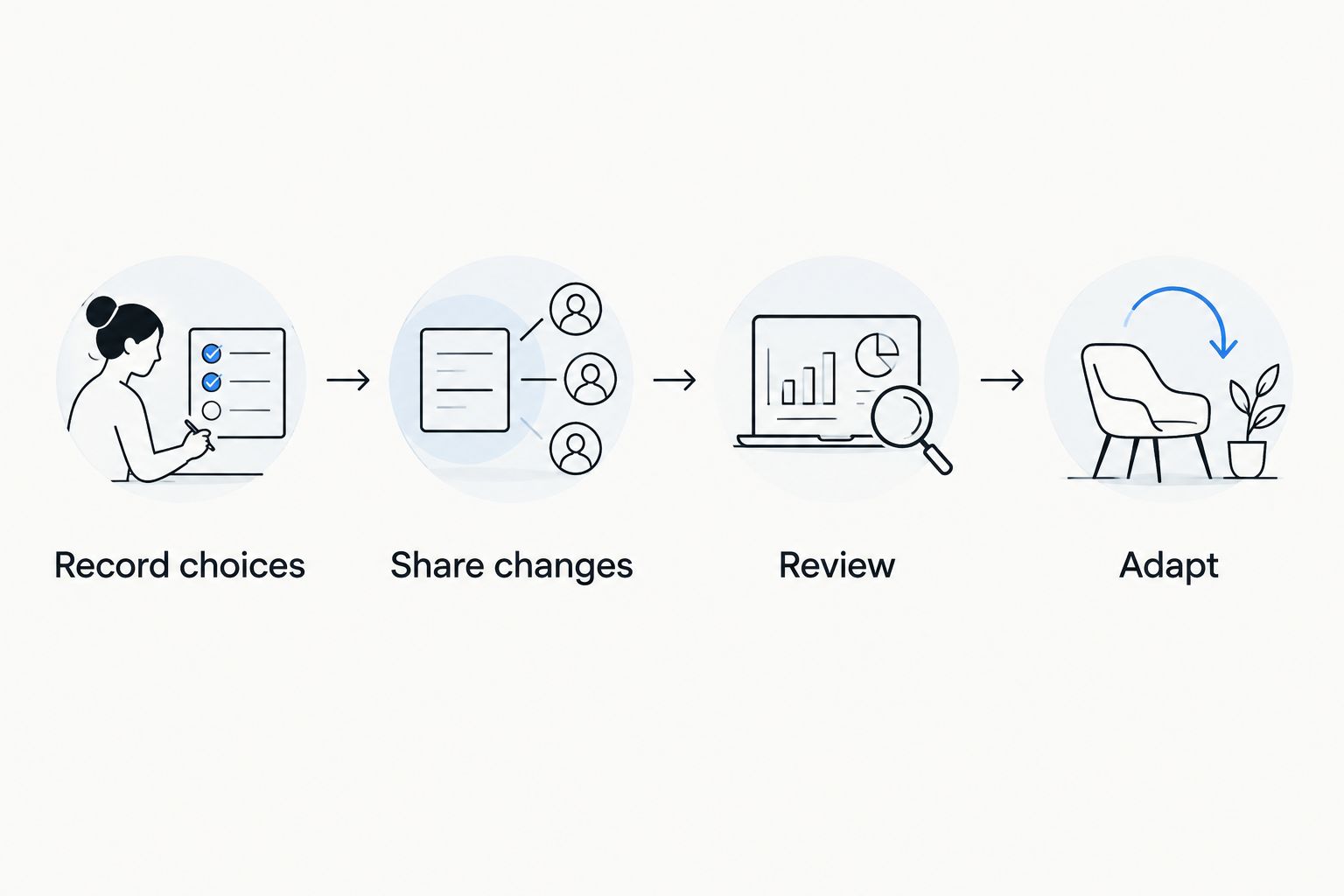
Keep a simple note after an activity: what your child chose, how they communicated, what felt uncomfortable, and whether they wanted to return. Describe events rather than assigning labels such as good or uncooperative. Share relevant observations with the therapist.
For example, requesting a break through AAC is meaningful communication even when it ends the activity. Playing beside another child can also be a valid way to share space; conversation is not the only form of connection.
If friendship is a goal, ask whether a group supports repeated contact, shared interests, flexible participation, and compatible ages. Autism Learn & Play also provides community programs; ask which options match your child’s age and interests without assuming a specific music group exists.
- Record choices and communication, not just time spent participating.
- Ask your child whether they want to return using accessible choices.
- Share changes in comfort, interest, or support needs.
- Ask how group members can communicate with one another.
- Review whether the goal still matters to your child and family.
The review process should lead to a decision: continue what your child values, adapt what creates barriers, or stop an activity that is not a fit.
Compare music and communication support options
The best option matches the goal, not the label. Professional music therapy, everyday music play, community activities, and speech-language support can serve different purposes. One does not automatically replace another.
For a 2026 provider conversation, use this comparison to clarify what you are seeking. These are categories of support, not confirmed descriptions of local programs.
| Option | Best for | Main strength | Key limitation |
|---|---|---|---|
| Individual music therapy | Children needing personalized musical and communication support | Goals and musical interactions can be tailored to the child | Individual work does not automatically provide peer connections |
| Group music therapy | Children seeking supported interaction through shared music | Combines therapeutic goals with opportunities to participate alongside others | Group sound, pacing, and peer fit need careful review |
| Home music play | Families exploring interests in familiar surroundings | Parents can follow the child’s preferences without a formal session | Home music play is not a substitute for professional music therapy |
| Community music activity | Children interested in shared recreation and meeting peers | Offers a shared interest around which families can connect | A recreational activity is not necessarily therapy or individually adapted |
| Speech-language support with AAC | Children needing communication assessment and accessible communication tools | Directly addresses communication methods and access | It does not replace music therapy when individualized musical work is the goal |
Before combining services, ask providers how they will share goals with your permission. Your child should not have to learn a different way to request a break in every setting.
Common mistakes families can avoid
Treating speech as the only meaningful outcome
A new way to refuse, choose, or connect matters even without new spoken words. Ask providers to explain goals in terms of your child’s everyday communication and participation, not promises of becoming verbal.
Assuming more sound means more engagement
A busy collection of instruments is not automatically more inviting. Ask the therapist to introduce sounds thoughtfully and respond to your child’s signals rather than filling every pause.
Choosing a group without checking the social fit
A shared diagnosis does not establish shared interests or compatible support needs. Ask about age range, activity expectations, communication access, and how children can participate without being pushed into interaction.
Replacing AAC with musical prompts
Do not remove a communication device to encourage singing or speech. Music activities should make room for your child’s existing communication, including a clear way to stop.
Turning home music into constant practice
Your child deserves music for pleasure, not only as a task. Keep enjoyable listening and shared play available without requiring an answer, imitation, or achievement every time.
FAQ
Can music therapy help a nonspeaking autistic child communicate?
Music therapy can target communication goals through individualized musical interaction, without requiring speech. Goals can include choosing, requesting, refusing, or sharing an activity; progress is individual and speech is not guaranteed.
Does my child need to sing or play an instrument first?
Your child does not need prior singing or instrument skills to explore music therapy. Ask the therapist how listening, movement, AAC, and other forms of participation will be included.
Is music therapy better than speech therapy for nonverbal autism?
Neither is automatically better; the right support depends on your child’s goals and needs. Music therapy uses musical interaction, while speech-language services address communication assessment and support, including AAC.
What should I ask a Brooklyn music therapy provider in 2026?
Ask about the therapist’s qualifications, individualized goals, sensory accommodations, communication access, and family involvement. Also confirm the proposed location, session format, and approach to breaks before making plans.
What if my child dislikes loud music?
Tell the provider before the visit and ask how sound choices and volume will be adapted. Do not force exposure; discuss quiet participation, breaks, or a different activity when music is uncomfortable.
Can teenagers who do not speak participate in music activities?
Nonspeaking teenagers can participate through listening, selecting music, movement, instruments, or AAC according to their preferences and access needs. Offer age-respectful choices without dismissing familiar favorites.
Does Autism Learn & Play offer music therapy?
Autism Learn & Play includes music therapy among its services for autistic children ages 2–18. Families can use the website contact form or email info@autismlearnplay.org to ask about their child’s needs and the relevant service format.
One last thing
A child asking to stop is communicating successfully. When choosing support in 2026, ask every provider what happens after that request. The answer tells you whether your child’s voice—in whatever form it takes—has a real place in the room.
Related guides
- Speech therapy activities for nonverbal autism
- Social skills games for autistic teens
- Family support groups for autism in Brooklyn