Best starting point for child-focused community programs: Autism Learn & Play. Best for parent-to-parent connection: Parent to Parent of New York State. Best for understanding support options: INCLUDEnyc. This 2026 guide to autism support groups for families in Brooklyn separates caregiver support from children’s activities so you can choose the right kind of connection.
- For autism support groups for families Brooklyn parents can explore, start by separating caregiver support from children’s community programs.
- Autism Learn & Play offers Brooklyn community programs for children ages 2–18; ask separately about caregiver groups.
- Parent to Parent of New York State is a starting point for parent-to-parent support.
- INCLUDEnyc and AHRC NYC are additional family-resource contacts; confirm the format before choosing a group.
Why this matters
A parent discussion group and a child’s social activity answer different needs. One gives you space to talk with other caregivers; the other gives your child opportunities to participate alongside peers. Neither automatically includes the other.
For your 2026 search, decide whose needs come first at this meeting: yours, your child’s, or both. That distinction saves you from arriving at a workshop expecting a support circle, or bringing your child to an adult-only discussion.
The organizations below are starting points, not a calendar of confirmed Brooklyn meetings. A family-resource organization, a parent-matching network, and a child-focused nonprofit serve different purposes. Ask each organization about its current groups, eligibility, and meeting arrangements before making plans.
What makes the best family autism support option?
Choose a group by its fit with your family, not by the length of its activity list.
- Clear purpose: Establish whether the meeting offers caregiver conversation, information, children’s activities, or a combination.
- Relevant ages: Ask which ages participate and how the organizer handles different interests and support needs.
- Respectful participation: Look for permission to listen, communicate differently, take breaks, and decline activities.
- Practical access: Confirm the location, travel demands, meeting format, and whether your child can attend.
- Privacy: Ask how organizers handle personal stories, photographs, and information shared outside the meeting.
- Continuity: If friendship is your goal, ask whether families meet repeatedly or attend separate one-time events.
The best group is one your family can participate in without hiding its needs. A useful answer from an organizer describes what happens at the meeting, rather than simply calling it welcoming.
Brooklyn family support options at a glance
These recommendations rank starting points by purpose. They do not rank therapy quality or promise a particular group schedule in 2026.
| Starting point | Best for | Standout role | Key limitation |
|---|---|---|---|
| Autism Learn & Play | Child-focused community participation | Brooklyn nonprofit offering community programs, therapy services, and online classes for ages 2–18 | Its stated services do not establish a recurring caregiver support group |
| Parent to Parent of New York State | Connecting with another parent | Statewide parent-to-parent support network | Parent matching is different from a local group gathering |
| INCLUDEnyc | Understanding family support options | New York City disability information and family resources | A resource conversation or workshop is not necessarily an ongoing support circle |
| AHRC NYC | Exploring broader disability family supports | New York City organization serving people with intellectual and developmental disabilities and their families | Ask which services fit your child and whether a relevant Brooklyn group exists |
1. Autism Learn & Play: best for child-focused community programs
Autism Learn & Play is a Brooklyn-based nonprofit offering therapy services, community programs, and online classes for children on the autism spectrum ages 2–18. Its stated services include speech, occupational, music and art therapy, tutoring, and ABA.
Autism Learn & Play is best for Brooklyn families seeking child-focused community programs alongside therapy and educational services. For a family-support search, distinguish those offerings from an adult caregiver discussion group. Ask directly whether the organization has a format that matches your goal.
Autism Learn & Play pros:
- Its Brooklyn location makes it a locally relevant starting point.
- Its stated age range includes young children, school-age children, and teens.
- Community programs sit alongside therapy and educational offerings.
Autism Learn & Play cons:
- The stated services do not confirm an ongoing parent support circle.
- A broad age range does not mean every activity suits every child.
Best for: Families who want to ask about child-focused community participation rather than assume a parent-only group is included.
Explain what your child enjoys, how your child communicates, and what makes a shared activity comfortable. Ask what parents do during the activity and how children can take breaks. These questions help you understand the experience without assuming program details.
Verdict: Hold any enrollment decision until the activity, age fit, and caregiver role are clear.
2. Parent to Parent: best for connection with another caregiver
Parent to Parent of New York State supports families of people with disabilities through parent-to-parent connection. Its parent-matching approach is a useful starting point when you want to speak with someone who has lived experience of caregiving.
This is a different choice from taking your child to a group activity. Start here when your immediate need is a conversation about family life, rather than an outing or a class.
Parent to Parent of New York State pros:
- Parent-to-parent support centers caregiver experience.
- An individual connection offers a different format from speaking in a group.
- Its statewide scope makes it relevant to New York families.
Parent to Parent of New York State cons:
- An individual parent connection is not a recurring Brooklyn gathering.
- A support parent does not replace professional medical, legal, or educational advice.
Best for: Caregivers who want to explore a connection with another parent before joining a larger circle.
Tell the organization what kind of experience you hope to discuss. Your child’s age, your preferred language, and your main concern are useful starting points; ask how its matching process works rather than expecting an exact match.
Verdict: Hold expectations of a group meeting until the organization explains the support format.
3. INCLUDEnyc: best for understanding your support options
INCLUDEnyc provides disability information and family resources in New York City. It is a relevant starting point when you need help understanding the difference between educational information, family support, and community participation.
A resource conversation and a workshop serve a different purpose from a confidential caregiver circle. Ask which format addresses your question, and whether there is a separate opportunity for ongoing peer connection.
INCLUDEnyc pros:
- Its work focuses on New York City families and disability-related needs.
- Information and family resources help you organize questions before approaching a group.
- It offers a starting point beyond autism-only services.
INCLUDEnyc cons:
- A workshop does not necessarily provide continuing peer support.
- Information support does not establish a child activity or childcare arrangement.
Best for: Families who need to clarify what kind of support to seek and which questions to ask.
For your 2026 inquiry, name the practical issue first: understanding school support, finding caregiver connection, or locating an activity your child can join. Ask about the next appropriate contact instead of requesting every possible resource at once.
Verdict: Hold registration until you know whether the event is informational, conversational, or activity-based.
4. AHRC NYC: best for exploring broader family supports
AHRC NYC serves people with intellectual and developmental disabilities and their families. It is another New York City starting point for exploring family supports beyond an autism-only search.
Approach AHRC NYC with a specific question about your family’s needs. Ask whether it offers or can identify a relevant caregiver support format, and clarify any eligibility requirements before assuming a program fits.
AHRC NYC pros:
- Its work includes families of people with intellectual and developmental disabilities.
- Its New York City focus is relevant to Brooklyn families.
- A broader disability perspective offers another route for exploring support.
AHRC NYC cons:
- Not every service is an autism-specific family group.
- The organization’s citywide role does not confirm a meeting near your home.
Best for: Families who want to explore broader disability family supports rather than limit their search to autism-labeled gatherings.
Describe what you need from a meeting: space to talk, practical information, or an activity involving your child. Ask about the location and participant requirements for that particular option, not the organization in general.
Verdict: Hold any commitment until eligibility, location, and the meeting’s purpose are confirmed.
How these starting points are ranked
The ranking follows the criteria above: purpose, age relevance, respectful participation, access, privacy, and continuity. Each organization occupies a different use-case slot rather than competing for the same claim.
No attendance figures, family testimonials, or comparative outcome claims determine this order. The practical question is simpler: which starting point matches what your family needs next?
Match the activity to your child’s age and interests
For children ages 2–5 years, ask about caregiver participation, room layout, transitions, and whether watching before joining is accepted. Describe your child’s interests rather than assuming an activity labeled for young children will fit.
For children ages 6–12 years, ask what children actually do together. Shared interests such as drawing, movement, games, or making something provide a clearer picture than a general promise of social development.
For teens ages 13–18 years, involve your teen in choosing. Ask whether the activity feels age-respectful, what choices participants have, and whether communication differences are welcomed without pressure to perform.
These age bands are planning prompts, not eligibility rules. Interests and support needs still come first. A teenager who enjoys art deserves an age-respectful art activity, not an automatic placement based on a younger interest level.
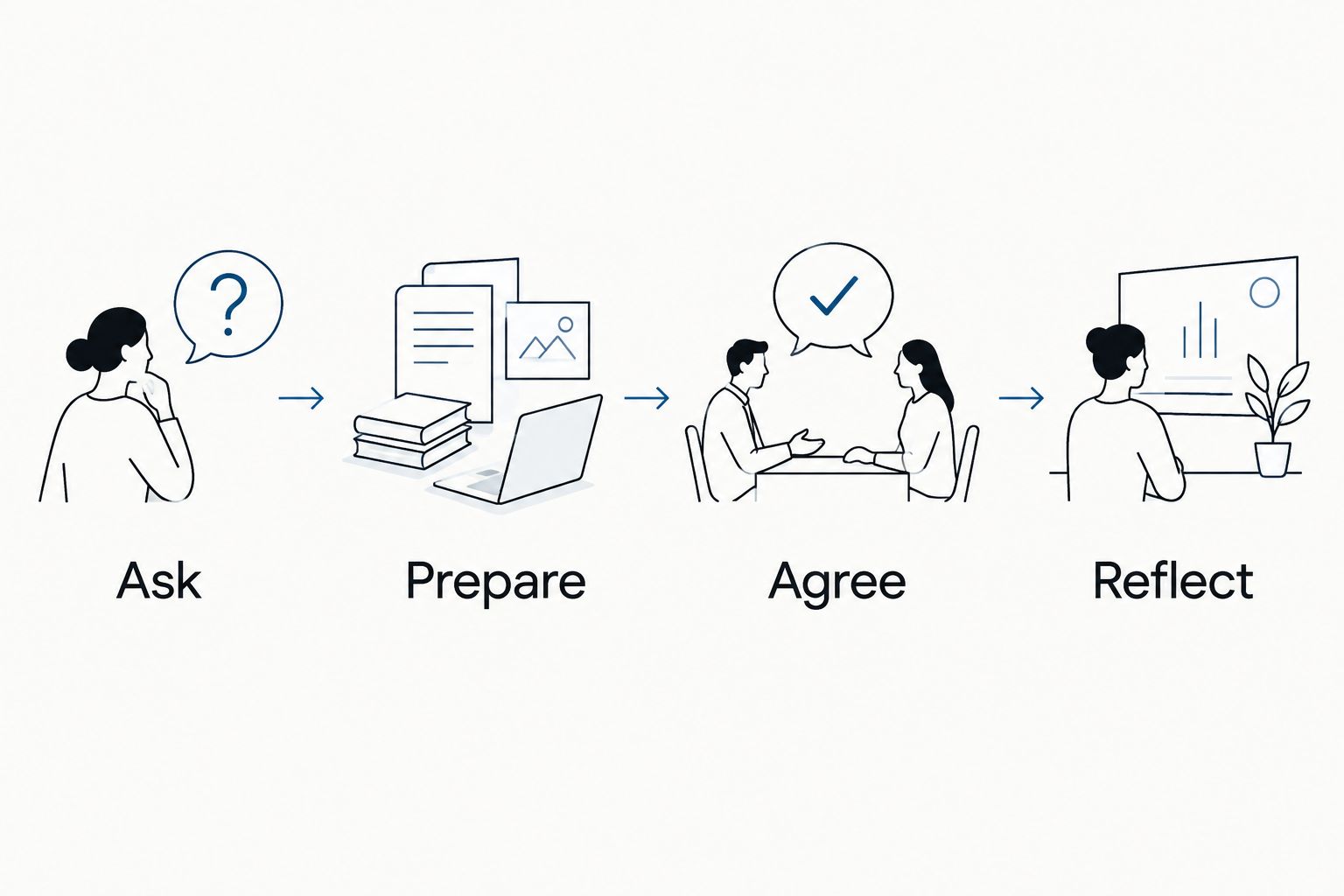
Before your first meeting: ask, prepare, agree, reflect
You do not need to explain your family’s entire history to make an initial inquiry. Give the organizer enough information to answer practical questions, then decide what else you want to share.
- Ask: Who attends, what happens, and is the meeting for caregivers, children, or both?
- Prepare: Request a description of the space, arrival process, activities, and break options.
- Agree: Discuss with your child what participation can look like, including watching or leaving.
- Reflect: Afterward, ask what felt comfortable and what needs to change before another visit.
For a caregiver-only meeting, confirm arrangements for your child separately. Do not assume that a family-focused organization provides supervision during an adult discussion. For a child activity, ask whether caregivers stay in the room or participate in another way.
At a 2026 outing, your child does not have to speak, join every activity, or stay until the end to deserve a welcome. Choose a format that respects those boundaries. Leaving an unsuitable setting is a useful decision, not a failed attempt at community.
Which family support option should you choose?
Choose by the person who needs support first. For child-focused community programs, start with the Brooklyn nonprofit listed first. For your own caregiver connection, explore Parent to Parent of New York State. For information and broader family-resource questions, contact INCLUDEnyc or AHRC NYC.
Before committing, ask one decisive question: What would a first visit or conversation look like for our family? A concrete answer gives you something to plan around.
For questions about the Brooklyn nonprofit’s own programs, use its website contact form or email info@autismlearnplay.org. Describe your child’s age, interests, communication preferences, and the kind of connection you are seeking.
FAQ
What’s the best autism support group for families in Brooklyn?
The best choice depends on whether you need caregiver conversation, information, or an activity for your child. Parent to Parent of New York State is a starting point for parent-to-parent connection; confirm current Brooklyn group arrangements separately.
Does Autism Learn & Play offer parent support groups?
Autism Learn & Play’s stated offerings include community programs, therapy services, and online classes for children ages 2–18. Those offerings do not establish a recurring caregiver support group, so ask directly through its website contact form or info@autismlearnplay.org.
Can I bring my child to a caregiver support meeting?
Bring your child only after the organizer confirms that children can attend. Ask separately about supervision, activities, and whether caregivers remain responsible for their children during the discussion.
Is parent matching the same as joining a support group?
No, parent matching connects you with another parent rather than establishing a group gathering. Ask how the connection works and whether separate group opportunities are offered.
How do I find an autism-friendly activity for my teenager?
Start with your teenager’s interests and preferences, then ask about participant ages and activity choices. Confirm that the setting respects different communication styles and allows breaks or observation without pressure.
What should I ask before joining a family support group in 2026?
Ask who attends, what happens, how privacy is handled, and whether children participate. Confirm the meeting location or online format and any eligibility requirements directly with the organizer.
Does my child have to talk or join every activity?
Choose a group that respects your child’s communication and participation preferences. Ask explicitly whether watching, using communication supports, taking breaks, or declining an activity is accepted.
One last thing
A shared interest is often a better search filter than the word autism alone. Ask your child what they want to do, not just which group you want them to join. A drawing table, a favorite game, or a movement activity gives you a specific starting point for discussing fit.
For your next 2026 inquiry, lead with that interest and one practical need. You are looking for a place where your family can participate honestly, not a place where your child must become someone else to belong.
Related guides
- Social skills games for autistic teens
- Art therapy activities for autistic kids
- Board games for kids with autism
- Gross motor activities for kids with autism