Best overall: play dough presses; best for low-mess practice: sticker collages; best for using household materials: paper tearing. This 2026 guide compares fine motor skill activities for autism by sensory comfort, everyday usefulness, and ease of adapting them alongside occupational therapy activities at home.
- Play dough presses lead fine motor skill activities for autism when your child enjoys touching and shaping dough.
- Sticker collages offer finger-control practice without wet materials; paper tearing uses materials you already have.
- Choose hand coordination activities by your child’s interests, sensory preferences, and safety needs—not age alone.
- Autism Learn & Play Inc. offers occupational therapy services; ask about support that fits your child’s everyday goals.
Why this matters
Fine motor activities involve the smaller movements you use to handle objects, fasten clothing, and manipulate tools. For autistic children, the right starting point is an activity they can comfortably explore—not a task they must finish.
Your family's 2026 activity plan does not need to center on handwriting. Opening a container, making a collage with a friend, or managing a jacket can give hand movements a purpose your child recognizes.
Autism Learn & Play Inc. is best for Brooklyn families seeking a nonprofit offering occupational therapy services alongside community programs. For home fine motor skill activities for autism, keep the goal equally practical: support participation while respecting your child's choices.
What makes the best fine motor activity?
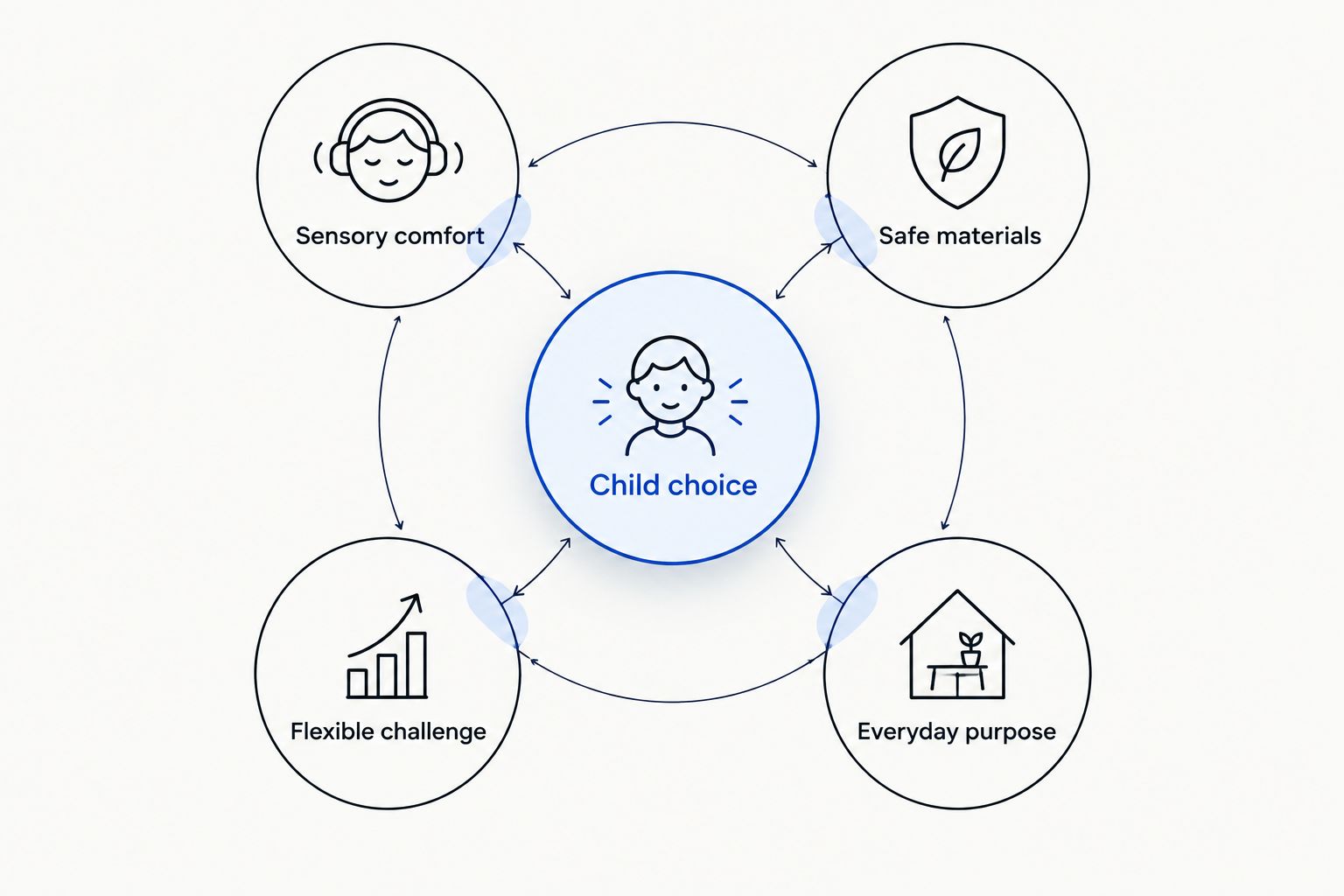
Use these criteria before choosing materials. An activity earns its place when you can adapt it without turning play into a test.
- Child choice: Your child can select materials, change the activity, or stop.
- Sensory comfort: The texture, sound, and resistance fit your child's preferences.
- Safe materials: Pieces, cords, tools, and ingredients suit your child's needs and require appropriate supervision.
- Flexible challenge: You can make the task easier without abandoning its purpose.
- Everyday purpose: The movements connect with something meaningful, such as art, dressing, or shared play.
Start with comfort and safety, then adjust the challenge. A visually impressive project is not a better choice if your child cannot comfortably participate.
Best fine motor activities at a glance: 2026
These rankings identify different starting points, not a developmental ladder. Choose the use case that matches your child today.
| Activity | Best for | Standout feature | Key limitation |
|---|---|---|---|
| Play dough presses | Flexible squeeze-and-shape play | Change resistance, tools, and movements | Texture or ingredients can rule it out |
| Sticker collages | Low-mess finger control | Peeling and placing have a visible purpose | Adhesive and backing can be frustrating |
| Paper tearing | Using household materials | Adjust paper size and thickness | Ripping sounds or rough edges can bother children |
| Clothespin clipping | Opening-and-closing grip practice | A spring provides resistance | Clips can pinch fingers |
| Large-piece threading | Coordinating both hands | One hand holds while the other guides | Loose pieces and cords need safety checks |
| Tongs and sponge sorting | Shared turn-taking play | Picking up objects fits a simple group game | Tongs can require too much force |
| Fastening practice | Everyday dressing tasks | Practice connects directly with clothing | Fasteners differ greatly in difficulty |
1. Play dough presses: best for flexible squeeze-and-shape play
Play dough lets your child squeeze, flatten, roll, and press a material into different shapes. You can offer hand-only play or introduce a broad stamp or rolling tool, depending on what feels comfortable.
Begin with your child's preferred movement rather than a model to copy. Pressing a palm into dough counts as participation; a finished sculpture is unnecessary.
Play dough presses pros:
- Several movements fit within one activity.
- Your child can choose the shape and tools.
- Shared materials allow side-by-side play without requiring conversation.
Play dough presses cons:
- Sticky textures or scents can make the activity uncomfortable.
- Mouthing, allergies, and ingredient sensitivities require careful material selection.
Adapt it: Offer a tool instead of direct touch, or choose a different activity if your child rejects the material. Avoid hidden small objects in dough for a child who mouths items.
Best for: Children who enjoy squishing, pressing, or shaping materials.
Verdict: Skip play dough when the material is unsafe or unwelcome; flexibility does not mean pushing through discomfort.
2. Sticker collages: best for low-mess finger control
Sticker collages involve lifting an edge, peeling away backing, and placing a sticker where your child chooses. The result can be abstract art, a decorated folder, or a picture based on a favorite interest.
Start the peeling edge yourself if needed. Your child can take over the remaining movement without having to manage the hardest part first.
Sticker collages pros:
- No wet material is necessary.
- Your child controls placement and design.
- Larger stickers offer an alternative to tiny pieces.
Sticker collages cons:
- Adhesive touching fingers can be unpleasant.
- Thin backing and small stickers demand precise handling.
Adapt it: Put partly peeled stickers along the edge of a backing sheet. Secure the collage paper so your child does not have to hold it steady while placing each sticker.
Best for: Children who like visual choices and prefer dry materials.
Verdict: Hold intricate sticker projects until peeling feels manageable; begin with accessible pieces and child-led placement.
3. Paper tearing: best for using household materials
Paper tearing asks your child to hold paper with both hands and pull in opposite directions. The pieces can become a collage, a pretend landscape, or materials for another art project.
Use clean paper without staples or sharp attachments. Offer different paper types as choices, not as an instruction to tolerate an unwanted texture.
Paper tearing pros:
- Reuses suitable paper already in your home.
- Combines hand movements with a creative purpose.
- Does not require scissors.
Paper tearing cons:
- Ripping sounds can be uncomfortable.
- Thick paper can demand more effort than your child wants to use.
Adapt it: Make a starting tear or offer narrow strips. Children who enjoy arranging pieces but dislike ripping can join the collage stage instead.
Explore art activities for autistic kids when your child wants the hand activity to lead into a creative project.
Best for: Families wanting a flexible activity using existing materials.
Verdict: Skip tearing if the sound or sensation bothers your child; arranging prepared pieces is a valid alternative.
4. Clothespin clipping: best for opening-and-closing grip practice
Clothespin activities involve squeezing a clip open and releasing it onto a stable edge. Your child can attach clips to sturdy cardboard or use them to hold pictures for a shared display.
Check how much force the clip requires before offering it. A stiff spring changes a simple game into a demanding task.
Clothespin clipping pros:
- Opening and closing create a clear action sequence.
- Clips can become part of art or pretend play.
- A sturdy edge gives the movement a visible target.
Clothespin clipping cons:
- Springs and jaws can pinch skin.
- Small or stiff clips can be difficult to control.
Adapt it: Hold the cardboard steady and demonstrate once. Let your child attach clips wherever they choose instead of requiring a color pattern or exact placement.
Best for: Children interested in squeezing tools and attaching objects.
Verdict: Hold stiff or small clips; use only a clip your child can handle safely and comfortably.
5. Large-piece threading: best for coordinating both hands
Threading combines holding an object with guiding a lace through an opening. Large-hole pieces or a lacing board let you vary the challenge without relying on tiny beads.
Choose materials around your child's safety needs. Large pieces still require supervision, and cords are not suitable for every child.
Large-piece threading pros:
- Gives each hand a different role.
- Allows child-led choices of colors or shapes.
- Connects with craft projects for older children and teens.
Large-piece threading cons:
- Loose pieces present a risk when a child mouths objects.
- Floppy laces and narrow holes can cause frustration.
Adapt it: Use a stable lacing surface and an easy-to-guide lace. Begin with a single opening rather than expecting your child to complete a whole pattern.
Best for: Children who enjoy construction or crafts and can safely use the selected materials.
Verdict: Skip loose-piece threading when mouthing or cord safety is a concern; select a different two-handed task.
6. Tongs and sponge sorting: best for shared turn-taking play
Tongs let your child pick up suitable sponge pieces and move them between containers. The movement combines squeezing, holding, and releasing an object.
For shared play, each child can have their own tools and contribute to the same collection. Taking turns is an option, not a requirement for joining the activity.
Tongs and sponge sorting pros:
- Containers provide a clear destination.
- Children can sort by a chosen feature or move pieces freely.
- The activity works as parallel play or a cooperative game.
Tongs and sponge sorting cons:
- Some tongs require excessive grip force.
- Sponges can tear, so mouthing and material condition need attention.
Adapt it: Use an easy-to-operate tool and stable containers. If squeezing interrupts the fun, let your child move suitable objects by hand.
Best for: Children who enjoy transferring objects near peers or family members.
Verdict: Hold sorting rules and turn-taking demands until the basic movement feels comfortable.
7. Fastening practice: best for everyday dressing tasks
Fastening practice uses clothing or a suitable practice surface to explore zippers, buttons, or other closures. Choose a fastener connected to a task your child wants help with.
Practice away from a rushed departure. You can separate the steps—for example, starting a zipper yourself and inviting your child to pull it.
Fastening practice pros:
- Connects directly with an everyday task.
- Offers age-respectful choices for older children and teens.
- Lets you practice one movement rather than an entire dressing routine.
Fastening practice cons:
- Tiny buttons and stiff zippers demand precise control.
- Repetition can feel frustrating when attached to pressure for independence.
Adapt it: Ask which part your child wants to try. Easier closures and dressing support remain valid choices; independence is not a reason to remove helpful accommodations.
Best for: Children and teens interested in participating more in dressing.
Verdict: Skip fasteners that cause pain or distress; choose accessible clothing and a more manageable practice step.
Match the activity to age without making age the rule
Autism Learn & Play Inc. serves children ages 2–18. Within that range, materials and presentation should respect both your child's interests and their individual support needs.
- Ages 2–5 years: Offer simple actions, accessible materials, and close supervision. Avoid small loose pieces when mouthing is part of play.
- Ages 6–11 years: Connect movements with interests such as animals, maps, characters, or making something alongside a friend.
- Ages 12–18 years: Offer age-respectful projects, practical clothing tasks, and choices about whether younger-looking materials appeal to your teen.
These are planning suggestions, not developmental deadlines. A teen can enjoy dough, and a younger child can prefer practical tasks.
Make room for friendship at a Brooklyn group activity
A shared activity does not need to require identical participation. One child can tear paper, another can place prepared pieces, and another can choose colors for the same collage.
Before an outing or group session, ask what materials will be used, whether your child can observe first, and how breaks work. Ask whether bringing a familiar communication support is appropriate. These questions help you decide whether the setting fits your family.
For questions about Autism Learn & Play Inc.'s services or community programs, use the website contact form or email info@autismlearnplay.org. Describe your child's interests and the activity or everyday task you want support with.
Ask about support for your child
Share your child’s interests and ask about therapy services or community programs.
How these activities rank in 2026
The order reflects adaptability, sensory choice, material safety, and everyday purpose—not comparative treatment results. Play dough leads because you can change the movement and tools; sticker collages lead for dry-material play; paper tearing leads for using household materials.
Your child's response outranks the list. Move any activity down when it creates discomfort, and move a preferred activity up when you can make it safe and meaningful.
Which activity should you choose in 2026?
Start with play dough presses if your child enjoys the texture. Choose sticker collages for dry, low-mess play, or fastening practice when your child's goal involves dressing.
Offer a choice, make the first action accessible, and stop when your child communicates they are finished. For individualized support, Autism Learn & Play Inc. offers occupational therapy services; ask how those services relate to your child's priorities.
FAQ
What’s the best fine motor activity for an autistic child?
Play dough presses are the default choice in this guide when your child enjoys the texture and can use the material safely. Sticker collages are a better starting point for children who prefer dry materials.
What can I use instead of play dough?
Sticker collages, paper tearing, or fastening practice offer alternatives to touching dough. Choose according to your child’s interests, sensory preferences, and material safety needs.
Are these fine motor activities suitable for autistic teenagers?
Yes, the activity can fit a teenager when the project respects their interests and choices. Clothing fasteners, craft projects, and practical tasks offer alternatives to younger-looking play materials.
How long should my child do a fine motor activity?
Let your child’s comfort and willingness guide the session rather than imposing a fixed duration. Pause or stop when your child communicates discomfort, fatigue, or that they are finished.
Can fine motor activities help children play together?
Fine motor activities can provide a shared task, such as contributing pieces to one collage. Give children different ways to participate rather than requiring conversation, eye contact, or identical movements.
What if my child puts activity materials in their mouth?
Avoid loose pieces, cords, and materials that are unsafe to mouth. Ask an occupational therapist to help select an activity and materials that fit your child’s safety needs.
When should I ask an occupational therapist for help?
Ask for help when hand tasks cause pain, repeated frustration, or difficulty participating in activities your child wants to do. An occupational therapist can assess the task and discuss individualized supports.
One last thing
A finished craft is not the only sign of participation. Choosing a color, holding the paper steady, or deciding where a piece belongs gives your child a meaningful role.
Before adding difficulty, ask what would make the activity easier to join. That change can matter more than adding another exercise.
Related guides
- Music therapy techniques for autism
- Speech therapy activities for nonverbal autism
- Sports for kids with autism