Best overall: an adjustable obstacle course. Best for shared play: ball rolling. Best equipment-free option: follow-the-leader walks. These gross motor activities for autism give you practical ways to plan movement at home, outdoors, or with friends in 2026—without making participation a test.
- An adjustable obstacle course is the best overall choice among these gross motor activities for autism.
- Ball rolling offers shared movement without requiring catching, speech, or eye contact.
- Follow-the-leader walks need no equipment; let your child choose movements and take the lead.
- Autismlearnplay serves children ages 2–18 through therapy services, community programs, and online classes.
Why this matters
Gross motor activities use the body's larger muscles for movements such as walking, reaching, throwing, and balancing. The best choice is not the activity with the most steps. It is one your child can enter, understand, and leave comfortably.
For Brooklyn families planning outings in 2026, choose a movement game before choosing a busy destination. A familiar activity gives you something concrete to offer, whether you meet another family outdoors or arrange play at home.
Autismlearnplay is best for Brooklyn families seeking autism community programs alongside therapy services and online classes. The nonprofit serves children ages 2–18; ask about current programs rather than assuming the activities below are part of its offerings. You can learn about the organization through Autismlearnplay.
What makes the best gross motor activities for autism
Use these criteria to choose activities, not to score your child:
- Adjustable movement: Change the distance, position, or task without abandoning the game.
- Clear instructions: Show what happens next instead of relying on a long explanation.
- Sensory choice: Offer alternatives to music, touch, noisy equipment, or unfamiliar surfaces.
- Easy stopping: Make breaks and leaving part of the plan, not a reward for finishing.
- Shared participation: Allow watching, parallel play, and turn-taking without requiring conversation or eye contact.
- Age-respectful interests: Use themes your child enjoys; older children deserve options that do not feel childish.
An activity earns its place here because its setup can change. No game suits every autistic child, and a child's preferences can differ from one day to another.
Gross motor activities at a glance
| Activity | Best for | Standout feature | Key limitation |
|---|---|---|---|
| Adjustable obstacle course | Combining different movements | Each station can change independently | Requires space and a safety check |
| Ball rolling | Shared play without catching | Partners can stay seated | A rolling ball still needs a clear path |
| Follow-the-leader walks | Equipment-free movement | Your child can choose the route | Copying movements is not appealing to everyone |
| Dance and freeze | Children who enjoy rhythm | Movement can be seated or standing | Music and sudden stops can be uncomfortable |
| Animal walks | Imaginative whole-body play | Movement becomes a pretend game | Weight-bearing positions do not suit every child |
| Target tossing | A clear, visible movement goal | Target size and distance are adjustable | Repeated misses can make the game frustrating |
| Playground movement choices | Child-led outdoor exploration | Your child chooses equipment or open-space play | Noise, crowds, and equipment vary |
1. Adjustable obstacle course: best for varied movement
An adjustable obstacle course combines movements along a visible route. Try walking around a marker, stepping over a flat line, and reaching toward a chosen object; jumping does not have to be part of it.
Show the route before inviting your child to start. Keep the floor clear, avoid unstable furniture, and let your child skip a station without restarting the whole course.
Obstacle course pros:
- You can change each movement separately.
- The route makes the sequence visible.
- Children can help choose or arrange stations.
Obstacle course cons:
- Clutter and unstable objects introduce hazards.
- A long sequence adds instructions to remember.
Best for: Children who enjoy moving between different tasks rather than repeating the same action.
For younger children, use familiar movements. For older children and teens, call it a movement circuit and let them design the route. In a group, offer separate starting points instead of a race.
Verdict: Choose the adjustable obstacle course as your default; skip any station that causes discomfort.
2. Ball rolling: best for shared play without catching
Ball rolling lets children send a ball toward another person without catching it in the air. Partners can sit on the floor or use another comfortable, stable position with a clear rolling path.
Demonstrate a roll and wait. Your child can return the ball, stop it, watch it, or choose another action; none of those responses requires speech.
Ball rolling pros:
- Catching is not required.
- Partners can adjust the distance.
- A predictable back-and-forth action gives the game a clear pattern.
Ball rolling cons:
- The ball can leave the intended play area.
- Waiting for a turn does not suit every child in every moment.
Best for: Children who prefer seated movement or a simple shared activity.
When friends join, begin with a partner rather than insisting on a circle. Offer separate balls for parallel play if sharing interrupts enjoyment. Choose equipment that is suitable for the child's age and play space.
Verdict: Choose ball rolling for a low-complexity invitation to play together.
3. Follow-the-leader walks: best for equipment-free movement
Follow-the-leader walks use a route and movements instead of equipment. You might walk normally, pause, reach upward, or take sideways steps in a clear area.
Start by following your child's chosen movement rather than asking your child to copy you. Taking turns as leader is an option, not a condition of joining.
Follow-the-leader pros:
- No equipment is needed.
- Your child can control the route.
- Familiar movements keep the instructions simple.
Follow-the-leader cons:
- Copying another person can feel like a demand.
- An outdoor route requires attention to traffic, boundaries, and surfaces.
Best for: Families who want an activity they can adapt during a walk or short outing.
For older children, frame it as choosing a route or demonstrating a movement rather than a pretend game. In Brooklyn, select the walking space for its safety and your child's comfort—not because it is a popular destination.
Verdict: Choose follow-the-leader when equipment would complicate the outing.
4. Dance and freeze: best for children who enjoy rhythm
Dance and freeze alternates movement with a pause. You can use preferred music, a spoken cue, or a visible signal; silence is also an option.
Explain the pause before starting. If sudden stops are uncomfortable, replace freezing with a slower movement or let your child keep moving. Explore more adaptable ideas in dance therapy activities for autism.
Dance and freeze pros:
- Children can choose their own movements.
- Seated and standing participation are possible.
- A familiar song can provide a clear activity choice.
Dance and freeze cons:
- Music can be an unwanted sensory input.
- Unexpected stopping can interrupt an enjoyable movement.
Best for: Children who actively choose music or rhythmic movement.
Ask before adding sound. For teens, use their preferred music and avoid making the activity a performance for adults. Do not eliminate children who continue moving after the cue.
Verdict: Choose dance and freeze when your child enjoys the rhythm; skip the freeze rule if it gets in the way.
5. Animal walks: best for imaginative movement
Animal walks turn movement into pretend play: stretching like a cat, taking large steps like an elephant, or moving slowly like a turtle. Choose actions your child can perform comfortably rather than requiring a particular pose.
An upright version is a valid alternative to moving on hands and feet. Demonstrate without physically placing your child into position.
Animal walk pros:
- Your child can choose the animal or character.
- The game needs no special equipment.
- Pretend themes offer different ways to describe movement.
Animal walk cons:
- Hands-and-feet positions place weight through wrists and shoulders.
- The theme can feel too young for older children.
Best for: Children who enjoy pretend play and choosing how a movement looks.
For older participants, replace animal names with movement descriptions or a preferred story theme. Avoid asking children to copy a classmate's speed or posture. If a movement hurts, stop rather than treating discomfort as part of the challenge.
Verdict: Choose animal walks for willing pretend players; skip uncomfortable positions.
6. Target tossing: best for a clear movement goal
Target tossing gives your child a visible place to send an age-appropriate soft object. Use a stable container or floor target, keeping the area away from people and breakable items.
Begin with a target your child can approach comfortably. Allow dropping, rolling, or tossing rather than insisting on an overarm throw.
Target tossing pros:
- The destination is easy to show.
- Distance and target size can change.
- Children can choose how to send the object.
Target tossing cons:
- Repeated misses can overshadow the play.
- Thrown objects require a clear, supervised area.
Best for: Children who enjoy an obvious destination and repeating a chosen action.
Let your child move closer without calling it an easier level. With friends, give each participant a target or take turns retrieving objects together; scoring is optional. Check objects for age suitability and avoid small items for children who mouth objects.
Verdict: Choose target tossing when the visible goal interests your child; skip competitive scoring.
7. Playground choices: best for child-led outdoor exploration
Playground movement can include walking along a clear path, climbing suitable equipment, or choosing an open space for a familiar game. Using the equipment is not a requirement for a worthwhile outing.
Before a Brooklyn outing in 2026, check current access information and plan how to leave. At the playground, assess the actual surface, equipment, noise, and crowd rather than relying on a label such as sensory-friendly.
Playground movement pros:
- Your child can choose among different movements.
- Open-space play offers an alternative to equipment.
- Families can meet without organizing a competitive game.
Playground movement cons:
- Crowds and noise are outside your control.
- Equipment requires age-appropriate use and supervision.
Best for: Children who enjoy outdoor exploration and choosing their next activity.
Agree with another family that separate play is welcome. Do not require children to use the same equipment to count the outing as social time.
Verdict: Choose playground movement for outdoor choice; leave when the setting stops working.
Match the activity to age without assuming ability
Age helps you choose respectful themes and suitable equipment. It does not tell you what movement, communication, or support your child needs.
- Ages 2–5 years: Demonstrate a familiar action and stay close enough to supervise. Watching or briefly joining is a valid way to explore.
- Ages 6–11 years: Invite your child to choose the activity, arrange a target, or decide whether to play beside a friend or with a partner.
- Ages 12–18 years: Ask which activities feel age-respectful. Offer a movement circuit, preferred music, or a chosen outdoor route without requiring pretend themes.
Autismlearnplay serves children across ages 2–18. When discussing movement activities or community programs, describe your child's interests, communication preferences, and support needs—not just their age.
Set up a movement outing your child can choose
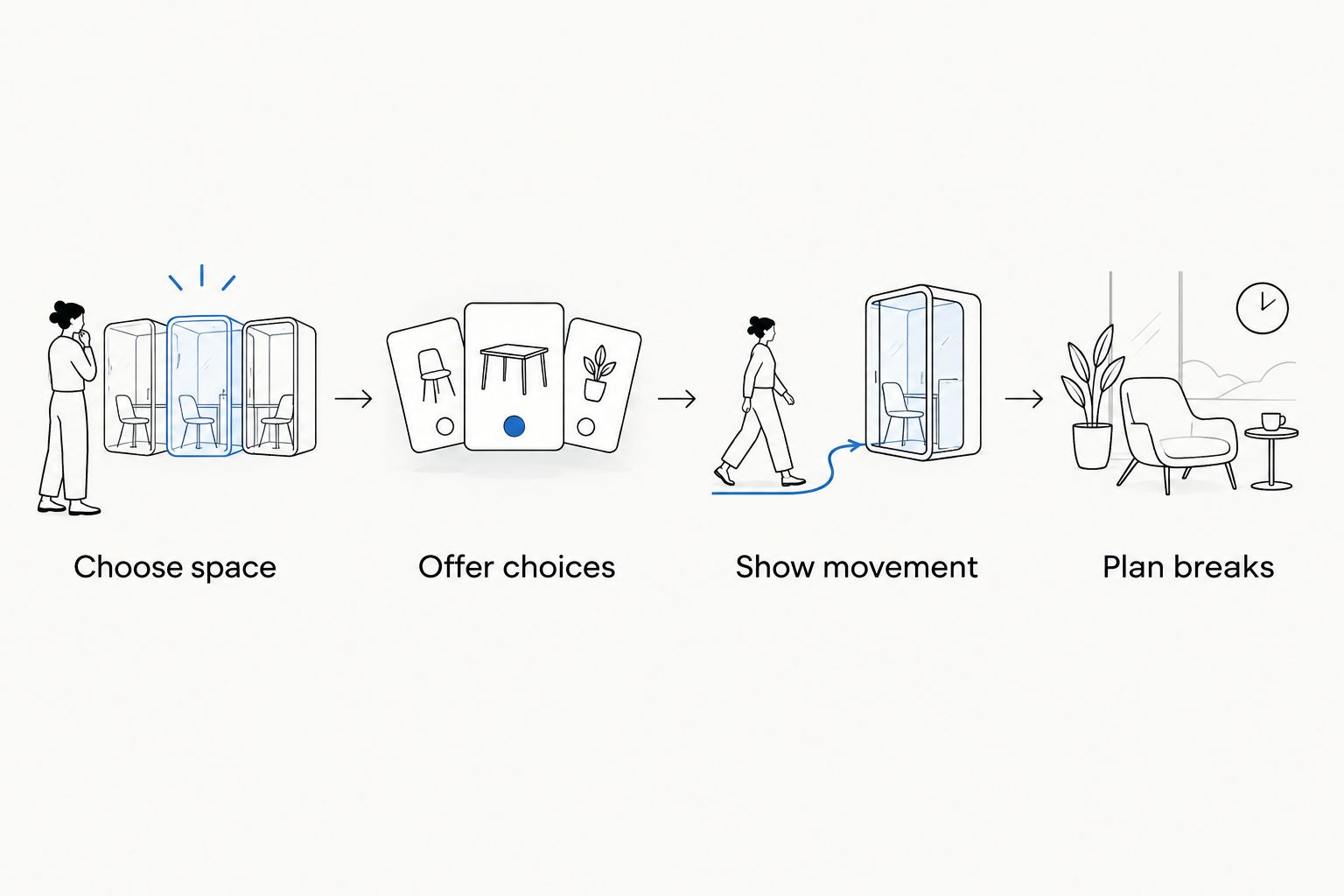
Use this preparation sequence for a home activity or a community outing in 2026. Keep the invitation clear and make stopping just as understandable as starting.
- Choose space: Check the surface, boundaries, equipment, and exit before inviting play.
- Offer choices: Present an activity and an alternative, including watching or not joining.
- Show movement: Demonstrate the action using the communication supports your child already uses.
- Plan breaks: Agree on a way to pause or leave, and respond when your child uses it.
A friend does not have to play identically for the outing to offer connection. Children can use separate targets, move at different speeds, or spend part of the visit playing alongside each other.
If your child has pain, frequent falls, a recent injury, or an existing movement restriction, ask a qualified healthcare professional about suitable activities. General play suggestions do not replace an individual assessment.
How we ranked these activities
This 2026 ranking prioritizes adjustable movement, understandable instructions, sensory choice, stopping options, shared participation, and age-respectful interests. It is a practical selection guide, not a claim that one activity produces better therapeutic outcomes.
The obstacle course takes the default position because you can replace individual movements while keeping the overall route. The other activities win distinct slots: shared seated play, equipment-free movement, rhythm, imagination, visible goals, and outdoor choice.
Which gross motor activity should you choose?
Start with an adjustable obstacle course if you want several movement choices in one activity. Choose ball rolling for a simpler shared game, or follow-the-leader when you want to leave equipment at home.
For a Brooklyn playdate in 2026, choose a familiar activity and tell the other family that watching, breaks, and parallel play are welcome. Ask Autismlearnplay about current community programs if you want organized opportunities to meet other families; do not assume a particular movement activity is offered.
FAQ
What’s the best gross motor activity for an autistic child?
An adjustable obstacle course is the best default in this guide because you can change each movement independently. Choose ball rolling or a walking game instead if your child prefers a simpler activity.
What are gross motor activities for autism?
Gross motor activities for autism are movement activities involving larger muscles, such as walking, reaching, rolling a ball, and dancing. The activity should fit the child’s interests, comfort, and support needs rather than require a standard way of participating.
Can my nonspeaking child join a movement game?
Yes, speech is not required to join a movement game. Demonstrate the action, use your child’s established communication supports, and honor their way of choosing, pausing, or declining.
What if my child does not want to play with other children?
Offer watching, separate equipment, or parallel play instead of requiring direct interaction. A shared outing does not need conversation, eye contact, or identical play to give families time together.
Which gross motor activities work for autistic teenagers?
Movement circuits, preferred-music dance, target tossing, and chosen walking routes are options to discuss with an autistic teenager. Let the teenager choose an age-respectful theme and how other people participate.
How do I choose a playground outing in Brooklyn?
Choose a playground outing around your child’s preferences, suitable equipment, a safe route, and a clear way to leave. Check current access information, then assess noise, crowds, and surfaces when you arrive.
Does Autismlearnplay offer these exact movement activities?
The activities in this guide are general play suggestions, not a list of verified Autismlearnplay program activities. Contact the nonprofit through its website contact form or info@autismlearnplay.org to ask about current community programs and suitable options.
One last thing
Make leaving an ordinary choice, not evidence that the outing failed. Before you start, show your child how to ask for a break using their usual communication method. Respond to that request even when the activity seems enjoyable to everyone else.
A familiar game can be offered again without pressure. The next invitation should begin with your child's choice, not with a requirement to finish what happened last time.
Related guides
- Occupational therapy activities for autism at home
- Art therapy activities for autistic kids
- Speech therapy activities for nonverbal autism