Best overall: child-led movement exploration. Best for shared play: mirror dancing. Best for a clear routine: a movement song. These dance therapy activities for autism offer starting points for playful movement in 2026; home and community activities are not a substitute for individualized dance/movement therapy.
- For dance therapy activities for autism, start with child-led movement rather than a routine your child must copy.
- Mirror dancing suits shared play; seated rhythm offers an alternative to standing activities.
- Autism Learn & Play serves Brooklyn families seeking therapy services, community programs, and online classes.
- Choose sensory-friendly movement with optional music, accessible positions, and permission to watch or stop.
Why this matters
A dance activity can be an invitation to spend time together, not a test of coordination, speech, or social behavior. Your child can participate by choosing music, watching, moving a hand, or dancing alongside someone without copying them.
For Brooklyn families exploring community activities, Autism Learn & Play is a nonprofit providing therapy services, community programs, and online classes for children ages 2–18. Ask directly about movement-based opportunities and the supports your child needs before choosing an outing.
The best starting activity is the movement your child chooses, with room to pause or decline. The ranking below prioritizes choice and adaptability, not claims that one activity treats autism better than another.
What makes the best dance activity for your child?
Use these criteria when choosing dance therapy activities for autism in 2026:
- Child choice: Your child can select, change, watch, or decline the activity.
- Sensory flexibility: Music, lighting, props, and proximity are adjustable rather than required.
- Accessible movement: Participation includes seated movement and alternatives to jumping or standing.
- Clear expectations: You can explain what happens next without making the routine rigid.
- Age-respectful interests: Music and themes reflect your child's preferences, including those of teenagers.
- Comfortable connection: Shared play does not depend on eye contact, touch, speech, or exact imitation.
An activity that requires distressing music or unwanted physical contact fails these criteria, even if its description sounds appealing. Start with the simplest version your child welcomes.
Dance activities at a glance
These are adaptable activity ideas, not a list of verified local classes or prescribed treatments. Each option has a different starting point.
| Activity | Best for | Standout feature | Key limitation |
|---|---|---|---|
| Child-led movement exploration | Choosing how to participate | Your child sets the movement | Adults must resist taking over |
| Mirror dancing | Shared play with a partner | Either person can lead | Copying can become pressure |
| Movement songs | A recognizable routine | A repeated song provides a familiar sequence | Repetition or lyrics can be unwelcome |
| Seated rhythm | Exploring movement without standing | Hands, arms, or shoulders can participate | Seated does not automatically mean accessible |
| Scarf movement | Exploring a prop through movement | A scarf makes the movement visible | Fabric or fluttering can be distracting |
| Movement stories | Pretend play | A chosen story suggests actions | Imaginary instructions do not suit everyone |
| Shared dance circles | Joining a group on your own terms | Children contribute or observe | Group sound and proximity need planning |
1. Child-led movement: best for choosing how to participate
Child-led movement exploration begins with your child's interest rather than an adult's choreography. Offer a clear space and invite movement, with music only if your child wants it. Follow their choice without turning it into a lesson.
A child might sway, turn, move their fingers, or remain still. You can join nearby without asking for a different movement.
Child-led movement pros:
- Accepts different ways of moving.
- Works with or without music.
- Leaves your child in control of participation.
Child-led movement cons:
- An open-ended invitation does not suit every child.
- Adults can unintentionally replace choice with instructions.
Best for: Children who prefer to decide what happens, including those who dislike copying a routine.
Offer a simple choice such as moving together or watching. Accept either answer, including an answer communicated through actions.
Verdict: Skip adult-directed choreography as the default; start with your child's movement.
2. Mirror dancing: best for shared play with a partner
Mirror dancing invites one person to make a movement while another responds with a similar movement. Your child can lead, follow, or simply watch. Keep the invitation playful rather than checking whether the movement matches.
Sit or stand side by side if facing each other is uncomfortable. A small hand movement is enough to begin.
Mirror dancing pros:
- Gives your child a clear leadership role.
- Needs no props or recorded music.
- Allows small, seated movements.
Mirror dancing cons:
- Copying can feel like a demand.
- Facing a partner can be uncomfortable.
Best for: Children who enjoy another person responding to their actions.
Describe what you notice without correcting: you can acknowledge a raised hand and offer your own version. Avoid making eye contact a condition of joining.
Verdict: Skip exact-match expectations; choose mirror dancing when your child welcomes shared imitation.
3. Movement songs: best for a recognizable routine
A movement song pairs a familiar piece of music with a simple sequence of actions. Let your child choose the song and help decide the movements. The sequence can include pauses, seated actions, or listening without moving.
For your 2026 activity plan, keep the routine recognizable without requiring the same response every time. Familiarity is an invitation, not an obligation.
Movement song pros:
- Offers a recognizable beginning and ending.
- Connects movement with a chosen interest.
- Gives adults a clear activity structure.
Movement song cons:
- Lyrics or volume can be uncomfortable.
- Repeating the same sequence can lose its appeal.
Best for: Children who enjoy familiar songs and knowing what comes next.
Choose age-respectful music. A teenager does not need a nursery song simply because the movements are simple.
Verdict: Skip surprise volume changes; choose a familiar song your child actually enjoys.
4. Seated rhythm: best for movement without standing
Seated rhythm invites hand, arm, shoulder, or other comfortable movements while sitting. You can offer a beat through music or demonstrate a movement silently. Your child chooses whether and how to respond.
Use your child's usual safe positioning and movement supports. Sitting is an option, not proof that an activity fits every body.
Seated rhythm pros:
- Does not require standing or jumping.
- Allows participation alongside standing dancers.
- Can use small movements and optional sound.
Seated rhythm cons:
- A particular movement can still be uncomfortable.
- Tapping and percussion add sound that some children dislike.
Best for: Children who prefer or need a seated option, including those who want to join without whole-body movement.
Do not move your child's limbs to produce the expected action. Ask their relevant care professional about movements when physical safety needs individual guidance.
Verdict: Skip assumptions about ability; offer seated rhythm as an equal participation option.
5. Scarf movement: best for exploring a movement prop
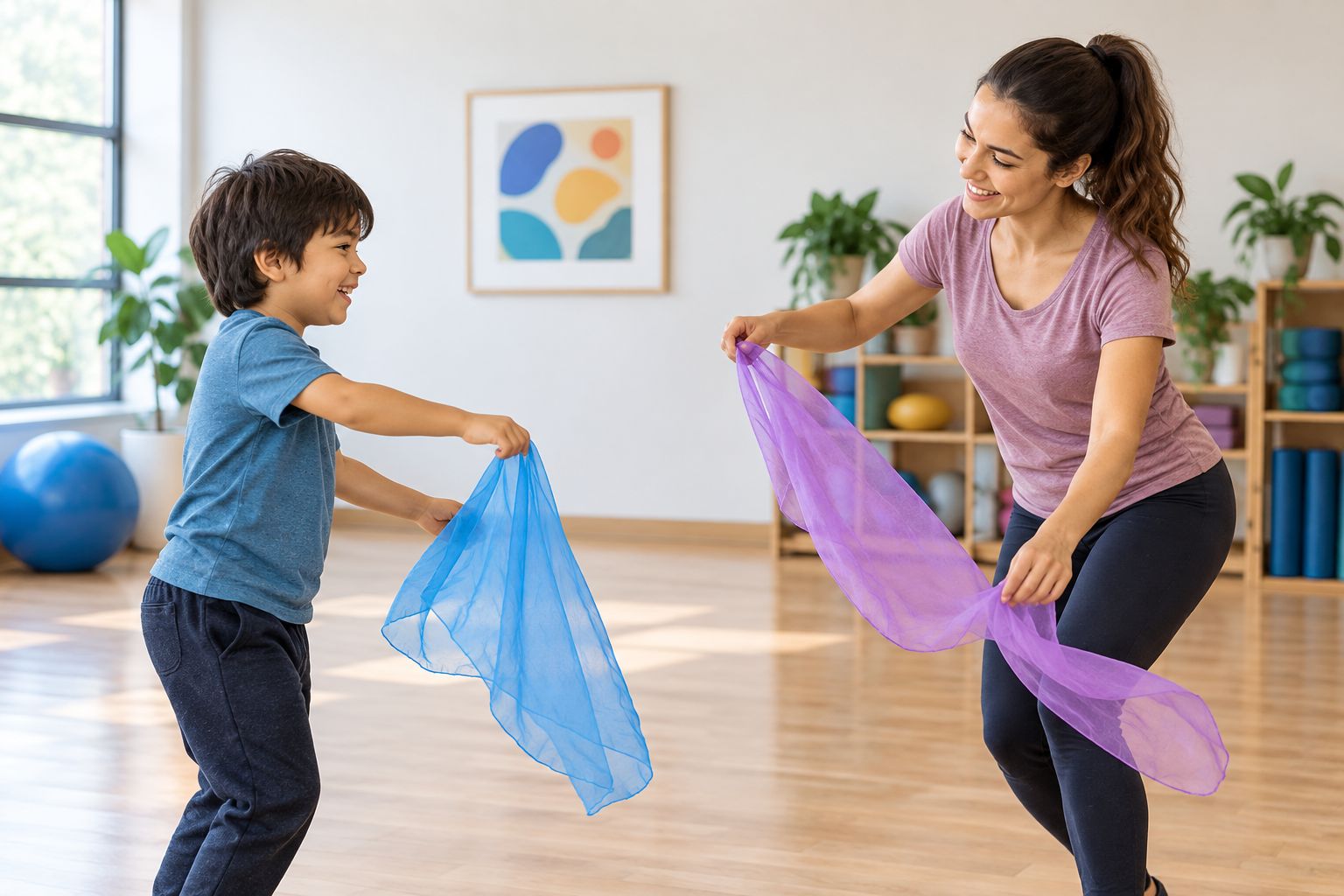
Scarf movement uses a lightweight fabric prop to accompany a chosen action. Your child can lift, lower, wave, or set it aside. Demonstrate slowly and keep fabric away from faces, necks, and mobility equipment.
Offer one prop without surrounding your child with moving fabric. The activity works without a scarf if the material is unwelcome.
Scarf movement pros:
- Makes the path of a movement visible.
- Offers a prop your child can choose or reject.
- Works with seated or standing actions.
Scarf movement cons:
- Fabric texture can be unwelcome.
- Fluttering fabric can distract from the activity.
Best for: Children who already enjoy fabric props and watching movement.
Verdict: Skip scarves when the texture or motion is uncomfortable; the prop is never required.
6. Movement stories: best for children who enjoy pretend play
Movement stories connect actions with a theme your child chooses. You might invite stretching like a tree or moving like a favorite animal. Your child can change the story or choose a literal demonstration instead.
Older children can build a sequence around their own interests without using a preschool theme. Avoid treating imaginative play as a requirement.
Movement story pros:
- Connects movement with a chosen interest.
- Lets children contribute ideas.
- Works without music or equipment.
Movement story cons:
- Figurative instructions can be unclear.
- A long story can bury the movement invitation.
Best for: Children who enjoy stories, characters, or pretend play.
Demonstrate an action if words alone are not useful. Offer a plain choice, such as reaching upward or moving sideways, instead of insisting on the story.
Verdict: Skip elaborate narration; choose movement stories only when the theme adds enjoyment.
7. Shared dance circles: best for flexible group participation
A shared dance circle invites children to contribute a movement or respond to someone else's. Joining can mean dancing beside the circle, watching from a comfortable distance, or choosing music. Passing a turn must remain acceptable.
For Brooklyn outings in 2026, ask the organizer how children can participate without entering the center or performing alone. Do not assume a group described as inclusive offers those choices.
Shared dance circle pros:
- Provides a shared activity for children and families.
- Allows different children to contribute ideas.
- Can include observation and parallel movement.
Shared dance circle cons:
- Group sound and closeness can be uncomfortable.
- Taking a public turn can create pressure.
Best for: Children interested in being around peers, with participation matched to their comfort.
Verdict: Skip compulsory turns; choose groups that welcome watching, passing, and breaks.
Match the invitation to your child's age and interests
Age helps you choose respectful themes, but it does not tell you how your child communicates or moves. These age bands are planning examples, not developmental requirements:
- Ages 2–5 years: Offer a simple demonstration, stay nearby, and let exploration replace choreography.
- Ages 6–12 years: Invite choices about music, props, or leading a partner. Explain group expectations in a useful format.
- Ages 13–18 years: Ask about preferred music and social settings. Respect privacy, autonomy, and the right to reject childish themes.
Across ages 2–18, follow individual preferences rather than assuming everyone needs the same support. Autism Learn & Play serves this age range through its stated therapy services, community programs, and online classes; confirm the fit of any specific activity directly.
Plan a Brooklyn group outing before you arrive
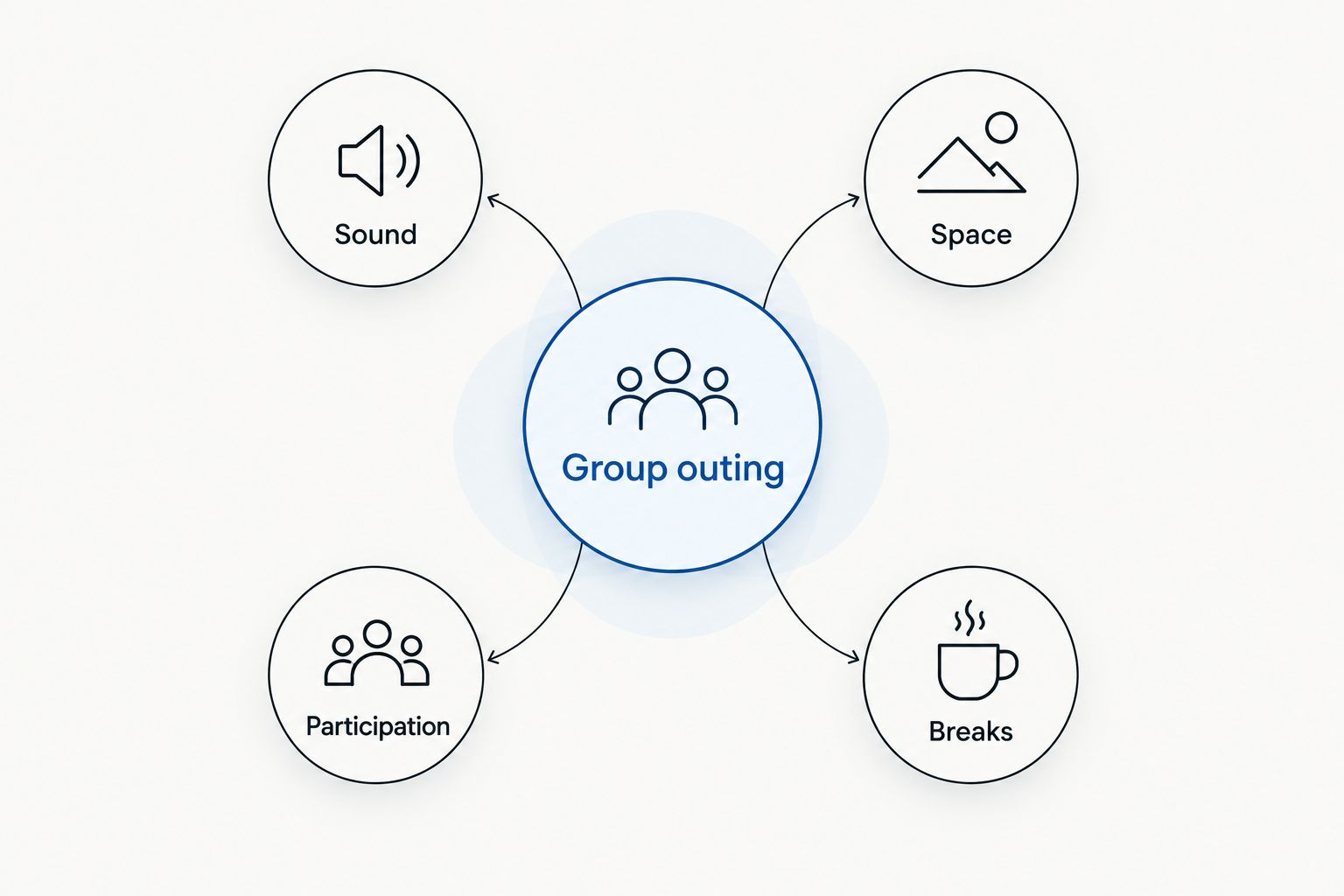
For a 2026 outing, ask about the experience itself—not just whether the event carries a sensory-friendly label. The answers help you decide whether to attend, observe first, or choose something else.
- Sound: Ask whether music volume is adjustable and whether sudden sounds occur.
- Space: Ask about seating, movement access, crowding, and room to watch apart from the group.
- Participation: Confirm that watching, passing turns, and using communication supports are accepted.
- Breaks: Ask where your child can pause and how leaving the activity works.
Tell the organizer how your child communicates yes, no, discomfort, and a need for space. Bring familiar supports your child already uses, and make leaving an acceptable outcome rather than a failed visit.
Autism Learn & Play can receive questions about its programs by email. Describe your child's interests and access needs without assuming dance therapy is part of the current offering.
Ask about community programs
Share your child’s age, interests, and support needs to ask which programs fit.
How these activities were ranked
This guide ranks activity formats by child choice, sensory flexibility, accessible movement, clear expectations, age-respectful interests, and comfortable connection. Child-led exploration comes first because it starts with the child's preferred participation rather than a performance requirement.
The ranking is not a comparison of clinical effectiveness. Dance/movement therapy is a professional therapeutic practice; a dance game at home or a community class does not become therapy simply by using that name.
Which activity should you choose?
Choose child-led movement exploration if you are unsure where to start. Add mirror dancing when your child welcomes a partner, or a movement song when a familiar sequence is appealing.
For a group outing, prioritize the conditions over the activity name. A flexible dance circle is a better fit than a preferred activity that requires unwanted touch, loud music, or compulsory participation.
FAQ
What’s the best dance therapy activity for autism to try at home?
Child-led movement exploration is the best default in this guide because your child chooses how to participate. Treat it as a playful home activity, not a substitute for individualized dance/movement therapy.
Is dancing at home the same as dance therapy?
No, dancing at home is not automatically dance/movement therapy. Professional therapy involves a therapeutic relationship and individualized goals; home dance play can remain simply enjoyable movement.
Can my child join a dance activity without speaking?
Yes, spoken language does not need to be a participation requirement. Offer demonstrations and accept gestures, communication devices, movement, or other familiar ways of expressing choices.
What if my child doesn’t like music?
Offer movement without recorded music. Child-led exploration, silent mirror dancing, and movement stories can all be presented without a soundtrack.
Which dance activities suit autistic teenagers?
Choose activities built around the teenager’s interests and preferred level of social participation. Seated rhythm, child-led movement, and shared dancing can use age-respectful music without childish themes.
What should I ask before a Brooklyn dance group outing in 2026?
Ask about sound, space, participation choices, and breaks. Confirm whether your child can watch, pass a turn, use communication supports, and leave the activity when needed.
Does Autism Learn & Play offer dance therapy activities for autism?
Ask Autism Learn & Play directly about dance therapy or movement-based activities. Its stated services include therapy, community programs, and online classes, but those categories alone do not establish a specific dance offering.
One last thing
Watching is a valid way to join an activity. Before your next outing, tell your child—and the organizer—that observing, passing, or leaving does not need to be earned by dancing first.
A judgment-free invitation gives your child room to decide what participation looks like. Keep that permission visible throughout the activity, not just at the beginning.
Related guides
- Art therapy activities for autistic kids
- Occupational therapy activities for autism at home
- Speech therapy activities for nonverbal autism
- Sports for kids with autism