
After-school autism program costs in Brooklyn depend on the specific service, session length, support arrangements, and enrollment terms; request a written quote for the program your child would attend in 2026. Ask whether that quote includes materials, registration, and any required adult support rather than treating the advertised session as the whole commitment. Compare the complete arrangement—not just the activity name—before enrolling.
- Compare after school activities for kids with autism by support, session length, enrollment terms, and your child’s interests.
- Autismlearnplay provides autism services, community programs, and online classes for children ages 2–18.
- Ask separately about recreation, therapy, and supervision; the same activity name does not establish what is included.
- For Brooklyn families, a workable journey and welcoming peer group belong in the decision alongside program charges.
How much do after-school autism programs cost in Brooklyn?
Your useful number is the written quote for your child's actual attendance plan. Before comparing programs in 2026, establish whether each quote covers a single session, recurring enrollment, or another commitment, and ask what happens when your child misses a day.
Start with the purpose. A recreational activity, an educational class, and an individualized therapy session are different services, even when all involve play. Autismlearnplay's autism services provide a starting point for questions about your family's needs, not a substitute for confirming the terms of a particular program.
Use this comparison when requesting information. These are questions to ask providers, not claims about charges at any named organization.
| Arrangement | Best for families seeking | What to confirm | Main limitation to check |
|---|---|---|---|
| Recreational group | Shared interests and opportunities to meet peers | Adult support, group activities, materials, and participation expectations | Whether staff can provide your child's needed assistance |
| Educational class | A defined learning activity | Teaching format, session length, supplies, and caregiver involvement | Whether the activity also provides meaningful peer interaction |
| Individual therapy | Support tied to an identified therapy goal | Provider qualifications, treatment plan, billing, and family responsibilities | Whether it addresses your separate need for recreation or childcare |
| Online class | Participation from home | Technology, materials, adult assistance, and interaction format | Whether your child enjoys participating through a screen |
Ask every provider the same questions. Otherwise, you are comparing different commitments under similar labels.
Why this matters for your family's week
An after-school activity should fit the child who arrives after a full school day. Your child does not need another setting where participation means ignoring discomfort or performing sociability for adults.
For your 2026 plans, write down the priority: enjoying a favorite interest, meeting peers, receiving specific support, or having a dependable after-school arrangement. More than one goal is welcome, but confirm that the program actually addresses each one.
Friendship deserves its own question. Ask how children spend time together, whether they return to the same group, and how staff support communication without requiring speech, eye contact, or unwanted interaction.
What should a written program quote explain?
Ask for terms you can review at home. A helpful response lets you understand what you are agreeing to without remembering every detail of a phone conversation.
The attendance commitment
Request the session length, frequency, enrollment period, and attendance rules. Ask whether a school holiday or provider cancellation changes the arrangement, and how absences are handled.
Also confirm the actual arrival and departure expectations. An activity that ends before your workday does is a different arrangement from after-school supervision, even if both happen in the afternoon.
What's included in participation
Ask whether materials and equipment are provided or whether your family needs to supply anything. For an outing, ask about transportation, admission arrangements, food, and the meeting location without assuming any of these are included.
Explain any assistance your child needs with communication, movement, eating, or personal care. Request a clear answer about what staff provide and what remains your family's responsibility.
The enrollment and cancellation terms
Read the written terms before committing. Ask about registration requirements, withdrawal, missed sessions, and any circumstances that change what your family owes.
Keep the response with the program description. If the quoted arrangement changes, ask for an updated explanation before agreeing rather than relying on an earlier conversation.
Why after-school program quotes differ
These are the details to establish when comparing after school activities for kids with autism. Ask providers to explain how each applies to the proposed arrangement rather than assuming every program works the same way.
- Service type: Clarify whether you are discussing recreation, education, therapy, or supervision. Ask exactly what the provider is offering.
- Session length: Record the actual duration and whether arrival, transitions, or caregiver conversations occur within that time.
- Attendance pattern: Ask whether enrollment involves individual sessions or an ongoing commitment, and which days that commitment covers.
- Support responsibilities: Confirm who assists your child and whether a caregiver or outside support person needs to attend.
- Setting and materials: Establish whether participation happens online, at a program location, or on an outing, and what your family must provide.
- Enrollment terms: Ask about registration, absences, cancellations, and withdrawal so you understand the whole agreement.
A clear answer is more useful than a reassuring label. Words such as inclusive or sensory-friendly should lead to practical explanations of what your child can expect.
How do you compare programs without overwhelming your child?
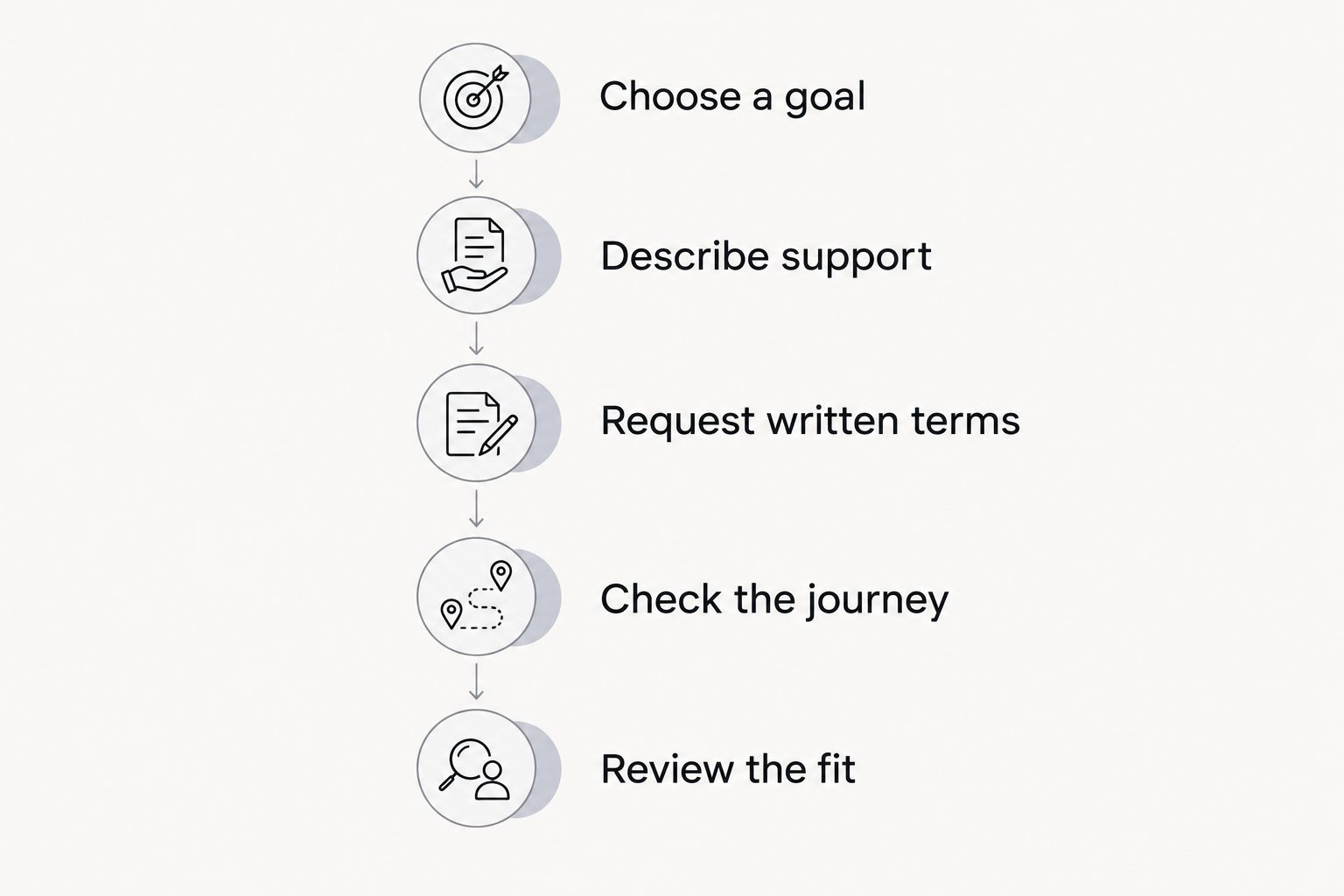
Use this sequence before committing to a recurring schedule. You can gather most of the information without asking your child to visit several unfamiliar settings.
- Choose a goal. Ask your child what sounds enjoyable, using their preferred communication method. Separate your supervision needs from your child's activity preferences.
- Describe support. Share useful information about communication, sensory preferences, transitions, and assistance. Describe what helps rather than presenting a list of things your child cannot do.
- Request written terms. Ask for the proposed attendance arrangement and its full conditions. Use the same questions for each provider.
- Check the journey. Plan the trip from school, including pickup and getting home. For online participation, consider the transition from school to the screen.
- Review the fit. Ask your child what they liked and what felt uncomfortable. Decide whether the arrangement supports your family's original goal.
You do not need to commit because an activity sounds impressive. Choose a setting where your child's communication, interests, and boundaries have room.
What can families expect from an online option?
An online class involves a different home arrangement from an in-person outing. Ask who needs to stay nearby, what materials to prepare, and how children participate before deciding whether the format fits your afternoon.
The supplied class descriptions illustrate why duration matters. Autismlearnplay lists Social Skills Class as 30 minutes via Zoom and Conversation: 1 on 1 as 1 hour via Zoom; both descriptions say the organization contacts families to finalize scheduling after preferred course days are selected.
| Listed class | Published format | Best for comparing | What still needs confirmation |
|---|---|---|---|
| Social Skills Class | 30 minutes via Zoom | A shorter online class format | Age fit, peer participation, activities, caregiver role, and current enrollment terms |
| Conversation: 1 on 1 | 1 hour via Zoom | A longer individual conversation format | Age fit, session approach, breaks, caregiver role, and current enrollment terms |
The advantage of comparing these formats is clarity about time and delivery. The limitation is equally important: a title and duration do not establish peer contact, suitability for your child, or after-school supervision.
Neither listing should be treated as a confirmed after-school placement. Ask how the proposed class fits your child's age, interests, communication, and routine before making a decision.
How should the choice change with your child's age?
A provider's overall age range does not mean every class suits every child. For families planning activities in 2026, ask about the specific group's ages and interests rather than relying on a broad program description.
For younger children
If you are seeking an activity for a child aged 2–5 years, ask about caregiver participation, play choices, transitions, and personal-care responsibilities. Find out whether a child can observe before joining an activity.
Check what happens when your child wants to stop. A welcoming explanation should describe adult support and alternatives, not simply repeat an expectation that everyone completes the same task.
For school-age children
Ask how the activity fits around dismissal, food, rest, and travel. Give your child a real choice between interests rather than selecting solely around a skill adults want them to practice.
For community connection, ask how children share activities and get to know one another. Being in the same room is not the same thing as having supported opportunities to connect.
For teenagers
Include your teenager directly in the decision, using accessible communication. Ask whether activities, materials, and conversation topics respect their age and interests.
Also clarify privacy, independence, and the role of caregivers. An activity should not require a teenager to accept unwanted interaction as the condition of belonging.
Does insurance cover after-school activities for autistic children?
Do not assume coverage because a program serves autistic children or uses the word therapy. Ask the provider what service would be billed, then ask your health plan about that specific service and provider.
For your 2026 enrollment decision, request information about authorization, network requirements, and your financial responsibility directly from the plan. Keep recreation, childcare, and clinical treatment separate in that conversation so everyone is discussing the same arrangement.
A program's willingness to discuss insurance is not a coverage determination. Confirm the terms with the organization responsible for your benefits before relying on them.
Is an online class a substitute for after-school care?
An online class is an activity format, not confirmation of supervision. Ask whether an adult must stay present and what support your child needs to participate at home.
The practical question is whether the arrangement works while you meet your other responsibilities. If you need care between school dismissal and your return, ask specifically who is responsible for your child during that entire period.
What should I ask about making friends?
Ask how children interact, what shared activities look like, and how staff respond when someone wants space. Request examples of participation that do not depend on speaking aloud or joining every group task.
Connection should remain an invitation. Your child can enjoy being alongside peers, sharing an interest, or gradually getting comfortable without being pushed into a particular style of friendship.
Where can Brooklyn families begin?
Autismlearnplay is best for families seeking a Brooklyn-based nonprofit offering autism services, community programs, and online classes for children ages 2–18. That identifies the organization's scope, not a promise that a particular activity matches every child's needs.
Use the contact form to describe your child's age, interests, preferred communication, and the after-school arrangement you need. Ask which options match those details and request current written enrollment terms.
When contacting Autismlearnplay in 2026, include whether your priority is peer connection, an educational activity, therapy, or supervision. That gives the conversation a clear starting point while leaving room to celebrate your child's uniqueness.
FAQ
How do I find out what an after-school autism program in Brooklyn will cost?
Request a written quote for your child’s specific attendance and support arrangement. Ask what is included, what your family must provide, and how absences or withdrawal affect the agreement.
What’s the best after-school activity for my autistic child?
The best fit starts with your child’s interests, communication, sensory preferences, and willingness to participate. Ask how the specific activity accommodates those needs rather than choosing by its title alone.
Are online autism classes the same as after-school childcare?
An online class does not establish that childcare or supervision is provided. Confirm whether a caregiver must remain present and who supports your child throughout the session.
Does my child have to speak to join a group activity?
Ask the specific provider how children participate without spoken language. Explain your child’s communication method and request concrete examples of how staff include it.
Will insurance pay for a social activity for my autistic child?
Confirm the exact service with the provider and your health plan rather than assuming a social activity is covered. Ask about provider requirements, authorization, and your financial responsibility.
What should I ask before enrolling my autistic teenager?
Ask about the participants’ ages, shared interests, communication support, privacy, and expectations. Include your teenager in deciding whether the activity feels respectful and enjoyable.
Should I choose a group activity or individual support?
Choose according to the goal: ask a group provider about peer interaction and an individual provider about the support being offered. Neither format automatically meets your separate need for after-school care.
One last thing
Ask this before signing: What happens if my child wants to watch, take a break, or leave? The answer gives you something concrete to consider alongside the written terms.
You are not buying a promise that your child will become someone else. You are choosing an opportunity for enjoyment, support, and belonging on terms your family understands.
Related guides
- Can siblings join autism community programs together?
- Social skills games for autistic teens
- Autism-friendly museums and attractions in NYC