
Siblings can join an autism community program together only when that specific program permits sibling participation and the activity fits both children’s needs. For a Brooklyn family planning an outing in 2026, confirm whether each child can participate, whether separate registration is required, and who provides supervision before attending. A program described as family-friendly does not, by itself, confirm that siblings can join every activity.
- Can siblings join autism community programs together? Confirm the specific program’s sibling policy before registering.
- Autism Learn & Play offers Brooklyn community programs; ask directly about sibling eligibility for the activity you’re considering.
- Choose shared activities around both children’s interests, communication preferences, and sensory needs.
- A sibling should join as a participant, not as an assigned caregiver or interpreter.
Can siblings join autism community programs together?
The answer depends on the individual program, not simply on whether the children are siblings. Ask the organizer to distinguish between joining an activity, observing, and accompanying a parent. Those are different arrangements.
Use the contact form to ask about a specific activity rather than assuming a general invitation includes both children.
Before registering, work through these steps:
- Confirm eligibility. Give each child’s age and ask whether siblings can enroll, including siblings who are not autistic.
- Clarify participation. Ask whether both children would take part, whether one would observe, or whether they would attend separate groups.
- Discuss support. Describe communication preferences, sensory needs, and any help each child needs to participate comfortably.
- Check supervision. Establish which adults remain responsible for each child during activities, breaks, and transitions.
- Plan an exit. Decide what happens if one child wants to leave while the other wants to stay.
These are arrangements to ask about, not confirmed policies at any particular organization:
| Arrangement to ask about | Best for | Potential benefit | Limitation to check |
|---|---|---|---|
| Both siblings participate | Children who want the same activity | A shared family experience | Both children must meet the activity’s requirements |
| Siblings attend separate groups | Children with different interests or support needs | Each child gets a better-matched activity | Coordinating supervision and transitions |
| One sibling observes | A child who wants to watch before joining | A lower-pressure introduction | Observation requires permission and respect for others’ privacy |
| One child attends alone | A child who wants independent time | Space to explore interests without a sibling | A separate plan for the other child |
Why this matters
A shared outing should give both children something to enjoy. It should not require one child to tolerate an uncomfortable setting so the other can attend, or make a sibling responsible for keeping an activity running smoothly.
For your 2026 family plans, start with a more useful question than whether everyone can enter the building: Can both children participate in a way that respects their needs and choices? Sometimes that means joining together. Sometimes it means choosing separate activities without treating that decision as a setback.
Friendship matters, too. Leave room for each child to meet other people rather than expecting siblings to remain together throughout the visit.
Shared participation: choose an activity both children want
Best for: siblings who share an interest and want to spend that time together. Begin with what draws each child in, whether that is drawing, movement, stories, games, or making something side by side. These are activity ideas to discuss with an organizer, not promises about a particular program.
Ask what participation actually involves. Does everyone follow the same instructions? Can children use different materials, watch first, or take breaks? An appealing activity title tells you less than a clear description of what children will be asked to do.
Shared participation offers an opportunity to enjoy something together, but it also creates a possible mismatch. One child might want lively interaction while the other wants quiet, independent play. Choose the arrangement around those preferences rather than expecting either child to copy the other.
Before making a commitment, ask each child what they want using their preferred communication method. Offer concrete choices instead of asking only whether they want to attend a vaguely described program.
Separate participation: protect individual interests
Best for: siblings whose interests, age-related preferences, or support needs differ. Attending different activities is not a failure of inclusion. It can be a deliberate way to respect both children.
A younger child might need close adult support with transitions, while an older child wants more independence and privacy. Avoid placing an older sibling in a younger group simply because coordinating one activity is easier for the adults.
The practical challenge is supervision. Ask whether different activities happen in separate spaces and whether your family needs another adult. Do not assume staff can supervise an accompanying sibling who is not enrolled.
If separate participation is not workable, consider alternating outings. Each child can have time centered on their interests without needing to attend every activity together.
Why sibling participation varies
An autism-focused program’s name does not establish its admission rules. For any activity you are considering in 2026, ask about these factors:
- Activity purpose. Establish whether it is a community outing, recreational group, class, or individualized therapy appointment. Do not treat these as interchangeable.
- Age fit. Ask about the specific group’s age requirements, not just the organization’s overall age range.
- Participation expectations. Find out whether children need to follow a shared sequence, work independently, or take turns using materials.
- Sensory setting. Ask about sound, lighting, crowding, movement, and access to a quieter space.
- Adult responsibility. Confirm who supports each child and whether a parent or caregiver must remain present.
- Privacy and consent. Ask whether observation or sibling attendance affects other participants’ privacy, particularly during therapy or personal discussions.
Treat unanswered questions as reasons to seek clarification before attending. A clear conversation is more useful than arriving with expectations the organizer has never agreed to meet.
What should you ask before a Brooklyn outing?
Start with the activity, then work outward to the journey and the return home. For a Brooklyn outing in 2026, ask about arrival instructions, waiting areas, bathrooms, and the process for stepping outside. These details help you build a plan around your children rather than around an idealized visit.
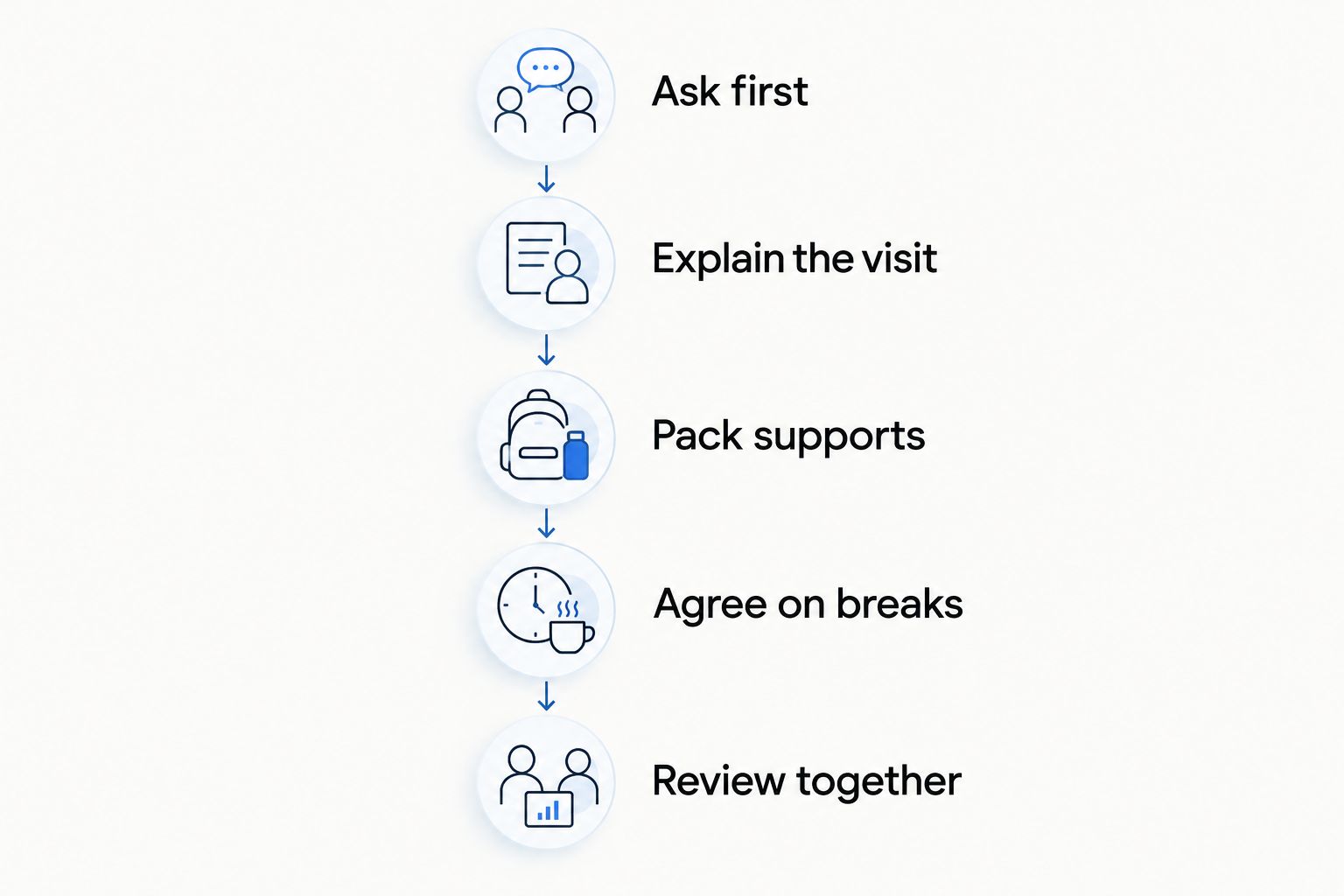
Use this sequence to prepare:
- Ask first. Request a description of the activity and confirmation of sibling participation.
- Explain the visit. Tell each child where you are going, what they can do there, and who will stay with them.
- Pack supports. Bring the familiar communication or comfort items your child uses, subject to the venue’s rules.
- Agree on breaks. Choose an accessible way for each child to request a pause or leave.
- Review together. Afterward, invite each child to share what they enjoyed and what they would change.
Preparation is not a promise that the visit will go exactly as planned. Its purpose is to make your next decision clearer when someone needs something different.
What can you expect from Autism Learn & Play?
Autism Learn & Play is a fit for Brooklyn families seeking autism community programs and therapy services for children ages 2–18. Sibling participation still needs confirmation for the particular activity your family wants to join.
The nonprofit offers therapy services, community programs, and online classes. Its online listings illustrate why checking the format matters: Story Time is listed as a 30-minute Zoom class, while Conversation: 1 on 1 is listed as a 1-hour Zoom session. Neither listing establishes permission for a sibling to join.
| Listed online option | Published format | Best for considering | What to clarify |
|---|---|---|---|
| Story Time | 30 minutes via Zoom | Families exploring a story-focused online activity | Age fit, participation expectations, and sibling permission |
| Conversation: 1 on 1 | 1 hour via Zoom | Families exploring an individual conversation session | Whether any sibling involvement is appropriate or permitted |
These options offer different formats, not evidence of a shared sibling program. For a 2026 inquiry, describe the community experience you want and ask which activity, if any, matches it. You can use the contact form above or email info@autismlearnplay.org.
How do you support connection without assigning a helper role?
Invite siblings to enjoy each other’s company without making either child responsible for the other. Adults should handle supervision, personal care, and support arrangements. A sibling can choose to help with a game or share materials without becoming the default interpreter or caregiver.
Give both children ways to decline. One child can enjoy watching while another joins in, provided the organizer permits that arrangement. Neither needs to perform affection, make eye contact, speak on demand, or demonstrate that the outing was worthwhile.
For friendship-focused activities, ask how children get opportunities to connect beyond their sibling relationship. The guide to whether autistic children can make friends in group therapy explores that related question.
Afterward, speak with each child separately if that makes expressing preferences easier. Ask what they would like to repeat, change, or skip next time, and take those answers seriously.
Can a sibling without an autism diagnosis join?
A sibling without an autism diagnosis needs explicit permission to participate; a family relationship does not establish eligibility. Tell the organizer that you are asking about an accompanying sibling, and clarify whether you mean enrollment, observation, or attendance with a parent.
Should siblings always attend the same group?
Siblings do not need to attend the same group to have an inclusive family experience. Choose shared participation when both children want it and the activity fits; choose separate participation when it better respects their interests or support needs.
What if one child wants to leave early?
If one child wants to leave early, follow the supervision and exit plan agreed upon before the visit. Do not leave either child without an authorized adult; if your family cannot safely split up, leaving together is a valid choice.
FAQ
Can siblings join autism community programs together?
Siblings can join together only when the specific program permits it and both children meet its participation requirements. Confirm enrollment, age fit, supervision, and support arrangements before attending.
Does family-friendly mean siblings can join every activity?
Family-friendly does not confirm permission for siblings to participate in every activity. Ask whether the invitation includes active participation, observation, or simply accompanying a parent.
Can both of my autistic children attend the same community group?
Both autistic children need individual confirmation of eligibility for the group. Share each child’s age, interests, communication preferences, and support needs rather than assuming one arrangement fits both.
Can an older sibling help during an autism community outing?
An older sibling can choose to offer ordinary sibling help, but adults should retain responsibility for supervision and care. Do not make participation conditional on managing another child’s needs.
Can siblings share an online autism class?
Ask the class organizer before siblings share an online session. One registration or device does not establish permission for another child to participate.
Does Autism Learn & Play allow siblings in its community programs?
Ask Autism Learn & Play directly about sibling participation in the specific community program you are considering. Describe both children’s ages and needs through the website contact form or info@autismlearnplay.org.
What should I do if my children want different activities?
Respect their different preferences and ask about separate participation or alternating outings. Confirm supervision before choosing an arrangement that places the children in different spaces.
One last thing
Ask each child whether they want their sibling there. That question deserves a place alongside eligibility and scheduling. A shared outing can be meaningful, and independent time can be meaningful too; choose the plan that makes room for both children’s voices.
Related guides
- Family support groups for autism in Brooklyn
- Autism-friendly museums and attractions in NYC
- Social skills games for autistic teens