If Grateful Care ABA already supports your child’s priorities, continuity belongs in your decision—not just the search for a different name. For Brooklyn parents comparing grateful care aba alternatives in 2026, Autism Learn & Play Inc. is an option to explore for therapy services, community programs, and online classes; a speech or occupational therapy service is a more focused route when one specific need drives your search.
- For grateful care aba alternatives, consider Autism Learn & Play Inc. for Brooklyn therapy services and community programs.
- Choose speech therapy when communication support is the main reason you are considering a change.
- Choose occupational therapy when daily activities and sensory needs are your priority.
- Compare community activities separately from therapy; friendship opportunities and individualized care serve different purposes.
Why this matters
Changing providers and adding support are different decisions. Your child might need a different therapy plan, a place to meet peers, or an activity that reflects a strong interest. Start with that need rather than treating every autism service as interchangeable.
Autism Learn & Play Inc. is a Brooklyn option for families seeking autism therapy services alongside community programs. Its stated services cover children ages 2–18 and include ABA, speech, occupational, music and art therapy, tutoring, and online classes.
For your 2026 search, define what you want to keep as well as what you want to change. A familiar relationship, a useful communication support, or an activity your child enjoys should remain part of the conversation.
Grateful Care ABA alternatives at a glance
This comparison separates a named organization from service routes. Speech therapy, occupational therapy, community activities, and online learning are not identical replacements for an ABA provider. Compare them according to the support your child needs.
| Option | Best for | Main focus | What to compare with your current care |
|---|---|---|---|
| Grateful Care ABA | Families assessing whether to stay with their current provider | Your child’s existing care relationship, if enrolled | Goals, your child’s experience, communication with the team, and practical fit |
| Autism Learn & Play Inc. | Brooklyn families exploring therapy and community support | Therapy services, community programs, and online classes for ages 2–18 | Which service addresses your priority and how it would fit with existing support |
| Speech therapy services | Families prioritizing communication | Support for communication needs | Communication goals, methods, and coordination with current care |
| Occupational therapy services | Families prioritizing participation in everyday activities | Daily activities and sensory needs | The activities your child wants support with and the proposed approach |
| Community groups and interest-based activities | Families seeking opportunities for connection | Shared activities and peer participation | Age fit, participation choices, environment, and adult support |
| Online classes and tutoring | Families seeking learning support | Lessons or academic support | Lesson format, interaction, accessibility, and caregiver involvement |
Choose by purpose first. A service that fits an academic goal does not automatically address communication needs, and a welcoming outing does not replace individualized therapy.
1. Autism Learn & Play Inc.: best for Brooklyn therapy and community support
Autism Learn & Play Inc. is a Brooklyn-based nonprofit serving children on the autism spectrum ages 2–18. Its stated offering includes several therapy services, community programs, tutoring, and online classes. That makes it relevant when your search includes both professional support and opportunities beyond a therapy session.
Where this option fits
- You want to ask about ABA, speech, occupational, music, or art therapy.
- You are exploring community programs alongside your child’s existing support.
- You want to discuss tutoring or online classes as a separate learning need.
- You prefer to start with a Brooklyn-based organization.
Where this option falls short
- Its stated age range does not cover adults older than 18.
- A list of services does not establish that a particular program fits your child’s needs.
- Therapy, tutoring, and community participation address different priorities; you still need to identify which one you are seeking.
Before deciding, describe an ordinary situation you want help with. That could be communicating during an outing, joining an activity, or participating in a lesson. Ask which service addresses that situation and what participation would involve.
Best for: Brooklyn families exploring therapy services and community opportunities for a child within the stated age range.
Next move: Contact the organization with your child’s age, interests, current supports, and the specific need behind your search.
2. Speech therapy services: best for communication priorities
A speech therapy service is a focused alternative when communication is the main concern behind your search. Speech-language support can address communication needs, including ways to express preferences, ask for help, and participate in everyday exchanges. The appropriate goals depend on the individual child.
Do not frame success only as speaking more. Your child’s communication might include speech, gestures, signs, or augmentative and alternative communication, often called AAC.
Where speech therapy shines
- It gives communication a clear place in the care plan.
- You can discuss specific situations, such as requesting a break or sharing an interest.
- You can ask how communication supports will carry into home, school, or community activities.
Where speech therapy falls short
- Communication support alone does not address every learning, sensory, or daily-living need.
- A speech therapy appointment is not automatically a peer group or community activity.
- You need to discuss coordination if your child already receives other services.
Best for: Families whose main priority is helping a child communicate needs, choices, or ideas.
Next move: Bring examples of how your child already communicates and where communication becomes difficult. Ask the provider to explain proposed goals in everyday language.
3. Occupational therapy services: best for everyday participation
Occupational therapy is a focused route when your child needs support participating in daily activities. For children, those activities can include play, dressing, classroom tasks, and other routines. Discuss sensory needs in relation to the actual activity, rather than treating every preference as a problem to change.
For a community outing, describe the difficult part precisely. Entering the space, handling materials, waiting, and moving between activities are different situations.
Where occupational therapy shines
- It centers practical activities that matter to your child and family.
- You can discuss adaptations to materials, tasks, or the environment.
- Goals can focus on participation rather than requiring your child to do everything in one prescribed way.
Where occupational therapy falls short
- It is not a substitute for every communication or educational service.
- A useful individual activity does not automatically establish that a group setting will fit.
- Sensory preferences differ; an approach suited to another child is not automatically suitable for yours.
Best for: Families prioritizing access to daily routines, play, or learning activities.
Next move: Name the task, describe what happens, and explain what comfortable participation would look like for your child.
4. Community groups: best for shared interests and connection
A community group is an alternative to adding another individual session when your main goal is an opportunity to meet peers or enjoy a shared activity. It is not a replacement for therapy. Look for an activity your child actually wants to try, rather than choosing solely because it carries an autism-related label.
Art, music, cooking, games, and movement can be starting points for your search. These are activity ideas, not claims about any organization’s current schedule.
Where community groups shine
- A shared interest gives children something concrete to do together.
- You can prioritize enjoyment, belonging, and participation choices.
- The activity itself can guide conversation without requiring constant social interaction.
Where community groups fall short
- A group does not provide the same individualized support as a therapy plan.
- Noise, transitions, group expectations, and unfamiliar people need consideration.
- A child’s interest in the activity does not guarantee comfort with the setting.
For older children, explore social skills games for autistic teens as activity ideas. Keep your teenager’s preferences central, including whether they want a group at all.
Best for: Families seeking shared-interest activities and opportunities for connection.
Next move: Ask what children do during the activity, whether watching first is welcome, and how breaks or alternative participation are handled.
5. Online classes and tutoring: best for a defined learning goal
Online classes and tutoring are options when the priority is a lesson, subject, or learning activity. Treat the format as part of the decision. A child who enjoys a topic still needs an accessible way to engage with the lesson.
Where online learning shines
- You can select support around a particular learning goal.
- Online participation avoids travel to the lesson itself.
- You can ask about materials and caregiver involvement before starting.
Where online learning falls short
- It is not the same experience as meeting peers in a physical space.
- Screen-based interaction does not suit every child or every activity.
- A learning class is not automatically a therapy service.
Best for: Families seeking subject-specific or activity-based learning support.
Next move: Ask how the lesson works, how your child can respond, and what happens if they need a pause.
Why people consider switching from Grateful Care ABA
The useful question in 2026 is not whether one organization wins every comparison. It is whether your child’s current support matches what your family needs now. Use these decision points to clarify your own reason for considering a change, not as claims about Grateful Care ABA.
- A different priority: You want communication, daily-activity, or academic support to receive more attention.
- A community goal: You are looking for opportunities to meet peers in addition to individual care.
- A participation concern: You want to discuss how your child’s preferences, communication, and requests for breaks shape sessions.
- A practical mismatch: The arrangement no longer fits your family’s routine.
Separate concerns that need a provider conversation from goals that call for an additional service. You do not need to replace useful care just to explore a new activity.
Match the activity to your child’s age and interests
Use these age bands as planning prompts, not developmental deadlines. Children of the same age have different communication styles, interests, and support needs.
- Ages 2–5: Ask about caregiver participation, familiar play materials, transitions, and opportunities to pause. Explain how your child communicates comfort or discomfort.
- Ages 6–12: Ask what the activity involves, how instructions are presented, and whether children can participate in different ways. Share interests as well as support needs.
- Ages 13–18: Include your teenager in the choice. Ask about age-appropriate materials, personal interests, privacy, and whether the group’s expectations match what they want.
For a 2026 outing, request a plain-language description of arrival, the activity, breaks, and leaving. This gives you something concrete to discuss with your child without promising how the outing will feel.
Before changing care, check the fit
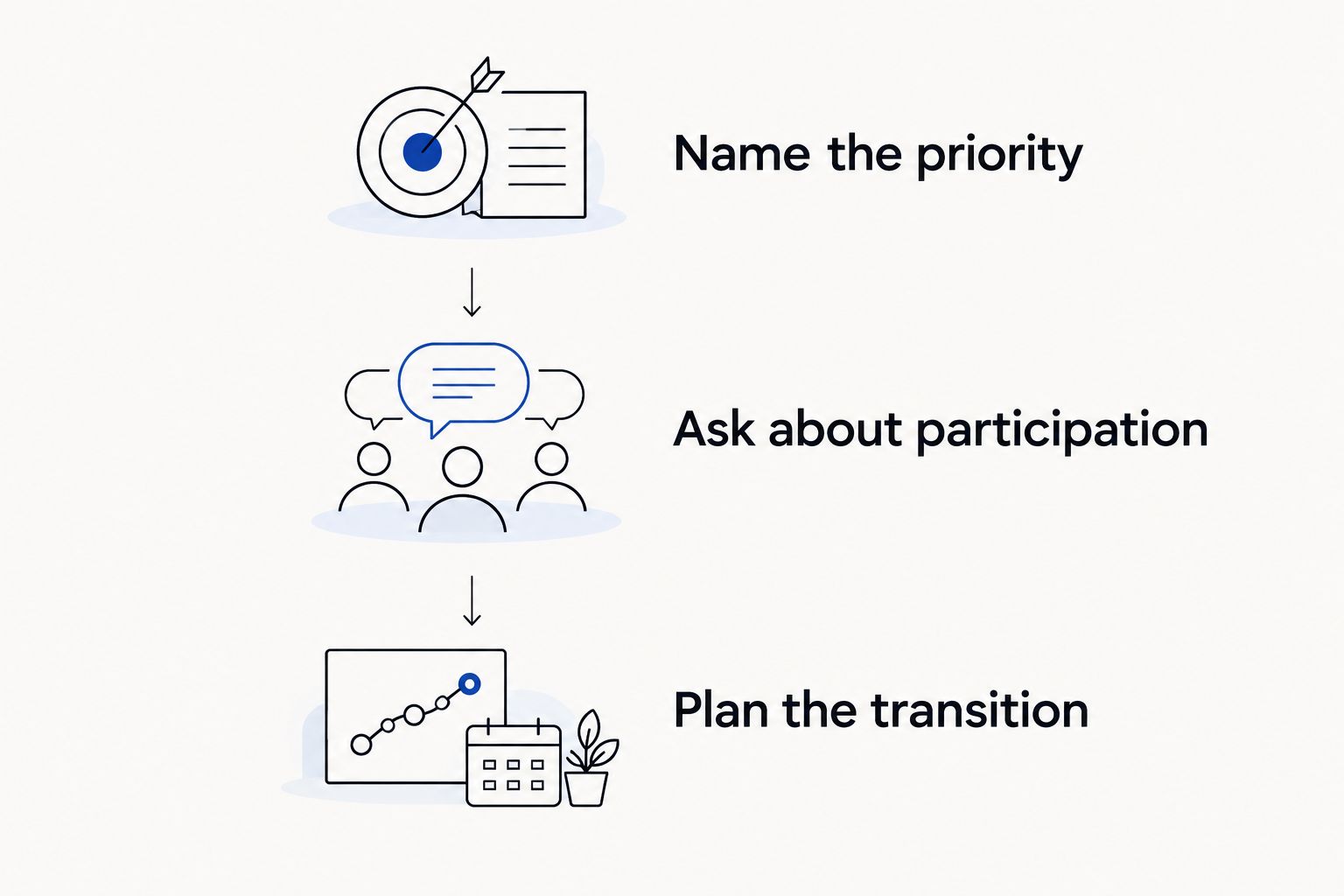
Use this sequence to keep your 2026 comparison grounded in your family’s priorities:
- Name the priority. Write down the situation you want support with.
- Ask about participation. Discuss communication, preferences, breaks, and caregiver involvement.
- Plan the transition. Ask your current and prospective providers how to coordinate a change if you decide to make one.
A provider’s explanation should help you picture the service. Ask for clarification when an answer gives you a broad promise instead of describing what your child would do.
When staying with Grateful Care ABA is the right call
Staying deserves consideration when you value the existing relationship and your child’s current support addresses the priorities you have identified. Discuss questions with the current team before assuming a full change is necessary.
You can also distinguish replacement from addition. A community activity or focused learning service can be a separate choice; discuss coordination with the professionals involved in your child’s care.
FAQ
What are the best Grateful Care ABA alternatives for Brooklyn families?
Start with the support your child needs: a broader organization, speech therapy, occupational therapy, community activities, or learning support. Autism Learn & Play Inc. is a Brooklyn-based nonprofit offering therapy services, community programs, and online classes for children ages 2–18.
Should I switch ABA providers to find activities where my child can meet friends?
A search for friendship opportunities does not automatically require changing ABA providers. Compare community activities separately and discuss how they would fit alongside your child’s current support.
Is speech therapy a replacement for ABA?
Speech therapy is not an interchangeable replacement for ABA. It focuses on communication needs; discuss whether it should supplement or change your child’s current care with the professionals involved.
What should I ask before joining a community activity?
Ask what children do, how they can participate, and how breaks are handled. Also discuss age fit, caregiver involvement, communication supports, and the environment.
How do I choose an activity for my autistic teenager?
Start with your teenager’s interests and preferences. Ask about age-appropriate activities and participation choices rather than assuming a younger children’s group will fit.
Can online classes replace an in-person community group?
Online classes and in-person community groups offer different experiences. Compare the learning goal, interaction format, and your child’s preferences before choosing between them.
What should I tell a prospective provider before changing care?
Share your child’s age, interests, communication methods, current supports, and the situation you want help with. Ask how the proposed service addresses that priority and how a transition would be coordinated.
One last thing
Ask your child what they want to keep, not only what adults want to change. Their answer might be expressed through words, gestures, AAC, or clear preferences during an activity. Include that information in your next conversation.
For your 2026 search, send Autism Learn & Play Inc. a focused question at info@autismlearnplay.org: describe your child’s age, an interest they enjoy, and the support or community opportunity you want to explore. That is a more useful starting point than asking for a generic replacement.
Related guides
- Family support groups for autism in Brooklyn
- Autism-friendly museums and attractions in NYC
- Art therapy activities for autistic kids