Best overall: child-led requesting during play. Best for predictable routines: a picture-supported routine. Best with everyday materials: turn-taking with a favorite toy. These ABA therapy activities for autism at home focus on useful communication, shared enjoyment, and your child’s choices—not compliance for its own sake.
- The best ABA therapy activities for autism at home start with your child’s interests and respect refusal.
- Child-led requesting supports communication through speech, gestures, pictures, or an existing AAC system.
- Picture-supported routines make everyday steps visible; turn-taking creates opportunities for shared play.
- Autism Learn & Play offers ABA services and community programs for children ages 2–18.
Why this matters
Home practice should help your child do something meaningful: ask for help, join a game, understand what happens next, or take a break. Completing an adult’s instructions is not enough to make an activity useful.
Autism Learn & Play is an option for Brooklyn families seeking ABA services and community programs for children ages 2–18. If your child receives therapy, ask the treating professional which everyday skills to practice and how to support them without turning family time into repeated demands.
This 2026 guide ranks adaptable home activities, not treatment programs. The activities draw on everyday learning principles, but an activity alone is not individualized ABA therapy. Choose one that fits your child’s interests, communication, and sensory needs.
What makes the best home ABA activity?
- Useful purpose: Practice something your child can use outside the activity, such as requesting help or choosing a snack.
- Child choice: Let your child select materials, change the activity, decline, or stop.
- Accessible communication: Accept speech, gestures, pointing, pictures, and your child’s existing communication system.
- Sensory fit: Adjust noise, texture, movement, lighting, and proximity to other people.
- Natural feedback: Respond to a request with the requested action rather than an unrelated reward.
- Easy adaptation: Change the challenge without treating age, speech, or eye contact as entry requirements.
For home practice in 2026, choose meaningful participation over perfect performance. Never withhold meals, water, comfort, or access to communication to create a teaching opportunity. Avoid forced eye contact, physical prompting, and goals aimed only at stopping harmless stimming.
ABA activities at a glance
| Activity | Best for | Standout feature | Key limitation |
|---|---|---|---|
| Child-led requesting | Expressing wants and needs | Communication leads to a meaningful response | Repeated prompting can interrupt play |
| Picture-supported routine | Understanding everyday transitions | Makes the next step visible | Pictures need to mean something to your child |
| Favorite-toy turn-taking | Shared play | Builds interaction around an existing interest | Sharing a treasured object can create stress |
| Everyday matching and sorting | Noticing useful similarities | Uses familiar household objects | Abstract sorting can lack everyday purpose |
| Shared household task | Participating in family routines | Practices skills within a real activity | Adult standards can make the task too demanding |
| Help-and-break practice | Self-advocacy | Gives your child ways to change or stop an activity | Adults must consistently honor the message |
1. Child-led requesting: best for expressing wants and needs
Child-led requesting means following your child’s interest and responding to their communication. During a favorite activity, notice an opportunity to request an action: opening a container, continuing a song, or helping with a toy.
Start with materials your child already enjoys. Model a useful word, gesture, picture, or message on their existing communication system, then allow time to respond. Accept a clear reach or point; do not require a spoken word before helping.
For a younger child, the interaction can center on a familiar toy. An older child or teenager can request help with a hobby, choose music, or ask someone to join an activity. Keep the subject age-respectful even when the communication is simple.
Child-led requesting pros:
- Starts with your child’s existing interests.
- Accepts different forms of communication.
- Connects a request with an immediate, relevant response.
Child-led requesting cons:
- Too many questions or prompts can disrupt enjoyment.
- Deliberately keeping desired items out of reach can create frustration.
Best for: Children practicing ways to express preferences, ask for help, or continue an enjoyable activity.
Verdict: Try child-led requesting first, without making access depend on a perfect response.
2. Picture-supported routine: best for everyday transitions
A picture-supported routine shows what happens during a familiar activity. Use photos, drawings, written words, or objects that your child understands to represent steps such as washing hands, getting a snack, and cleaning up.
Introduce the sequence while the routine is calm and familiar. Point to the current step, describe it briefly, and let your child check what comes next. The support is there to explain the routine—not to override a request for help or a break.
For your 2026 home plan, start with a routine that already happens regularly. Younger children can use pictures of their own belongings; older children can choose written lists, photos, or another format they prefer. Do not assume every autistic child finds pictures helpful.
Picture-supported routine pros:
- Keeps information visible after you finish speaking.
- Gives your child a way to check the next step.
- Fits activities you already do at home.
Picture-supported routine cons:
- Unfamiliar symbols can add confusion.
- An inflexible schedule can make changes harder to discuss.
Best for: Children who benefit from seeing or checking a sequence rather than relying on spoken instructions alone.
Verdict: Try a picture-supported routine when the format makes sense to your child; skip it when it does not.
3. Favorite-toy turn-taking: best for shared play
Turn-taking creates a simple back-and-forth interaction around something your child enjoys. Roll a ball, add pieces to a shared construction, or alternate choosing parts of a pretend-play scene.
Begin by joining rather than taking over. Offer your turn, describe what you are doing, and accept your child’s choice to watch or keep playing independently. Parallel play—playing alongside each other—can be a comfortable starting point.
Consider a brief 2-minute invitation rather than expecting a long game. That is a suggested starting format, not a therapeutic dose. For teenagers, use an age-respectful interest such as a cooperative game, music selection, or a shared creative project.
Favorite-toy turn-taking pros:
- Builds interaction around familiar enjoyment.
- Works with gestures and actions as well as speech.
- Allows you to adjust the amount of back-and-forth.
Favorite-toy turn-taking cons:
- Taking a cherished object can make play stressful.
- Long waits can overshadow the enjoyable part of the activity.
Best for: Children interested in shared play who need a flexible way to participate.
Verdict: Try turn-taking with willing participation; wait on sharing a treasured toy if it causes distress.
4. Everyday matching and sorting: best for noticing useful similarities
Matching and sorting involve finding items that belong together. Pair socks, match a container with its lid, or organize craft materials by a feature your child notices.
Give the activity a real purpose. Finding the lid that fits a container is more meaningful than repeatedly sorting unfamiliar cards just to finish a task. Demonstrate a match, then invite your child to explore rather than correcting every different choice.
Use large, safe objects suited to your child’s needs, and supervise small materials appropriately. Older children can organize supplies for a hobby or help locate household items. Accept an unexpected sorting rule and ask about it when your child can share their reasoning.
Everyday matching and sorting pros:
- Uses materials already involved in household routines.
- Lets your child compare objects through hands-on exploration.
- Can connect directly to finding and organizing belongings.
Everyday matching and sorting cons:
- Repetition without a purpose can become tedious.
- Small pieces and certain textures are unsuitable for some children.
Best for: Children who enjoy organizing, comparing, or finding corresponding objects.
Verdict: Try matching with a useful purpose; skip repetitive drills your child does not enjoy.
5. Shared household task: best for family participation
A shared household task gives your child a meaningful role in something the family already does. Choose an accessible part of setting the table, preparing materials for an outing, watering plants, or putting belongings away.
Offer a choice of roles and demonstrate the selected action. Keep the expectation clear, then provide help when requested. Participation matters more than speed, neatness, or doing the entire task independently.
A 5-minute shared-task window is one optional planning limit, not an expected attention span. Stop sooner when your child wants to stop. Children across ages 2–18 need different materials and supervision; choose by safety, interests, and current skills rather than age alone.
Shared household task pros:
- Practices skills in the setting where they are useful.
- Gives your child a role in family life.
- Offers natural opportunities to choose and request help.
Shared household task cons:
- Noise, smells, or textures can make a task uncomfortable.
- Adult expectations can turn participation into pressure.
Best for: Children who want to join everyday family activities with an accessible role.
Verdict: Try a small, chosen role; skip adult standards of speed or tidiness.
6. Help-and-break practice: best for self-advocacy
Help-and-break practice teaches an accessible way to ask for assistance, pause, or finish. Model a word, gesture, picture, or existing communication-system message during an ordinary activity.
Respond when your child communicates. If they ask for help, help; if they request a break, pause. Do not manufacture distress to make the lesson happen, and do not require completion before honoring a request to stop.
For younger children, you can model a simple gesture during play. Older children can choose language such as asking for space, requesting a different task, or declining participation. The goal is a message your child can use with family members and, with support, during community activities.
Help-and-break practice pros:
- Gives your child a way to influence what happens.
- Fits home, outings, and group activities.
- Accepts spoken and nonspeaking communication.
Help-and-break practice cons:
- Practice loses its meaning when adults ignore the request.
- A message is inaccessible if adults keep the needed tool elsewhere.
Best for: Children building reliable ways to ask for support, space, or a pause.
Verdict: Make help-and-break communication part of every activity, not a reward for finishing.
How these activities are ranked
This 2026 ranking prioritizes useful communication, child choice, sensory fit, and practical home use. Child-led requesting comes first because it connects an expressed preference with a meaningful response; the remaining activities serve different needs rather than competing for the same goal.
The ranking does not compare clinical effectiveness. Your child’s preferences and individualized support plan determine which activity belongs first in your home.
Which activity should you choose?
Start with child-led requesting inside an activity your child already enjoys. Add help-and-break communication from the beginning. Choose picture-supported routines when checking the next step is useful, or turn-taking when your child wants shared play.
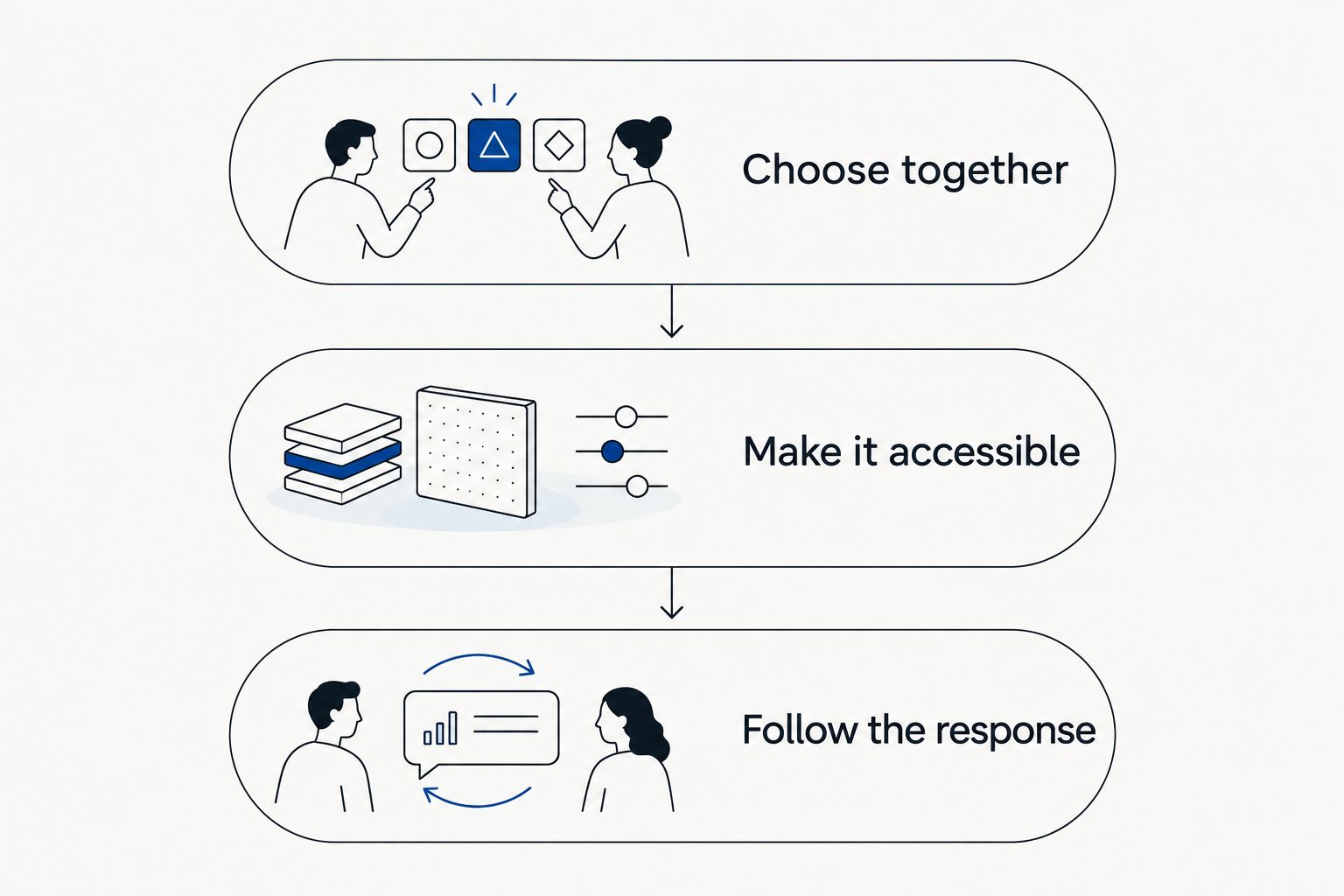
Use this simple sequence for your 2026 home practice:
- Choose together: Offer an activity and accept the answer.
- Make it accessible: Adjust materials, communication, and sensory demands.
- Follow the response: Continue, change, help, or stop based on your child’s communication.
For Brooklyn outings and community groups, ask organizers how children can participate, communicate, and take breaks. Autism Learn & Play provides community programs, therapy services, and online classes; ask directly about options suited to your child rather than assuming a particular format or accommodation.
Ask about support for your child
Tell Autism Learn & Play about your child’s interests, communication, and community activity goals.
FAQ
What are the best ABA therapy activities for autism at home?
Child-led requesting is the first activity to try when your goal is useful communication during enjoyable play. Picture-supported routines, turn-taking, matching, household participation, and help-and-break practice address different needs; choose according to your child’s interests and support plan.
Can I do ABA therapy at home without a therapist?
You can offer supportive play and everyday learning at home, but these activities are not a substitute for individualized ABA therapy. Ask a qualified treating professional for guidance on goals, prompting, and responses that fit your child.
How long should an at-home activity last?
There is no single session length prescribed by this guide. Offer a brief invitation and follow your child’s response; a suggested 2-minute play invitation is a starting format, not a required duration or therapeutic dose.
Can a nonspeaking child join these activities?
Yes, these activities can accept gestures, pointing, pictures, and an existing AAC system. Keep communication tools accessible and do not make spoken words a condition for participation or help.
What should I do if my child refuses an activity?
Respect the refusal and stop or offer a different option. Check whether the activity’s sensory demands, communication requirements, or materials need changing before inviting participation again.
Are these activities suitable for teenagers?
Yes, the activity formats can use age-respectful interests and materials. A teenager can request help with a hobby, plan an outing, or share a project rather than use toys intended for younger children.
Does Autism Learn & Play offer support for Brooklyn families?
Autism Learn & Play is a Brooklyn-based nonprofit offering therapy services, community programs, and online classes for children ages 2–18 on the autism spectrum. Email info@autismlearnplay.org to ask which options fit your child’s needs.
One last thing
For your 2026 home plan, write down what your child chose, not only what your child completed. A clear request to stop is communication worth honoring. That record keeps your child’s preferences visible when you discuss activities with family members or treating professionals.
Related guides
- Art therapy activities for autistic kids
- Occupational therapy activities for autism at home
- Speech therapy activities for nonverbal autism
- Sports for kids with autism