
Instead of rechecking museum details from scratch, connect your cool culture family pass to a repeatable outing plan: confirm admission requirements, check sensory supports, and prepare a flexible visit. This is a family planning workflow—not an account connection—and it keeps pass questions separate from your child’s comfort and access needs.
- Use the cool culture family pass alongside museum-specific admission checks; do not assume it includes sensory-friendly sessions.
- Confirm Cool Culture requirements and museum access arrangements separately before choosing your visit.
- Autism Learn & Play supports Brooklyn families seeking autism services and community programs, not museum admission confirmation.
- Plan sensory-friendly museum outings around your child’s interests, communication, breaks, and choice to leave.
Why this matters
A pass answers an admission question. A sensory-friendly outing requires a separate plan for sound, lighting, waiting, communication, and leaving when your child needs to stop. Confirm both before you travel.
For a 2026 outing, start with a shortlist of autism-friendly museums and attractions in NYC, then verify each destination’s current information directly. An appealing exhibit does not establish that the entrance, journey, or event format suits your family.
Autism Learn & Play is best for Brooklyn families seeking autism services and community programs for children ages 2–18. Museum admission and event arrangements still need confirmation through Cool Culture and the destination itself.
The goal is not to complete every gallery. It is to give your child a supported opportunity to explore something interesting, spend time together, and share an experience without pressure to stay.
Before you start
- Gather your pass materials. Keep your family’s Cool Culture pass information and any accompanying instructions accessible. Use the contact named in those materials for questions about your family’s pass.
- Gather destination information. Find the museum’s current visitor guidance, accessibility information, and the details for your intended date. Have your calendar and your child’s preferred communication supports nearby.
- Check the hidden mismatch. Do not assume a participating destination’s general admission arrangements also apply to a separately organized sensory-friendly event. Confirm whether that specific session requires its own reservation and how your pass applies.
You do not need to connect an app or create an automation for this guide. Use a paper note or an existing calendar; the useful connection is between verified admission details and a practical family plan.
Pass and admission checks
Keep the admission decision separate from the sensory decision. For your 2026 planning note, record what was confirmed, who confirmed it, and the date you checked rather than relying on a remembered conversation.
- Review your pass instructions. Check the information supplied with your cool culture family pass. Identify any instructions about use, family attendance, documentation, and where to ask questions.
- Confirm the destination. Check whether the museum you want to visit is included under the current pass arrangements. Do not treat an old article or another family’s experience as confirmation.
- Describe the exact visit. Ask about your intended date and whether you mean ordinary admission, a special exhibition, or a named sensory-friendly session. Give staff enough detail to answer the right question.
- Confirm the entry process. Ask whether you need to reserve ahead, what you must bring, and where to present your pass. If another adult or siblings will attend, ask how the rules apply to your party.
- Save the instructions. Keep the response with your outing note. If two sources disagree, ask the museum and the pass contact to clarify before making the trip.
Expected result: You can explain where your family will enter, what you need to bring, and whether any separate reservation is required. If those answers remain unclear, leave the visit unconfirmed rather than guessing.
A useful question is: Does my family’s Cool Culture pass apply to this exact visit, and what steps must I complete before arriving? That wording keeps the conversation focused on your planned outing, not just the museum’s general participation.
Sensory fit and visit format
Choose the format after checking your child’s needs—not simply because a session carries a sensory-friendly label. Ask what changes the museum actually makes and which parts of the visit remain unchanged.
- Name your child’s priorities. Write down interests, difficult environments, communication preferences, and signs that a break is needed. Include what helps, without assuming every familiar support will be permitted in every space.
- Ask about the whole route. Check the entrance, security process, waiting area, bathrooms, elevators, and exit as well as the galleries. An exhibit description does not answer those questions.
- Request specific sensory information. Ask about amplified audio, sudden sounds, flashing or changing lights, dark rooms, and crowded transition areas. Ask whether there is a place to pause and how to reach it.
- Check participation expectations. Ask whether visitors can observe without joining an activity, move away from a group, or leave a session early. Confirm any re-entry arrangements rather than promising your child a return.
- Choose the better fit. Compare the museum’s answers with your child’s preferences and your family’s travel needs. Keep another destination or a home activity as a backup.
| Visit format | Best for | Advantage to consider | Limitation to check |
|---|---|---|---|
| Ordinary museum visit | Families whose preferred exhibits and supports fit the standard visitor arrangements | You can plan around your child’s interests rather than a specific event theme | Sensory conditions and access arrangements need direct checking |
| Designated sensory-friendly session | Families seeking the particular adjustments described by the museum | The session description gives you specific adjustments to evaluate | Its schedule, participation format, and pass arrangements need separate confirmation |
Neither format is automatically the better choice. A session with helpful sound adjustments still needs checking for your child’s other priorities, such as waiting, movement, or bathroom access.
Expected result: You have chosen a format based on confirmed details and can identify what remains uncertain. You also know which uncertainty would make you change the plan.
Family preparation and outing note
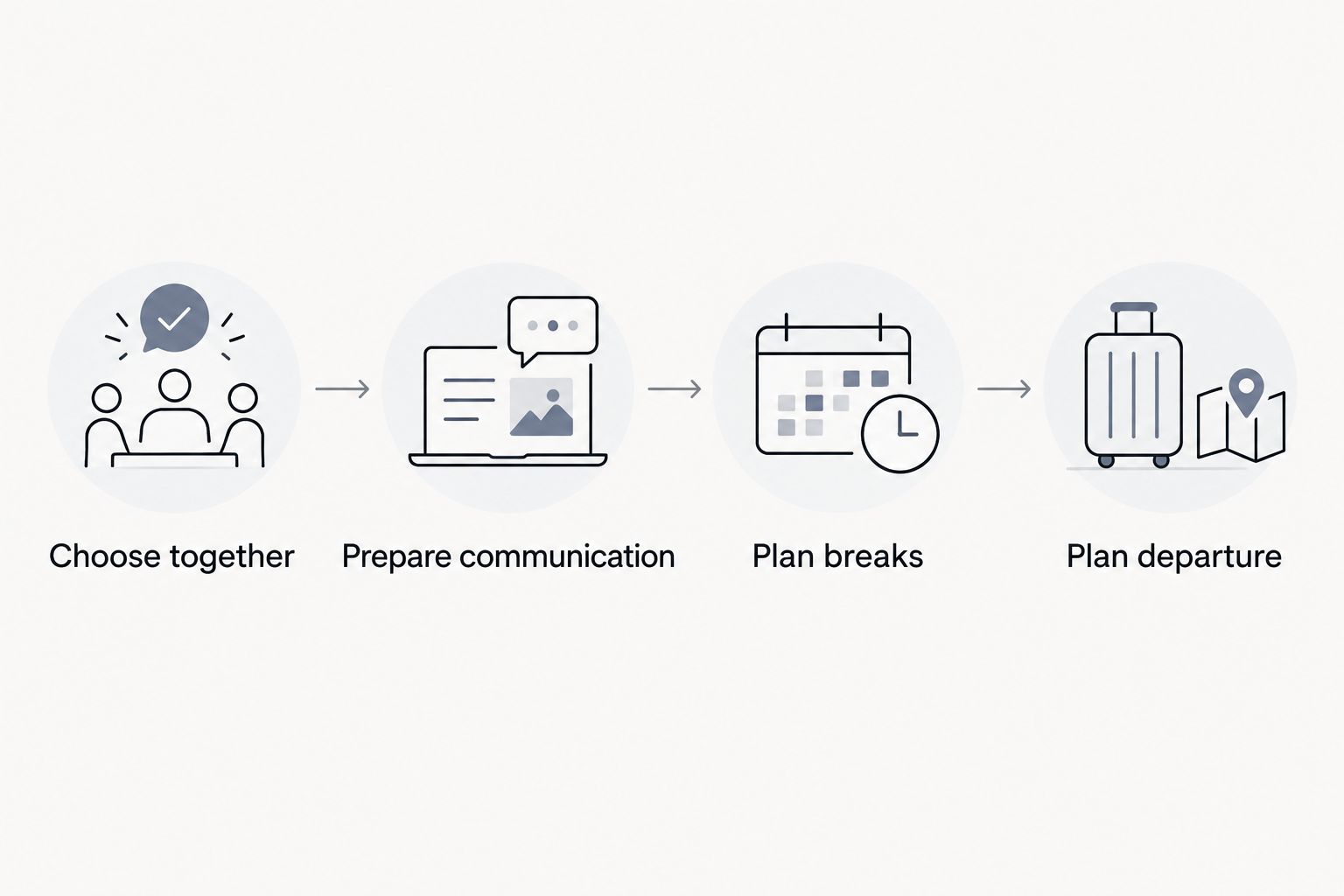
Turn the confirmed details into a short plan your family can actually use. Keep the sequence simple: arrival, a chosen experience, a break, and departure.
- Choose together. Show your child museum-provided pictures or descriptions when useful. Offer a meaningful choice about what to see, and accept that interest can change on the day.
- Prepare communication. Keep your child’s usual communication method accessible, including an AAC device, gestures, pictures, or speech. Make requesting a break or leaving as easy to communicate as choosing an exhibit.
- Plan breaks. Record the pause location the museum confirmed and a backup outside the building. Ask about food and drink rules before making a snack part of the indoor plan.
- Plan departure. Explain what happens if your child wants to stop. Agree which adult handles belongings and which adult stays with your child if you are visiting with another caregiver.
Expected result: Your outing note contains the entry instructions, chosen experience, break plan, and departure plan. Another caregiver can understand it without needing the full history of your research.
Match preparation to your child’s age and preferences. These are planning suggestions, not developmental requirements:
- Ages 2–5 years: Use a familiar way to show what happens next, and keep caregiver support close. Choose an experience your child already enjoys rather than expecting interest in a whole collection.
- Ages 6–12 years: Invite your child to choose an exhibit and help identify a break signal. Discuss waiting and transitions using the communication approach your child understands.
- Ages 13–18 years: Include your teen in decisions about the destination, company, and support. Ask how they want adults to help, and respect preferences about privacy and independence.
Avoid making eye contact, stillness, or spoken conversation conditions for participation. Your child can show interest through movement, observation, an AAC message, or returning to the same object.
Repeat the workflow when your plans change
For a repeat visit in 2026, reuse the structure—not every old answer. A new date, exhibition, session, or family group deserves another check of the details affected by that change.
Keep what you learned about your child separate from the museum’s arrangements. Your child’s preference for a particular gallery is useful preparation; a previous entry instruction still needs checking when you book a different event.
- Date changes: Recheck the intended session, reservation instructions, and journey.
- Destination changes: Repeat the admission and sensory checks rather than transferring assumptions between museums.
- Family changes: Confirm the entry arrangements for everyone attending and agree who supports each child.
- Child preferences change: Replace an exhibit or activity your child no longer wants. A familiar plan should offer reassurance, not become an obligation.
Add a friend without adding pressure
A shared outing can start with a common interest rather than an expectation to socialize throughout the visit. Invite another family to meet at a confirmed location and agree that either family can leave separately.
Best for: Families who want company while preserving different break and departure needs. The benefit is a shared experience; the limitation is coordinating different preferences without turning one child’s plan into everyone’s rule.
Offer connection without demanding it. Children can look at the same object, share an observation, or explore nearby without being required to talk or play together.
Troubleshooting
Pass information and museum instructions disagree
Do not choose whichever answer is more convenient. Explain the discrepancy to the museum and the contact listed with your pass, naming the exact date and session. Keep the clarification with your visit plan before setting out.
A sensory-friendly session has separate booking instructions
Ask how those instructions interact with your cool culture family pass. Do not treat pass participation as a reservation confirmation. Complete only the process the museum confirms for that session, and save any confirmation you receive.
Your child wants to leave before the planned exhibit
Follow the departure plan rather than making the exhibit a condition for leaving. Once your child is comfortable, ask what they want to share about the experience. Record a useful adjustment without treating a short visit as a failure.
The space feels different from the description
Move to your planned pause location or leave if needed. Ask staff about the specific issue—such as unexpected audio or an inaccessible route—instead of assuming another room will solve it. Update your notes with what happened on that visit, not a permanent judgment about the whole museum.
Siblings want different experiences
Agree on choices before entering and allow separate routes only when adult supervision supports them. Do not assign a sibling responsibility for managing another child’s needs. If splitting up is not practical, choose a shared activity or end the visit together.
Customize your workflow
Keep a short 2026 family outing note with what your child chose, what felt comfortable, and what you would change. Ask your child first when possible; an adult’s impression does not replace the child’s account.
You can use the same planning questions for other Brooklyn community activities: What will happen? How can my child participate? Where can we pause? How do we leave?
Autism Learn & Play provides autism services, community programs, and online classes for children ages 2–18. These are separate from museum admission arrangements, and participation does not establish access to a Cool Culture destination or event.
For questions about the nonprofit’s own programs and your family’s interests, use the Autism Learn & Play contact form. Describe your child’s age, preferred activities, and support needs without assuming a particular group format or museum partnership.
FAQ
How do I use a cool culture family pass for a sensory-friendly museum outing?
Confirm the pass arrangements for your exact destination and visit, then check the museum’s sensory supports separately. Ask whether the intended session requires a reservation and what you need to bring.
Does a Cool Culture pass automatically include sensory-friendly events?
Do not assume a Cool Culture pass includes a particular sensory-friendly event. Ask the museum how your pass applies to that exact session and whether separate booking steps are required.
Do I need to connect my pass to an app?
This planning workflow does not require an app connection. Follow the instructions supplied with your pass and keep confirmed museum details in a paper note or your existing calendar.
Is a sensory-friendly session always better than a regular museum visit?
No single visit format is best for every autistic child. Compare the museum’s stated adjustments, participation expectations, and access arrangements with your child’s preferences before choosing.
Can my autistic teen help plan the museum trip?
Yes—invite your teen to choose interests, company, and preferred support. Ask how they want help during the visit and include their preferences about breaks, privacy, and leaving.
What should I do if my child wants to leave the museum early?
Use your departure plan and leave without making completion of an exhibit a requirement. Later, invite your child to share what they liked or wanted changed through their preferred communication method.
Does Autism Learn & Play confirm Cool Culture museum admission?
Ask Cool Culture and the destination museum to confirm pass and admission arrangements. Autism Learn & Play provides autism services, community programs, and online classes for children ages 2–18; direct questions about those offerings to the nonprofit.
One last thing
Make leaving a normal part of the plan, not an emergency exception. Before your next 2026 visit, show your child how to request a break or departure using their preferred communication method. Knowing that the outing can end gives your child a real choice throughout the experience.
Related guides
- Can siblings join autism community programs together?
- Family support groups for autism in Brooklyn
- Social skills games for autistic teens