
Yes—your autistic child can join a typical summer camp with support when the camp can meet their individual communication, sensory, supervision, and personal-care needs. An inclusive label alone does not establish that fit; you need clear answers about who provides support and what happens during difficult moments. For summer 2026, choose a camp around your child’s interests and comfort, not an expectation that they must manage without help.
- Can my autistic child join a typical summer camp with support? Yes, when the camp can meet their individual needs.
- Ask who handles communication, sensory breaks, personal care, and safety before enrolling.
- Choose shared interests and welcoming peers over pressure to participate in every activity.
- Autismlearnplay offers Brooklyn autism community programs; ask directly about individual fit, not assumed summer camp services.
Can my autistic child join a typical summer camp with support?
Yes, when the support plan matches the actual camp day. Ask the director to explain arrival, group activities, meals, bathroom access, transitions, and pickup—not just describe the camp as welcoming.
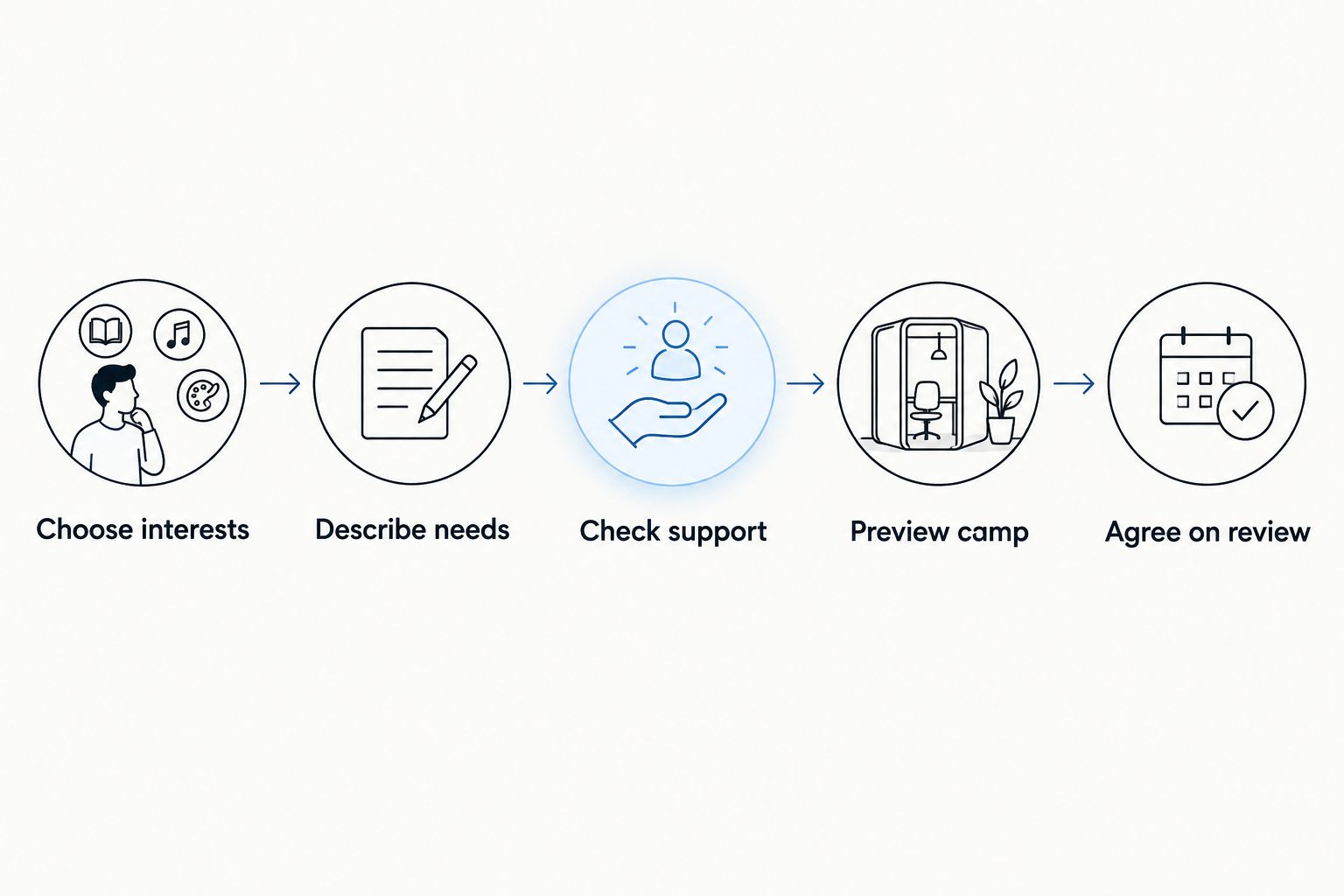
Use this sequence before making a decision:
- Choose interests. Start with activities your child enjoys, including activities they prefer to watch before joining.
- Describe needs. Explain how your child communicates, requests breaks, and gets help.
- Check support. Ask who will provide each support and who covers that person’s absence.
- Preview camp. Request a visit, photos, or a walkthrough of the daily routine.
- Agree on review. Decide how you and the camp will discuss what is working and what needs to change.
If school-based supports offer useful starting points, read about connecting summer programs to your child’s IEP meeting. Use that information to explain your child’s needs rather than assuming school arrangements automatically carry into camp.
Why this matters
Summer camp can be about belonging: sharing an interest, recognizing familiar faces, or enjoying an activity alongside other children. Your child does not need to speak, make eye contact, or join every group game to deserve inclusion.
For your 2026 search, separate a friendly welcome from a workable plan. A director’s willingness to listen matters, but specific arrangements tell you what your child can expect. Ask for examples tied to your child’s day rather than accepting general reassurance.
Which camp arrangement fits your child?
Compare arrangements by the support your child needs, not by which option sounds more independent. These are planning options to discuss with providers, not confirmed offerings at any particular camp.
| Arrangement | Best for | Potential benefit | Limitation to check |
|---|---|---|---|
| Typical camp with agreed accommodations | Children whose needs fit the camp’s staffing and environment | Access to shared-interest activities with peers | Staff must explain how accommodations work throughout the day |
| Typical camp with a dedicated support person | Children who need individualized assistance during camp activities | A clearly assigned adult can provide agreed support | Permission, responsibilities, coverage, and coordination need confirmation |
| Specialized summer program | Children needing an environment organized around more individualized support | Support can be central to the program’s structure | The label does not establish fit; check activities, staffing, and age grouping |
| Shorter community activities | Children who prefer a smaller starting commitment | Families can explore interests without choosing a full camp schedule | Separate activities do not necessarily provide a full-day care arrangement |
Choose the arrangement that supports participation without requiring your child to hide distress. A typical camp is not automatically the better choice, and a specialized setting is not a step backward.
Typical camp with agreed accommodations
Ask how staff would adapt a specific activity. For example, discuss whether your child can watch a noisy game from a quieter location, use their communication device, or take a break without losing the opportunity to return.
The strength of this arrangement is access to the activities your child wants. Its limitation is that an agreement on paper still needs staff who understand their responsibilities during busy transitions and shared activities.
Typical camp with a dedicated support person
If your child needs individualized assistance, ask whether an outside support person is permitted and what that person can do. Clarify responsibility during meals, bathroom routines, trips, swimming, and staff handovers before you commit.
A dedicated adult does not replace camp-wide inclusion. Ask how counselors will continue speaking directly to your child and helping them participate, rather than directing every interaction through the support person.
A specialized program or shorter community activity
Consider a different setting when a camp cannot explain how it will meet your child’s essential needs. Starting with a shorter activity is also a valid choice—not a test your child must pass before earning a place elsewhere.
Check the actual experience. A program’s name does not tell you whether its noise level, activities, peer group, communication supports, or expectations suit your child.
Why the right summer camp support varies
For summer 2026, build your questions around these factors rather than a diagnosis alone:
- Communication: Explain how your child says yes, refuses, asks for help, and expresses discomfort, including through gestures or a communication device.
- Sensory environment: Ask about amplified music, crowded rooms, whistles, clothing requirements, and access to a quieter space.
- Transitions: Discuss moving between activities, waiting, changes in plans, and getting on or off transportation.
- Personal care: Clarify support for eating, toileting, changing clothes, and any health-related routines the camp must address.
- Safety and supervision: Describe relevant concerns around exits, water, unfamiliar spaces, or difficulty communicating an urgent need.
- Interests and peers: Look for activities your child wants and age-appropriate opportunities to connect without forced conversation or touch.
Describe what helps as well as what is difficult. For example, explain whether your child prefers a spoken reminder, a picture of the next activity, a familiar object, or time to observe.
What should I ask the camp director before enrolling?
Ask the director to walk through a realistic situation: your child becomes uncomfortable during a loud activity and wants to leave. Who notices, how can your child communicate, where can they go, and who stays with them?
Then ask these practical questions:
- Who receives my child’s support information, and how will substitute staff receive it?
- Can my child keep their communication device available throughout the day?
- What happens if my child declines an activity or needs a break?
- How do you respond to distress without shaming or punishing the child?
- Who helps with personal care, and how is privacy protected?
- How will you communicate concerns and adjustments with our family?
- What changes during field trips, transportation, or water activities?
Ask for the agreed arrangements in writing. Keep the wording concrete enough that another staff member could understand what to do. For 2026 enrollment, confirm current arrangements directly rather than relying on a previous family’s experience.
How should support change with my child’s age?
Age is a planning guide, not a measure of ability. Children of the same age can have different communication, sensory, and personal-care needs, so use these examples as conversation starters rather than eligibility rules.
Ages 2–5 years: ask about care routines and separation
For children ages 2–5 years, first confirm that the program accepts their age group. Discuss toileting, meals, rest, separation from caregivers, and how staff recognize a request for comfort or a break.
Ask how adults support play without requiring children to join before they are comfortable. A familiar routine or a chance to observe belongs in the discussion if it helps your child.
Ages 6–12 years: ask about transitions and shared interests
For children ages 6–12 years, discuss movement between activities, group instructions, lunch, and opportunities to join peers around an interest. Ask what staff do when a child wants company but does not know how to enter a game.
Let your child help choose activities in their preferred communication style. Avoid treating every recreational moment as a lesson or measuring the day only by participation.
Ages 13–18 years: protect choice, privacy, and dignity
For young people ages 13–18 years, confirm age eligibility and whether activities match their interests. Include your teen directly in discussions about assistance, personal information, and how support should look around peers.
Ask about privacy during personal care and how staff handle unwanted attention or exclusion. Support should respect your teen’s age without assuming that being older means needing less help.
Does my child need to speak to attend a typical camp?
Spoken language should not be your only test of camp fit. Ask whether staff can support your child’s existing communication methods and recognize refusal, discomfort, requests, and choices.
Explain how your child uses gestures, pictures, typing, signs, or augmentative and alternative communication, often called AAC. Confirm that communication tools stay accessible during outdoor activities and transitions—not stored away until a scheduled session.
Can my child attend if they need help with toileting?
Your child’s toileting needs require a direct conversation about the camp’s actual personal-care arrangements. Ask who provides assistance, where it happens, how privacy is protected, and what happens when the usual staff member is absent.
Do not assume a dedicated support person can provide every kind of care. Confirm responsibilities with everyone involved before enrollment, including any limits that would prevent your child from attending safely and comfortably.
What if my child enjoys the activities but struggles with the camp day?
Separate the activity from the surrounding demands. Ask whether the difficulty concerns arrival, noise, waiting, meals, transitions, fatigue, or the activity itself, and discuss changes tied to that specific situation.
A shorter schedule or another setting is worth discussing when the full day does not fit. Changing the plan is a response to your child’s needs, not evidence that your child has failed.
Where Brooklyn families can find community support
Autismlearnplay offers autism community programs for Brooklyn families with children ages 2–18. Its stated services also include therapy and online classes; those offerings do not establish that it operates a typical summer camp or supplies camp support staff.
Autismlearnplay is best for Brooklyn families seeking autism community programs rather than a confirmed typical summer camp placement. Ask about your child’s interests, communication preferences, age, and support needs through the website contact form or at info@autismlearnplay.org.
FAQ
Can my autistic child join a typical summer camp with support?
Yes, when the camp can meet your child’s individual needs through clearly agreed support. Confirm communication access, supervision, sensory breaks, personal care, and staff responsibilities before enrolling.
Does my child need to be independent before starting camp?
Independence is not the right stand-alone test for camp fit. Identify the assistance your child needs and ask whether the camp can provide or accommodate it throughout the day.
Can I send a support person to summer camp with my child?
Ask the camp directly whether it permits an outside support person. Confirm that person’s responsibilities, access to activities, and backup arrangements before relying on the plan.
Should I tell the camp that my child is autistic?
Share the information staff need to support your child safely and respectfully, and involve your child in that discussion when appropriate. Describe practical needs and preferences rather than assuming the diagnosis explains everything.
What should I ask about swimming and field trips?
Ask who supervises your child, how communication remains accessible, and how the support plan changes away from the main camp space. Review water activities and transportation separately from the ordinary daily routine.
How do I know whether my child likes camp?
Use your child’s preferred communication methods to ask about specific parts of the day. Consider their choices and signs of comfort or distress alongside staff reports, rather than treating quiet behavior as proof of enjoyment.
Does Autismlearnplay provide summer camp support staff?
Ask Autismlearnplay directly about your request; its stated offerings include autism therapy services, community programs, and online classes, not confirmed summer camp staffing. Describe the support you are seeking through the website contact form or info@autismlearnplay.org.
One last thing
For summer 2026, ask one final question: What happens when my child says no? A specific answer about choice, breaks, safety, and returning to activities tells you more than a general promise of inclusion.
Your child deserves a summer with room for enjoyment, friendship, and their own way of participating. Choose adults who can explain how they will make that possible without promising that every day will be easy.
Related guides
- Summer programs for autistic teens
- Can siblings join autism community programs together?
- Family support groups for autism in Brooklyn