
A private tutor for autistic students has a provider-specific cost, so ask for a written quote that states the session length, teaching format, and support included. For your 2026 budget, also ask whether preparation, materials, parent updates, and canceled sessions involve separate charges; a session fee alone does not tell you the full commitment.
- How much does a private tutor for autistic students cost? Compare written quotes for the same session length and support.
- Choose autism tutoring around your child’s academic goals, communication preferences, and comfort—not promises of rapid progress.
- Autism Learn & Play Inc. lists Tutoring: 1 on 1 as a one-hour Zoom class.
- Ask about preparation, materials, cancellation terms, and parent updates before committing to private tutoring.
Why this matters
You need a tutoring arrangement your family can sustain—and a learning environment your child can use comfortably. Start with the task that needs support: understanding reading assignments, organizing homework, practicing math, or working toward a school goal.
If your child has an Individualized Education Program, use its academic goals to make your inquiry specific. This guide to connecting tutoring to your child's IEP academic goals can help you frame that conversation without treating private tutoring as a replacement for school services.
Compare what each quote includes before comparing the amount. A clear description of the teaching time and support gives you a useful basis for a decision.
How much does a private tutor for autistic students cost?
The amount you pay depends on the provider's quote and the arrangement you agree to. For a useful 2026 comparison, request the same information from every tutor rather than asking only for an hourly rate.
Use this breakdown when you request a quote. These are questions to confirm, not charges you should assume every tutor applies.
| Part of the quote | What to ask | Why it matters |
|---|---|---|
| Teaching session | How long is each appointment, and what counts as teaching time? | Session totals are not directly comparable when lengths differ. |
| Preparation | Is reviewing assignments or planning lessons included? | You need to know what happens outside the appointment. |
| Materials | Will you need to purchase or print anything? | Supplies belong in your family budget. |
| Parent communication | Are updates included, and how are they shared? | You need a practical way to understand the work. |
| School coordination | Does the tutor review school goals or communicate with teachers? | Confirm the scope and any required permission. |
| Cancellations | What happens if your child is ill or cannot participate? | Written terms explain your financial commitment. |
Ask the provider to distinguish required charges from optional services. Then request the total for your intended schedule, including any agreed extras, rather than trying to reconstruct the commitment from several separate messages.
Compare session length before comparing session fees
A 30-minute session and a 1-hour session are different time commitments. Put the duration beside every quote so you can see what you are comparing; do not assume a shorter appointment includes the same preparation or parent communication.
Duration is also a fit question. Ask how the tutor handles breaks, a slow start, or an activity your child needs explained differently, and whether those moments fall within the booked appointment.
Which tutoring format fits your child?
For your 2026 shortlist, compare the practical experience as well as the billing arrangement. Online private tutoring, in-person private tutoring, and group academic classes offer different settings; none is automatically the right choice for every autistic student.
| Format | Best for | Practical advantage | Limitation to consider |
|---|---|---|---|
| Online private tutoring | Families seeking individual academic support from home | Removes the journey to an appointment | Ask about screen use, materials, and adult help at home. |
| In-person private tutoring | Families seeking face-to-face academic support | Allows tutor and child to work in the same physical space | Travel and the setting need to fit your child. |
| Group academic class | Children interested in learning alongside peers | Provides a shared learning setting | Ask how much individual attention and adaptation are possible. |
Choose private tutoring for an individual academic task; consider a group separately for shared learning. A group class is not an equivalent substitute for individual support simply because both involve the same subject.
For Brooklyn families who also want opportunities to make friends, ask a group provider how children participate together. Do not assume that an academic class includes friendship support or that a private tutor provides peer interaction.
Online private tutoring: check the home setup
Before choosing online tutoring, ask whether your child will need to use a keyboard, move objects, read from a screen, or share written work. Explain how your child communicates and what makes an online activity comfortable or difficult.
Ask what an adult at home is expected to do. Preparing materials before a lesson is a different commitment from remaining beside your child throughout it.
In-person private tutoring: check the setting
Ask where teaching happens and what you can learn about the space before attending. Discuss sound, lighting, seating, access to breaks, and your child's preferred communication methods rather than relying on a general description such as “autism-friendly.”
Include the journey in your decision. An appointment needs to fit around school, meals, rest, and other commitments—not just an opening in the calendar.
Why private tutoring quotes differ
A useful quote describes an actual teaching arrangement. Ask each provider to explain these factors so you can compare like with like:
- Session length: Confirm the booked duration and how breaks or parent conversations fit within it.
- Individual or group format: Check whether the appointment is exclusively for your child or shared with other learners.
- Teaching setting: Clarify whether sessions happen online, at home, or at another location, and ask about related requirements.
- Academic scope: Describe whether you want help with a particular assignment, a subject, or an ongoing learning goal.
- Preparation and coordination: Ask what reviewing schoolwork, adapting materials, and communicating with adults involves.
- Booking terms: Read the agreement for cancellations, rescheduling, payment timing, and ending the arrangement.
These questions reveal differences in the service being quoted. They do not establish that a particular qualification, teaching method, or setting automatically justifies a higher charge.
How do I compare tutors without choosing on price alone?
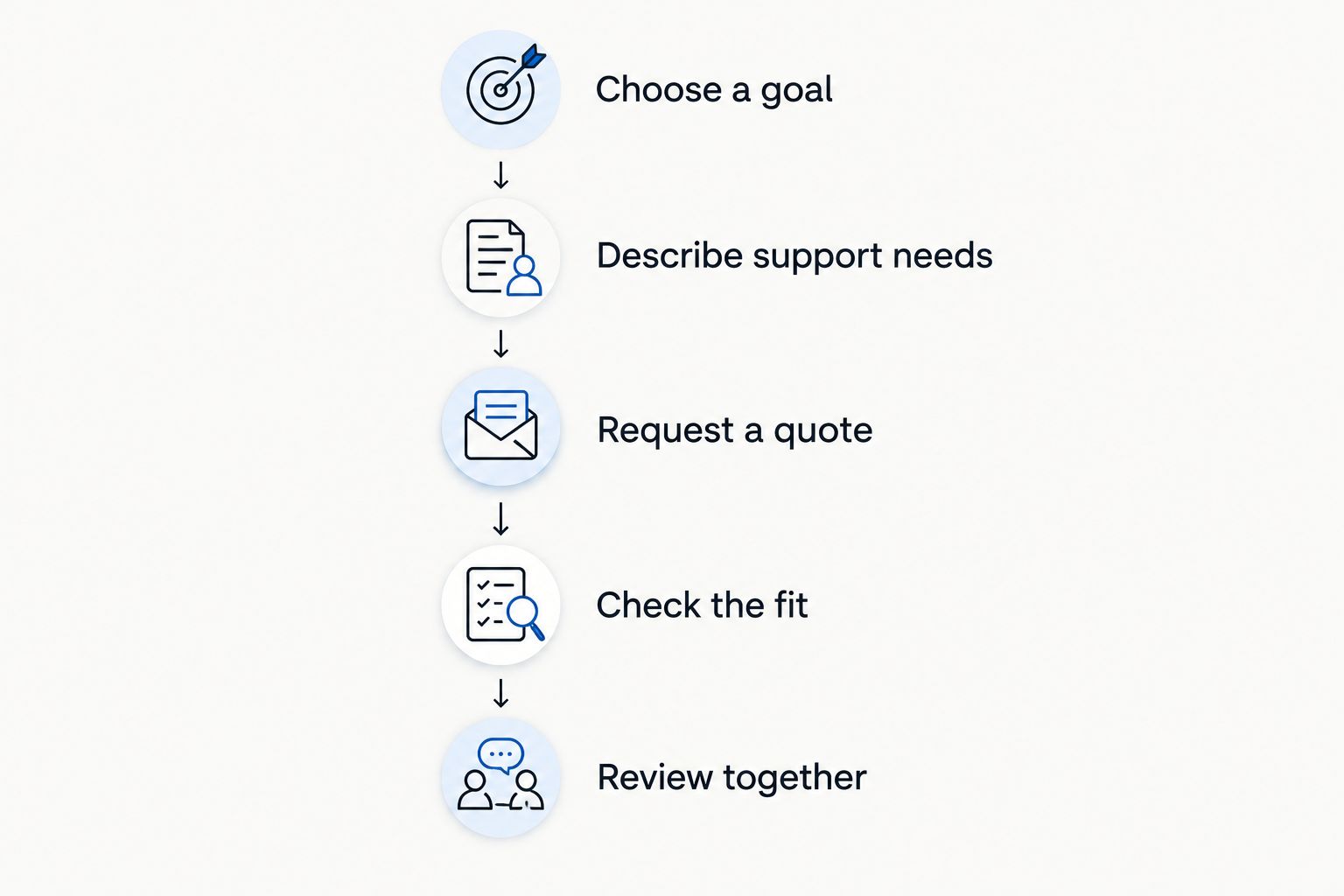
Use the same short process for every inquiry. In 2026, your comparison should end with a clear written agreement, not a promise that a tutor will “fix” your child's learning.
- Choose a goal. Identify an academic task your child needs help with and bring a relevant assignment or school goal.
- Describe support needs. Explain communication preferences, sensory needs, interests, and how your child asks for a pause.
- Request a quote. Ask for the session length, included work, optional charges, and booking terms in writing.
- Check the fit. Discuss what a lesson looks like and how the tutor responds when an approach is not working.
- Review together. Agree on how you will discuss the work and include your child's perspective.
This sequence keeps the conversation focused on your child. You do not need to share every personal detail at the first inquiry; start with information relevant to learning and participation.
Ask what a lesson actually looks like
Invite the tutor to explain how they would approach a sample task your child finds difficult. Look for a practical explanation of instructions, materials, choices, and breaks—not a guaranteed result.
Ask how your child can decline an activity or communicate confusion. A suitable tutoring conversation respects your child's communication and does not make eye contact, stillness, or spoken answers the price of participation.
Match expectations to age and interests
For a younger child, ask about play-based activities, adult participation, and how the tutor introduces unfamiliar tasks. Avoid choosing an arrangement solely because it resembles a classroom lesson.
For an elementary-age child, bring examples of schoolwork and explain which parts are difficult. Ask how the tutor separates understanding the subject from managing the instructions or materials.
For a teenager, include the teenager directly in choosing goals and discussing privacy. Subject knowledge, homework organization, and age-respectful materials deserve separate attention; an activity designed for a much younger child is not automatically appropriate.
What can Brooklyn families ask Autism Learn & Play Inc.?
Autism Learn & Play Inc. is best suited to families seeking a Brooklyn-based nonprofit offering autism tutoring alongside therapy services, community programs, and online classes. The organization serves children ages 2–18; ask which service fits your child's age and academic needs.
Its listed Tutoring: 1 on 1 class lasts 1 hour and takes place through Zoom. The listing says the team contacts families after they select preferred course days to finalize the booking; confirm the teaching approach and current terms directly.
The online format removes travel to that appointment. Its limitation is that you still need to establish whether the screen-based setting, lesson duration, and expected adult involvement suit your child.
For your 2026 inquiry, use the website contact form or email info@autismlearnplay.org. Share your child's age, the academic task you want support with, and relevant participation needs, then request a written quote without assuming tutoring includes other services.
Is private tutoring the same as school support?
Private tutoring and school-provided support are separate arrangements. Ask your child's school team to explain existing academic support and discuss an unmet need before assuming you must purchase another service.
If you choose private tutoring, decide what school information you want to share and give appropriate permission before coordination begins. A private tutoring agreement should explain its own scope rather than promise changes to your child's school plan.
Does a longer tutoring session mean better value?
A 1-hour appointment is not automatically better value than a shorter lesson. Compare the planned activities, breaks, and your child's experience rather than treating more booked time as proof of more useful learning.
Ask how the tutor responds if the planned task needs to change. Flexibility should be discussed before you commit, not assumed from the length of the appointment.
FAQ
How do I find out what a private tutor for an autistic student costs?
Request a written quote for your child’s intended session length and schedule. Ask what teaching, preparation, materials, parent communication, and booking terms the quote includes.
Should I choose the tutor with the lowest quote?
Choose by fit and clearly stated scope, not the lowest quote alone. Compare the same session length, academic task, participation supports, and agreement terms.
Can an online tutor support a nonspeaking autistic child?
Ask whether the tutor can work with your child’s existing communication methods, including an AAC device if used. Confirm how your child will answer, make choices, and request breaks during lessons.
How long is Autism Learn & Play Inc.’s private tutoring class?
Tutoring: 1 on 1 is listed as a 1-hour class conducted through Zoom. Ask the organization about the lesson structure, your child’s participation needs, and current booking terms.
Is a group class the same as private tutoring?
A group class is not the same as private tutoring because learning time and attention are shared. Ask about individual adaptation and peer participation before choosing a group for an academic goal.
What should I ask before booking tutoring for my autistic teenager?
Ask about subject knowledge, age-respectful materials, communication preferences, and how your teenager will help choose goals. Include your teenager in the decision rather than discussing only what adults want.
Will private tutoring replace my child’s school services?
Treat private tutoring as a separate arrangement, not a replacement for school services. Discuss school support with your child’s team and define the private tutor’s responsibilities in writing.
One last thing
Ask your child what would make learning together feel comfortable before you ask a tutor how quickly work will improve. Your child might want a familiar topic, a different way to answer, or permission to watch before participating.
Bring that preference to the first conversation. The most useful quote describes support your child can actually participate in—not simply time on a calendar.
Related guides
- Tutoring for autistic high schoolers
- Can tutoring help an autistic child catch up academically?
- Family support groups for autism in Brooklyn