
Yes, tutoring can help an autistic child catch up academically when instruction targets specific learning gaps and respects how the child communicates, processes information, and participates. It cannot guarantee grade-level performance or replace school-based support. This 2026 guide explains how to choose useful goals, recognize progress, and protect your child’s confidence along the way.
- Can tutoring help an autistic child catch up academically? Yes, with individualized instruction; grade-level catch-up is not guaranteed.
- Connect autism tutoring to specific reading, writing, or math goals rather than more homework alone.
- Autism Learn & Play offers tutoring for families exploring academic support; confirm the fit before enrolling.
- Track independent learning and comfort, not just completed worksheets or time spent studying.
Why this matters
Your child deserves support that makes learning more accessible, not a longer school day filled with pressure. Before adding tutoring in 2026, separate the academic skill your child needs to learn from the conditions your child needs to show that skill.
A child who answers aloud but struggles to write needs a different plan from a child who does not yet understand the lesson. Start by connecting tutoring to your child’s IEP academic goals if your child has an Individualized Education Program, or IEP.
The goal is useful learning with growing independence—not making your child appear less autistic. Friendship, play, rest, and time with family still belong in the week.
Can tutoring help an autistic child catch up academically?
Yes, individualized tutoring can provide targeted instruction and opportunities to practice skills your child has not yet mastered. The useful question is not simply whether tutoring works, but whether the teaching addresses the actual obstacle.
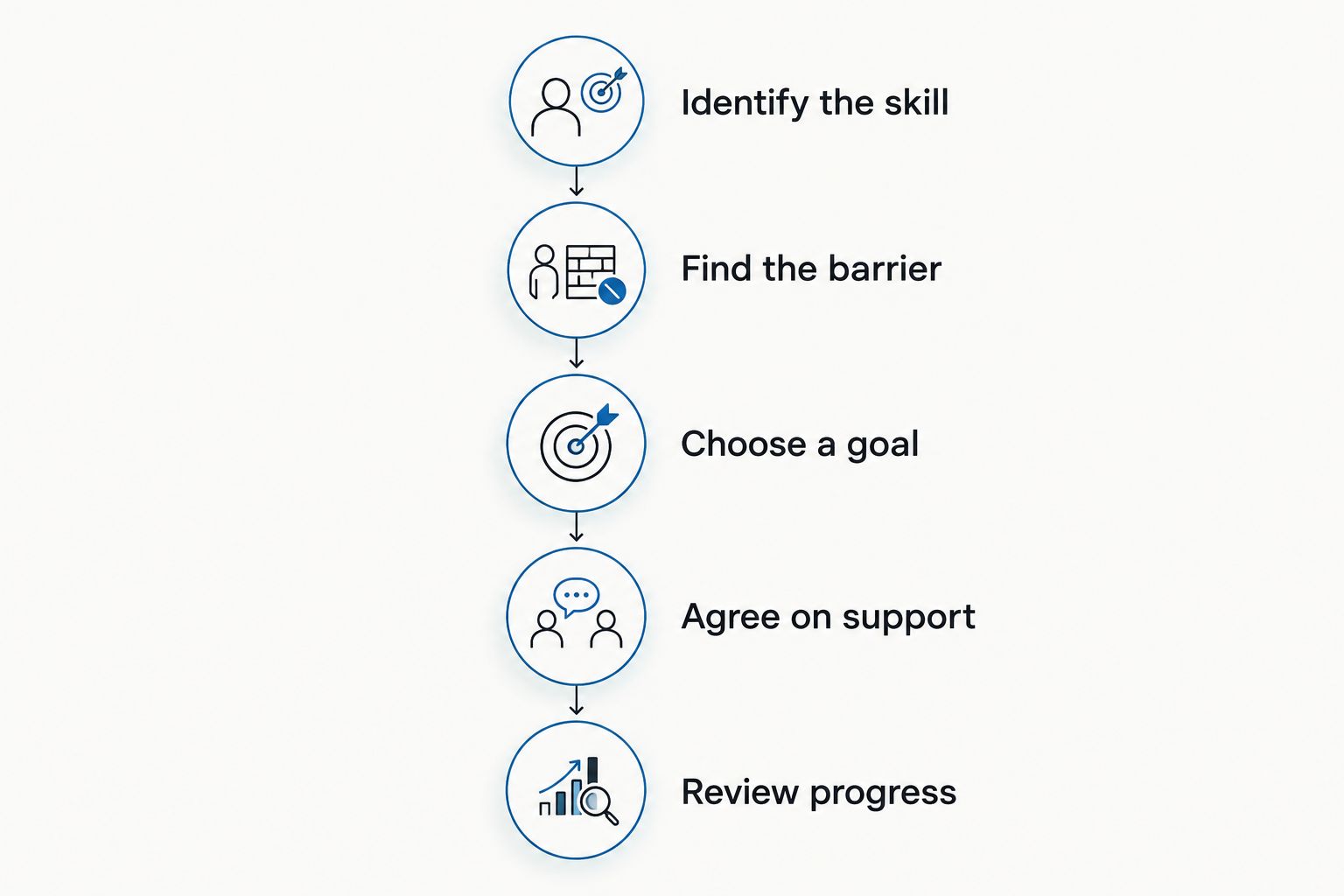
Use this process to decide what support to try:
- Identify the skill. Ask the teacher for a specific example: understanding a passage, adding quantities, organizing a paragraph, or following written directions.
- Find the barrier. Ask whether the difficulty involves understanding, communication, handwriting, task organization, or the learning environment. Do not assume every unfinished task reflects missing knowledge.
- Choose a goal. Describe something observable, such as explaining a story’s main idea using speech, typing, pictures, or an AAC device.
- Agree on support. Tell the tutor which communication tools, breaks, and instruction formats your child uses. Ask how those supports will remain accessible.
- Review progress. Compare work over time and record how much help your child needed. Change the approach when the evidence shows a mismatch.
A finished assignment is useful information, but it does not establish independent understanding. Ask the tutor to distinguish what your child completed alone from what required modeling or prompting.
Which type of academic support fits your child?
Tutoring, homework help, and school-based support serve different purposes. Use this comparison for your 2026 planning, then ask each provider what the actual service includes; a label alone does not tell you how instruction works.
| Support option | Best for | Main benefit | Limitation to check |
|---|---|---|---|
| Individual tutoring | A clearly identified academic skill | Focused teaching and practice around that skill | Does not replace school services or guarantee catch-up |
| Homework help | Understanding and completing current assignments | Support with the work already assigned | Completion alone does not show that underlying gaps are closing |
| School-based support | Accessing instruction during the school day | Connects support to classroom learning | Families still need clear goals and information about progress |
| Online tutoring | Families considering instruction from home | Removes the trip to an in-person session | Screen participation and home setup need to fit the child |
Choose the purpose before choosing the format. If your child needs instruction in reading, a session devoted entirely to finishing tomorrow’s worksheet does not address that goal.
For Brooklyn families, include the whole afternoon in your decision. Travel, school demands, meals, and recovery time matter when deciding whether another activity belongs on the calendar.
Reading tutoring: identify the skill beneath the assignment
Reading involves more than saying words aloud. Ask whether the goal concerns recognizing words, understanding vocabulary, following the meaning of a passage, or communicating an answer.
For example, if your child reads a passage aloud but cannot explain it, ask the tutor to examine comprehension rather than simply assigning more oral reading. If speaking is difficult, allow another way to demonstrate understanding.
Best for: children with a specific reading goal that the tutor can explain and assess. The benefit is a focused plan; the limitation is that practice aimed at the wrong reading skill leaves the original question unanswered.
Math tutoring: separate understanding from task demands
Ask the tutor to examine where the difficulty starts. Does your child understand the quantities but struggle with the wording of a problem, or complete a familiar procedure without understanding when to use it?
Request examples that distinguish the math concept from reading, writing, or organization demands. Let your child use an accessible response method so the session measures the intended skill.
Best for: children who need targeted help with an identified math concept or procedure. Focused explanation offers a clear purpose, but repeated worksheets alone do not establish whether your child understands the concept.
Writing tutoring: separate ideas from putting words on paper
Writing assignments ask children to coordinate ideas, language, organization, and a way to record their response. Ask which part needs instruction before treating the whole task as a writing gap.
If your child explains an idea clearly but struggles to record it, discuss typing, dictation, or other established supports with the school team. A tutor should know which supports your child already uses.
Best for: children with a defined goal in planning, composing, or revising written work. Targeted practice provides direction; its limitation is that academic tutoring alone does not address every communication or motor-related barrier.
Why tutoring progress varies
Your child’s starting point and the teaching plan matter more than a broad promise to “catch up.” Keep these factors in view:
- The learning goal: “Improve schoolwork” is too broad to evaluate. Name the skill and the situation in which your child will use it.
- Communication access: Speech should not be the only accepted response when your child uses typing, pictures, gestures, or AAC.
- Sensory comfort: Ask about sound, lighting, seating, movement, and breaks rather than assuming a quiet room meets every need.
- Teaching fit: Ask the tutor to explain how instruction changes when your child does not understand the first explanation.
- Coordination with school: Share relevant assignments and agreed goals so tutoring does not become disconnected extra work.
- Energy and participation: Consider what your child has already managed that day. Distress is a reason to review the plan, not evidence that more pressure is needed.
These are questions to investigate, not a checklist your child must pass. A supportive plan adjusts the environment and instruction instead of placing every demand on the learner.
How should tutoring change with your child’s age?
Autism Learn & Play serves children ages 2–18 across its therapy services, community programs, and online classes. That age range is not a reason to use the same academic plan for every child.
For younger children, discuss whether play-based early learning, communication support, or school readiness is the appropriate focus rather than formal catch-up tutoring. Use familiar interests and meaningful activities instead of assuming worksheets are the next step.
For elementary-age children, identify the particular reading, writing, or math skill creating difficulty. For teenagers, include the student in choosing goals and materials, and consider assignment planning alongside subject knowledge.
Age-respectful materials matter. A teenager working on foundational reading still deserves topics and presentation that respect their age and interests.
How do you know whether tutoring is helping?
Useful progress includes demonstrating a skill with less help and applying it beyond the practiced example. Keep representative work samples and ask the tutor to describe the support provided, rather than reporting only that the session went well.
Ask whether your child can use the skill with a different question, material, or setting. Also ask your child what feels helpful, using their preferred communication method.
For your 2026 progress notes, use simple headings: skill practiced, support used, independent response, and next adjustment. Avoid turning every family activity into a test; shared reading, games, and outings should still leave room for enjoyment.
What should you ask before booking tutoring?
Ask how the tutor identifies learning needs, supports communication, handles breaks, and reports progress. You need a clear explanation, not a promise that every autistic child follows the same path.
Bring these questions to the conversation:
- What academic skill would you work on first, and why?
- How will my child show understanding without being required to speak or write in a particular way?
- What happens when my child needs to pause or stop?
- How will you distinguish independent work from prompted work?
- How will you coordinate with the school and involve my child in decisions?
Autism Learn & Play is a tutoring option for families seeking online academic support for an autistic child. Its Tutoring: 1 on 1 listing describes a 1-hour session conducted via Zoom. The Reading Class and Math Class listings each describe 30-minute Zoom sessions; those durations describe the listed formats, not a recommended dose for your child.
The online format avoids a trip, but families still need to assess screen participation, communication access, and the home setup. To discuss Autism Learn & Play tutoring, use the website contact form or email info@autismlearnplay.org. Ask about your child’s goals and support needs before deciding whether the format fits.
FAQ
Can tutoring help an autistic child catch up academically?
Yes, tutoring can help an autistic child build academic skills when instruction targets specific needs and provides accessible ways to participate. It does not guarantee grade-level catch-up or replace school-based support.
How long does it take for tutoring to help an autistic child?
There is no single timeline that applies to every autistic child. Agree on a specific skill, compare work over time, and track how much support your child needs rather than relying on a promised deadline.
Is online tutoring a good choice for an autistic child?
Online tutoring is an option to assess against your child’s communication, sensory, and participation needs. Ask how breaks, response methods, and caregiver involvement work before choosing the format.
Can a nonspeaking autistic child receive academic tutoring?
Yes, a nonspeaking autistic child can receive academic tutoring with accessible ways to respond. Ask the tutor how they will support the child’s established communication methods, including AAC when used.
Should tutoring replace services in my child’s IEP?
No, private tutoring does not replace the school-based services in your child’s IEP. Coordinate tutoring with relevant academic goals and discuss concerns about school support with the school team.
What if my child becomes upset during tutoring?
Pause and review the task, environment, communication access, and demands with the tutor. Do not treat completing the session as more important than understanding what your child is communicating.
What academic support does Autism Learn & Play list?
Autism Learn & Play lists Tutoring: 1 on 1 as a 1-hour Zoom session and Reading Class and Math Class as 30-minute Zoom sessions. Contact the organization to discuss whether a listed format suits your child’s needs.
One last thing
Before choosing tutoring in 2026, bring an example of something your child understands or enjoys—not only work that went wrong. Ask the tutor how that strength will inform the first learning goal.
A worthwhile plan should explain both what your child will learn and how your child will be heard. Leave space for friends, community activities, and judgment-free play; academic support belongs within a full childhood, not in place of one.
Related guides
- Tutoring for autistic high schoolers
- Connecting online autism classes to in-person therapy
- Family support groups for autism in Brooklyn