
Tutoring for autistic high schoolers is individualized academic support with the aim of helping teenagers understand coursework, manage assignments, and build independence. This 2026 guide explains how to choose support around your teen’s communication, sensory needs, interests, and own goals—not just unfinished homework.
- Tutoring for autistic high schoolers should address the specific learning barrier, not assume every difficulty comes from autism.
- Autism Learn & Play offers tutoring within a Brooklyn nonprofit serving autistic children ages 2–18.
- Choose subject tutoring for content gaps and organizational support for planning difficulties; some teens need both.
- Protect communication preferences, breaks, and time with friends when building an academic support plan.
Why tutoring matters for autistic high schoolers
High school brings different teachers, longer assignments, and decisions about life after graduation. Your teen might understand a lesson but struggle to begin an open-ended task, explain an answer aloud, or work in a distracting setting. Choose tutoring around the obstacle, rather than treating every unfinished assignment as a knowledge gap.
Autism Learn & Play is a Brooklyn-based nonprofit offering tutoring, therapy services, community programs, and online classes for autistic children ages 2–18. Autism Learn & Play is best for Brooklyn families who want to explore tutoring within an autism-focused nonprofit. Ask directly about subject coverage, teaching approaches, and whether the service fits your teenager’s goals.
Your 2026 support plan should also leave room for friendship, interests, and rest. An academically useful arrangement still needs to fit your teen’s life; completing more work is not the only measure of a good match.
How to build a tutoring plan around your teenager
1. Identify the barrier before choosing support
Start with a conversation, not a placement decision. Ask your teen to show you an assignment that felt manageable and another that felt frustrating. Offer written responses or their usual communication method if talking through the problem feels demanding.
Distinguish understanding from access. A teen who solves equations accurately but cannot track submission dates needs a different starting point from a teen who needs help understanding equations. Both deserve support without blame.
You can begin this review yourself using recent schoolwork. A tutor’s role becomes clearer once you can describe what happens between receiving an assignment and turning it in.
- Ask which part feels difficult: understanding, starting, continuing, or submitting.
- Look for unclear instructions, unfamiliar vocabulary, and missing examples.
- Separate subject knowledge from handwriting or speaking demands.
- Record your teen’s explanation alongside teacher feedback.
2. Set a goal your teen actually values
Choose a practical goal together before adding sessions to the calendar. Your teen might want to understand biology diagrams, plan an essay, or finish schoolwork without a parent directing every move. Grades provide information, but they do not explain which support is helping.
For a manageable starting point, choose one priority subject and review three recent assignments together. These are suggested planning boundaries, not a required assessment. Use the work to identify a skill you can observe rather than a broad goal such as becoming more motivated.
Keep the goal understandable to everyone involved. Your teen should know what tutoring is for and have a say in changing it.
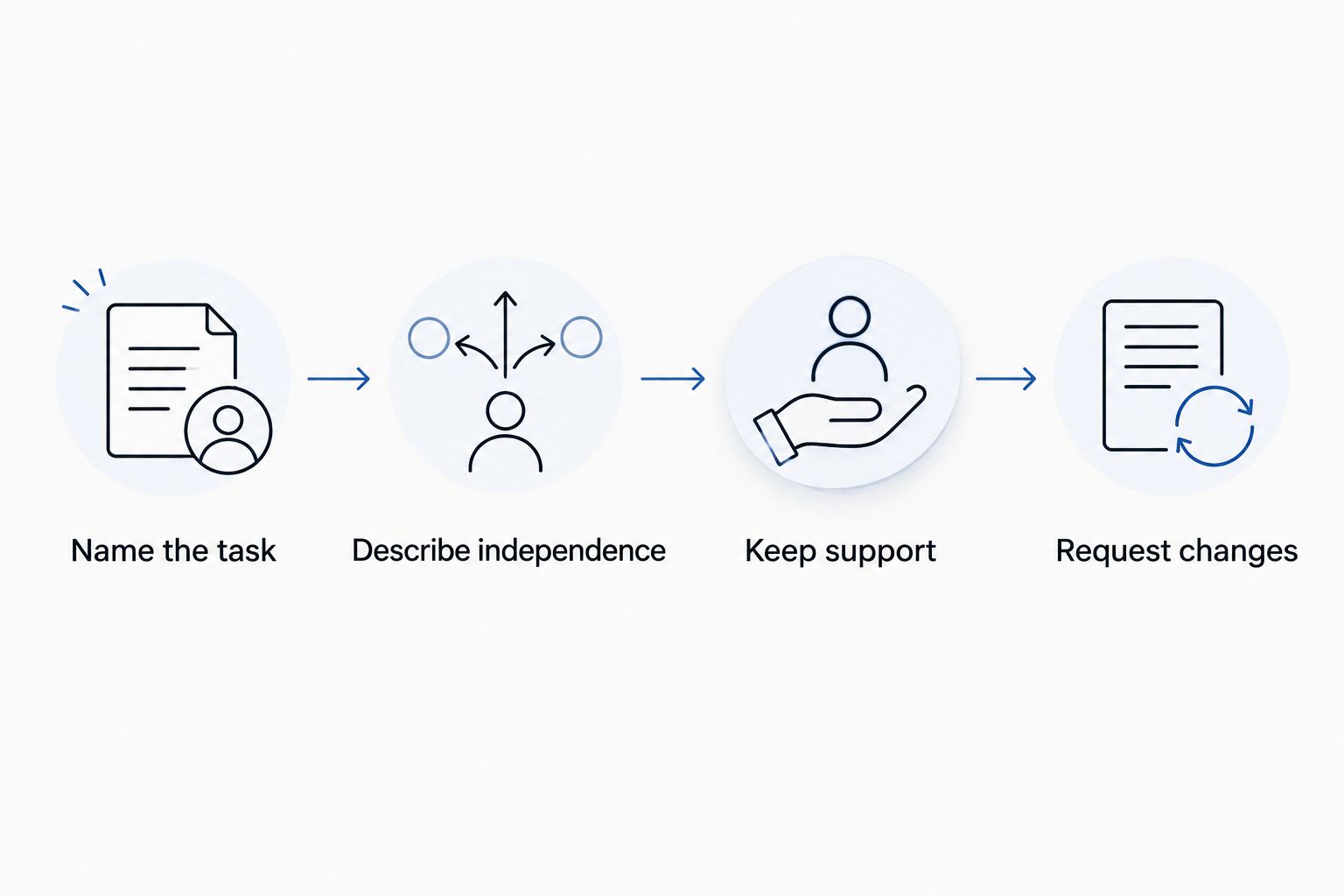
- Name the task your teen wants to handle more confidently.
- Describe what doing it with less help would look like.
- Decide which support should remain available.
- Agree on how your teen can request a change.
3. Check the tutor’s subject knowledge and approach
Begin with school information: course expectations, assignment examples, and feedback from the relevant teacher. These materials give any prospective tutor a concrete starting point. Share personal educational information only with appropriate permission and your teen’s involvement.
Next, ask the tutor to explain how they would teach an actual topic your teen finds difficult. General experience with children does not establish knowledge of high school algebra, literary analysis, or another specific course. Equally, strong subject knowledge does not establish a respectful teaching approach.
Autism Learn & Play offers tutoring as part of its wider services. Ask how its tutoring would address your teen’s particular coursework; the service description alone does not establish coverage for every high school subject.
- Ask about experience teaching the actual course.
- Request an explanation using a sample assignment.
- Discuss written, spoken, visual, or device-based responses.
- Ask how the tutor responds to confusion or a requested break.
- Clarify communication with parents and school staff.
4. Match the setting to your teen’s needs
Before searching for another program, identify what already helps your teen study. Consider lighting, background sound, seating, movement, and how instructions are presented. Ask which conditions your teen prefers rather than assuming that silence or sitting still works best.
For example, propose a 15-minute work block followed by a 5-minute break, then invite your teen to adjust it. This is a scheduling example, not a recommended dose of tutoring. A useful arrangement allows changes when the task or the day feels different.
For Brooklyn families, include the trip itself in the decision. Travel, crowded spaces, and the transition from school to tutoring belong in the planning conversation.
- Ask about lighting, sound, seating, and movement options.
- Check whether instructions can remain visible while working.
- Discuss how breaks begin and where they happen.
- For online support, check audio, typing, and screen-sharing needs.
- Plan the transition home as carefully as the arrival.
5. Build a predictable session without making it rigid
Create a simple agenda together using paper or an ordinary shared document. Start with the goal, work through an example, give your teen a chance to try, and end with a clear next step. A visible plan makes expectations explicit without requiring a specialized app.
Ask the tutor to distinguish teaching from completing homework. Finishing an assignment together is useful only if you also understand what your teen learned and which parts still require help. Keep practice connected to the class while allowing different ways to demonstrate understanding.
Predictability should support choice. If a task is confusing or the setting becomes uncomfortable, the plan needs room to change.
- Preview the session goal in accessible language.
- Show an example before requesting independent work.
- Break broad instructions into visible actions.
- Offer response methods that fit the learning goal.
- End by identifying what comes next.
6. Coordinate school support and protect community time
Start by asking the school which academic supports already exist and how outside tutoring should connect with them. If your teen has an Individualized Education Program, or IEP, review relevant goals and accommodations with the school team. Outside tutoring does not replace the school’s responsibilities under an IEP.
Choose one place to track assignments rather than asking your teen to maintain competing systems. With permission, share the essential instructions and agreed supports with the tutor. Your 2026 plan should make schoolwork easier to manage, not create another administrative task.
Protect activities your teen enjoys, including time with friends. If shared learning appeals to your teen, ask about age fit, interests, participation expectations, and opportunities for breaks before choosing a group.
- Ask teachers which concepts deserve priority.
- Keep assignment tracking in one agreed place.
- Clarify who communicates changes or concerns.
- Reserve time for chosen interests and friendships.
- Avoid treating social participation as a reward for finishing work.
7. Review progress with your teen and adjust
Use a brief record of the task, the help provided, and your teen’s feedback. You do not need a complicated dashboard. Compare similar tasks so that an easier worksheet does not look like progress on a harder skill.
Ask whether your teen can explain the next step, recognize when help is needed, or use a support independently. Also ask how tutoring feels. A plan that produces completed work but leaves your teen unheard needs revision.
If the arrangement is not useful, revisit the goal, teaching method, setting, or provider. Do not respond automatically by adding more sessions.
- Keep examples of comparable work over time.
- Note which prompts or tools were needed.
- Ask your teen what helped and what felt uncomfortable.
- Change the plan when the original barrier remains.
- Recognize progress without making comparisons with other teenagers.
Compare tutoring options for your 2026 plan
The best option matches the task and your teen’s preferred way of learning. These categories describe support arrangements, not confirmed offerings from a particular provider. Ask each provider what its sessions actually include.
| Option | Best for | Main benefit | Key limitation |
|---|---|---|---|
| School-based academic support | Connecting help directly to current classes | Keeps discussion close to teacher expectations | Ask how much individual teaching the arrangement includes |
| Individual subject tutoring | Learning specific course content | Focuses teaching on a defined academic gap | Subject expertise alone does not establish a suitable communication approach |
| Organizational support | Planning, starting, and submitting work | Addresses the steps around completing assignments | Does not replace teaching missing subject knowledge |
| Online tutoring | Teens who prefer learning from a familiar setting | Removes the trip to a tutoring location | Requires a workable technology and communication setup |
| Small-group tutoring | Teens who want learning alongside peers | Provides shared academic activity | Group pace and sensory conditions need careful checking |
Online and individual tutoring can overlap, as can subject teaching and organizational support. Ask what the tutor will actually do rather than choosing by the label alone. For any group arrangement, confirm that the content and activities respect your teenager’s age.
Common mistakes families make when choosing tutoring
Mistaking incomplete work for a lack of effort
An unfinished assignment tells you what happened, not why. Check whether instructions were understood, the task felt manageable, and the response method worked before deciding your teen needs more reminders.
Choosing a program by age range alone
Autism Learn & Play serves children ages 2–18, but that broad range does not describe a particular tutoring session or peer group. Ask about the specific participants, course level, and activities. Teenagers deserve age-respectful materials even when they need support with foundational skills.
Rewarding compliance instead of understanding
Quiet sitting, eye contact, and spoken answers are not the same as learning. Judge the academic skill using a suitable response method. Do not make a preferred appearance of attention the goal of tutoring.
Filling every open afternoon with support
Discuss the whole week before adding appointments. School, travel, homework, interests, and friendships all need space. Ask your teen which commitments feel useful and which leave too little recovery time.
FAQ
What is the best tutoring for autistic high schoolers?
The best tutoring for autistic high schoolers matches the specific academic barrier and respects the teenager’s communication and sensory needs. Check subject knowledge, teaching methods, and your teen’s preferences before choosing a provider.
How do I know whether my teenager needs subject tutoring or organizational help?
Subject tutoring addresses missing understanding, while organizational help addresses planning, starting, tracking, and submitting work. Review an actual assignment with your teen to identify where the difficulty occurs; some teenagers need both kinds of support.
Is online tutoring better than in-person tutoring for an autistic teen?
Neither format is automatically better for an autistic teen. Compare the learning environment, travel demands, communication tools, and your teenager’s preference before choosing.
Can a nonspeaking autistic teenager benefit from tutoring?
A nonspeaking autistic teenager can participate in tutoring through accessible communication methods. Ask the tutor to work with the teen’s established system, including augmentative and alternative communication when used, rather than requiring spoken answers.
Should a tutor follow my teenager’s IEP?
Share relevant IEP goals and accommodations with an outside tutor with appropriate permission so tutoring can align with school support. Outside tutoring does not replace the school’s responsibilities under the IEP.
Does Autism Learn & Play offer tutoring for teenagers?
Autism Learn & Play lists tutoring among its services for autistic children ages 2–18. Ask directly about your teenager’s age, subject, learning goals, and the proposed session format.
What should I ask before choosing a small tutoring group?
Ask about participant ages, academic level, group expectations, sensory conditions, and communication supports. Include your teenager in the decision and clarify how participants can take breaks or decline an activity.
One last thing
Before finalizing your 2026 tutoring plan, ask your teen: What would make schoolwork easier without taking away something you enjoy? The answer gives you a concrete starting point—and keeps support connected to the life your teenager wants.
For questions about tutoring and related services, contact Autism Learn & Play through the website contact form or email info@autismlearnplay.org. Describe the course, the difficult task, and your teen’s preferred supports so the conversation begins with their needs.
Related guides
- Social skills games for autistic teens
- Speech therapy for autistic teenagers
- IEP advocacy resources for autism parents
- Family support groups for autism in Brooklyn