Choose Autism Learn & Play if you want to explore a Brooklyn nonprofit offering therapies, community programs, and online classes; choose Apex ABA if its proposed care plan meets your child's ABA needs better after you confirm the provider, setting, and family involvement. For 2026, the useful distinction is broad community support versus the fit of a specific therapy plan—not a blanket winner.
- Autism learn and play vs Apex ABA starts with your child’s goals, not a provider ranking.
- Autism Learn & Play offers autism therapy services, community programs, and online classes for children ages 2–18.
- Choose Apex ABA only when its confirmed care plan better matches your child’s ABA needs.
- Compare communication support, sensory needs, family participation, and community opportunities before deciding.
Why this matters for Brooklyn families
Your family might need help with communication, a welcoming place to meet peers, support with everyday tasks, or several of these together. Those are different needs. A therapy appointment does not automatically provide a friendship group, and a community activity does not replace individualized therapy when your child needs it.
Start by naming the part of family life you want to support. Perhaps your child wants someone to share a favorite game with, needs a comfortable way to request a break, or wants more independence during an outing.
The best choice is the provider whose actual plan fits that goal while respecting your child's communication, preferences, and boundaries. Keep that standard throughout this 2026 comparison.
At a glance
Use this table as a decision guide. Questions in the Apex ABA column are selection criteria, not promises about its services.
| Dimension | Autism Learn & Play | Apex ABA |
|---|---|---|
| Best for | Families exploring autism therapy services alongside community programs and online classes | Families whose provider-specific ABA plan proves the better fit |
| Service scope | ABA, speech, occupational, music and art therapy, tutoring, and more | Confirm the exact services included in your child's proposed plan |
| Brooklyn connection | Brooklyn-based nonprofit | Confirm the location and service setting relevant to your family |
| Age fit | Serves children ages 2–18 | Confirm eligibility and experience with your child's age |
| Standout feature | Therapy, community programs, and online classes within its stated offering | Identify the concrete feature that meets your child's priority |
| Communication and comfort | Evaluate the specific program and staff approach | Apply the same communication and sensory-support questions |
| Family involvement | Ask how caregivers participate in the selected service | Ask how caregivers participate in the proposed plan |
| Pricing model | Request service-specific payment and coverage terms | Request plan-specific payment and coverage terms |
Broad support favors the nonprofit's stated offering
A family seeking several kinds of support has a clear reason to consider the Brooklyn nonprofit. Its stated services include ABA, speech, occupational, music and art therapy, tutoring, community programs, and online classes.
Autism Learn & Play is a strong starting point for Brooklyn families seeking autism therapy services alongside community programs. That breadth gives you several subjects to discuss without assuming that every service belongs in your child's plan.
The limitation is just as important: a broad service list does not establish how services connect. Ask whether providers communicate, what consent that requires, and who helps your family understand recommendations.
For either organization, request a plain-language explanation of what your child would actually do. A useful answer connects the activity to a goal you recognize, rather than simply naming a therapy approach.
A better-matched ABA plan can favor Apex ABA
Apex ABA becomes the stronger choice for your family when its confirmed proposal better addresses your child's specific ABA needs. That decision requires a conversation about the actual plan—not an assumption based on the organization's name.
Ask the proposed provider to explain:
- What your child would work on and why it matters to them.
- How your child can refuse, pause, or communicate discomfort.
- How staff respond when an activity feels overwhelming.
- How caregivers contribute goals and raise concerns.
- How the team decides whether to continue, adjust, or stop an approach.
Choose Apex ABA for a demonstrably better individual fit, not for an unsupported claim that one organization delivers better results. The same standard applies to any ABA option offered by the nonprofit.
A narrow, well-matched plan can be more useful than a long menu of services your child does not need. Conversely, an ABA plan alone does not answer every question about friendship, recreation, or family community.
Brooklyn roots favor a locally focused starting point
A Brooklyn-based organization is a relevant starting point when your priority is connection close to home. Local community matters beyond the appointment itself: you are also deciding how an activity fits around school, siblings, travel, and your child's energy.
That local connection does not establish where each program takes place. Before planning around any service, ask for its actual setting and how participation works.
For a group or outing, request a description of arrival, the main activity, breaks, and departure. Ask whether a caregiver stays and how a child can leave an activity without being pressured to finish.
Your 2026 decision should reflect the whole outing, not just the scheduled activity. A plan that looks appealing on paper still needs to work for your family's everyday routine.
Age fit requires more than an eligibility range
The nonprofit serves children ages 2–18, but that range does not mean a single group or activity suits everyone. Ask about the specific participants, interests, communication supports, and expectations in the program you are considering.
Use these age bands as conversation prompts, not developmental deadlines:
- Ages 2–5 years: Ask about caregiver presence, familiar play, transitions, and ways to express needs without speech.
- Ages 6–12 years: Ask about shared interests, participation choices, school-day fatigue, and support during group activities.
- Ages 13–18 years: Ask about age-respectful activities, privacy, personal choice, and opportunities to connect around genuine interests.
Apply those questions to Apex ABA as well. Confirm the proposed provider's experience with your child's age and goals rather than treating general eligibility as enough.
For teenagers, include the young person directly in the decision whenever possible. A parent's priority and a teen's priority deserve room in the conversation.
Community opportunities favor an explicit community offering
If your goal is friendship or a sense of belonging, community programs deserve their own place in the comparison. They are part of the nonprofit's stated offering, alongside therapies and classes.
That is a reason to inquire, not a promise of a particular group, outing, or outcome. Ask what the activity involves and whether children can participate through observing, parallel play, conversation, movement, or another comfortable approach.
A useful community opportunity should make sense to your child. A shared interest in drawing, games, or music gives you a concrete starting question; it does not require your child to enjoy every group activity.
For Apex ABA, ask whether the proposed service addresses your community goal directly or whether you would seek that opportunity separately. Do not treat therapy and friendship as interchangeable purchases. Each deserves its own purpose and fit check.
Communication and sensory support have no automatic winner
Neither a provider's name nor a list of therapies establishes how your child will feel during a session. Judge both options by the answers about your child's actual needs.
Describe how your child communicates, including speech, gestures, pictures, or an augmentative and alternative communication device. Ask how staff will recognize a request to stop, a need for help, or a preference for another activity.
Then discuss the environment. Ask about sound, lighting, movement, waiting, physical space, and access to breaks without assuming that either organization offers a particular accommodation.
Comfort and communication are decision criteria, not rewards your child must earn. For your 2026 shortlist, a clear answer about these needs matters more than reassuring language without a practical explanation.
A provider that cannot explain its approach has not answered your question. Keep asking until you understand what participation would look like.
Family involvement is a tie until the plan is specific
Both options should face the same family-participation questions. Do not award either a win based on general language about individualized care.
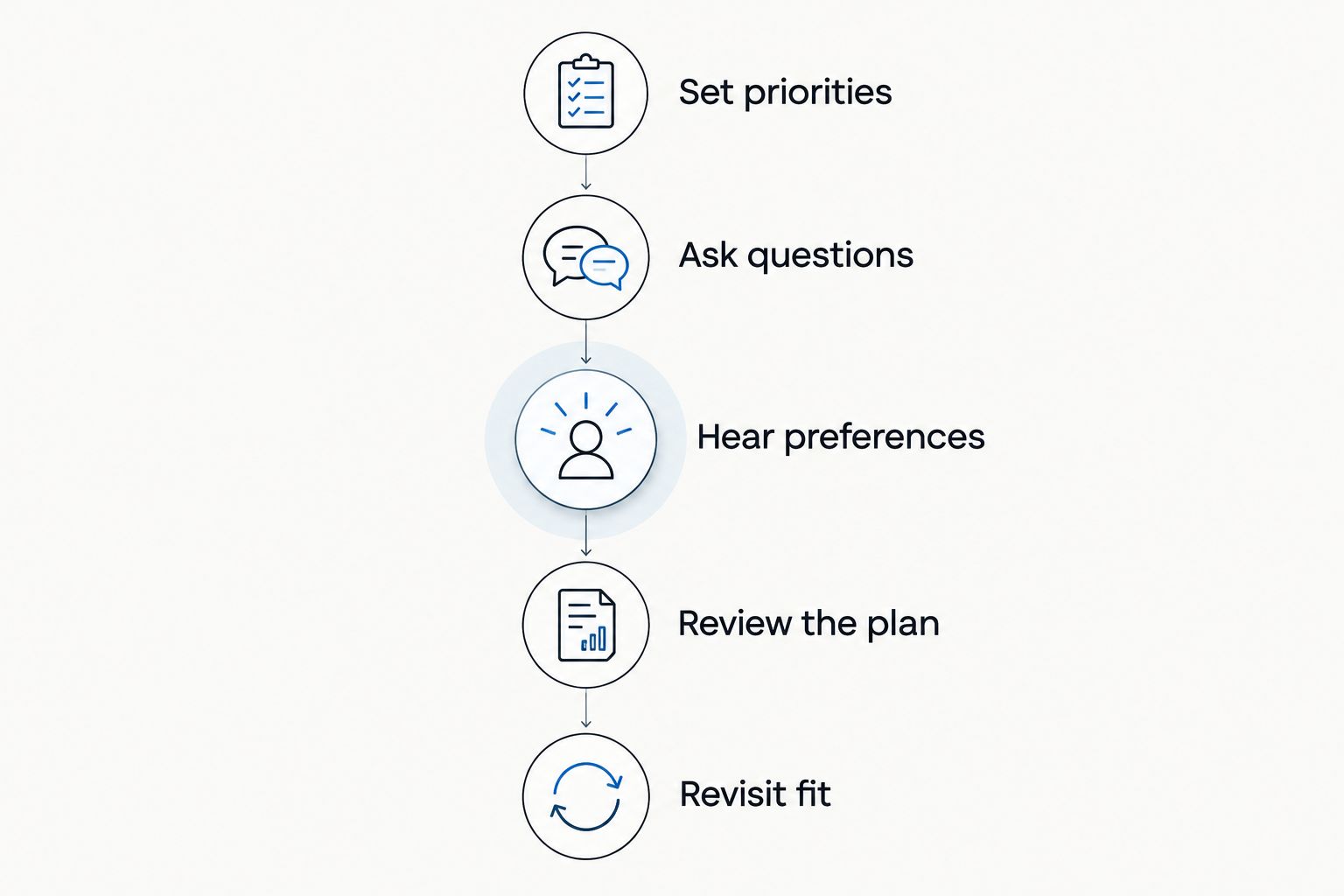
Use a simple comparison process:
- Set priorities: Write down the everyday situations your family wants help with.
- Ask questions: Bring the same questions to each provider so you can compare answers fairly.
- Hear preferences: Include your child's interests, objections, and preferred ways to communicate.
- Review the plan: Check that the proposed activities connect to those priorities.
- Revisit fit: Ask how you can raise concerns and request changes.
This is a family decision aid, not a clinical assessment. Its purpose is to keep the conversation grounded in your child's life rather than an impressive-sounding service description.
Pricing: compare written terms, not assumptions
For your 2026 decision, ask each organization to explain the payment model for the exact service under consideration. Nonprofit status does not establish your payment responsibility, and a therapy label does not establish insurance coverage.
Separate therapy, community programs, and online classes when asking about terms. Do not assume one payment arrangement covers every offering.
Ask each organization:
- Is the service billed by appointment, class, program, or another arrangement?
- What does the quoted arrangement include?
- Does insurance apply to this specific service and provider?
- What approvals or referrals are required before participation?
- What are the cancellation and rescheduling terms?
- Who can answer billing questions in writing?
Predictability means understanding your commitment before you agree. Flexibility means understanding what happens when your child's needs or your family schedule changes.
Neither model is automatically better. Choose terms you understand and can sustain alongside the service your child actually needs. Keep the written explanation with the proposed care or participation plan.
Final verdict: choose by your family's main goal
Choose Autism Learn & Play if you want broader community support
Best for: Brooklyn families exploring therapies, community programs, and online classes for a child ages 2–18. Its stated range makes it a useful starting point when your questions extend beyond one therapy service.
Confirm the specific program, age fit, setting, participation expectations, and payment terms. Breadth is useful only when the offering you select fits your child.
Choose Apex ABA if its specific ABA proposal fits better
Best for: families prioritizing an ABA plan that they have confirmed meets their child's goals, communication needs, and participation preferences. Give Apex ABA the decision when its actual proposal answers those needs better—not because of a general ranking.
Confirm the relevant provider, location, caregiver involvement, and terms before committing. Keep community participation as a separate question if it remains a family priority.
| Dimension | Winner or decision rule |
|---|---|
| Broad service scope | The nonprofit's stated range supports a broader starting point |
| Individual ABA fit | Apex ABA when its confirmed proposal fits better |
| Brooklyn starting point | The Brooklyn-based nonprofit |
| Age fit | The specific age-appropriate program or provider |
| Community opportunities | The nonprofit has an explicit community-program offering |
| Communication and sensory support | No automatic winner; evaluate the actual approach |
| Family involvement | Tie until responsibilities and feedback routes are clear |
| Payment arrangement | The written terms your family understands and can sustain |
FAQ
Is Autism Learn & Play better than Apex ABA?
Autism Learn & Play is a strong starting point for Brooklyn families seeking therapies alongside community programs and online classes. Choose Apex ABA instead when its confirmed individual ABA proposal better matches your child’s needs; there is no basis for a blanket winner.
What ages does the Brooklyn nonprofit serve?
The nonprofit serves children ages 2–18 on the autism spectrum. Ask about the age fit of the specific service or activity rather than assuming every offering covers that full range.
Does the nonprofit offer services besides ABA?
Yes. Its stated offering includes speech, occupational, music and art therapy, tutoring, community programs, and online classes, alongside ABA.
How do I know whether Apex ABA is right for my child?
Evaluate the actual proposal for your child. Confirm the provider, setting, goals, communication support, caregiver involvement, and response to discomfort before deciding.
How much does either option cost in 2026?
Request written payment terms for the exact service you are considering. Ask about the billing arrangement, insurance requirements, cancellation terms, and your family’s responsibilities rather than assuming one model applies to every service.
What should I ask about a group activity for my autistic child?
Ask what happens from arrival through departure and how your child can participate, take a break, or leave. Also confirm the age group, caregiver role, communication supports, and sensory environment.
Can I explore community programs separately from therapy?
Yes, you can evaluate community participation and therapy as separate family priorities. Ask each organization about its participation requirements rather than assuming one service requires another.
One last thing
Before contacting either organization, finish this sentence: “My child would enjoy or find daily life easier with more support for…” Use your own words, then invite your child to add theirs in whatever way they communicate.
That sentence can keep a provider conversation focused. “Sharing a favorite activity with another child” gives a different direction from “asking for a break during a busy outing,” even when both matter to the same family.
For questions about the nonprofit's services, use its website contact form or email info@autismlearnplay.org. Describe your child's age, interests, communication preferences, and the kind of support you want to explore without assuming a particular program is the answer.
Related guides
- Apex ABA alternatives
- Family support groups for autism in Brooklyn
- Social skills games for autistic teens
- Autism-friendly museums and attractions in NYC