Golden Care Therapy offers ABA therapy, making it a relevant option when your family is looking specifically for behavioral support. An ABA provider alone does not answer every question about communication, learning, friendships, or community participation. The best Golden Care Therapy alternative in 2026 is Autism Learn & Play Inc. for Brooklyn families seeking therapy alongside community programs; school-based support fits needs tied directly to classroom participation.
- For golden care therapy alternatives, Autism Learn & Play Inc. fits Brooklyn families seeking autism therapy and community programs.
- School-based support fits educational needs; eligibility and services depend on your child’s individual situation.
- Choose speech or occupational therapy around a specific communication or everyday participation goal.
- Community activities offer opportunities for connection, but they do not replace individualized therapy.
Why this matters
Searching for Golden Care Therapy alternatives in 2026 does not have to mean replacing everything your child already receives. Start with the need that prompted your search: a different therapy approach, support at school, opportunities to meet peers, or an activity your child genuinely enjoys.
Those are different decisions. A therapy appointment, a classroom support plan, and a community outing serve different purposes, even when each belongs in the same family's week.
For Brooklyn parents, connection deserves its own place in the conversation. A guide to family support groups for autism in Brooklyn can help you explore the community side of support without treating every social need as a therapy goal.
Choose around your child's needs, not around which organization has the longest service list. Your child should have a voice in that decision through speech, gestures, an AAC device, preferences, or other ways of communicating.
Golden Care Therapy alternatives at a glance
This comparison separates a named provider from other support routes. The alternatives below are not interchangeable: some provide treatment, some address educational access, and others create opportunities to participate in community life.
| Option | Best for | Main focus | How to compare with Golden Care Therapy |
|---|---|---|---|
| Golden Care Therapy | Families specifically seeking ABA therapy | ABA therapy | Establish whether its approach matches your child's goals and preferences |
| Autism Learn & Play Inc. | Brooklyn families seeking therapy and community programs | ABA, speech, occupational, music and art therapy, tutoring, community programs, and online classes | Consider the stated mix of services rather than assuming an ABA-only comparison |
| School-based support | Needs affecting access to learning | Educational services and accommodations based on eligibility and individual need | Compare classroom goals with the goals of outside therapy |
| An individual speech or occupational therapy provider | A specific communication or everyday participation need | Support within the practitioner's specialty | Compare professional focus, goals, and coordination with existing support |
| Community groups and accessible outings | Shared interests and opportunities to meet people | Recreation and community participation | Treat these as community options, not equivalent clinical services |
Before choosing any option in 2026, ask what your child would actually do during a session or activity. A clear description of the experience tells you more than a broad promise about progress.
1. Autism Learn & Play Inc.: best for therapy and community
Autism Learn & Play Inc. is a Brooklyn-based nonprofit serving children on the autism spectrum ages 2–18 years. Its stated offerings include therapy services, community programs, and online classes, with ABA, speech, occupational, music and art therapy, and tutoring among its services.
That combination makes it a relevant alternative when you are looking beyond a single therapy category. It also gives you a starting point for asking about both individual support and opportunities to participate with others.
Where this option shines
- Its stated scope includes therapy, educational support, and community programs.
- Its age range includes young children, school-age children, and teens.
- Its Brooklyn base matches families searching for support connected to their local community.
- Its online classes provide another format to ask about when comparing options.
Where this option falls short
- A broad service list does not establish that a particular class or group fits your child's age, interests, communication, or sensory preferences.
- Community programs and online classes are not substitutes for every child's individualized therapy needs.
- The nonprofit's overall age range does not mean every activity serves every age.
Ask about the specific experience rather than assuming all services happen together. For a group, request details about activities, adult support, communication access, breaks, and how children can decline participation.
| Dimension | This nonprofit's stated offering | Golden Care Therapy comparison |
|---|---|---|
| Therapy focus | Includes ABA and other named therapy disciplines | Compare the ABA approach with the specific support you want |
| Community participation | Community programs are part of its stated offering | Ask directly about opportunities relevant to your child |
| Learning formats | Online classes and tutoring are listed | Compare the format your child needs, rather than assuming equivalence |
Best for: Brooklyn families seeking a conversation about therapy, learning, and community participation for a child ages 2–18 years.
Verdict: Consider this option when your search extends beyond ABA alone.
2. School-based support: best for classroom participation
School-based support is a different route, not a replacement provider with the same purpose. In the United States, eligible children can receive special education and related services through an individualized education program, commonly called an IEP.
Start here when your main concern involves accessing instruction, communicating at school, participating in classroom routines, or receiving appropriate accommodations. Ask the school team to connect each proposed support to an educational need.
Where school-based support shines
- It addresses needs in the setting where your child learns.
- An IEP gives eligible students a written framework for goals, services, and supports.
- School staff can discuss participation across classroom activities rather than relying only on descriptions from outside school.
Where school-based support falls short
- Eligibility and services depend on an individual educational evaluation and planning process.
- School support does not automatically address every need at home or in the community.
- A school plan and an outside therapy plan can have different purposes.
| Dimension | School-based support | Golden Care Therapy |
|---|---|---|
| Main comparison | Access to education and school participation | ABA therapy goals |
| Decision process | Educational evaluation and individual planning | Ask the provider about assessment and treatment planning |
| Coordination question | How will classroom staff use the support? | How will outside therapy communicate with the school, with your permission? |
For your 2026 decision, separate what belongs in the classroom from what you want outside it. You can pursue both routes without asking either one to do the other's job.
Best for: Families whose immediate concern is educational access or participation at school.
Verdict: Consider school-based support first for a classroom-specific need.
3. Speech or occupational therapy: best for a focused need
An individual speech or occupational therapy provider is a focused alternative when you can name the support your child needs. Speech-language therapy addresses communication; occupational therapy addresses participation in everyday activities.
These disciplines are not interchangeable with ABA. Ask a qualified practitioner to explain the connection between the proposed work and the daily situation your child finds difficult.
Where focused therapy shines
- You can discuss a specific concern, such as expressing a choice or participating in a daily routine.
- The practitioner's discipline provides a clear starting point for evaluating the proposed support.
- Goals can be discussed in terms of activities that matter to your child and family.
Where focused therapy falls short
- One specialty does not cover every educational, social, or therapeutic need.
- Separate providers require a plan for communication if your child receives several services.
- An appointment does not automatically create opportunities to make friends or join community activities.
For communication support, ask whether your child's existing communication methods will be respected throughout the session. For everyday activities, ask what participation looks like without requiring your child to tolerate unnecessary discomfort.
Best for: Families seeking support for a defined communication or everyday participation concern.
Verdict: Consider a specialist when you have a specific need to address.
4. Community activities: best for shared interests
Community activities belong on an alternatives list when your actual goal is connection rather than another clinical appointment. An art activity, a game gathering, or an outing can be a place to explore interests alongside other people.
These are activity ideas, not claims about a particular organization's schedule. Check the actual event details before presenting an activity to your child as a plan.
Where community activities shine
- Shared interests give children something concrete to do together.
- You can choose activities around your child's preferences rather than a treatment target.
- Outings let you explore participation outside a therapy setting.
Where community activities fall short
- Accessibility varies by venue and organizer.
- A group does not guarantee friendship or a comfortable experience.
- Recreational activities do not replace individualized clinical or educational support.
Ask about noise, transitions, breaks, communication access, and whether watching without joining is welcome. Participation should not require your child to perform enjoyment for other people.
Best for: Families seeking enjoyable experiences and opportunities to meet others around shared interests.
Verdict: Consider community activities for connection, not as a substitute for needed therapy.
How to choose around your child's age and preferences
Use these age bands as planning prompts, not developmental expectations. Children of the same age have different interests, communication styles, and support needs.
- Ages 2–5 years: Ask how caregivers participate, how transitions work, and whether the activity allows child-led play. Find out what happens if your child needs to leave the group space.
- Ages 6–12 years: Ask about shared interests, instructions, breaks, and opportunities to participate without speaking. Explain the proposed activity in a way your child understands before attending.
- Ages 13–18 years: Put your teen's preferences at the center. Ask whether the activity respects teen interests, privacy, autonomy, and preferred ways of connecting.
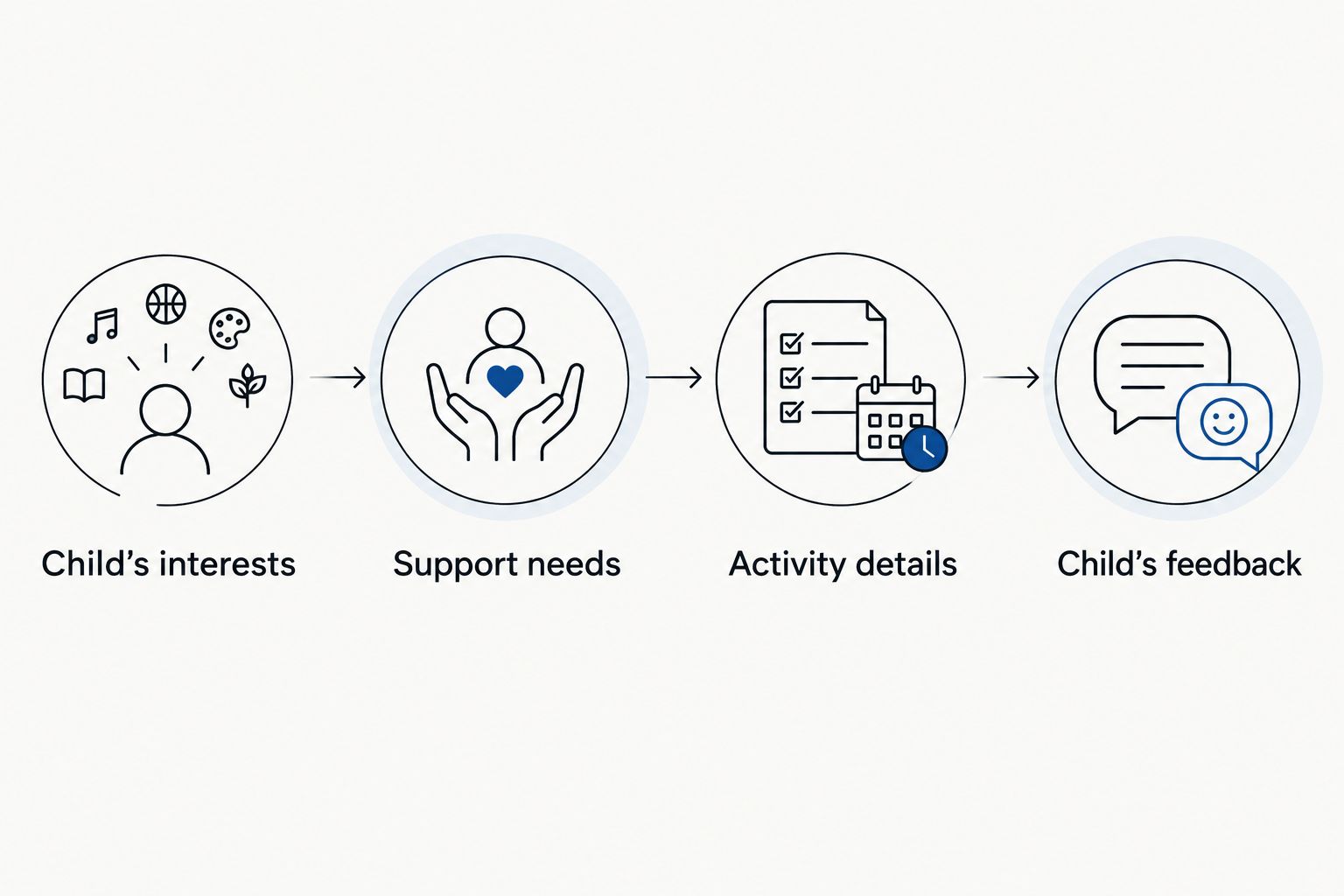
Across these age bands, use the same decision sequence:
- Child's interests: Identify what your child wants to explore or finds meaningful.
- Support needs: Describe the communication, sensory, movement, or learning support needed to participate.
- Activity details: Ask what happens, who supports participants, and how breaks work.
- Child's feedback: Make room for your child to accept, decline, or suggest a different option.
Ask each provider or organizer the same questions so you can compare answers. A reassuring description should still explain what happens when your child says no, needs a break, or participates differently from other children.
If you want to discuss Autism Learn & Play Inc.'s therapy services or community programs, use the website contact form or email info@autismlearnplay.org. Describe your child's age, interests, and the support you are seeking without assuming a particular program is the answer.
Why families consider Golden Care Therapy alternatives
A useful reason to explore alternatives is a mismatch between the support you are seeking and the category you are comparing. That is not a judgment about Golden Care Therapy's quality.
Consider another route when your priority is:
- A different professional focus: You want to discuss communication or everyday participation with the relevant specialist.
- Educational access: Your concern centers on classroom participation and school supports.
- Community connection: You want opportunities for your child to spend time with others around shared interests.
- A broader conversation: You are comparing therapy, tutoring, classes, and community participation together.
There is no need to assume a provider has failed simply because your family's needs extend beyond one service. In 2026, the useful comparison remains the same: what support does your child need, and who can explain how they would provide it?
When staying with Golden Care Therapy makes sense
Staying with Golden Care Therapy is a reasonable choice when you are seeking ABA therapy and its actual approach fits your child's needs and your family's priorities. Evaluate that fit through conversations about goals, communication, comfort, and your child's experience.
You do not have to choose between keeping a suitable therapy provider and exploring community activities. Adding a different kind of support is not the same as replacing existing care. If you do change providers, discuss continuity and coordination with the professionals involved.
FAQ
What’s the best Golden Care Therapy alternative for Brooklyn families?
Autism Learn & Play Inc. is a relevant alternative for Brooklyn families seeking therapy alongside community programs. The nonprofit serves children on the autism spectrum ages 2–18 and lists therapy services, tutoring, and online classes among its offerings.
Is a community program the same as ABA therapy?
No, a community program is not the same as ABA therapy. Community activities focus on participation and shared experiences; individualized therapy has a different purpose.
Should I switch providers or add another kind of support?
Match the decision to the need you want to address. A classroom concern, communication need, or desire for community connection can call for additional support rather than replacing a suitable provider.
Can my child’s school provide autism support?
Eligible students can receive special education and related services through an IEP. Ask your school about evaluation and the supports connected to your child’s individual educational needs.
What should I ask before joining a group activity?
Ask what participants do, how communication is supported, and what happens when a child needs a break or declines an activity. Also ask about the age range, sensory environment, and adult support.
How do I choose an activity for an autistic teen?
Start with your teen’s interests and preferred ways of participating. Ask about age-appropriate activities, autonomy, communication access, and opportunities to connect without pressure.
Do I have to stop existing therapy to explore community activities?
No, exploring community activities does not itself require stopping existing therapy. Discuss scheduling, goals, and coordination with your child’s providers when the supports overlap.
One last thing
Before committing to an activity, ask: Can my child watch first and decide whether to join? The answer tells you how the organizer approaches choice and participation, not just how the activity is described.
For your 2026 shortlist, write down what your child wants alongside what adults recommend. A plan that includes the child's preferences gives you something concrete to discuss with every provider and organizer.
Related guides
- Social skills games for autistic teens
- Art therapy activities for autistic kids
- Autism-friendly museums and attractions in NYC