
Best starting point: a predictable bedtime routine. Best for sensory discomfort: a child-led bedroom adjustment. Best medication option to discuss with a clinician: melatonin, after sleep habits and other causes have been addressed. This 2026 guide compares sleep aids for kids with autism without treating every restless night as a reason to add a supplement.
- Start with a predictable bedtime routine when choosing sleep aids for kids with autism.
- Match sensory-friendly sleep supports to your child’s preferences, not a product’s promises.
- Discuss persistent sleep difficulties with a pediatric clinician before giving melatonin.
- Autism Learn & Play offers Brooklyn community programs; medical sleep treatment belongs with your child’s clinician.
For families raising children ages 2–18, Autism Learn & Play provides therapy services, community programs, and online classes. The sleep supports below are general guidance, not a description of a sleep-treatment program offered by the organization.
Why this matters
Bedtime difficulties can involve several different problems: trouble settling, waking repeatedly, discomfort, or a sleep schedule that no longer fits your child. The best sleep aid addresses the problem you actually see. A darker room does not treat breathing problems, and a supplement does not explain why a child wakes in pain.
The American Academy of Neurology's guideline on insomnia and disrupted sleep in autistic children and adolescents recommends addressing contributing conditions and medications, then using behavioral sleep strategies first. It recommends discussing melatonin when those strategies have not helped enough and contributing factors have been addressed.
That is the starting point for this 2026 ranking. Your child's comfort, communication, and safety come before getting through a bedtime checklist.
What makes the best sleep aids for kids with autism
Use these criteria before choosing a bedtime support in 2026:
- Problem match: Identify whether the difficulty is settling, night waking, early waking, or discomfort.
- Safety: Check medication interactions and avoid supports that restrict movement or cover the face.
- Child preference: A sound, texture, or lighting change must feel comfortable to your child.
- Predictability: Choose something you can repeat without making bedtime a complicated project.
- Communication access: Keep your child's usual way of asking for help available overnight.
- Clinical fit: Persistent difficulties, pain, or breathing concerns need medical assessment rather than another product.
A useful support makes bedtime more understandable or comfortable. It does not require your child to hide distress, tolerate an unpleasant sensation, or stop harmless self-regulating movements.
Sleep supports at a glance
These are approaches to discuss and adapt, not a shopping list. The order reflects where families should generally start, with medication reserved for a clinician-guided decision.
| Sleep support | Best for | Standout feature | Key limitation |
|---|---|---|---|
| Predictable bedtime routine | An unclear or inconsistent bedtime transition | Repeats a familiar sequence | Does not treat underlying medical causes |
| Visual bedtime schedule | Uncertainty about what happens next | Makes the sequence visible | Must match the child's communication needs |
| Sensory-friendly bedroom adjustments | Identifiable light, sound, or texture discomfort | Changes a specific environmental trigger | The wrong adjustment adds discomfort |
| Consistent wake time and daytime light | An irregular sleep schedule | Supports day–night timing | Requires flexibility around illness and family needs |
| Clinician-guided melatonin | Persistent difficulty after initial strategies | Adds a medical option to a sleep plan | Timing, formulation, interactions, and safety need review |
1. Predictable bedtime routine: best for bedtime transitions
A predictable bedtime routine gives your child a familiar path from daytime activity to sleep. Choose a short sequence that fits your household, such as washing, changing into sleepwear, sharing a quiet activity, and settling into bed. Keep the order recognizable without demanding perfect performance.
For younger children, you can guide the sequence while offering simple choices. School-age children and teenagers should help choose activities, privacy boundaries, and reminders that feel respectful.
Predictable bedtime routine pros:
- Uses familiar activities rather than introducing a supplement.
- Gives caregivers a shared approach to bedtime.
- Allows choices within a consistent sequence.
Predictable bedtime routine cons:
- Requires coordination when several adults handle bedtime.
- Does not resolve pain, breathing problems, or medication effects.
Avoid turning the routine into a reward for staying quiet. Your child still needs a way to ask for the toilet, water, reassurance, or help with discomfort.
Best for: Children whose bedtime transition feels unclear or changes from night to night.
Verdict: Choose a predictable bedtime routine first, while checking for signs that medical assessment is needed.
2. Visual bedtime schedule: best for knowing what comes next
A visual bedtime schedule shows the steps your child will follow. Use photographs, familiar symbols, written words, or objects according to how your child understands information. A visual schedule supports a routine; it does not replace communication or adult reassurance.
For a toddler, a familiar object can represent the next activity. An older child might prefer a simple checklist, while a teenager might choose a private written reminder rather than a picture chart.
Visual bedtime schedule pros:
- Keeps the sequence available without repeated spoken instructions.
- Lets your child see what is finished and what remains.
- Can include choices and planned changes.
Visual bedtime schedule cons:
- Unfamiliar symbols can make the sequence harder to understand.
- A rigid chart can create frustration when plans change.
Show changes before they happen whenever possible. If your child needs a break, the schedule should accommodate that need rather than become another demand.
Best for: Children who benefit from seeing or handling a reminder of the next step.
Verdict: Choose a visual bedtime schedule when spoken reminders alone are not helpful.
3. Sensory-friendly bedroom adjustments: best for discomfort
Sensory-friendly bedroom adjustments target something specific your child finds uncomfortable. Check light entering the room, household sounds, bedding texture, sleepwear seams, and temperature. Ask your child directly when possible, and use their communication system or observed responses when spoken answers are not available.
Change one feature before adding several new items. If a hallway light is the problem, address that light rather than assuming your child needs a sound machine, special blanket, and new mattress.
Sensory-friendly bedroom adjustment pros:
- Focuses on an identifiable source of discomfort.
- Can preserve familiar objects and routines.
- Gives your child a say in their sleep space.
Sensory-friendly bedroom adjustment cons:
- A soothing sound for one child can disturb another.
- Environmental changes do not explain every night waking.
White noise is optional, not a requirement. Keep any sound device quiet and away from the child's head; stop using it if your child dislikes it. Do not use weighted bedding as a default sleep aid, especially when a child cannot remove it independently; discuss safety with their clinician.
Best for: Children who show or report a specific discomfort in their bedroom.
Verdict: Choose a targeted bedroom adjustment; skip products that add unwanted sensations.
4. Consistent wake time and daytime light: best for irregular schedules
A consistent wake time and exposure to natural daytime light help support the body's day–night rhythm. Start with a schedule that allows enough sleep, rather than waking your child early simply to make bedtime easier. Pair daytime light with activities your child already enjoys.
A daytime walk, a comfortable outdoor play space, or another accessible outing can fit this approach. No particular Brooklyn venue or group program is required, and physical activity should never become a punishment for a difficult night.
Consistent wake time and daytime light pros:
- Connects bedtime with the rest of the day.
- Fits into familiar family activities.
- Encourages a repeatable daily rhythm.
Consistent wake time and daytime light cons:
- Illness, school demands, and caregiver schedules complicate consistency.
- Does not replace assessment for persistent insomnia or other sleep disorders.
For teenagers, protect age-appropriate sleep time rather than treating late sleepiness as defiance. Ask a clinician for help when school mornings and the child's sleep timing remain difficult to reconcile.
Best for: Children whose sleep and wake times vary substantially across the week.
Verdict: Choose a sustainable daily rhythm; skip abrupt schedule changes that reduce needed sleep.
5. Clinician-guided melatonin: best for persistent sleep difficulty
Melatonin is a hormone involved in sleep timing, and supplemental melatonin is a medical discussion—not the automatic next purchase after a difficult evening. The American Academy of Neurology guideline supports offering it when behavioral strategies have not been sufficient and contributing conditions and medications have been addressed.
A clinician should review the sleep pattern, other medicines, product formulation, and timing before recommending it. Melatonin supplements are not FDA-approved medicines for pediatric insomnia, and supplement contents can vary.
Clinician-guided melatonin pros:
- Has guideline support for selected autistic children with persistent sleep difficulties.
- Gives families another option after initial strategies have not helped enough.
- Can be reviewed as part of an ongoing sleep plan.
Clinician-guided melatonin cons:
- Can cause side effects, including morning drowsiness or headache.
- Long-term safety information in children remains limited.
- Supplement quality and medicine interactions need attention.
Do not copy another family's dose or increase it without guidance. Store melatonin and other supplements securely, including products that resemble candy.
Best for: Children whose persistent sleep difficulty needs a clinician-guided option after initial assessment and support.
Verdict: Wait for clinical guidance before starting melatonin.
How this ranking works
This 2026 ranking prioritizes safety, problem match, communication access, and supports families can repeat. It follows the guideline distinction between initial behavioral strategies and a later, individualized discussion about melatonin; it is not a product-testing comparison.
Autism Learn & Play is a community-program option for Brooklyn families seeking connection alongside their child's care. A pediatric clinician remains the right person to assess medical sleep concerns.
Which sleep aid should you choose?
Choose a predictable bedtime routine as the default, then address the clearest source of difficulty. Add a visual schedule if the sequence is confusing, or adjust the bedroom if your child identifies discomfort. Avoid introducing everything at once: you need to know which change your child accepts and finds helpful.
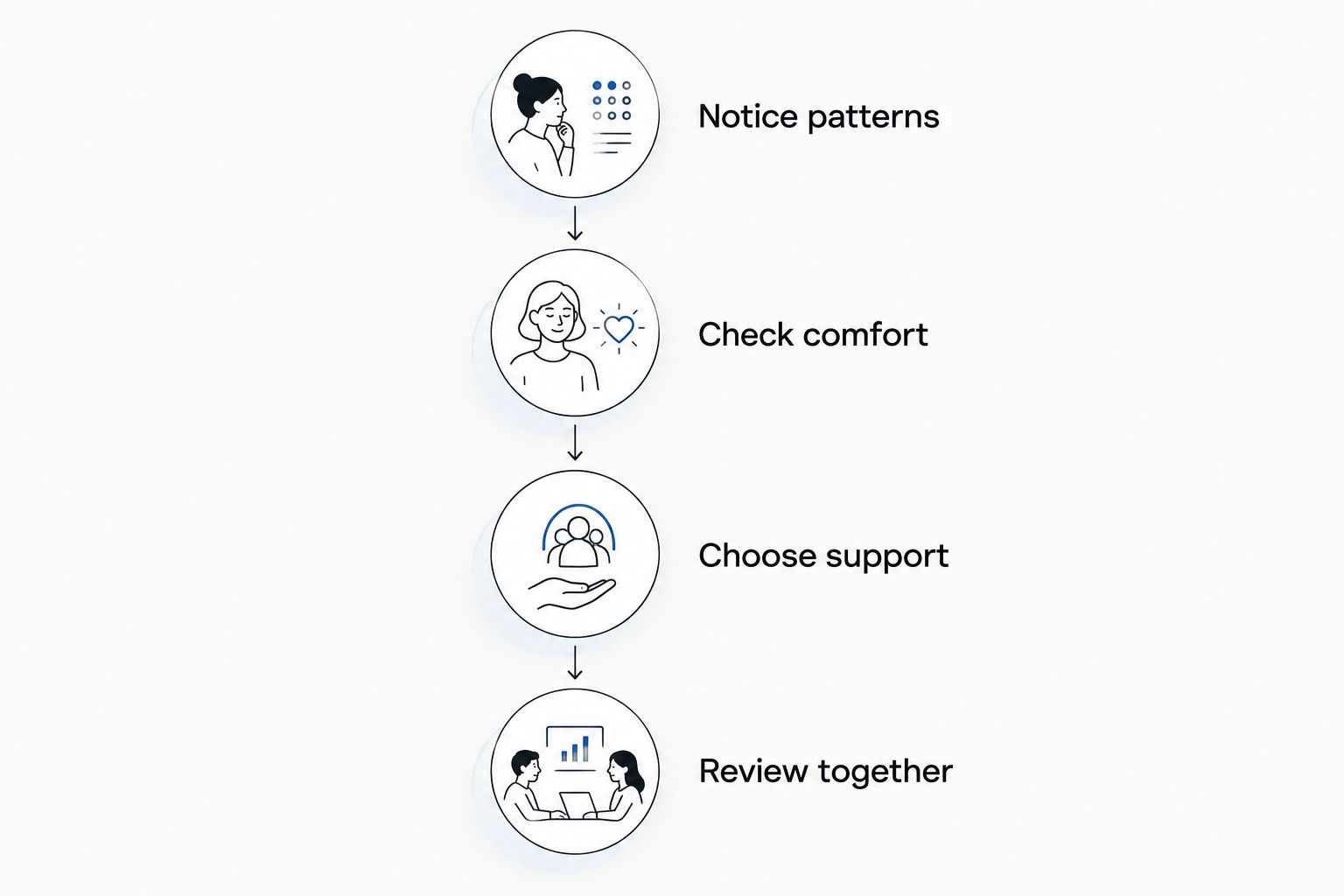
Use this sequence to prepare your next move:
- Notice patterns: Record bedtime, waking, naps, discomfort, and relevant medication changes.
- Check comfort: Ask about light, sound, temperature, clothing, and bedding.
- Choose support: Select the approach that matches the problem.
- Review together: Include your child's preferences and discuss persistent difficulties with their clinician.
Keep daytime activities and bedtime needs connected without assuming they are interchangeable. These occupational therapy activities for autism at home offer related reading, not a substitute for a sleep assessment.
Check sleep needs across ages
The American Academy of Sleep Medicine recommends these daily sleep ranges, including naps where applicable:
- Age 2: 11–14 hours per 24 hours.
- Ages 3–5: 10–13 hours per 24 hours.
- Ages 6–12: 9–12 hours per 24 hours.
- Ages 13–18: 8–10 hours per 24 hours.
These are age-based recommendations, not a promise that every child will follow the same schedule. Bring persistent differences, daytime sleepiness, or difficult mornings to your child's clinician.
Know when to seek medical help
Contact your child's clinician about regular snoring, gasping, breathing pauses, persistent pain, unusual nighttime movements, or ongoing daytime sleepiness. Review sleep changes that follow a new medicine with the prescriber. Do not stop prescribed medication independently.
Breathing distress or an inability to wake your child normally requires emergency help. Do not try another sleep aid first.
FAQ
What’s the best first sleep aid for a child with autism?
A predictable bedtime routine is the best starting point when there are no urgent medical concerns. Match additional support to your child’s communication needs and specific sources of discomfort.
Is melatonin safe for kids with autism?
Melatonin needs an individualized discussion with your child’s clinician. Side effects, medicine interactions, supplement quality, and limited long-term safety information matter when deciding whether to use it.
How much melatonin should I give my child?
Ask your child’s clinician to decide whether melatonin is appropriate and recommend the dose and timing. Do not copy another child’s plan or increase a dose independently.
Are weighted blankets good sleep aids for autistic children?
Weighted blankets are not a default sleep aid for autistic children. Discuss safety with your child’s clinician, particularly if your child cannot remove the blanket independently or has breathing or movement difficulties.
What if my child cannot tell me why bedtime is uncomfortable?
Keep your child’s usual communication supports available and look for repeatable patterns around clothing, bedding, light, sound, and position. Persistent distress or signs of pain need medical assessment rather than assumptions about sensory preferences.
Should an autistic teenager follow a toddler’s bedtime routine?
No; an autistic teenager needs an age-respectful routine that includes privacy, choice, and enough sleep. Use reminders the teenager accepts rather than assuming picture charts or parent-led steps suit every age.
Does Autism Learn & Play provide medical sleep treatment?
Autism Learn & Play provides therapy services, community programs, and online classes for children ages 2–18. Bring medical sleep-treatment questions to your child’s pediatric clinician, and direct questions about the nonprofit’s programs to info@autismlearnplay.org.
One last thing
For your 2026 bedtime plan, keep your child's communication aid within reach—not packed away with daytime activities. A child who uses pictures, gestures, or an AAC device still needs a way to say that something hurts or ask for help at night. A calm-looking bedroom is not enough if your child cannot communicate comfortably inside it.
Related guides
- Family support groups for autism in Brooklyn
- Children's books about autism for parents
- Social skills games for autistic teens