Best overall: the American Museum of Natural History for interest-led exploration. Best for younger children: Brooklyn Children’s Museum. Best for train enthusiasts: the New York Transit Museum. This 2026 guide to autism friendly museums NYC compares five outings by interests, sensory demands, and opportunities to enjoy time together—not by a promise that every gallery is quiet.
- For autism friendly museums NYC, choose the American Museum of Natural History for dinosaurs, animals, and interest-led exploration.
- Brooklyn Children’s Museum suits younger children who prefer play; the New York Transit Museum suits train enthusiasts.
- New York Hall of Science suits hands-on learners; Intrepid Museum suits older children interested in aircraft and ships.
- Autism Learn & Play supports Brooklyn families; confirm each venue’s current accessibility arrangements before planning an outing.
Why this matters
An autism-friendly outing starts with your child’s interests and needs, not a venue’s popularity. A child who loves trains needs a different plan from a child who enjoys making things or wants space to move. Neither child needs to complete every exhibit to have a worthwhile visit.
Autism Learn & Play provides therapy services, community programs, and online classes for children ages 2–18. For Brooklyn families, museum visits offer another setting for shared interests and community connection, without turning family time into a lesson.
Choose the activity your child wants to return to—not the attraction with the longest checklist. Looking together, communicating a preference, or sharing an exhibit with a friend can be the purpose of the outing.
What makes the best autism-friendly museum outing?
For your 2026 shortlist, use these criteria before choosing tickets or planning travel:
- Interest match: Start with something your child already enjoys, such as trains, dinosaurs, art, or experiments.
- Sensory fit: Ask about sound, lighting, crowds, touch-based exhibits, and places to step away. “Interactive” does not mean quiet.
- Choice and flexibility: Favor a plan that lets your child watch, participate, pause, or leave without pressure.
- Communication access: Ask whether the venue provides visual preparation materials or other accessibility supports. Bring your child’s usual communication tools.
- Age-respectful activities: Younger children and teenagers deserve different options. Follow interests without treating an older child like a preschooler.
- Manageable travel: Include the journey, entrance, bathroom access, and return trip in your decision—not just the museum itself.
A regular admission visit and a dedicated sensory-friendly event are different experiences. Confirm the arrangements for the exact visit you are considering; do not assume a museum-wide accessibility statement describes every gallery or event.
NYC museums and attractions at a glance
These five destinations have distinct strengths. The limitations describe features to consider, not judgments about whether autistic children belong there.
| Museum or attraction | Best for | Standout feature | Key limitation |
|---|---|---|---|
| American Museum of Natural History | Interest-led exploration | Dinosaur fossils and natural-history collections | A large museum requires a focused route |
| Brooklyn Children’s Museum | Younger children who prefer play | Child-focused, hands-on exhibits | Shared play spaces need a sensory-fit check |
| New York Transit Museum | Train enthusiasts | Historic subway cars in a former subway station | A below-street setting makes entrance planning important |
| New York Hall of Science | Hands-on science learners | Interactive science exhibits | Participation demands vary between exhibits |
| Intrepid Museum | Older children interested in aircraft and ships | An aircraft carrier and aviation exhibits | Shipboard routes and outdoor areas require extra planning |
1. American Museum of Natural History: best for focused interests
The American Museum of Natural History in Manhattan brings together dinosaur fossils, animal displays, and other natural-history collections. It is the best overall choice here when your child has a clear interest that can anchor the visit. Choose that interest first; leave the rest of the building optional.
For a child fascinated by dinosaurs, your plan can center on fossils rather than a broad museum tour. For an older child interested in animals or Earth science, invite them to select the subject. An interest-led route gives the visit a purpose without requiring constant participation.
American Museum of Natural History pros:
- Distinct subjects let you build a visit around an existing interest.
- Looking at exhibits does not require taking turns with shared equipment.
- Natural-history topics provide options beyond activities aimed at young children.
American Museum of Natural History cons:
- The building’s scale can make an unfocused visit tiring.
- Different galleries have different environments; one comfortable room does not establish the fit of the next.
Best for: Children and teenagers who enjoy dinosaurs, animals, or natural history and prefer a clear destination.
For your 2026 visit, choose a main subject and an optional extension before leaving home. Check the current visitor map and accessibility information rather than promising access to a particular route.
Verdict: Buy admission for a focused interest-led visit, not an attempt to see everything.
2. Brooklyn Children’s Museum: best for younger play-based learners
Brooklyn Children’s Museum offers child-focused exhibits and hands-on exploration. Its strongest place in this list is for younger children who enjoy learning through play rather than following a traditional gallery route.
For a preschool-aged child, begin with the kind of activity they already enjoy: manipulating objects, exploring a space, or watching other children play. A shared play area can create opportunities to spend time near peers. Joining in remains a choice, not a requirement.
Brooklyn Children’s Museum pros:
- Play offers an alternative to a look-but-do-not-touch outing.
- Child-focused activities suit families seeking an outing built around younger children.
- Shared interests provide a starting point for meeting another family.
Brooklyn Children’s Museum cons:
- Shared spaces involve other children’s movements and sounds.
- A younger-child focus is not the default choice for a teenager seeking an age-respectful outing.
Best for: Younger children who enjoy hands-on play and families who want a child-centered Brooklyn destination.
Ask about current exhibit environments and accessibility arrangements before your 2026 visit. If you invite a friend, choose a shared activity rather than making conversation the main task.
Verdict: Buy for a play-focused outing when the current exhibit setup fits your child.
3. New York Transit Museum: best for train enthusiasts
The New York Transit Museum in Brooklyn occupies a former subway station and displays historic subway cars. That makes it a clear match for children whose interests include trains, stations, or transportation history.
Give the interest room to lead. Your child might want to compare cars, notice signs, or talk about familiar journeys. You do not need to add a social-skills assignment to make that exploration valuable.
New York Transit Museum pros:
- Historic subway cars provide a specific attraction for train enthusiasts.
- Transportation gives the visit a clear theme.
- The subject can appeal to both younger children and teenagers.
New York Transit Museum cons:
- The below-street setting requires careful entrance and accessibility planning.
- Museum trains and a live subway journey are different experiences; liking one does not establish comfort with the other.
Best for: Children and teenagers with a strong interest in trains or public transportation.
Before traveling, confirm the current accessible entrance instructions and explain the museum setting. Plan the journey separately: your child’s enthusiasm for exhibits should not be treated as consent to a difficult trip.
Verdict: Buy for a genuine train interest after checking the entrance and travel plan.
4. New York Hall of Science: best for hands-on science learners
New York Hall of Science in Queens centers on interactive science exhibits. It suits children who prefer doing, observing a result, and trying again rather than moving through display cases.
Choose activities by how your child likes to participate. Some children want to handle materials; others want to watch before deciding. Explain that observing counts, and do not turn every exhibit into a question your child must answer.
New York Hall of Science pros:
- Interactive exhibits offer an alternative to mainly observational museums.
- Science activities provide a shared focus for children visiting together.
- Families can prioritize participation style instead of completing a fixed tour.
New York Hall of Science cons:
- Interactive experiences differ in their sound, movement, and handling demands.
- Shared equipment can involve waiting or taking turns.
Best for: Children who enjoy experiments, cause-and-effect activities, or hands-on exploration.
Check current exhibit information before your 2026 trip. If waiting is difficult, prepare a clear alternative activity rather than making access to a particular exhibit the measure of success.
Verdict: Buy for hands-on exploration when the current exhibits match your child’s participation preferences.
5. Intrepid Museum: best for older aircraft and ship enthusiasts
Intrepid Museum in Manhattan is centered on the aircraft carrier Intrepid and includes aviation exhibits. It is a strong shortlist option for older children and teenagers interested in aircraft, ships, or engineering.
Let your teenager help decide what to see and how to prepare. Ask what interests them, what they want explained beforehand, and whether they prefer visiting with family or a friend. Support should preserve their agency, not make the visit feel like a younger child’s activity.
Intrepid Museum pros:
- Aircraft and ship-related exhibits offer a specific interest match.
- The subject gives older children an alternative to preschool-oriented attractions.
- Large physical objects provide a concrete focus for observation and discussion.
Intrepid Museum cons:
- Shipboard routes require attention to the accessibility of particular areas.
- Outdoor portions require weather preparation as well as sensory planning.
Best for: Older children and teenagers who actively want to explore aircraft or ships.
Check current route information and explain that a ship-based museum differs from a conventional gallery. Do not promise access to every area before confirming its requirements.
Verdict: Buy for a child-led aviation or ship interest after checking route suitability.
How this 2026 ranking works
The ranking prioritizes interest match, participation style, age fit, and planning demands. It compares established museum settings and collection themes; it is not a sensory certification or a claim that these destinations provide identical autism-specific services.
The American Museum of Natural History takes the default position because its subject choices support a focused, interest-led visit. The other museums win distinct use cases. A strong train interest is a better reason to choose the New York Transit Museum than its position in a general ranking.
Prepare the outing without overloading your child
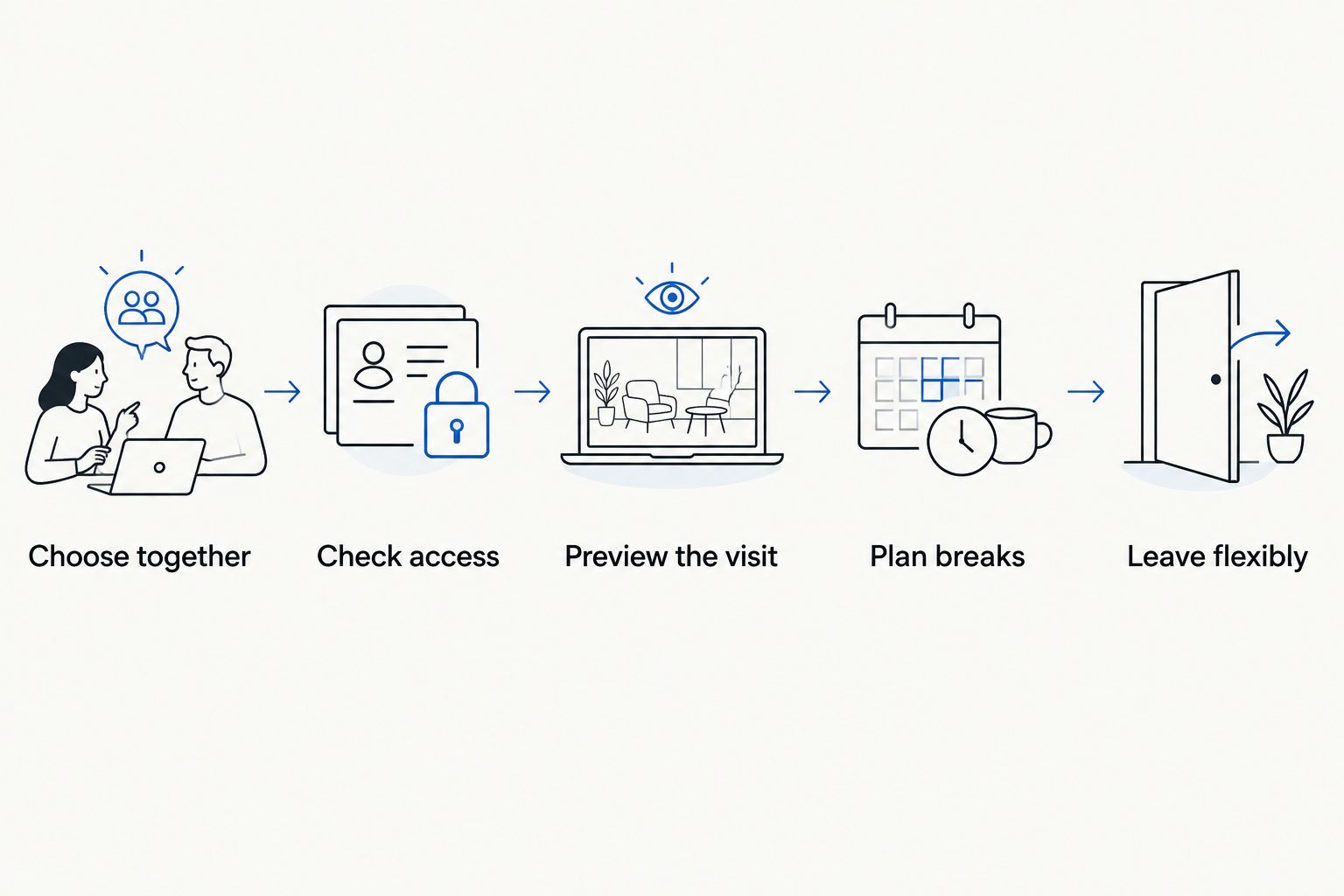
Build a simple plan around these steps:
- Choose together: Offer options that match your child’s interests, using pictures or their preferred communication method.
- Check access: Confirm entrance instructions, relevant accessibility supports, bathroom arrangements, and exhibit conditions.
- Preview the visit: Explain the journey, arrival, main activity, and return home in a format your child understands.
- Plan breaks: Decide how your child can request a pause and where you will go if an environment is uncomfortable.
- Leave flexibly: Treat changing the plan as a valid response to your child’s needs.
Use age bands as planning prompts, not rules. For children ages 2–5 years, prioritize familiar routines and concrete previews. For children ages 6–12 years, invite choices about exhibits and breaks. For teenagers ages 13–18 years, prioritize age-respectful interests, privacy, and involvement in decisions.
For a friend outing, agree on a meeting point and an easy way for either family to leave. Parallel exploration counts as spending time together; conversation and eye contact are not admission requirements for friendship.
Autism Learn & Play supports children across these ages through its stated services and programs. Contact the organization to ask about community options that fit your child rather than assuming it organizes trips to the museums listed here.
Ask about community programs
Tell Autism Learn & Play your child’s age, interests, and support needs.
Which NYC museum should you choose?
Choose the American Museum of Natural History as your default only when its subjects interest your child. Choose Brooklyn Children’s Museum for younger play-based learners, the New York Transit Museum for trains, New York Hall of Science for hands-on science, and Intrepid Museum for older aircraft or ship enthusiasts.
For Brooklyn families planning in 2026, travel demands can decide between otherwise suitable destinations. A manageable outing with a clear favorite activity is a better starting point than an ambitious itinerary your child did not choose.
FAQ
What’s the best autism-friendly museum in NYC?
The American Museum of Natural History is this guide’s best overall pick for children interested in dinosaurs, animals, or natural history. Choose a focused route and confirm current accessibility arrangements; the ranking does not mean every gallery is quiet.
Which Brooklyn museum is best for a child who loves trains?
The New York Transit Museum is the strongest interest match for train enthusiasts because it displays historic subway cars in a former subway station. Check entrance accessibility and prepare the journey separately from the museum visit.
Is Brooklyn Children’s Museum suitable for autistic toddlers?
Brooklyn Children’s Museum is a shortlist option for young children who enjoy hands-on play. Suitability depends on your child’s sensory preferences and the current exhibit setup, so ask about the environments you plan to use.
What’s a good NYC attraction for an autistic teenager?
Intrepid Museum suits teenagers interested in aircraft and ships, while the American Museum of Natural History suits natural-history interests. Let your teenager help choose the destination and check the accessibility of the planned route.
Are sensory-friendly events the same as regular museum visits?
No, a sensory-friendly event and regular admission describe different visit arrangements. Ask the venue what changes apply to the specific event, including sound, lighting, participation expectations, and break spaces.
How do I prepare a nonspeaking child for a museum visit?
Use your child’s preferred communication method to explain the outing and offer choices. Bring their usual communication tools and make requests such as break, bathroom, help, and leave accessible throughout the visit.
Does Autism Learn & Play organize these museum trips?
This guide does not describe Autism Learn & Play-led museum trips. Autism Learn & Play provides therapy services, community programs, and online classes; email info@autismlearnplay.org to ask about current community options.
One last thing
Plan the exit before planning the second exhibit. Agree on how your child can communicate that they are finished, and honor that signal. Leaving after a favorite activity is a complete outing—not a failed attempt at a longer one.
Related guides
- Social skills games for autistic teens
- Art therapy activities for autistic kids
- AAC devices for autism
- STEM activities for kids with autism