Instead of carrying separate notes between appointments, connect music therapy and speech therapy for autism through a shared communication goal, an agreed activity, and a brief handoff. Ask both therapists to define what your child can communicate during music and how to support that same message outside the session.
- Connect music therapy and speech therapy for autism around one shared communication goal, not matching activities alone.
- Autism Learn & Play offers music therapy and speech therapy for autistic children ages 2–18.
- Keep AAC, gestures, and speech available; singing is not the only successful response.
- Ask therapists to distinguish independent communication from responses supported by a song or adult prompt.
Why this matters
A child choosing an instrument, singing a familiar line, and asking for help are different actions. Your team needs to name the communication skill underneath the activity. Otherwise, an enjoyable session tells you little about whether the speech therapy goal was practiced.
Autism Learn & Play is a fit for Brooklyn families seeking children's music therapy and speech therapy. The nonprofit serves children ages 2–18 through therapy services, community programs, and online classes. Explore Autism Learn & Play and ask how providers can exchange information about your child's goals; do not assume that separate services automatically share a treatment plan.
For your 2026 planning notes, use one current goal statement rather than copying every goal from every report. Music can provide the setting for communication practice, but the speech-language pathologist and music therapist should decide how their work connects.
Before you start
- Bring the current goal and examples. Have your child's speech therapy goal, a recent session summary, and an example of how your child communicates at home. Include gestures, writing, pictures, and augmentative and alternative communication, or AAC.
- Arrange permission to coordinate. Ask each provider what consent is needed to exchange information. Identify who will receive updates and how you will send them through an agreed, private channel.
- Check the hidden mismatch. Completing a song lyric is not automatically the same as independently requesting something. Before starting, agree on what counts as communication and keep your child's usual communication tools accessible.
You do not need a special tracking app. A shared paper template or a document approved by the providers is enough. The field names below are suggested headings for that template, not buttons in a particular platform.
Shared goal
- Choose the message. Ask the speech-language pathologist which current communication goal belongs in the music session. Examples to discuss include requesting help, declining an activity, making a choice, or inviting someone to join. Choose a message that matters to your child, not just an action that is easy to count.
- Define accepted responses. Under Communication method, list the forms your child already uses or is learning with professional support. A spoken word, AAC selection, gesture, or picture can carry the same message. Do not make speech the only accepted response unless the clinician is addressing a specific speech task and has explained the distinction.
- Record the starting point. Under Current example, describe an actual event: what happened, what your child communicated, and what help an adult provided. Avoid labels such as uncooperative. Write what you observed.
- Set the boundary. Under Pause or stop, describe how your child shows discomfort or declines participation. Agree that adults will honor those signals rather than turning every refusal into another demand.
Expected result: Both therapists can explain the same goal in plain language and identify which responses count. You should also know what does not count—for example, an adult selecting an AAC message on the child's behalf.
Keep this goal separate from a broad hope such as making friends. Friendship can guide your priorities, while the working goal names something observable, such as asking a peer to take a turn.
Music activity
- Ask for an activity match. Have the music therapist select or adapt an activity around your child's interests, sensory preferences, and agreed communication goal. Do not add unexpected sound simply to create a response.
- Make communication accessible. Under Materials, list the items the therapist recommends, including your child's usual AAC system when relevant. Position communication supports where your child can reach and use them throughout the activity.
- Agree on adult support. Under Adult support, record how the therapist will model a message, offer a choice, or pause. Ask how the therapist will avoid repeated prompting and recognize when your child wants to stop.
- Build in a genuine choice. Let the activity include meaningful options, including declining. Asking which sound to hear is only a choice if the adult accepts the answer.
Expected result: You can describe why the activity fits the communication goal, how your child can respond, and how adults will respect a refusal.
For example, if the agreed goal is requesting help, the therapist might use an ordinary moment when assistance is needed during an instrument activity. Do not deliberately make a preferred item inaccessible or create frustration to force a request.
For children ages 2–5 years, discuss familiar play and caregiver participation. For ages 6–12 years, ask about interests and comfortable ways to participate alongside others. For ages 13–18 years, involve the young person directly in choosing music and communication priorities. These are planning prompts, not age-based requirements or descriptions of a particular program.
Session handoff
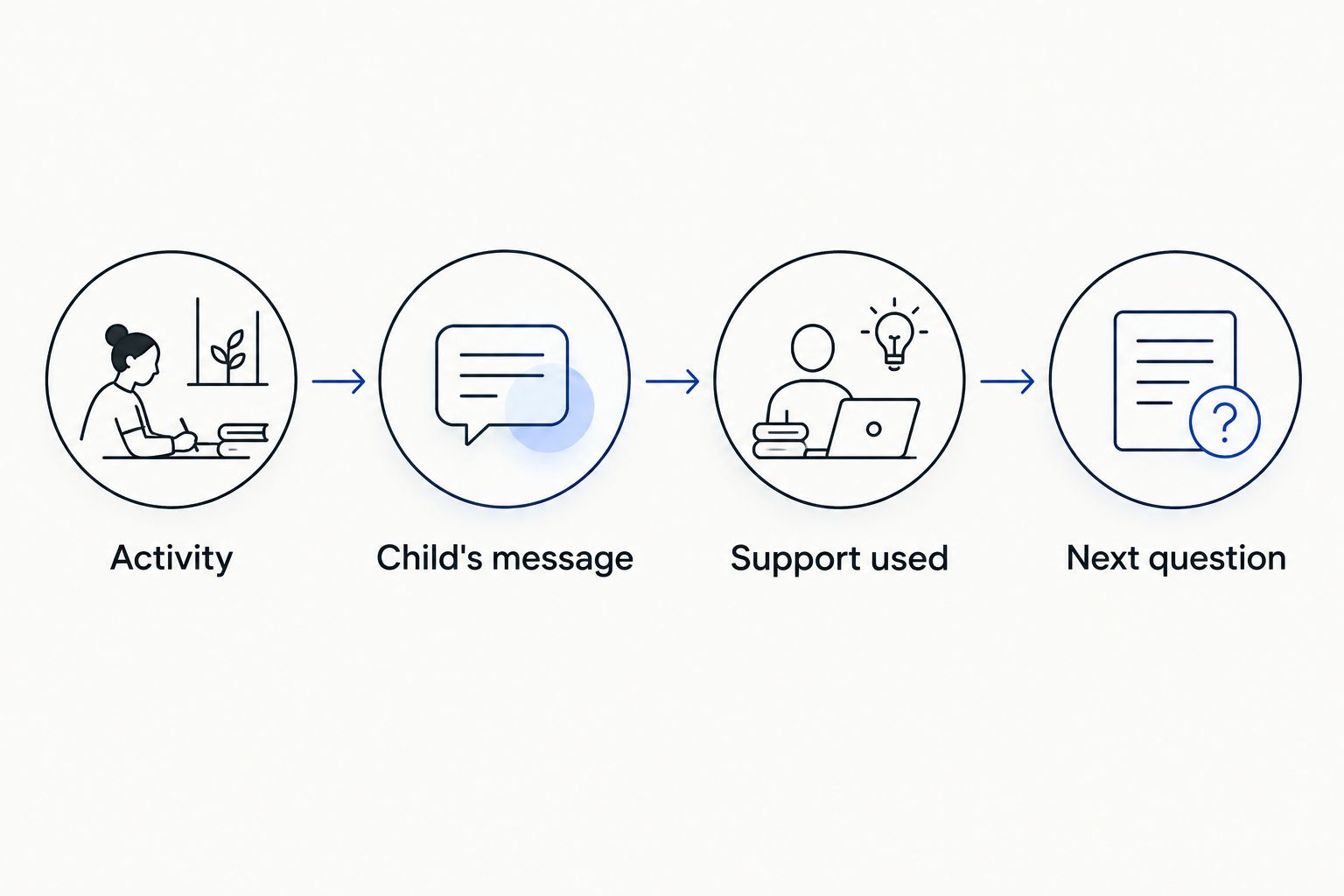
- Record the context. Under Activity, name what was happening when communication occurred. Include relevant sound, group, or transition details without writing a full session transcript.
- Describe the response. Under Child's message, record what your child communicated and how. Distinguish a request to continue from singing along; they do not answer the same question.
- Name the support. Under Support used, note whether an adult modeled the response, offered choices, or gave another cue. Leave interpretation to the clinicians rather than labeling every response independent.
- Send one useful question. Under Next question, ask what needs clarification. For example: Should this message be practiced during another routine, or does the communication support need adjusting first?
Expected result: The speech-language pathologist receives enough context to interpret the music-session example, and the music therapist receives guidance about the next communication opportunity.
Keep your 2026 session notes factual. Writing that your child selected a help message after an adult model is more useful than writing that communication was excellent. Both observations can feel encouraging, but only the first tells another provider what happened.
Avoid sending recordings of sessions or other children through informal group chats. Ask providers about consent and their approved method before sharing audio, video, or identifiable information.
Everyday practice
- Choose a familiar routine. Ask the speech-language pathologist where the same message has a natural purpose outside music. A request for help might belong during a craft activity, while declining might belong during activity selection.
- Keep the message consistent. Use the communication support the clinician recommends. Do not rearrange an AAC layout or add unfamiliar symbols on your own to match a song.
- Keep the practice optional. As a planning example, ask whether a 2-minute opportunity during an existing routine would suit your child. This is a discussion starter, not a recommended treatment dose. End earlier if your child declines or becomes uncomfortable.
- Report what changed. Tell the therapist whether the message appeared in the everyday routine, what support was used, and whether the activity remained comfortable.
Expected result: The team has a real-world example to discuss, not an assumption that a skill practiced during music has transferred elsewhere.
For families using communication devices or picture systems, the guide to connecting speech therapy to AAC device use at home provides a related planning topic. Keep device changes under the guidance of the professionals supporting your child.
Choose the setting by the communication need
Neither setting wins for every child. Use music when your child wants that activity; use an everyday routine when the message naturally belongs there. Compare both with the therapists rather than treating music as a required reward or a test.
| Practice setting | Best for | Advantage | Limitation |
|---|---|---|---|
| Therapist-led music activity | Children who choose musical participation | Connects the communication goal to an activity the child wants | A response tied to a song does not establish use outside that song |
| Familiar everyday routine | Practicing a message where it has a direct purpose | Gives the team an example outside the therapy activity | Noise, demands, and adult support differ from the session |
The useful comparison is not whether your child performs better with music. It is whether each setting gives your child an accessible, meaningful way to communicate.
When the speech therapy goal changes
Update the music-session plan whenever the speech-language pathologist changes the target or communication support. Do not keep practicing an old response simply because a familiar song makes it easy to produce.
- Replace the goal statement. Add the review date and identify the current version, such as your 2026 communication plan.
- Keep relevant interests. A favorite activity can remain, but the music therapist should decide whether it still fits the new goal.
- Check access again. Confirm that the required vocabulary, pictures, gestures, or other supports are available.
- Retire conflicting instructions. Tell caregivers which previous prompts or expectations no longer belong in the plan.
This second workflow also applies when your child's preferences change. A once-loved activity is not a permanent obligation. Ask your child and the team what to keep, change, or stop.
Troubleshooting
Your child sings the line but does not use the message elsewhere
Ask the speech-language pathologist to review whether the sung response demonstrates the intended skill. Record the musical cue and adult help, then ask about a natural opportunity outside the song. Do not assume lyric completion proves independent communication.
Sound makes the activity uncomfortable
Pause the activity and honor your child's request or signals to stop. Ask the music therapist about sound level, instrument choice, predictability, or a different activity. More exposure is not the automatic next step.
Adults accept speech but overlook AAC or gestures
Return to Communication method in the shared plan. Ask the team to clarify which responses meet the goal and ensure adults acknowledge those responses consistently. Never remove a communication system to encourage spoken words.
The therapists use different prompts
Share the discrepancy rather than choosing a prompt yourself. Ask the providers to explain what each prompt addresses and agree on what caregivers should do. Different clinical tasks need clear instructions, not an improvised compromise.
Tracking becomes another household burden
Reduce the handoff to one meaningful example and one question. As an optional organizational choice, reserve 5 minutes for writing a summary after a relevant appointment. That is a paperwork limit, not a therapy schedule or a target for your child.
Customize your workflow
Once the handoff is clear, discuss whether the same message matters during a community outing or group activity. Asking for a break, inviting someone to join, or declining a turn can be useful priorities to discuss without requiring your child to socialize on demand.
For a Brooklyn outing in 2026, ask the organizer about sound, transitions, caregiver participation, communication access, and leaving early. These questions help you plan; they do not establish that a program offers particular accommodations.
Autism Learn & Play provides music therapy, speech therapy, and community programs. Ask about your child's interests and support needs through the website contact form or info@autismlearnplay.org. Confirm how coordination works rather than assuming a shared-provider arrangement, group format, or specific outcome.
FAQ
How do I connect music therapy and speech therapy for autism?
Ask both therapists to agree on a current communication goal, accepted response methods, and a brief session handoff. Record what your child communicated and what support was used, then discuss an everyday setting where the same message has a purpose.
Does my child need to speak to participate in music therapy?
Spoken language should not be treated as the only way to participate. Discuss gestures, pictures, AAC, movement, and your child’s preferences with the music therapist before choosing activities.
Is singing a song the same as meeting a speech therapy goal?
No, singing a song does not automatically demonstrate the targeted communication skill. The speech-language pathologist needs to consider the goal, the musical cue, and any adult support before interpreting the response.
Should my child keep an AAC device during music therapy?
Keep your child’s communication system accessible during the activity. Ask the clinicians how to support its use and do not remove it to encourage speech.
What should I ask Autism Learn & Play about coordinating therapy?
Ask how music therapy and speech therapy providers can exchange goal information with your permission. Also ask about communication access, sensory preferences, and how your child’s choices will shape participation.
How long should we practice between appointments in 2026?
Ask your child’s therapists to recommend an appropriate approach rather than adopting a standard duration. Use meaningful routines and honor requests to pause or stop; this guide’s timing examples are organizational suggestions, not treatment prescriptions.
Can the same music activity work for a toddler and a teenager?
Do not assume the same activity suits both. Choose materials, music, communication priorities, and adult involvement around the individual child’s age, interests, preferences, and support needs.
One last thing
A clear refusal is useful communication, not a failed session. If your child uses speech, AAC, or a gesture to say stop, acknowledge the message. Include it in your next 2026 goal review: learning how your child communicates boundaries belongs alongside requests to continue.
Related guides
- Music therapy techniques for autism
- Speech therapy for autistic teenagers
- Family support groups for autism in Brooklyn