
To find out how much autism summer programs cost in Brooklyn in 2026, request a written quote for your child’s exact schedule, activities, and support needs. Check whether that quote also covers transportation, outings, supplies, and any additional support you request; do not treat a listed enrollment fee as the complete family budget.
- How much do autism summer programs cost in Brooklyn? Get a written quote for the exact schedule and support requested.
- Compare total family costs, not enrollment fees alone, when choosing sensory-friendly activities and opportunities to make friends.
- Autismlearnplay serves children ages 2–18; ask which community programs match your child’s interests and support needs.
- Confirm school-based services and insurance decisions separately before subtracting any assistance from your summer budget.
How much do autism summer programs cost in Brooklyn?
The useful number is your family’s total for a clearly defined summer plan—not an unexplained weekly or session fee. Ask each provider to quote the same dates, attendance schedule, and requested support so you can compare equivalent arrangements.
For your 2026 search, use the worksheet below. Leave an item unresolved until the provider answers it rather than assuming it is included.
| Budget item | What to ask | What to record |
|---|---|---|
| Program attendance | What dates and daily hours does the quote cover? | Written total for your requested schedule |
| Enrollment requirements | Are there separate enrollment or assessment charges? | Each charge and its purpose, if applicable |
| Individual support | Is the support your child needs included? | What staff will provide and any separate charge |
| Transportation | Is travel included, arranged separately, or your responsibility? | Provider charges and your own travel plan |
| Activities and supplies | Are outings, materials, or meals included? | Any required extras |
| Schedule changes | What happens after an absence, cancellation, or early departure? | Written payment and refund terms |
If school services are part of your planning, review how to connect summer programs to your child’s IEP meeting. Keep the school discussion separate from a private program’s enrollment agreement.
Why this matters
A summer plan has to work for both your child and your household. A program that does not fit your transportation, communication, or sensory needs is not a practical choice simply because its advertised fee looks appealing.
Start with the experience you want your child to have: a welcoming place to enjoy an interest, spend time with peers, or try something new without pressure. Then ask what arrangements make that experience accessible. Your child’s comfort and ability to participate belong in the budget conversation from the start.
For Brooklyn families, include the trip itself in that conversation. Ask yourself whether you can manage drop-off, pickup, and a return trip if your child needs to leave early.
Compare the kind of summer experience before comparing quotes
A recreational group, an individual therapy appointment, and an online class serve different purposes. Do not compare them as interchangeable purchases just because each happens during the summer.
Use these categories to explain what you are looking for. The descriptions below are selection criteria, not promises about a particular provider.
| Option | Best for | What to look for | Limitation to consider |
|---|---|---|---|
| In-person community program | Families prioritizing shared activities and peer connection | Activities your child enjoys and a clear participation plan | Travel and the group environment need to fit your child |
| Therapy-focused service | Families seeking support for an identified therapy goal | A clear explanation of the service and its purpose | A therapy appointment does not automatically provide a broader summer social experience |
| Online class | Families seeking a scheduled activity from home | A format your child can access comfortably | An online session does not provide an in-person outing |
| Family-led outing | Families prioritizing control over pace and departure | A manageable setting and a flexible exit plan | You organize the activity and provide support |
Ask what children actually do together. Sharing a room is different from having supported opportunities to choose an activity, communicate, and connect.
For a child who likes watching before joining, ask whether observation is welcome. For a teen, ask whether the activities and peer group reflect their age and interests rather than simply placing everyone together.
Why summer program quotes need a closer look
Use these questions to identify differences between 2026 quotes. They are items to verify—not a claim that every Brooklyn provider charges separately for them.
- Schedule: Does the quote cover the same attendance dates and daily hours as the other options?
- Support: What help with communication, transitions, personal care, or participation is included?
- Activity format: Are you comparing a community group, an individual service, or an online class?
- Travel and outings: Who arranges transportation, and what does the family need to handle?
- Materials and meals: What must you supply, and are any additional payments required?
- Payment terms: What happens if your child misses a day, leaves early, or stops attending?
Request answers in writing. A friendly conversation helps you judge the atmosphere, but your budget needs a clear description of what the agreement covers.
Avoid filling gaps with assumptions. If someone says support is individualized, ask what that means for your child during a noisy activity, a bathroom break, or a transition away from a favorite game.
Build a summer budget around your child
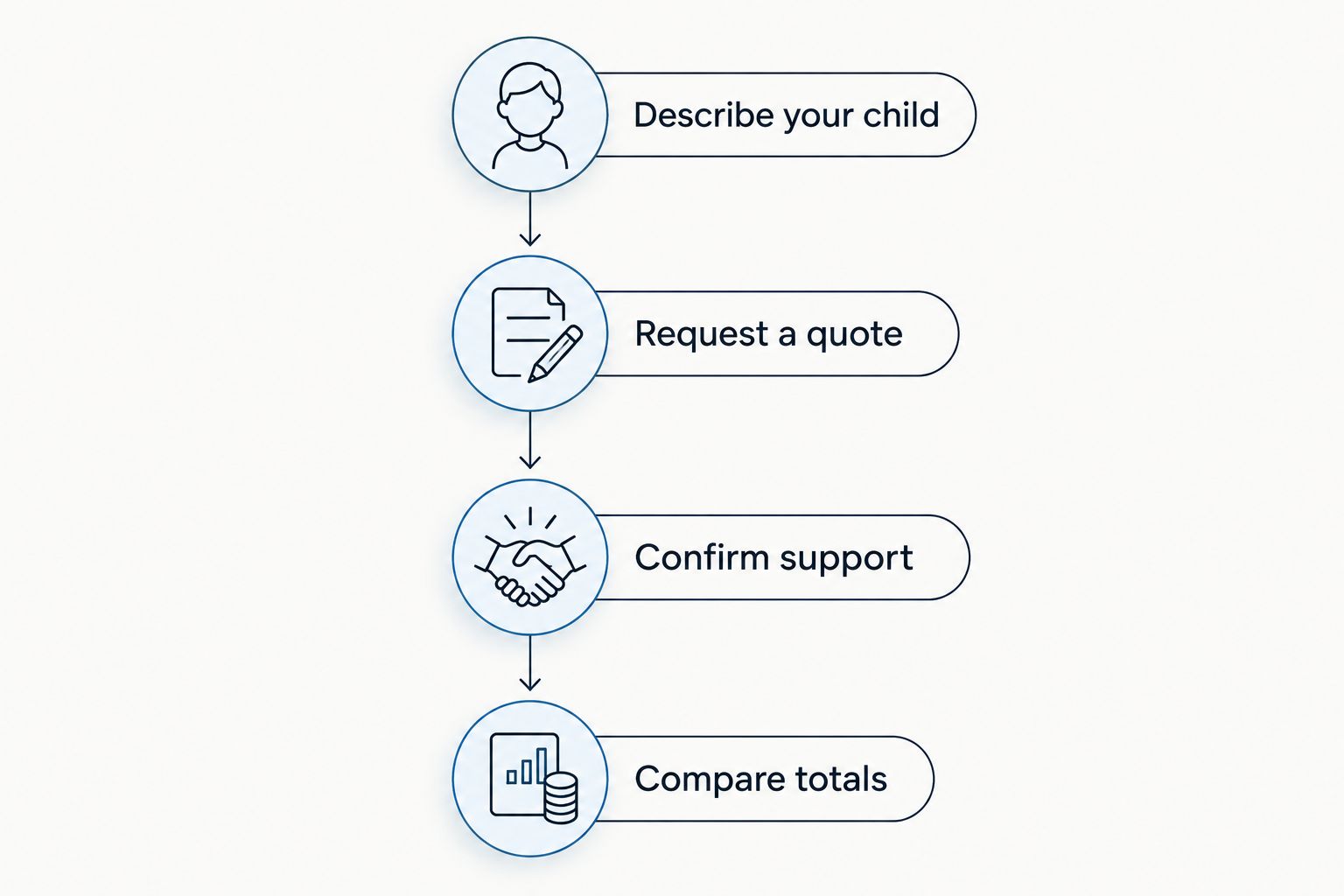
You do not need a complicated spreadsheet. You need a consistent way to describe your child’s needs, collect answers, and compare the complete plan.
Describe your child
Write a short introduction covering interests, communication methods, sensory preferences, and the support your child uses in unfamiliar settings. Include what helps your child feel welcome—not just what is difficult.
For example, tell the provider whether your child prefers to watch first, uses a communication device, enjoys movement, or needs a quieter place to pause. Ask how the program would respond rather than assuming a general autism-friendly description answers those questions.
Request a quote
Give each provider the same requested dates and schedule. Ask for a written total and a separate explanation of anything excluded.
You can use this wording: Please quote the complete cost for our requested schedule, explain the support included, and list any required additional payments. Please also send the cancellation and refund terms.
Confirm support
Ask who will help your child communicate a need, take a break, or move between activities. Clarify how staff will contact you if the agreed plan is not working.
A useful answer describes an actual process. Reassurance alone does not tell you what your child can expect during the day.
Compare totals
Put the program quote beside your transportation plan, required supplies, and any work or caregiving arrangements. Keep unconfirmed financial assistance separate from money already approved.
Choose a plan you can explain clearly: what your child will do, how support works, and what your household is agreeing to pay.
Match the experience to your child’s age and interests
For families with children ages 2–18, one activity description is not enough to establish a good fit. Ask about the actual peer group, activity expectations, and ways children can participate.
Younger children: ask about everyday routines
For a younger child, discuss separation from caregivers, toileting support if needed, snacks, transitions, and how adults respond when a child wants to stop. Describe your child’s current routines without treating independence as a requirement for belonging.
Ask whether you can explain familiar comfort strategies before the first visit. Confirm what the provider can accommodate rather than relying on a broad age label.
School-age children: start with shared interests
Ask how the group uses interests such as drawing, music, building, or games. Look for opportunities to participate alongside peers without making conversation or eye contact the price of admission.
A useful question is: What happens when a child enjoys the activity but does not want to join the group discussion? The answer helps you understand whether different participation styles are respected.
Teenagers: include them in the decision
Give your teen a real voice in choosing the activity, setting, and goals. Ask about age-appropriate materials, privacy, communication preferences, and the option to decline an activity.
Do not assume a teen wants a program framed around practicing social behavior. Ask what would make the summer enjoyable and what kind of connection they actually want.
Where online classes fit—and where they do not
An online class belongs in your comparison when you want a scheduled activity at home. It is not an equivalent substitute when your main goal is an in-person Brooklyn outing or spending time together in a shared physical space.
Autismlearnplay is best for families seeking a Brooklyn-based nonprofit offering autism therapy services, community programs, and online classes for children. Ask about the specific service that interests you rather than assuming every offering is a summer program.
The published class descriptions provide useful format details, but those details do not establish a summer schedule or suitability for your child.
| Listed online class | Published format | Best for exploring | Limitation to check |
|---|---|---|---|
| Social Skills Class | 30 minutes via Zoom | A scheduled online social-skills activity | Ask about the group, participation expectations, and age fit |
| Conversation: 1 on 1 | 1 hour via Zoom | An individual online conversation activity | An individual session is not a peer-group outing |
For 2026 planning, confirm the current details directly. You can contact the team with your child’s age, interests, preferred format, and support needs. Ask which options match that description without assuming a particular schedule or outcome.
Can school services or insurance help with the budget?
Confirm payment responsibility before counting any assistance toward a summer program. Ask your school team about your child’s documented summer education needs, and ask your health plan about the exact therapy service under consideration.
Do not treat a recreational enrollment, an online class, and a therapy service as the same coverage question. Give the person answering your inquiry the specific service description and provider information.
For your 2026 budget, record what has been confirmed, who confirmed it, and what conditions apply. A pending request is not the same as an approved arrangement.
What should I ask before paying an enrollment fee?
Ask for the complete written agreement, including the schedule, support arrangements, required payments, and cancellation terms. Read it alongside the description of your child’s needs that you shared with the provider.
If an important accommodation was discussed verbally, ask for written confirmation. Resolve differences before you commit rather than hoping the first day will clarify them.
How do I compare programs with different schedules?
Compare the exact attendance you intend to use, not just the provider’s headline billing period. Record the dates, daily hours, travel requirements, and support included in each proposal.
Then compare the experiences. A shorter activity that your child wants to attend and a longer day with a different purpose should remain distinct choices, not just competing totals.
FAQ
How much do autism summer programs cost in Brooklyn in 2026?
Get a written 2026 quote for your child’s requested schedule and support needs. Ask the provider to identify required payments, exclusions, and cancellation terms before you compare options.
Does a summer program quote include transportation?
Confirm transportation directly with the provider; do not assume it is included. Ask who handles pickup, drop-off, and an early departure if your child needs one.
Will insurance pay for an autism summer program?
Ask your insurer about the exact service rather than assuming coverage from the program’s name. Keep coverage decisions separate from enrollment promises and request written confirmation of your responsibility.
What should I ask if my child uses a communication device?
Ask how your child will access and use the device throughout activities, breaks, and transitions. Explain how your child communicates choices, discomfort, and a request to leave.
Is an online class the same as an in-person summer program?
No. An online class provides an activity at home, while an in-person program involves attending a physical setting; compare each against your child’s interests and your family’s goals.
Can I ask about a program for an autistic teenager?
Yes. Ask about the actual age group, age-appropriate activities, privacy, and your teen’s choices about participation. Include your teen in the decision rather than selecting solely from an age range.
How do I ask Autismlearnplay about options for my child?
Use the website contact form or email info@autismlearnplay.org. Share your child’s age, interests, communication preferences, and support needs, then ask which services match your request.
One last thing
Before choosing, ask: What happens if my child wants to watch, take a break, or leave? That answer tells you something a fee cannot: whether the experience makes room for your child’s choices.
For summer 2026, make the participation plan as clear as the payment plan. A welcoming community starts with understanding the child who is joining it.
Related guides
- Summer programs for autistic teens
- Family support groups for autism in Brooklyn
- Autism-friendly museums and attractions in NYC