Animal therapy for autism anxiety can help some children feel more comfortable during supported activities, but it is not a proven stand-alone treatment for an anxiety disorder. In 2026, the safest approach is to treat animal-assisted sessions as an optional addition to individualized care, with your child's consent, sensory needs, and safety guiding every visit.
- Animal therapy for autism anxiety is an optional support, not a replacement for individualized anxiety care.
- Animal-assisted therapy differs from a friendly animal visit, pet ownership, and service-dog support.
- Your child must be able to watch, decline contact, take breaks, and leave without pressure.
- Autism Learn & Play provides Brooklyn families with therapy services, community programs, and online classes; animal-assisted services are not established here.
Can animal therapy help an autistic child manage anxiety?
Some children enjoy animal-assisted activities, but enjoying a session does not establish that anxiety has improved outside it. Research on animal-assisted interventions in autism includes encouraging findings, yet differences in activities, participants, and outcome measures limit firm conclusions about treating anxiety specifically.
Ask a provider to distinguish a pleasant experience from a treatment claim. A child choosing to approach an animal is meaningful; it does not automatically show less school anxiety, easier separations, or better sleep.
The term animal therapy also covers very different experiences. Before comparing programs, establish what each one actually provides.
| Option | Best fit | Potential benefit | Limitation or concern |
|---|---|---|---|
| Animal-assisted therapy | A child interested in animals whose clinician identifies a relevant treatment goal | An animal can be included in a planned therapeutic activity | Provider qualifications, animal handling, and progress measures need checking |
| Supervised animal visit | A child who wants a recreational encounter | Offers an opportunity for enjoyment and shared activity | A visit is not automatically anxiety treatment |
| Family pet | A family that independently wants and can care for an animal | Offers companionship and familiar routines | Requires ongoing care; acquiring a pet is not an anxiety prescription |
| Trained service dog | A person with a disability-related need for trained tasks | Performs specific disability-related tasks | Has a different purpose from a therapy animal or companion pet |
What does the evidence mean for your family?
Look for studies measuring anxiety directly, not only social interaction or participation. Also ask whether benefits continued after sessions ended and whether researchers compared the intervention with another activity receiving similar adult attention.
Those questions matter because an engaging activity, a supportive adult, and a predictable routine can all shape a child's experience. Research must separate those influences before assigning the benefit to an animal alone.
Why this matters
For a Brooklyn family planning activities in 2026, the question is not simply whether animals are calming. It is whether a particular setting respects your child and addresses a need your family actually has.
Autism Learn & Play provides therapy services, community programs, and online classes for autistic children ages 2–18. That broader view matters: an outing can be valuable for enjoyment and connection without being labeled a treatment.
Do not make animal contact the price of joining in. Watching from a distance, talking about an animal, or choosing an animal-free activity should remain valid ways to participate.
Why a child's response to animal-assisted activities varies
An animal that interests one child can overwhelm another. Choose around the child's preferences rather than an expectation that all children should enjoy animals.
- Interest and choice: Your child should have a genuine opportunity to approach, observe, or decline. Adults' enthusiasm is not a substitute for the child's interest.
- Sensory experience: Barking, movement, fur, smells, and an unfamiliar room deserve attention before a visit.
- Predictability: Ask what happens on arrival, who handles the animal, and how unexpected movement is managed.
- Communication access: Your child needs an understood way to communicate stop, more distance, discomfort, or a break.
- Health and safety: Discuss allergies, asthma, immune-system concerns, bites, scratches, and hygiene with the appropriate professionals.
- The actual anxiety concern: Enjoying an animal encounter does not necessarily address the situations causing distress at home or school.
Avoid interpreting quietness as proof of calm. Check your child's communication, willingness to continue, and experience afterward rather than relying on whether the room looked peaceful.
What should you ask before booking an animal-assisted session?
Use the same questions whether an activity takes place in Brooklyn or requires travel elsewhere. For a 2026 booking, confirm current arrangements directly rather than relying on photographs or an old event description.
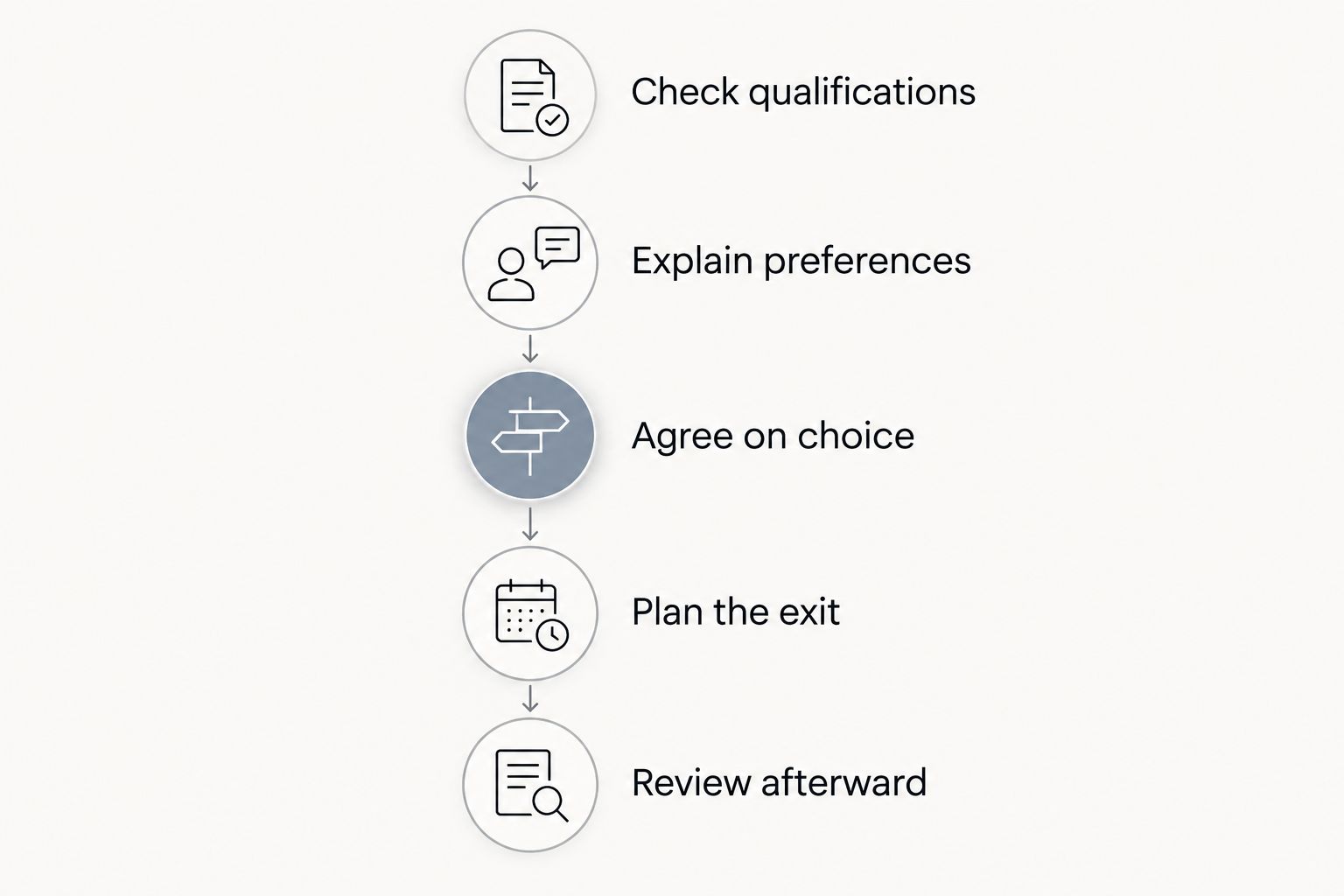
- Check qualifications. Ask who provides the therapy, what professional credentials apply, and who is responsible for handling the animal. An animal-handler credential is not the same as a mental-health qualification.
- Explain preferences. Describe your child's interests, communication methods, allergies, movement needs, and known fears. Ask whether the setting can accommodate them without requiring contact.
- Agree on choice. Establish how your child can decline, request distance, or end the activity. Ask what staff do when a child moves away or becomes distressed.
- Plan the exit. Ask about a quiet waiting option, the route out, and whether leaving early creates any pressure to return immediately.
- Review afterward. Decide what you will observe and how the provider will discuss it with you. Participation alone should not be presented as proof of reduced anxiety.
A clear explanation matters more than a reassuring label. If a provider cannot describe the activity, supervision, and stop procedure, you do not yet have enough information to decide.
What can your child expect during a first visit?
There is no universal animal-therapy session. Ask the provider to describe the actual sequence before presenting it to your child as a plan.
A proposed introduction might involve observing from a doorway, meeting the handler without approaching the animal, or choosing whether to move closer. These are accommodations to request, not promises about what any program includes.
Prepare with information the provider has verified. A simple explanation of where you are going, what animal will be present, and how you can leave is more useful than promising that your child will love it.
What should you bring or arrange?
Ask whether your child's usual communication supports and comfort items can accompany them. Keep access to an AAC device, pictures, signs, or other established communication available throughout the outing.
Also discuss handwashing, food rules, and safe interaction with the handler. Do not improvise feeding, hugging, or touching an animal without clear guidance.
Your child's refusal ends the interaction; it does not need to become a lesson in persistence. The animal also needs space and breaks, with its handler responsible for recognizing its limits.
How should the plan change from ages 2–18?
Age helps you ask better questions, but it does not predict an individual child's interests or communication. Match the activity to the person, not just the age printed on a program description.
Ages 2–5 years: prioritize distance and caregiver support
For children ages 2–5 years, ask how caregivers remain involved and how staff respond to sudden movements or reaching. Start with the child's existing comfort around animals rather than assuming early exposure must include touching.
Keep the purpose modest: a safe, chosen experience. A toddler who watches briefly and then wants to leave has communicated something useful.
Ages 6–12 years: connect the activity to a specific concern
For children ages 6–12 years, ask what they want from the visit. Looking at animals, learning about their care, and joining a shared activity are different goals.
If anxiety treatment is the aim, discuss a concrete everyday difficulty with a qualified clinician. Do not assume that completing an animal-related task will transfer to managing that difficulty elsewhere.
Ages 13–18 years: protect autonomy and age-appropriate interests
For young people ages 13–18 years, include the teenager directly in decisions about goals, setting, privacy, and participation. Avoid presenting an activity in a childish way simply because it involves animals.
As teenagers approach adulthood, discussions about CBT for autistic adults concern a different age group and treatment approach; adult evidence should not be used to promise results for children. Ask a qualified clinician about anxiety care appropriate to your teenager's age and communication needs.
A teenager who prefers an animal-free interest group is making a valid choice. Friendship and belonging do not require an animal encounter.
How do you tell whether an activity is helping?
For your family's 2026 plan, identify the concern before the first visit. Otherwise, a memorable afternoon can become confused with evidence that treatment is working.
Write down what your child wants, what causes difficulty, and what a meaningful change would look like. Examples include asking for a break, choosing to enter a setting, or recovering comfortably after an outing—not simply sitting still or following directions.
Afterward, consider the whole experience:
- Did your child choose to participate and retain the ability to stop?
- What did your child communicate during and after the visit?
- Was the travel or waiting more demanding than the activity itself?
- Did your child want to return, avoid returning, or change something?
- If anxiety treatment was the goal, what changed in the relevant everyday situation?
Share observations with the clinician supporting your child's anxiety. Keep other care decisions separate from enthusiasm about a new activity; do not stop prescribed treatment because an outing went well.
When should you pause or choose something else?
Pause when the activity increases distress, overrides refusal, or creates an unmanaged safety concern. Repeated avoidance is a reason to reconsider the plan, not to insist that your child eventually adapt.
Seek medical advice about allergy or breathing concerns before exposure. If anxiety disrupts sleep, school attendance, eating, or ordinary family life, arrange an assessment rather than relying on recreational activities alone.
An animal-free option is not a lesser choice. Shared art, music, games, or another preferred interest can provide a reason to spend time with others without adding unwanted animal contact.
Where does community support fit?
Autism Learn & Play is a fit for Brooklyn families seeking therapy services, community programs, and online classes for autistic children ages 2–18. Its stated services include speech, occupational, music, and art therapy, tutoring, and ABA; do not assume that this includes animal-assisted therapy.
The organization's range of services is a starting point for questions, not proof that a particular activity treats your child's anxiety. Ask about the specific setting, age fit, communication access, and opportunities for connection.
You can use the contact form to ask Autism Learn & Play about its programs and your child's needs. Describe what your child enjoys and what makes outings difficult, rather than feeling you need to arrive with the right program name.
FAQ
Can animal therapy reduce anxiety in an autistic child?
Animal-assisted activities can feel reassuring for some autistic children, but evidence does not establish them as a reliable stand-alone treatment for anxiety. Discuss persistent anxiety with a qualified clinician and keep participation voluntary.
Does my child have to touch the animal to participate?
Your child should not be required to touch an animal. Ask before booking whether observing, keeping distance, and leaving are accepted options.
Is a therapy animal the same as a service dog?
A therapy animal is not the same as a service dog. Service dogs are trained to perform disability-related tasks, while animal-assisted visits and therapy sessions have different purposes.
Should we get a pet to help our autistic child’s anxiety?
Do not get a pet solely as an anxiety treatment. Choose pet ownership only if your family wants an animal and can meet its long-term care needs, regardless of any hoped-for therapeutic benefit.
What if my child is afraid of dogs or other animals?
Do not force contact with an animal your child fears. Choose an animal-free activity, and seek qualified support if the fear interferes with everyday life.
Can a nonspeaking child join an animal-assisted activity?
A nonspeaking child needs an accessible way to express interest, refusal, discomfort, and requests for breaks. Ask whether the provider supports the child’s existing communication methods and recognizes moving away as meaningful communication.
Does Autism Learn & Play offer animal therapy?
Autism Learn & Play’s stated services do not establish an animal-assisted therapy offering. Contact the organization directly about its therapy services, community programs, and online classes rather than assuming animal sessions are included.
One last thing
Make your final question for a 2026 outing: What happens if my child says no? A specific, respectful answer tells you more about the fit than a promise that animals make everyone feel better.
Leaving can be a successful use of communication. Your child does not need to finish an activity to deserve a welcoming place in the community.
Related guides
- Animal therapy for autistic toddlers
- Is a social skills group right for a shy autistic child?
- Family support groups for autism in Brooklyn