
Best overall format to consider: a removable-cover weighted blanket. Best for an airy construction: an open-knit weighted blanket. Best when your child dislikes pressure: an ordinary lightweight blanket. This 2026 guide compares weighted blankets for autism by comfort, care, and safety—not promises of better sleep or a treatment for autism.
- Weighted blankets for autism are optional comfort tools, not proven sleep treatments or a requirement for sensory support.
- A removable-cover weighted blanket is the first format to compare if your child wants pressure and a clinician approves.
- Open-knit, smooth-fabric, and textured blankets suit different preferences; no texture works for every autistic child.
- Skip added weight when your child dislikes pressure, cannot remove the blanket independently, or has unresolved safety concerns.
Why this matters
Your child’s comfort matters more than a product’s autism label. Some children enjoy pressure; others dislike weight, warmth, fabric seams, or the feeling of being covered. Choosing a blanket starts with listening to that preference, including preferences expressed through gestures, movement, or a communication device.
Autism Learn & Play provides therapy services, community programs, and online classes for children ages 2–18. Autism Learn & Play serves families seeking autism therapy and community connection; it is not a weighted-blanket retailer. This guide does not describe blankets sold or used by the organization.
For Brooklyn families, a blanket is only one possible part of a comfortable home routine. It does not replace opportunities to play, make friends, or participate in activities your child enjoys. The guide to occupational therapy activities for autism at home offers another starting point for exploring everyday activities.
What makes the best weighted blankets for autism
Use these criteria before comparing colors or patterns. In 2026, the right choice still begins with your child—not a universal shopping formula.
- Safety and independent removal: Your child must be able to remove the blanket without help. Ask a clinician about individual suitability before adding weight.
- Child-led comfort: Your child chooses whether to use it. Pulling away, pushing it off, or saying no means stop.
- Texture: Compare the actual surface, including seams, edges, and both sides. Soft does not mean comfortable for everyone.
- Warmth: Consider the complete construction, not just a cooling label. A cover changes how a blanket feels.
- Cleaning: Read care instructions for both the cover and the weighted section. A washable cover does not make the insert machine-washable.
- Clear instructions: Look for readable information about intended users, construction, and safe use. An autism label is not a safety credential.
Weighted blanket options at a glance
These are construction categories, not tested product rankings. Each option has a different use case; the ordinary blanket is included because adding weight is not always the right decision.
| Rank and option | Best for | Standout feature to check | Key limitation |
|---|---|---|---|
| 1. Removable-cover weighted blanket | Families prioritizing surface cleaning | A separate cover with clear care instructions | The weighted insert still needs its own care plan |
| 2. Open-knit weighted blanket | Children who prefer an open construction | Visible spaces between knitted strands | Openings or chunky strands can feel distracting |
| 3. Smooth-fabric weighted blanket | Children who prefer an even surface | A fabric without raised decorative texture | Smooth fabric does not eliminate seams or warmth |
| 4. Textured weighted blanket | Children who actively seek tactile input | A surface the child wants to touch | The same texture can be unpleasant to another child |
| 5. Ordinary lightweight blanket | Children who do not want added pressure | Familiar coverage without weighted filling | It does not provide added weight |
1. Removable-cover weighted blanket: best for easier surface care
A removable-cover weighted blanket separates the fabric your child touches from the weighted insert. That makes it the first format to compare when cleaning the outer surface matters. Check how the cover attaches and whether its closure sits where your child will feel it.
Do not assume you can put the whole blanket in your washing machine. The insert’s instructions matter just as much as the cover’s, and a clean outer layer does not solve a spill that reaches the filling.
Removable-cover weighted blanket pros:
- The outer cover can be cleaned separately when its instructions permit.
- You can inspect the cover and insert independently.
- The construction lets you assess the surface fabric separately from the weighted layer.
Removable-cover weighted blanket cons:
- Refitting the cover adds a care task.
- Closures, ties, or shifting layers can bother a texture-sensitive child.
Best for: Families whose child wants pressure and whose main practical concern is caring for the surface fabric.
Verdict: Hold until a clinician confirms suitability and you have checked both sets of care instructions.
2. Open-knit weighted blanket: best for an open construction
An open-knit weighted blanket uses a knitted structure with visible gaps rather than a continuous fabric shell. It is an option to compare when your child dislikes a closed-in feeling. Open construction alone does not establish that a blanket stays cool or is safe for a particular child.
Let your child inspect the strands and openings before considering use. A child who enjoys knitted fabric has a different starting point from one who picks at loops or dislikes chunky surfaces.
Open-knit weighted blanket pros:
- The construction is easy to inspect visually.
- The open surface offers a different feel from a filled fabric shell.
- It gives knit-preferring children a distinct option to evaluate.
Open-knit weighted blanket cons:
- Gaps and strands can invite pulling or picking.
- Care requirements vary; the knitted appearance does not establish washability.
Best for: Children who already prefer open knitted fabrics and can use the blanket safely.
Verdict: Hold until your child accepts the knit texture and a clinician approves adding weight.
3. Smooth-fabric weighted blanket: best for an even surface
A smooth-fabric weighted blanket has a surface without deliberately raised tactile features. It is a useful comparison category if your child rejects bumps, plush pile, or decorative textures. Look closely: a smooth panel can still have noticeable stitching, labels, or borders.
Judge the entire blanket, not a photograph of its center. Ask to examine the edges and both sides, and check whether the product information describes the fabric clearly.
Smooth-fabric weighted blanket pros:
- It avoids intentionally raised surface patterns.
- You can compare its fabric with materials your child already accepts.
- Its simpler surface makes seams and borders easier to assess separately.
Smooth-fabric weighted blanket cons:
- Smooth does not mean cool, lightweight, or free of irritating seams.
- A preferred fabric cannot make unwanted pressure comfortable.
Best for: Children who want pressure but prefer familiar, even-textured fabric.
Verdict: Hold until the fabric, edges, and weight all meet your child’s individual needs.
4. Textured weighted blanket: best for children who seek tactile input
A textured weighted blanket combines added weight with a raised, plush, or otherwise noticeable surface. Consider this category only when your child actively enjoys that kind of touch. The useful question is not whether the blanket looks soothing, but whether your child wants to touch it.
Texture and weight are separate choices. A child can enjoy a textured cushion or ordinary blanket without wanting a weighted version, so do not treat a liking for one as approval for the other.
Textured weighted blanket pros:
- It offers a surface for children who enjoy tactile exploration.
- You can compare the texture with familiar favorite fabrics.
- A clearly described surface helps you screen out unwanted materials.
Textured weighted blanket cons:
- Raised patterns or pile can feel unpleasant or distracting.
- A pleasing texture can obscure the separate question of whether weight is appropriate.
Best for: Children who clearly seek that specific texture and have already been assessed for safe weighted-blanket use.
Verdict: Skip unless your child independently welcomes both the texture and the pressure.
5. Ordinary lightweight blanket: best when added weight is unwanted
An ordinary lightweight blanket provides coverage without deliberately added weight. It is the default when your child wants a blanket but not pressure, or when weighted-blanket suitability remains unresolved. Keeping a familiar blanket is a valid choice—not a missed therapy opportunity.
For an older child or teen, let personal style matter too. A blanket can belong to an ordinary reading or relaxation routine without becoming a visible label for their sensory needs.
Ordinary lightweight blanket pros:
- It avoids deliberately added weight.
- You can begin with a fabric your child already accepts.
- It works as an alternative when your child declines a weighted option.
Ordinary lightweight blanket cons:
- It does not offer the added pressure some children seek.
- Texture and warmth still require attention.
Best for: Children who dislike weight, prefer familiar bedding, or have not been cleared to use a weighted blanket.
Verdict: Buy only if you need a replacement; otherwise, keep the familiar blanket your child already likes.
What the sleep evidence actually says
Weighted blankets are not a proven sleep treatment for autistic children. A randomized crossover trial published in Pediatrics in 2014, titled Weighted Blankets and Sleep in Autistic Children—A Randomized Controlled Trial, included 67 children who completed the study. Children used weighted and comparison blankets for 2 weeks each.
The trial did not find improvements in objectively measured total sleep time, time to fall asleep, or waking during the night. Children and parents nevertheless preferred the weighted blanket. Those findings distinguish liking a blanket from demonstrating a sleep benefit.
For your 2026 decision, comfort is a reasonable goal; a promised change in sleep is not. If sleep difficulties affect your child or household, speak with your child’s clinician about the sleep problem itself rather than relying on a blanket purchase.
The study does not establish a result for every child, every blanket, or every use. It also does not support claims that weighted blankets treat autism, prevent distress, or guarantee calmer behavior.
How to make a child-led choice safely
Start with suitability before shopping. Ask your child’s pediatrician or occupational therapist whether added weight is appropriate, particularly when your child has breathing, movement, or other health concerns. Product instructions and an online weight chart cannot replace that discussion.
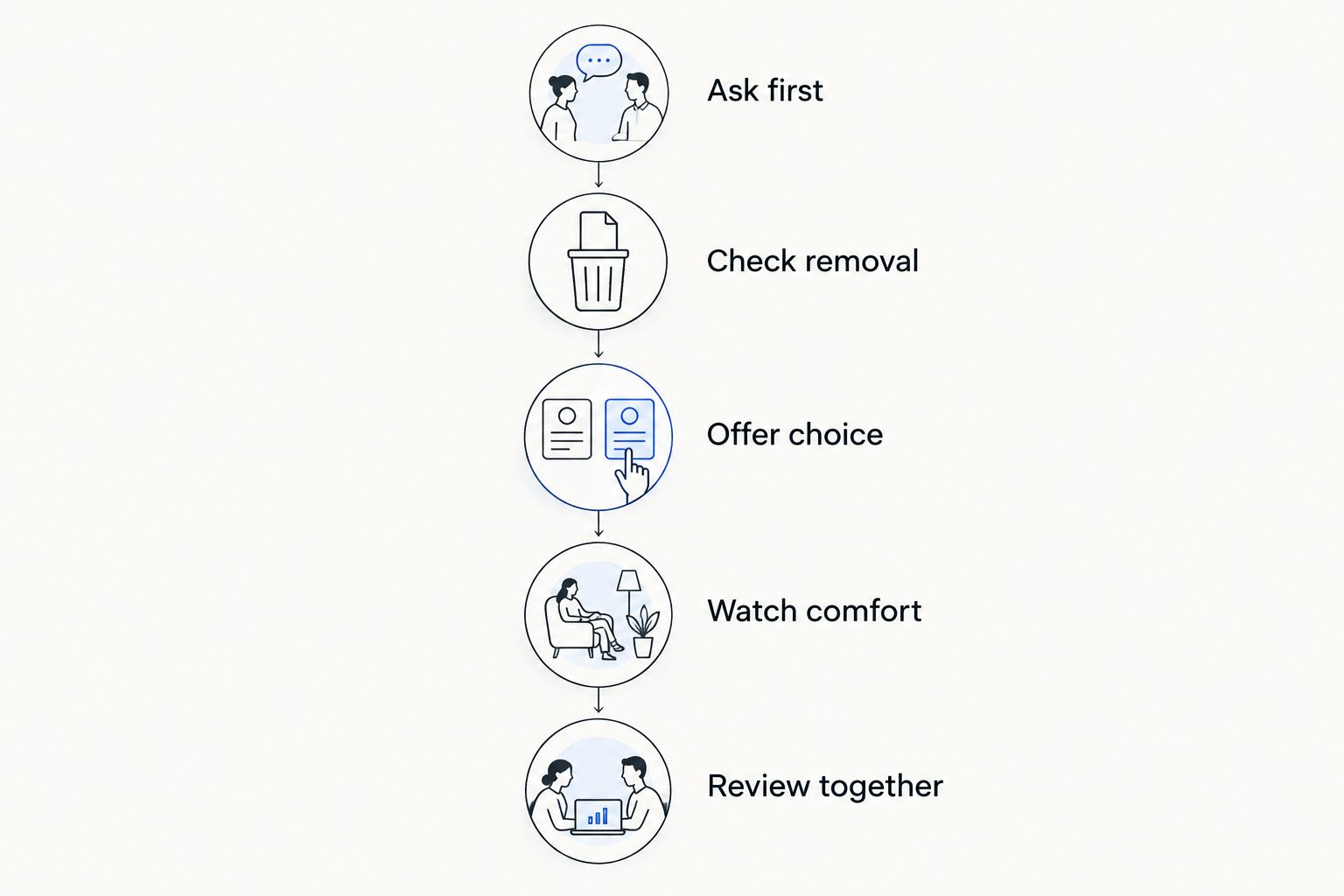
Use this sequence for your 2026 shortlist:
- Ask first: Discuss your child’s needs and the intended use with a clinician. Do not turn a body-weight percentage into a universal prescription.
- Check removal: Your child must be able to remove the blanket independently. Never wrap, tuck, fasten, or use it to restrict movement.
- Offer choice: Let your child accept or decline the blanket. Offer their usual blanket alongside it.
- Watch comfort: Keep the face and neck uncovered, remain attentive, and stop if your child shows discomfort, overheating, or breathing difficulty.
- Review together: Ask what felt comfortable and what did not. Accept a refusal without trying to train your child to tolerate the blanket.
Match the discussion to your child’s age
For younger children, do not interpret the organization’s age range as blanket eligibility. Weighted blankets do not belong in an infant’s sleep space, and a child who cannot remove one independently should not use one.
For school-age children, build the conversation around clear preferences: fabric, warmth, pressure, and the ability to stop. For teens, ask directly about privacy and choice. Do not introduce a weighted blanket at school, an outing, or a group activity without discussing the setting and relevant safety requirements.
Autism Learn & Play’s services span ages 2–18, but no single sensory tool fits that entire range. Families seeking services or community programs can email info@autismlearnplay.org; blanket safety questions belong with the child’s clinician.
How the options are ranked
This 2026 ranking compares formats by independent removal, child preference, texture, warmth, cleaning, and clarity of instructions. Removable-cover construction comes first for its separate surface-care option—not because it has demonstrated better therapeutic results.
The remaining categories answer different preferences. This is not a hands-on product test or a ranking of manufacturers. No named blanket earns a recommendation without verified specifications and an individual safety assessment.
Which weighted blanket should you choose?
Start with a removable-cover format only if your child wants pressure and a clinician confirms suitability. Compare open-knit construction for a knit preference, smooth fabric for an even surface, and textured fabric only when your child actively seeks it.
If any part of that decision remains unresolved, keep the ordinary blanket. Autism Learn & Play’s community-centered approach is compatible with a simple principle: participation and comfort do not require buying a sensory product.
FAQ
What’s the best weighted blanket for an autistic child?
No weighted blanket is best for every autistic child. A removable-cover format is a useful first comparison for surface care, but safety, independent removal, and your child’s preference determine suitability.
Do weighted blankets help autistic children sleep?
Weighted blankets are not a proven sleep treatment for autistic children. A randomized trial published in Pediatrics in 2014 found no improvement in objectively measured sleep, although children and parents preferred the weighted blanket.
How heavy should my child’s weighted blanket be?
Ask your child’s clinician for individual guidance rather than relying on a universal body-weight formula. The blanket must not restrict movement, and your child must be able to remove it without help.
Can a weighted blanket be used overnight?
Do not assume a weighted blanket is appropriate for overnight use. Discuss that specific use with your child’s clinician; weighted blankets should never be placed in an infant’s sleep space.
Is an open-knit weighted blanket better than a filled blanket?
Neither construction is automatically better. Open-knit blankets offer a different surface and structure, while filled blankets vary in fabric, seams, warmth, and care requirements.
What if my child pushes the weighted blanket away?
Stop and respect your child’s refusal. Offer their familiar blanket or another comfortable activity; enjoying pressure is not a requirement for an autistic child.
Can I wash the whole weighted blanket?
Wash the blanket only as its care instructions permit. A removable cover and its weighted insert can have different cleaning requirements, so read both before choosing a product.
Does Autism Learn & Play sell weighted blankets?
Autism Learn & Play is a nonprofit providing therapy services, community programs, and online classes for children on the autism spectrum. This guide does not identify a blanket retail offering or a product used in its programs.
One last thing
A child who prefers a blanket has told you something useful about comfort—not necessarily about sleep. The weighted-blanket trial found preference without an objective sleep improvement, and that distinction deserves a place in your 2026 shopping decision.
Before buying anything, ask your child what they like about their current blanket. The answer might be its familiar edge, its fabric, or simply that it belongs to them. Keep what works; added weight is optional.
Related guides
- Sleep aids for kids with autism
- Family support groups for autism in Brooklyn
- Social skills games for autistic teens