Best first inquiry for science: Science Lab. Best for focused math learning: Math Class. Best for individual academic support: Tutoring: 1 on 1. This 2026 shortlist covers online options from Brooklyn-based Autism Learn & Play, not a directory of in-person STEM clubs.
- For STEM programs for kids with autism, Brooklyn families can start by asking about Science Lab.
- Science Lab and Math Class are each listed as 30-minute Zoom classes; confirm age fit and participation supports.
- Tutoring: 1 on 1 is listed as a one-hour Zoom class for families seeking an individual format.
- Choose for your child’s interests, communication preferences, and comfort—not the most ambitious course description.
Why this matters
A science topic your child loves is a useful starting point. The next question is whether the class makes room for how your child communicates, explores, and takes breaks. A familiar subject does not automatically make an unfamiliar group comfortable.
Autism Learn & Play provides therapy services, community programs, and online classes for children ages 2–18. Its broader services are distinct from the specific online classes compared here; an educational class should not be treated as a substitute for individualized therapy.
For your 2026 search, separate two goals: learning a STEM subject and spending time with peers. Ask about both. An online class can address a subject interest without necessarily providing the shared projects or recurring peer contact you want from a community program.
What makes the best STEM program for your child?
Use these criteria before choosing a subject or format:
- Interest fit: Start with something your child already enjoys exploring, rather than a skill someone says they should enjoy.
- Age and learning fit: Ask about the intended ages, reading demands, prior knowledge, and task difficulty for the specific class.
- Communication access: Ask whether your child can respond through speech, typing, pointing, or an augmentative and alternative communication device, often called AAC.
- Sensory comfort: Ask about audio, screen activity, materials, breaks, and expectations around movement or camera use.
- Connection opportunities: If friendship is the goal, ask how children interact and whether they meet the same peers again.
- Practical fit: Check session length, caregiver involvement, equipment, and the difference between watching a demonstration and doing an activity.
The best match is a class your child can access without having to hide their needs. Treat answers to these questions as selection criteria, not requests to make after enrollment.
STEM options at a glance
These are starting points for a conversation, not claims that every class fits every age. The listed formats and durations come from the individual course descriptions supplied for this 2026 guide.
| Option | Best for | Standout detail | Key limitation |
|---|---|---|---|
| Science Lab | Families starting with a science interest | Listed as a 30-minute Zoom class | The listing does not describe experiments, materials, or peer interaction |
| Math Class | Families seeking a math-focused option | Listed as a 30-minute Zoom class | The listing does not identify math levels or teaching adaptations |
| Tutoring: 1 on 1 | Families prioritizing an individual format | Listed as a one-hour Zoom class | STEM subject coverage and pacing require confirmation |
None of these listings establishes an in-person Brooklyn STEM outing. If your priority is meeting other families locally, ask specifically about community programs rather than assuming an online course includes that experience.
1. Science Lab: best first inquiry for science interests
Science Lab is a named online class, listed as 30 minutes long and conducted through Zoom. It is the most direct science-specific option in this shortlist; the description does not establish whether children carry out experiments, watch demonstrations, or discuss scientific ideas.
Best for: Families whose child shows an interest in science and who want to explore an online format.
For a child who enjoys noticing patterns, asking questions, or exploring how things work, begin by describing that interest to the organizer. Then ask what a typical session involves. Do not assume that “Lab” means a materials kit or hands-on experiment at home.
Science Lab pros:
- Science is the explicit subject of the class.
- The listed 30-minute duration gives you a concrete session length to assess.
- The Zoom format does not require travel to a classroom.
Science Lab cons:
- The description does not specify activities or required materials.
- The description does not explain group size, age grouping, or interaction between children.
Before choosing Science Lab, ask whether children need to handle materials and how instructions are presented. If your child prefers watching before participating, ask whether observation is accepted. For hands-on work, clarify the adult supervision expected at home.
Verdict: Hold enrollment until Science Lab’s activities, age fit, and participation expectations match your child.
2. Math Class: best for a math-specific learning goal
Math Class is listed as a 30-minute class conducted through Zoom. The title identifies the subject, but the description does not specify the level or topics covered.
Best for: Families looking for a math-focused class rather than a general science activity.
Bring a concrete example of what your child enjoys or finds difficult. That might be counting objects, understanding a homework question, or exploring a favorite number pattern. These are examples of questions to discuss, not verified features of the class.
Math Class pros:
- Math is the stated focus, making the initial subject match straightforward.
- The published session length is 30 minutes.
- The online format removes the journey to and from a class.
Math Class cons:
- The listing does not establish prerequisites or learning levels.
- The listing does not describe visual supports, pacing, or how children answer questions.
Ask whether a child needs to read instructions independently and whether spoken answers are expected. Also clarify whether the session uses shared activities, individual work, or demonstrations. Those differences matter when you are choosing between academic practice and a chance to connect with peers.
Verdict: Hold enrollment until Math Class’s level and response methods fit your child’s current learning needs.
Compare the listed science and math classes
Both options have published session lengths, but duration alone does not determine fit. Use the course details as a starting point, then ask about the actual experience before making a choice.


3. Tutoring: 1 on 1: best for an individual learning format
Tutoring: 1 on 1 is listed as a one-hour class conducted through Zoom. Its individual format distinguishes it from the subject-named options, but the description does not confirm which STEM subjects the tutor covers.
Best for: Families who want to discuss a specific academic need in an individual setting.
Start with the task, not a broad request to “catch up.” Explain what your child is working on, how instructions are usually presented, and which ways of responding feel comfortable. Ask whether the tutor covers that subject before discussing a learning plan.
Tutoring: 1 on 1 pros:
- The course explicitly identifies an individual format.
- The listing states a one-hour session length.
- The Zoom format avoids a separate trip for tutoring.
Tutoring: 1 on 1 cons:
- STEM subject coverage is not specified in the description.
- Individual tutoring is not a peer-group experience.
- A one-hour session requires a separate conversation about breaks and pacing.
Do not assume individual instruction automatically means a particular accommodation is included. Ask about visual instructions, communication methods, caregiver involvement, and what happens when your child needs to pause.
Verdict: Hold enrollment until the tutor confirms subject coverage and a workable session structure.
How this shortlist is ranked
Science Lab comes first because its title most directly matches a science-program search. Math Class takes the math-specific slot, while Tutoring: 1 on 1 offers a distinct individual format. This is a ranking by stated subject and format—not measured teaching quality, child outcomes, or family reviews.
Autism Learn & Play is a starting point for Brooklyn families seeking online STEM learning options. The next step is to confirm whether a particular class meets your child’s needs, especially when friendship or hands-on participation is the main goal.
A practical way to choose in 2026
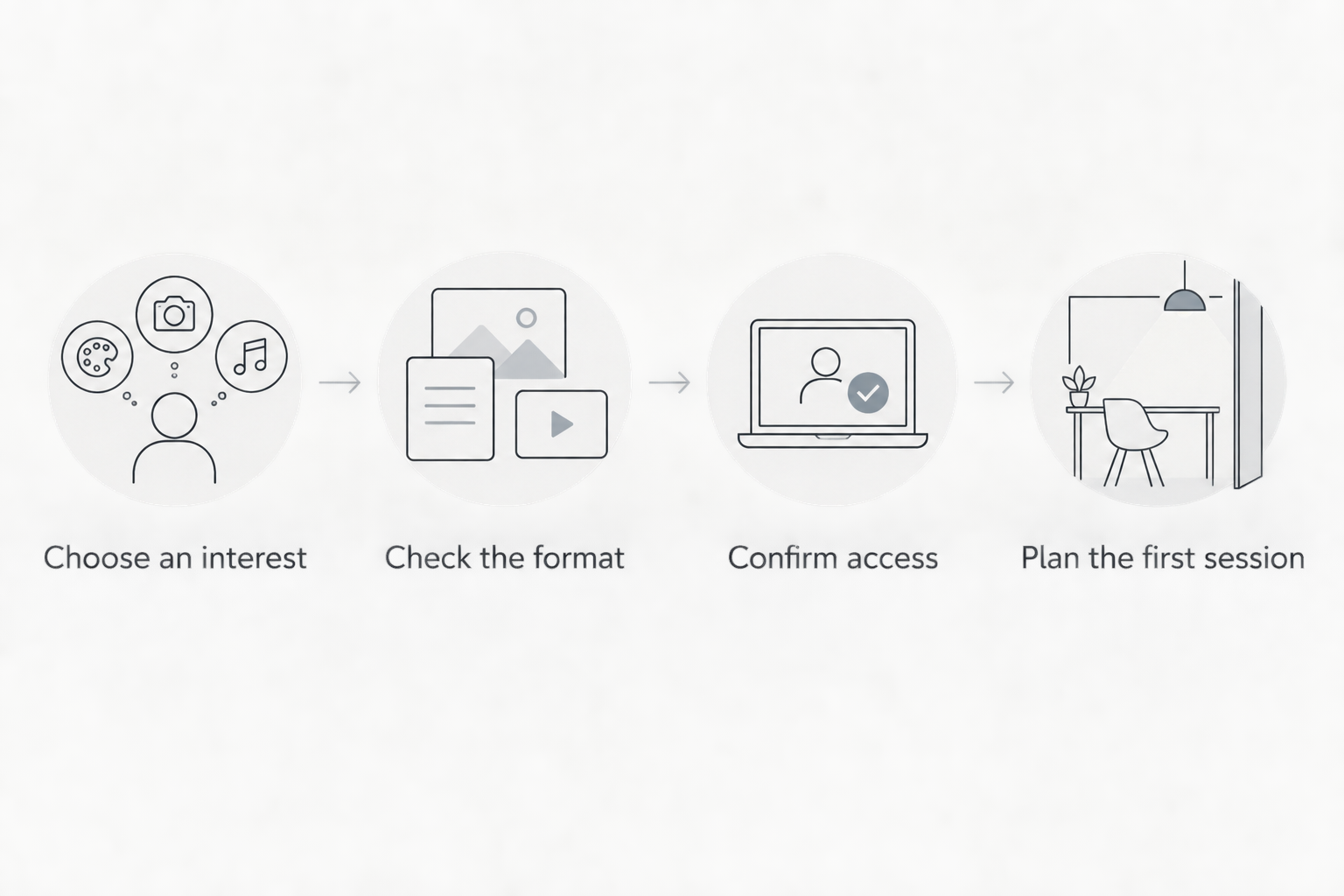
Use this sequence to turn a broad search into a useful conversation with an organizer. Keep your child involved through whatever communication method works for them.
- Choose an interest. Name a subject or activity your child wants to explore. Ask what they would like to do, not only what they want to learn.
- Check the format. Confirm whether the session is online or in person, individual or group-based, and demonstration-led or participatory.
- Confirm access. Discuss communication, sensory preferences, breaks, materials, and caregiver support before committing.
- Plan the first session. Explain what will happen and agree on a way for your child to request help or stop.
For an in-person Brooklyn outing, add questions about arrival, crowded spaces, restrooms, a quieter place to pause, and leaving early. These are planning questions, not verified features of any program in this shortlist.
Match the experience to your child’s age
Age helps frame your questions, but it does not replace your child’s preferences or learning profile. A program serving children ages 2–18 does not establish that every individual class serves that entire range.
Ages 2–5: ask about adult participation
Ask how much a caregiver is expected to do and whether activities involve small materials. Clarify whether the child needs to follow spoken instructions or remain at a screen. Choose an experience around curiosity and comfort, rather than expecting a young child to complete a formal lesson.
Ages 6–12: separate learning from social expectations
Ask about reading requirements, task steps, and how children share materials or ideas. If connection is important, find out whether children actually work together. Being in the same online room is different from having supported opportunities to interact.
Ages 13–18: protect choice and age-respectful learning
Invite your teen to assess the topic, presentation, and group before deciding. Ask whether examples and materials suit teenagers, including teens working on foundational skills. Respect a preference for individual learning without treating it as a failure to socialize.
Which STEM option should you choose?
Start with Science Lab if your main goal is exploring a science interest. Choose Math Class for a math-specific inquiry, and ask about Tutoring: 1 on 1 when an individual academic format matters more than a group experience.
For your 2026 decision, do not confuse a subject match with a complete match. Confirm the class experience, age fit, and access arrangements first. If you want to make friends or meet Brooklyn families, ask separately about recurring community activities and how participation works.
To discuss the listed classes or community programs with Autism Learn & Play, use the website contact form or email info@autismlearnplay.org. Describe your child’s interests and the experience you are seeking without assuming a particular program arrangement.
FAQ
What are the best STEM programs for kids with autism in Brooklyn in 2026?
Science Lab is the first science-specific inquiry in this shortlist; Math Class suits a math-focused search, and Tutoring: 1 on 1 offers an individual format. These are listed online options, not verified in-person Brooklyn STEM clubs. Confirm age fit, activities, and access arrangements before choosing.
Are these STEM classes in person in Brooklyn?
The three listed classes are conducted through Zoom. The organization is Brooklyn-based, but that does not make these particular classes in-person outings.
How long are the online science and math classes?
Science Lab and Math Class are each listed as 30 minutes long. Tutoring: 1 on 1 is listed as one hour. Ask how breaks and caregiver participation work within that time.
Can my nonspeaking child join an online STEM class?
Confirm the specific class’s communication arrangements before enrolling your nonspeaking child. Ask whether pointing, typing, AAC, or another preferred method can be used and whether spoken answers are required.
Will a STEM class help my child make friends?
A STEM class is not a guarantee of friendship. If connection is your priority, ask about shared activities, recurring classmates, and support for different communication styles. Individual tutoring does not provide a peer group.
Can my autistic teenager take one of these classes?
Confirm eligibility and age-appropriate content for the particular class. The organization serves children through age 18, but the individual course descriptions do not establish each class’s age range.
What should I ask before choosing a STEM program?
Ask about activities, age grouping, communication access, sensory demands, breaks, and caregiver involvement. For a community outing, also ask about arrival, quieter spaces, peer interaction, and leaving early.
One last thing
Ask this before committing: “What happens if my child wants to watch but not join in yet?” The answer gives you something more useful than a broad promise of inclusion: a concrete picture of how the organizer responds to your child’s choices.
Related guides
- STEM activities for kids with autism
- Autism-friendly museums and attractions in NYC
- Connecting online autism classes to in-person therapy
- Social skills games for autistic teens