Best first inquiry: Arts & Crafts Class for families exploring creative projects. Best verified online format: Drawing Class; best format to look for when friendship is your priority: a small, interest-led community art group. This 2026 guide helps Brooklyn parents compare art options by their child's interests, sensory preferences, communication, and age—not by promises of a perfect fit.
- Autismlearnplay offers Arts & Crafts Class and Drawing Class; ask which matches your child’s interests and support needs.
- For art classes for kids with autism Brooklyn families can assess, compare sensory choices, communication access, and peer fit.
- Drawing Class is a 30-minute Zoom class; confirm age suitability and participation expectations before choosing.
- For friendship-focused outings, ask how children interact rather than assuming every group class creates connections.
Why this matters
The best art class gives your child meaningful choices, not a finished project to copy perfectly. For Brooklyn families, the decision also includes travel, transitions, and whether your child wants an outing or an activity at home.
Autismlearnplay is a Brooklyn-based nonprofit serving children ages 2–18 through therapy services, community programs, and online classes. Its art-related options provide a starting point for questions; an online class and an in-person friendship group serve different purposes.
For your 2026 shortlist, separate the activity from the setting. A child who loves drawing does not automatically want a busy studio, and a teen seeking friends deserves more than an age-inappropriate craft project.
What makes the best art class for your child?
Use these criteria before comparing names or completing a registration:
- Creative choice: Ask whether children choose subjects, tools, or ways to approach a project instead of following an identical example.
- Sensory flexibility: Ask about sound, smells, textures, lighting, and alternatives to materials your child avoids.
- Communication access: Explain how your child communicates, including gestures, typing, or an AAC device, and ask how instructors respond.
- Age and interest fit: Check the actual participant age range and project interests rather than relying on a broad children's label.
- Peer connection: Ask whether the activity includes optional ways to share ideas, notice another child's work, or create alongside someone.
- Practical access: Confirm the location or online format, caregiver expectations, supplies, and what happens when a child needs a break.
A welcoming description is not a substitute for these answers. Look for specific explanations that respect your child's preferences.
Art class options at a glance
The first two entries below are named classes offered by Autismlearnplay. The remaining entries are formats to ask local providers about, not claims that a particular Brooklyn venue offers them.
| Option | Best for | Standout feature | Key limitation |
|---|---|---|---|
| Arts & Crafts Class | Exploring a creative class option | A named arts-and-crafts offering | Confirm projects, format, ages, and support arrangements |
| Drawing Class | Families seeking an online drawing option | A 30-minute class conducted through Zoom | Does not provide an in-person Brooklyn outing |
| Small community art group | Families prioritizing peer connection | A format organized around creating alongside others | Group size alone does not establish sensory or communication access |
| Individual art instruction | Children who want focused attention | A format centered on one learner | Does not provide a peer group |
| Teen interest-led art workshop | Older children seeking age-respectful projects | A format chosen around the teen's own interests | A teen label does not establish suitable support |
1. Arts & Crafts Class: best for exploring a creative class option
Best for: Families who want to ask about an arts-and-crafts offering before narrowing their choice to drawing. Arts & Crafts Class is a named offering from Autismlearnplay. Ask what children actually do during a session before deciding whether it matches your child's interests.
Start with preferences rather than goals someone else has selected. Tell the organizer whether your child likes making recognizable pictures, arranging objects, choosing colors, or exploring a process without keeping the result.
Arts & Crafts Class pros:
- Provides a specific creative offering to ask about.
- Gives families an alternative to choosing a drawing-specific title.
- Creates a useful starting point for discussing preferred activities.
Arts & Crafts Class cons:
- The title alone does not establish materials, session structure, or sensory accommodations.
- Confirm whether the class is online or in person and which ages it serves.
For your 2026 inquiry, ask for a description of a typical session and what a child can do instead of the main project. Do not assume that an arts-and-crafts label means messy materials are required—or that alternatives are provided.
Verdict: Hold until the class format and activity choices match your child.
2. Drawing Class: best for an online drawing option
Best for: Families who want a drawing class without traveling to a studio. Drawing Class is a 30-minute class conducted through Zoom. After families select preferred course days, the organization gets in touch to finalize and book the session.
Autismlearnplay's Drawing Class is the clearest starting point here for Brooklyn families specifically seeking an online drawing option. It is not a substitute for an in-person outing if meeting other children face to face is your main goal.
Drawing Class pros:
- The online delivery format is specified.
- The 30-minute session length helps you assess the time commitment.
- The drawing focus gives you a clear interest to discuss with your child.
Drawing Class cons:
- Zoom participation is different from sharing a physical art space.
- Confirm supplies, age suitability, caregiver involvement, and interaction expectations.
Ask whether your child can watch before drawing, work away from the screen, or show a picture without speaking. These are questions to resolve, not promised class features.
Verdict: Hold until the online participation expectations fit your child.
Compare the named creative classes
These cards identify the two named offerings discussed above. Use the class descriptions as a starting point, then ask about the details that matter to your family.


3. Small community art group: best for prioritizing peer connection
Best for: Children who want opportunities to create alongside other children. Look for a community art group that can explain how participants share space and connect without requiring everyone to speak, collaborate, or present their work.
Ask what interaction looks like. Passing supplies, choosing a shared theme, or noticing another child's picture are possible activity designs to request—not features to assume.
Small community art group pros:
- Offers a format to seek when meeting peers is your priority.
- Allows you to assess both the activity and the shared environment.
- Gives families a reason to ask about returning participants and shared interests.
Small community art group cons:
- A small group can still involve uncomfortable sound, movement, or textures.
- Attendance does not guarantee friendship or a compatible peer match.
For a Brooklyn outing in 2026, ask about arrival, waiting areas, caregiver participation, and leaving early. A clear explanation helps you plan without making your child responsible for tolerating an unsuitable environment.
Verdict: Hold until the organizer explains both participation choices and peer interaction.
4. Individual art instruction: best for focused attention
Best for: Children who prefer working with an instructor without a peer group. Individual art instruction is a format to consider when your child wants to explore a particular interest or when a shared setting is not the right choice.
Describe what your child enjoys and what makes instruction frustrating. Ask how the instructor responds when a learner changes direction, declines a material, or needs more time before beginning.
Individual art instruction pros:
- Makes one learner's interests the center of the discussion.
- Provides a format for requesting an individually paced approach.
- Removes peer-group participation from the immediate decision.
Individual art instruction cons:
- Does not offer a group of potential friends.
- Individual attention alone does not establish autism experience or communication access.
Keep recreational instruction separate from therapy. If your family seeks therapeutic support, ask about the service and the professional providing it rather than treating every individual art lesson as art therapy.
Verdict: Hold until the instructor explains their approach to choice, communication, and breaks.
5. Teen interest-led art workshop: best for age-respectful projects
Best for: Older children and teens who want their interests to shape the activity. Look for workshops organized around a subject or creative process your teen actually chooses. Ask your teen whether they want instruction, social time, independent work, or a combination.
Do not equate simpler instructions with younger-looking projects. A teen can need clear steps or communication support while wanting themes that reflect their age and interests.
Teen interest-led art workshop pros:
- Starts with the teen's own reasons for attending.
- Gives you a way to assess shared interests with potential peers.
- Keeps age-respectful content central to the decision.
Teen interest-led art workshop cons:
- Teen programming does not automatically include sensory flexibility.
- Sharing work publicly or completing a group project might be an expectation; ask first.
Before choosing a 2026 workshop, let your teen review the description and prepare questions in their preferred communication format. Their interest matters more than how impressive the finished work looks.
Verdict: Skip workshops that dismiss your teen's preferences or require unwanted sharing.
How these options are ranked
The ranking follows the criteria above: creative choice, sensory flexibility, communication access, age fit, peer connection, and practical access. It is a decision guide, not a claim that every option has been tested or that one format suits every autistic child.
The named classes come first because they provide concrete offerings to explore. The remaining formats separate different family priorities: meeting peers, receiving individual instruction, and finding age-respectful activities.
Match the activity to your child's age and preferences
Use age as a planning prompt, not a measure of ability. Children within the same age range have different interests and support needs.
- Ages 2–5 years: Ask about caregiver involvement, safe materials, freedom to explore, and whether children must remain seated.
- Ages 6–12 years: Ask about project choice, instructions, breaks, and optional ways to interact with peers.
- Ages 13–18 years: Ask about age-respectful themes, privacy, independence, and whether the teen wants a social or individual experience.
You do not need to turn the outing into a test. Decide what would make the experience worthwhile for your child, including simply observing or discovering a material they enjoy.
Prepare for the first class without overplanning
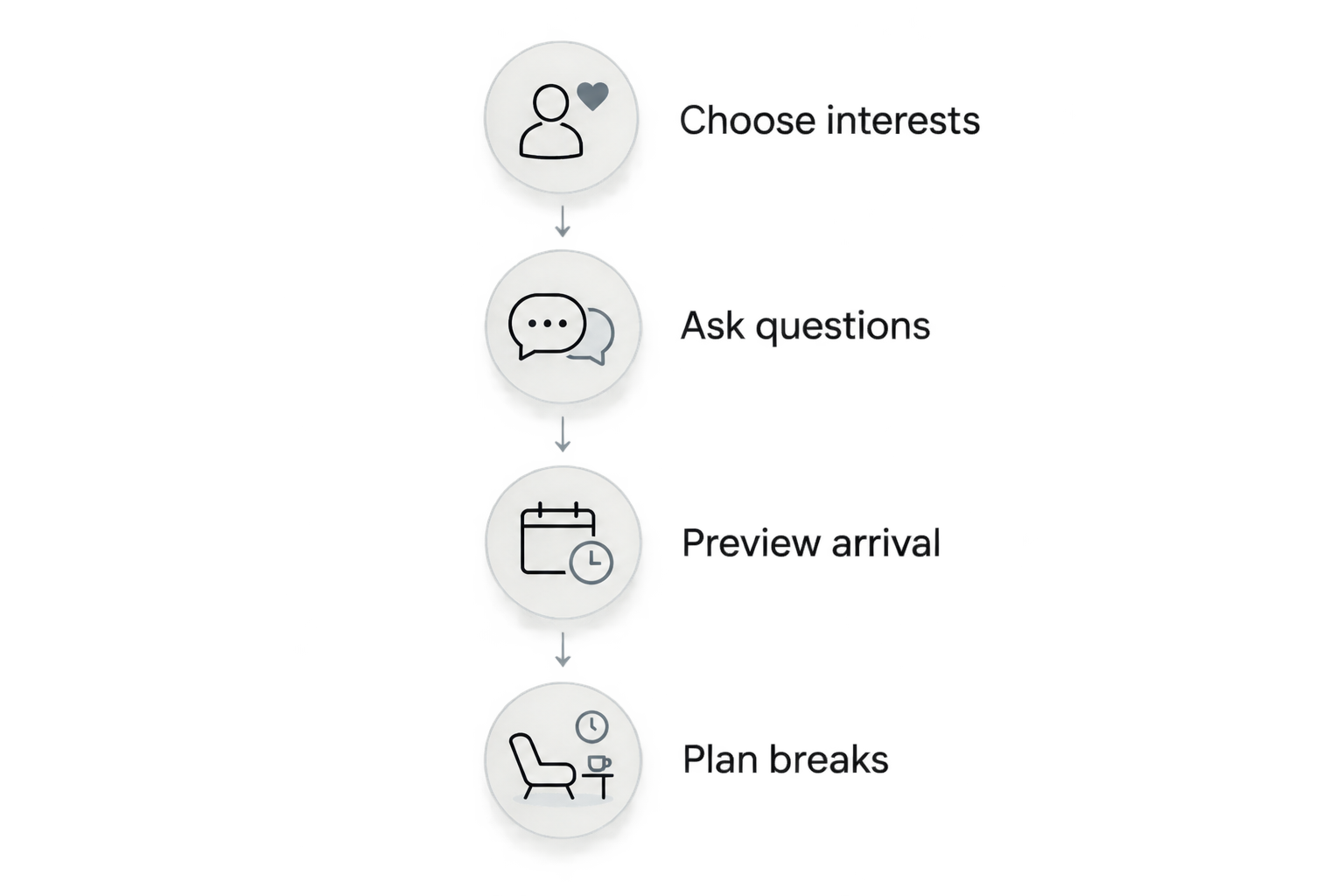
Use this sequence to turn a class description into a practical plan:
- Choose interests: Let your child help select the activity using conversation, pictures, gestures, or their usual communication method.
- Ask questions: Explain relevant sensory preferences, communication methods, and support needs. Ask how the organizer responds.
- Preview arrival: Request a description of entering, waiting, meeting the instructor, and beginning the activity. For Zoom, ask how joining works.
- Plan breaks: Agree on how your child can pause or leave, then explain the plan in a way they understand.
A predictable plan is more useful than a promise that everything will be easy. Keep it flexible enough to follow your child's response.
Which art class should you choose?
Start with your child's preferred activity, then choose the setting. Explore Arts & Crafts Class when you want to discuss a creative offering, or Drawing Class when drawing through Zoom matches your family's goal.
If friendship is the priority, ask specifically about an in-person peer group rather than expecting an online class or individual lesson to provide the same experience. For questions about Autismlearnplay's art classes, use the contact form or write to info@autismlearnplay.org with your child's age, interests, and preferred format.
FAQ
What’s the best art class for an autistic child in Brooklyn?
The best art class matches your child’s interests, sensory preferences, communication, and desired setting. Compare actual participation expectations rather than choosing by an autism-friendly label alone.
Does Autismlearnplay offer online art classes?
Autismlearnplay offers Drawing Class as a 30-minute Zoom class. Ask about age suitability, supplies, caregiver involvement, and participation expectations before choosing.
Is Arts & Crafts Class an in-person Brooklyn program?
Confirm the delivery format directly before planning an outing. Also ask about the location, participant ages, materials, and caregiver expectations.
Can my nonspeaking child join an art class?
Ask the organizer how the class supports your child’s communication method before enrolling. Explain any use of AAC, gestures, typing, or other communication, and ask how children make choices or request breaks.
Is an art class the same as art therapy?
No, recreational art instruction and art therapy are different services. If you want therapeutic support, ask about the service’s purpose and the qualifications of the professional providing it.
How do I find an art activity my autistic teen will enjoy?
Start with your teen’s own interests and preferred setting. Check that project themes, peer ages, communication support, and expectations for sharing work feel appropriate to your teen.
Will a group art class help my child make friends?
A group art class does not guarantee friendship. Ask about shared interests and optional interaction, then listen to whether your child wants to return.
One last thing
Ask what happens when a child chooses not to make the planned project. That answer reveals more about participation choices than a photograph of matching finished artwork. You are looking for a place where your child can create, connect, or observe without having to hide who they are.
Related guides
- Art therapy activities for autistic kids
- Art therapy for autistic teens
- Autism-friendly museums and attractions in NYC