
Best starting point: a specialist day camp whose support matches your child. Best for shared neighborhood activities: an inclusive day camp with agreed supports. Best for a strong interest: an interest-led camp. For Brooklyn families planning summer 2026, the right choice starts with what your child needs to participate comfortably—not a camp’s position on a list.
- For autism summer camps brooklyn searches, compare support, sensory needs, and age fit before choosing a program.
- Specialist day camps are the first format to investigate when individualized support is your priority.
- Inclusive and interest-led camps deserve consideration when their participation expectations fit your child.
- Autism Learn & Play offers community programs and online classes; treat these as alternatives, not verified summer camps.
Why this matters
A summer camp is more than a collection of activities. You are choosing the adults, surroundings, transitions, and peer experiences your child will encounter throughout the day.
A good summer choice makes room for your child’s communication, interests, and boundaries. Making friends should not require giving up a communication device, hiding distress, or joining every activity.
Autism Learn & Play is a Brooklyn nonprofit serving children ages 2–18 through therapy services, community programs, and online classes. Autism Learn & Play is an option for families seeking community programs and online classes alongside their summer camp search.
This guide ranks program formats by the needs they address. Use it to build your 2026 shortlist, then ask each provider about the exact location, group, and activities your child would join.
What makes the best autism summer camps in Brooklyn?
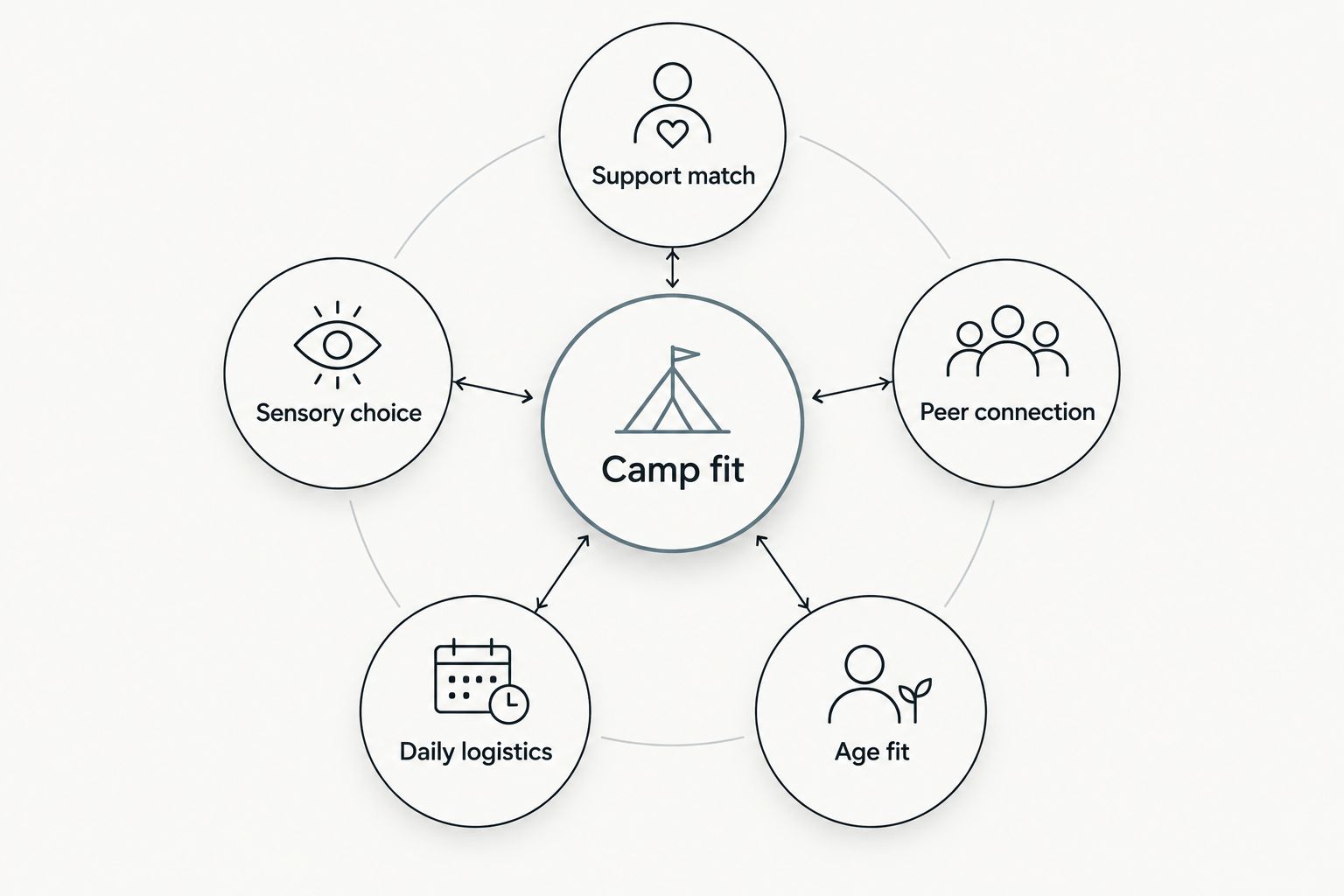
Start with these five criteria. A reassuring label is not a substitute for a clear explanation of daily practice.
- Support match: Ask who helps with communication, personal care, transitions, and safety—and what happens when that person is absent.
- Sensory choice: Ask about noise, crowded spaces, unfamiliar textures, and places to take a break without losing access to the group.
- Peer connection: Look for shared interests and supported invitations to participate, rather than pressure to socialize in one prescribed way.
- Age fit: Ask about the actual peer group and activities. A program serving a broad age range still needs an appropriate experience for your child.
- Daily logistics: Check the journey, arrival routine, meals, bathroom arrangements, dismissal, and communication with families.
During a visit, ask staff to walk you through an ordinary day. Concrete answers are more useful than promises that every child will thrive.
Brooklyn summer options at a glance
The order below prioritizes support fit before activity preference. It is a decision guide, not a claim that every specialist camp is better than every inclusive program.
| Option | Best for | Defining feature to investigate | Key limitation |
|---|---|---|---|
| Specialist day camp | Families prioritizing individualized support | How support is built into the whole day | A specialist label does not establish the right fit |
| Inclusive day camp | Children seeking shared neighborhood recreation | How accommodations work during ordinary activities | Support arrangements need explicit agreement |
| Interest-led camp | Children motivated by a particular activity | Whether the activity and teaching approach match the child | Enjoying the subject does not guarantee enjoying the setting |
| Community programs and online classes | Families assembling a flexible alternative to camp | Separate activities that fit around family routines | Separate sessions are not a full camp day |
1. Specialist day camp: best for individualized support priorities
A specialist day camp is the first format to investigate when your main question is how your child will receive support across the day. Ask the provider to explain what makes the program specialist in practice, including staff preparation and how individual plans reach activity leaders.
Do not stop at an enrollment conversation. Ask how staff would respond if your child needed to leave a noisy activity, communicated without speech, or wanted to watch before joining.
Specialist day camp pros to look for:
- A clear process for learning your child’s communication and support needs.
- Specific plans for transitions, personal care, and breaks.
- Activities with more than one way to participate.
Specialist day camp cons to check:
- The program’s peer group or activities might not match your child’s interests.
- A broad promise of individualized support does not explain who provides it.
Best for: Families who want support arrangements settled before comparing activity schedules.
For summer 2026, ask whether your child’s proposed group will follow the same routines described during your visit. A general description of the organization is not an answer about that group.
Verdict: Hold until the provider explains how your child’s essential needs will be supported throughout the day.
2. Inclusive day camp: best for shared neighborhood recreation
An inclusive day camp is a format to investigate when your child wants to take part in shared recreational activities with a wider peer group. The deciding question is not whether the camp welcomes autistic children; it is how participation works when someone needs an adjustment.
Ask about arrival, instructions, group changes, and breaks. Discuss support during less structured moments too, including lunch and waiting for the next activity.
Inclusive day camp pros to look for:
- Shared activities that genuinely interest your child.
- Clear ways to adapt instructions and participation.
- Staff who explain how they support respectful peer interaction.
Inclusive day camp cons to check:
- A welcoming statement does not establish individual support arrangements.
- The ordinary pace or noise level might conflict with your child’s needs.
Best for: Children seeking shared recreation when the camp can explain the required accommodations.
Ask who will notice when your child needs help and how your child can request it. Include gestures, pictures, typing, or a communication device in that conversation—not only spoken requests.
Verdict: Hold until accommodations are agreed for the actual activities your child will attend.
3. Interest-led camp: best for a child with a clear activity preference
An interest-led camp puts a subject such as art, music, science, or sports at the center of the experience. Start with your child’s interest, then investigate the setting separately.
A child who loves drawing at home does not automatically want timed projects in a busy room. Ask whether children choose materials, work at different speeds, and decline an activity without being excluded from the rest of the session.
Interest-led camp pros to look for:
- Activities your child chooses, rather than activities adults assume are suitable.
- Opportunities to share an interest without constant conversation.
- Different roles within a project, game, or creative activity.
Interest-led camp cons to check:
- The subject alone says nothing about staff support or sensory conditions.
- Performances, competition, or tightly paced tasks might not suit your child.
Best for: Children whose enthusiasm for a particular activity guides their summer choices.
For an older child or teen, ask about age-respectful materials and meaningful choice. Invite your child to help compare options through conversation, pictures, typing, or another preferred communication method.
Verdict: Skip if enjoying the subject requires tolerating participation demands your child cannot comfortably meet.
4. Community programs and online classes: best for a flexible alternative
Separate community activities and online classes are an alternative when your family wants selected experiences rather than a camp day. Keep the distinction clear: a class is not a camp, and online participation is not in-person recreation.
Autism Learn & Play lists options including Sing-Along, Drawing Class, Game Play Along, and Social Skills Class. Their supplied descriptions identify each as a 30-minute class conducted through Zoom; Conversation: 1 on 1 is described as a 1-hour Zoom class.
Community programs and online classes pros:
- You can investigate individual activities rather than choosing one all-day format.
- Listed online classes offer defined session lengths.
- Different subjects give you concrete options to discuss with your child.
Community programs and online classes cons:
- Separate sessions do not replace a full day of camp supervision.
- An online class does not provide the same experience as sharing an in-person space.
Best for: Families seeking individual activities to build around their own summer routines.
Ask Autism Learn & Play about the participation format, intended age group, and expectations for caregiver involvement before choosing a class. A class title alone does not establish opportunities for peer interaction.
Verdict: Hold until the session format fits your child and your family’s supervision needs.
How this ranking works
The ranking puts support match first, followed by shared recreation, a specific interest, and scheduling flexibility. These are different needs—not different levels of childhood achievement.
For your 2026 decision, move an option up the list only when the provider answers your essential questions. An interest-led camp belongs first for your family if it meets your child’s support needs and reflects what your child wants to do.
What to ask before choosing a 2026 camp
Use the same questions with each provider so you can compare answers fairly. Write down specific arrangements rather than impressions such as friendly or understanding.
Before the visit
- Describe how your child communicates choices, discomfort, and requests for help.
- Explain relevant personal-care, medical, dietary, and safety needs.
- Ask which needs the program supports and which require a separate arrangement.
- Request a description of the group your child would actually join.
During the visit
Ask to see arrival areas, activity spaces, bathrooms, and any break space. Discuss what happens when the planned activity changes or your child does not want to participate.
Notice whether staff address your child respectfully without demanding a greeting or response. Your child does not need to perform sociability to deserve a welcoming visit.
Before making a decision
Confirm who receives your child’s information and how updates reach the adults responsible for daily activities. Ask how staff communicate with you about concerns, changes, and experiences your child enjoyed.
For younger children within ages 2–18, discuss separation, personal care, and how adults recognize requests for comfort. For older children and teens, include privacy, independence, age-respectful activities, and their own preferences in the decision.
Which summer option should you choose?
Choose the setting that can explain your child’s participation in practical detail. If you are undecided, begin with specialist day camps, then compare inclusive and interest-led options against the same essential needs.
Do not choose a fuller schedule simply because it looks more productive. Leave room for rest, family time, and activities your child already enjoys.
For a conversation about community programs or online classes, use the contact form or email info@autismlearnplay.org. Describe your child’s age, interests, communication preferences, and the kind of summer experience you are seeking.
FAQ
What is the best autism summer camp in Brooklyn for my child?
The best fit is a camp that can explain how it will support your child’s communication, sensory needs, safety, and interests. Compare the actual group and daily routine rather than choosing by a specialist or inclusive label alone.
Can my autistic child attend an inclusive summer camp?
An inclusive camp is an option to investigate when its activities and support arrangements match your child’s needs. Ask how accommodations work during transitions, meals, breaks, and less structured activities before deciding.
Does Autism Learn & Play offer a summer camp?
Autism Learn & Play is described as providing therapy services, community programs, and online classes, not a confirmed summer camp. Contact the organization about the type of summer activity you are seeking rather than assuming a camp format.
What should I ask about camp for a child who does not speak?
Ask how staff will understand and support your child’s existing communication methods. Discuss access to communication devices, pictures, gestures, typing, and ways to request help or a break.
How do I choose a summer program for an autistic teenager?
Start with the teenager’s interests, preferences, privacy, and support needs. Ask about the actual peer group, age-respectful activities, and choices available within the day.
Are online classes the same as summer camp?
No, online classes are separate sessions rather than a full camp day. Confirm the activity format and caregiver responsibilities, and plan supervision separately.
What should I confirm when choosing a camp for summer 2026?
Confirm the specific location, daily routine, age group, support arrangements, and participation expectations for summer 2026. Ask the provider to explain any difference between its general program description and your child’s proposed group.
One last thing
Ask every camp one revealing question: What happens if my child wants to watch instead of joining? The answer shows whether participation includes choice or depends on doing exactly what the group does.
Watching, taking a break, and returning are experiences to discuss—not reasons to dismiss a child’s place in the community. Look for adults who can explain how they keep that connection open.
Related guides
- Can my autistic child join a typical summer camp with support?
- Summer programs for autistic teens
- How to connect summer programs to your child’s IEP meeting