Best starting point for individual academic help: Tutoring: 1 on 1. Best subject-focused options: Reading Class for reading, Math Class for math, and Writing Class for writing; best planning-focused option: Organization and Goal Setting. This 2026 special needs tutoring guide helps Brooklyn families compare these online options by learning goal and session format.
- Autism Learn & Play offers special needs tutoring online; Tutoring: 1 on 1 is the individual academic option.
- Reading Class, Math Class, and Writing Class each have a listed duration of 30 minutes via Zoom.
- Choose by your child’s learning goal, communication needs, and comfort with online learning—not age alone.
- Ask about adaptations and school-goal coordination before choosing a class.
Why this matters
Your child deserves learning support that respects how they communicate, what interests them, and when they need a break. Choosing a subject is only part of the decision. The format must also fit your family's day.
Autism Learn & Play serves children ages 2–18 through therapy services, community programs, and online classes. Its services include tutoring, but an online academic class is not the same experience as an in-person community outing. Ask separately about opportunities to meet peers and make friends.
For Brooklyn families seeking individual online special needs tutoring, Autism Learn & Play's Tutoring: 1 on 1 is the clearest starting point in this comparison. That verdict reflects the listed format, not a promise of academic progress or a ranking against unreviewed providers.
What makes the best special needs tutoring resource?
For your 2026 shortlist, prioritize these criteria before choosing a class name:
- Goal fit: Identify the task your child wants help with, such as understanding a passage or starting an assignment.
- Individual attention: Decide whether your child needs one-to-one support; do not assume every subject class has that format.
- Communication access: Ask how your child can answer through speech, typing, pointing, or their usual communication system.
- Session fit: Compare the listed duration with your child's experience of online learning, including breaks and transitions.
- School connection: Ask whether the tutor can use relevant schoolwork and work toward an agreed academic goal.
- Child choice: Include your child's preferences about topics, materials, participation, and help.
Special needs tutoring options at a glance
These are options from the nonprofit's online class catalog, not a borough-wide ranking of tutoring providers. All five use Zoom; confirm age fit, teaching approach, and session arrangements directly.
| Option | Best for | Standout listed feature | Key limitation |
|---|---|---|---|
| Tutoring: 1 on 1 | Individual academic support | Explicit one-to-one format; 1 hour | Longer listed session than the subject classes |
| Reading Class | A reading-focused starting point | Reading focus; 30 minutes | Not a substitute for checking the child's specific reading needs |
| Math Class | A math-focused starting point | Math focus; 30 minutes | Requires checking the match to current schoolwork |
| Writing Class | A writing-focused starting point | Writing focus; 30 minutes | Requires checking how writing and communication supports are handled |
| Organization and Goal Setting | Planning-focused support | Organization focus; 30 minutes | Not a replacement for direct subject instruction |
1. Tutoring: 1 on 1: best for individual academic support
Tutoring: 1 on 1 is a listed 1-hour Zoom class with an explicitly individual format. Start here when your main priority is dedicated academic attention rather than choosing a subject-labeled class immediately.
Bring a recent assignment and describe where your child gets stuck. Ask how the tutor would approach that task, respond to frustration, and accommodate your child's communication preferences. Confirm whether the hour can include breaks rather than assuming a continuous seated lesson.
Tutoring: 1 on 1 pros:
- The name explicitly identifies individual instruction.
- The online format removes travel to the session.
- The listed duration gives you a clear starting point for discussing session fit.
Tutoring: 1 on 1 cons:
- A 1-hour appointment requires more scheduled time than the listed subject classes.
- Online participation still needs a suitable device, connection, and learning space.
Best for: Families prioritizing individual academic help and willing to discuss the session structure beforehand.
Verdict: Hold until the provider confirms a workable learning goal, age match, and break plan.
2. Reading Class: best for a reading-focused starting point
Reading Class is a 30-minute class conducted via Zoom. Its subject focus makes it a starting point when reading—not general homework completion—is your priority.
Explain what reading looks like for your child right now. Recognizing words, reading aloud, and understanding a story are different tasks; ask which task the class addresses and how your child can demonstrate understanding without being required to speak.
Reading Class pros:
- The subject focus makes your first inquiry specific.
- The 30-minute duration is shorter than the individual tutoring option.
- Online attendance avoids a separate trip after school.
Reading Class cons:
- A reading label alone does not establish the instructional method.
- The shorter appointment leaves less scheduled time for transitions and instruction together.
Best for: Families seeking a reading-focused conversation with the provider before choosing broader tutoring.
Verdict: Hold until the reading task and participation format match your child's needs.
3. Math Class: best for a math-focused starting point
Math Class is a 30-minute Zoom class. Consider it when your child needs help with a specific math task and you want to discuss subject-focused support.
Share an example rather than saying only that math is difficult. Ask whether the instructor can use familiar materials, show steps clearly, and accept your child's preferred way of responding. These are questions to resolve, not features to assume.
Math Class pros:
- The math focus keeps the initial discussion concrete.
- Its listed duration helps you compare scheduling demands.
- The online format removes session-related travel.
Math Class cons:
- You need to verify the match to your child's current math level.
- Screen-based instruction needs a workable way to share and complete problems.
Best for: Families with an identifiable math learning goal.
Verdict: Hold until the provider explains how the class will address that goal.
4. Writing Class: best for a writing-focused starting point
Writing Class is a 30-minute class delivered through Zoom. Start your inquiry here when writing is the task your child wants support with.
Be specific about the barrier: generating ideas, forming sentences, spelling, handwriting, or organizing a response. Ask whether typing, dictation, or another established support can be used. A writing class should not be treated as occupational therapy or communication therapy simply because those needs overlap during schoolwork.
Writing Class pros:
- The subject label helps you frame a focused inquiry.
- The listed session length supports straightforward scheduling.
- Remote attendance avoids transportation to a classroom.
Writing Class cons:
- The title does not distinguish composition instruction from handwriting support.
- Families need to confirm how the instructor handles the child's usual writing tools.
Best for: Families who can name a writing task and want to explore targeted instruction.
Verdict: Hold until the writing goal and access arrangements are clear.
5. Organization and Goal Setting: best for planning-focused support
Organization and Goal Setting is a 30-minute Zoom class. It is the planning-focused option in this comparison, rather than a class named for an academic subject.
Start with a task your child finds meaningful, such as preparing materials or beginning an assignment. Ask what the class actually covers and how the approach respects your child's preferences. Do not assume an organization class will resolve reading, writing, or math difficulties.
Organization and Goal Setting pros:
- Its stated focus distinguishes planning from subject instruction.
- The listed duration makes comparison with subject classes straightforward.
- The online format avoids an additional journey.
Organization and Goal Setting cons:
- Planning support does not replace instruction in an unfamiliar subject.
- You need to confirm age fit and the specific skills addressed.
Best for: Families whose priority is planning a task rather than learning subject content.
Verdict: Hold until the provider connects the class to a child-chosen, practical goal.
Match the task to your child's interests
For your 2026 plan, separate the learning goal from the material used to practice it. A child can work on explaining an idea through a favorite topic without changing the underlying goal. Ask the instructor which materials can be adapted and which parts of the lesson are fixed.
For a teen interested in visual projects, graphic design resources for neurodivergent learners belong in a discussion about project choice: ask whether a poster or layout could replace an unrelated writing prompt while preserving the same learning goal. Interest is a starting point for planning, not proof that a particular resource suits every learner.
Avoid choosing materials solely by chronological age or choosing childish themes for an older student. Ask your child what feels engaging and respectful. The same academic task can call for very different presentation choices across childhood and adolescence.
Prepare for a first tutoring conversation
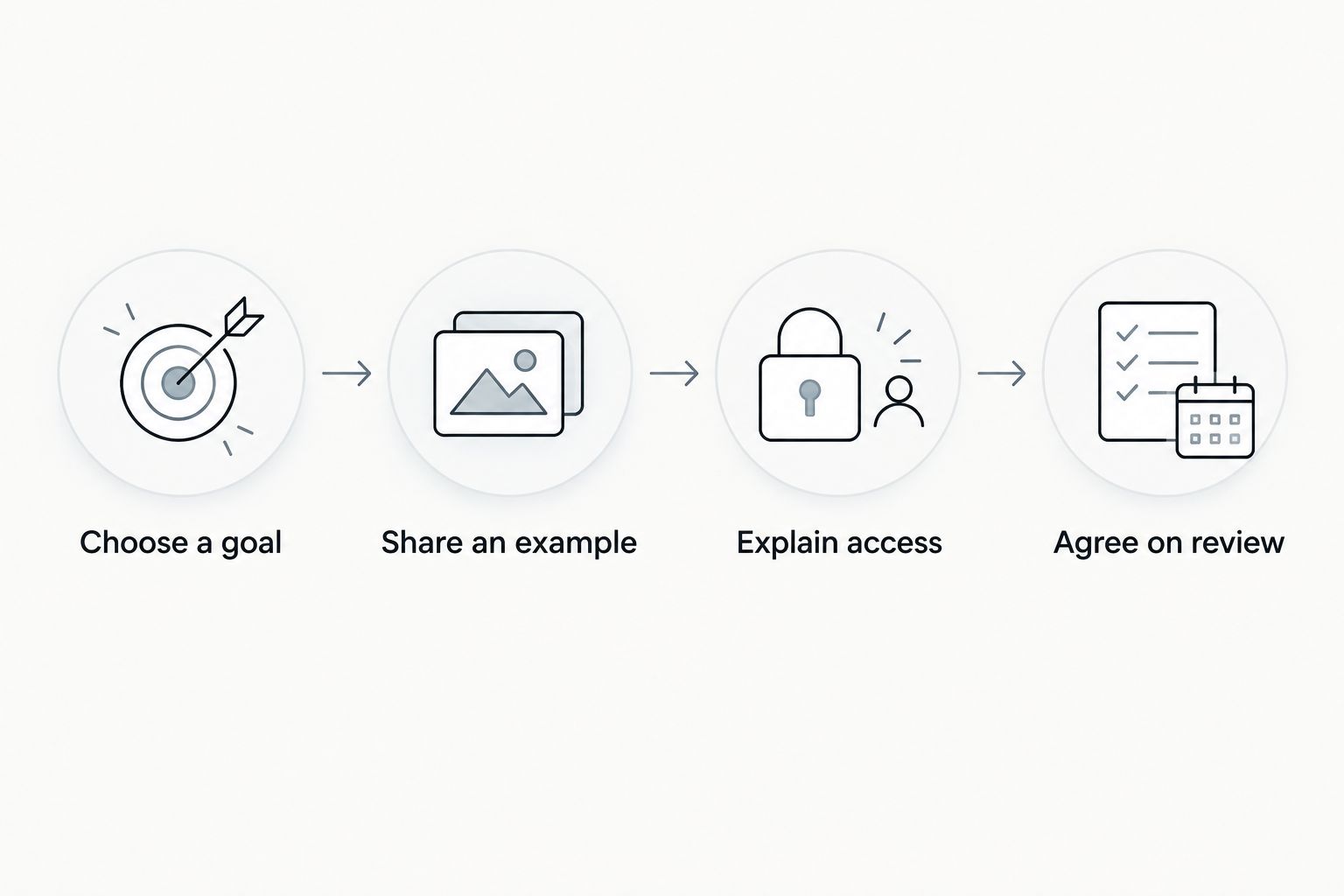
Use this sequence when comparing special needs tutoring in 2026. You do not need a polished educational summary; a concrete example and your child's perspective are enough to begin.
- Choose a goal: Describe one school or home-learning task that needs support.
- Share an example: Bring work that shows where the task becomes difficult, without asking your child to repeat a distressing experience.
- Explain access: Describe communication tools, sensory preferences, and signs that a break is needed.
- Agree on review: Ask how you will discuss whether the approach is helping and when to adjust it.
If your child has an individualized education program, choose a relevant academic goal rather than trying to address everything at once. This guide to connecting tutoring to your child's IEP academic goals keeps that discussion focused on the relationship between school expectations and outside support.
Compare session formats before choosing
The listed durations are planning information, not targets your child must tolerate without adjustment. Ask how each class handles joining, transitions, breaks, and ending the session.
The cards below show the individual option alongside two subject-focused alternatives. Contact the provider to confirm suitability and arrangements before committing.


How these options were ranked
This 2026 comparison ranks the listed options by their stated focus, individual-versus-subject format, duration, and delivery method. Tutoring: 1 on 1 leads for individual academic help because its name explicitly identifies that format. The other entries occupy distinct subject or planning roles; their order does not establish teaching quality or outcomes.
Which special needs tutoring option should you choose?
Start with Tutoring: 1 on 1 if dedicated individual academic support is your priority. Start with the relevant subject class when you already know the learning area, or Organization and Goal Setting when planning is the central concern.
For your 2026 inquiry, use Autism Learn & Play's contact form to describe your child's age, learning goal, communication preferences, and experience with Zoom. Ask separately about community programs if making friends is also a priority.
FAQ
What’s the best special needs tutoring starting point for Brooklyn families?
Tutoring: 1 on 1 is the individual academic starting point in this comparison. It is listed as a 1-hour Zoom class; confirm age fit, learning goals, and adaptations before choosing.
Are these tutoring options in person in Brooklyn?
The five listed options are delivered via Zoom, not described here as in-person Brooklyn sessions. Ask separately about in-person services and community programs.
Is a subject class better than one-to-one tutoring?
Choose by the support your child needs, not the class label alone. Tutoring: 1 on 1 explicitly identifies individual instruction, while the subject classes require confirmation of their participation format.
Can a nonspeaking child take part in online tutoring?
Confirm communication access directly before choosing online tutoring. Explain your child’s usual communication system and ask how the instructor will accept responses and recognize requests for a break.
Does the same tutoring option suit children ages 2–18?
Do not assume the same option suits every child ages 2–18. Ask about developmental fit, academic level, interests, and session structure rather than relying on age alone.
Can tutoring support my child’s IEP goals?
Ask the tutor to review a relevant academic IEP goal and explain whether the class can address it. Outside tutoring does not replace the school’s responsibilities under the IEP.
Will an online class help my child make friends?
Do not assume an online academic class includes peer interaction. Ask about the class format and explore community programs separately when friendship is a priority.
One last thing
Ask your child what would make learning feel easier before asking what they need to improve. Their answer gives you something concrete to bring to the tutor—and keeps your child's comfort and choices inside the plan.
Related guides