Art therapy is sometimes covered by insurance for autistic children, but an autism diagnosis alone does not establish coverage: your plan must cover the actual service, recognize the treating provider, and accept the claim under its rules. Before starting in 2026, confirm any authorization requirements and your share of the bill; a covered service does not necessarily mean the insurer pays the full amount.
- Is art therapy covered by insurance for autism? Sometimes; confirm the service, provider credentials, and authorization requirements with your plan.
- Art therapy and recreational art classes are not interchangeable insurance benefits.
- Autism Learn & Play offers art therapy; families should confirm billing arrangements directly before starting.
- For Brooklyn families, the next step is a benefits check using the provider’s actual service and billing details.
Is art therapy covered by insurance for autism?
Coverage depends on the specific service and insurance contract, not simply on the words art therapy. Ask the provider how the session is described and billed, then ask your insurer whether that combination of service, professional license, and setting is covered.
Autism Learn & Play provides therapy services, community programs, and online classes for autistic children ages 2–18. Its therapy services are a starting point for discussing your child's needs, not confirmation that your insurance will reimburse a particular session.
Use this comparison to separate activities that can look similar from the outside. The “best for” descriptions identify the purpose to discuss, not a promise of coverage or results.
| Service or activity | Best for | What to verify | Important limitation |
|---|---|---|---|
| Art therapy | Families seeking therapeutic work through art-making | Provider qualifications, treatment purpose, and the plan's benefit rules | The service name alone does not establish coverage |
| Psychotherapy that incorporates art | A child whose mental health treatment includes creative expression | Whether the actual psychotherapy service and professional are covered | Using art does not create a separate covered benefit |
| Occupational therapy using art materials | A child working on goals within occupational therapy | The occupational therapist's assessment, treatment plan, and applicable benefits | An art activity is not automatically occupational therapy |
| Recreational art class | Enjoyment, creativity, and shared interests | Activity format, age fit, and participation supports | Do not assume a recreational class is a medical insurance benefit |
Why this matters
A creative activity can be meaningful without being insurance-covered treatment. Equally, a covered therapy session is not automatically the right fit for your child.
For Brooklyn parents planning services in 2026, these are separate decisions: Does this activity match my child's needs, and how will it be paid for? Keeping those questions separate helps you avoid choosing a service only because of its billing label.
Your child does not need to produce recognizable artwork, speak throughout a session, or enjoy messy materials for you to discuss creative support. Tell the provider what your child enjoys, avoids, and uses to communicate. Ask how those preferences would shape the session before making a commitment.
How do I check coverage before the first session?
A general question about autism benefits is not enough. Give your insurer the details of the proposed service so the answer applies to the appointment you are considering.
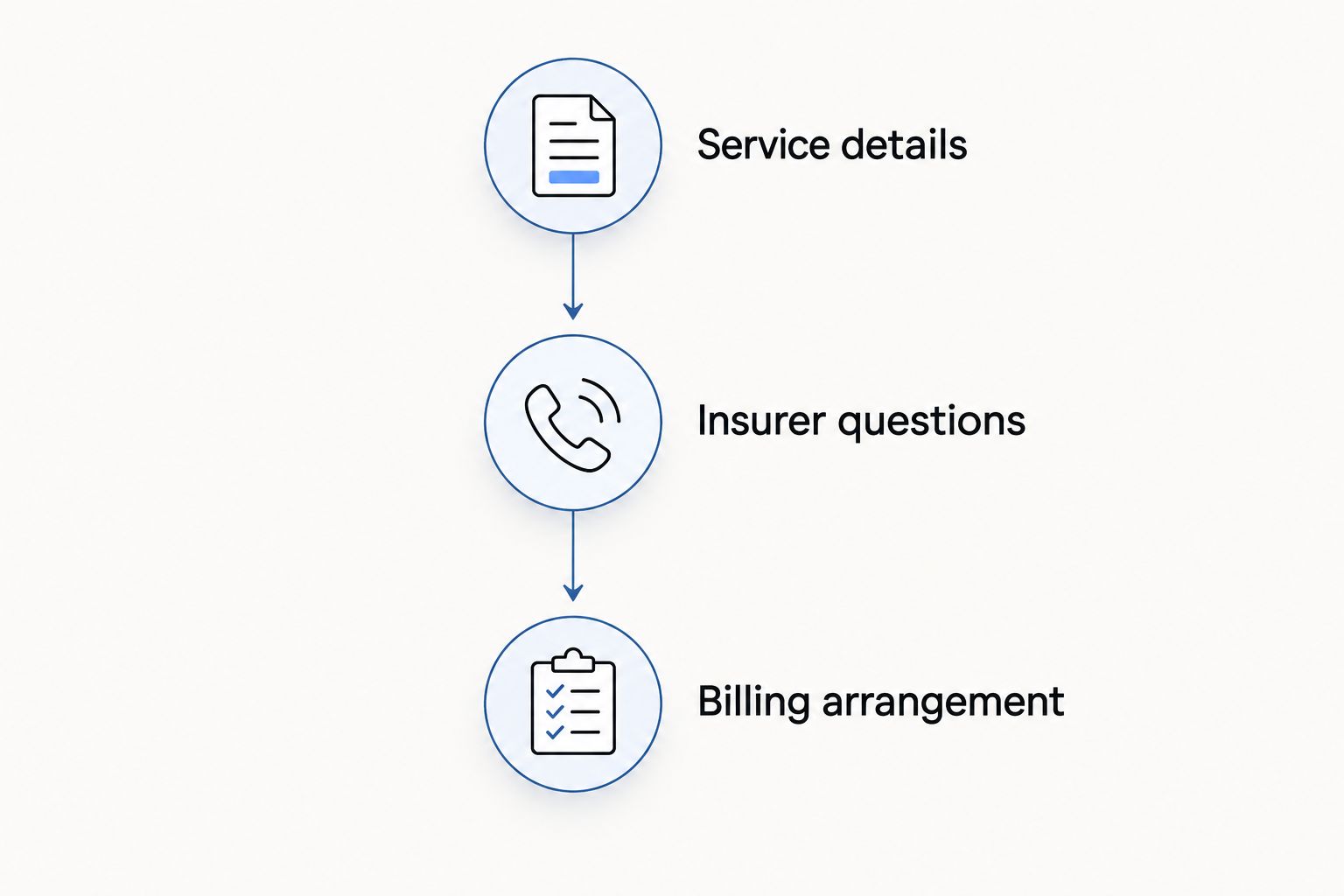
Gather the service details
Ask the provider for the treating professional's name, license type, service description, and proposed billing code, if the provider submits insurance claims. Also ask whether sessions are individual or group-based and whether they take place in person or online.
Do not choose a billing code yourself. The claim must accurately describe the service delivered. A request to rename a recreational class as therapy is not a solution to a coverage exclusion.
Ask the insurer specific questions
Use the member-services number on your insurance card and have the provider's information ready. Ask:
- Does my child's plan cover this exact service when this type of professional delivers it?
- Is the treating professional in network for this plan?
- Is a referral, prior authorization, or clinical review required?
- Do different rules apply to group sessions or telehealth?
- What deductible, copayment, or coinsurance applies?
- Are there visit limits or other conditions I should understand?
Request the relevant written benefit language and keep the call reference number. A phone explanation helps you understand the plan, but it does not replace the contract or guarantee payment of a future claim.
Confirm the provider's billing arrangement
Ask whether the provider submits claims, expects payment from you, or supplies documentation for you to submit. Confirm who is responsible if the insurer rejects a claim.
Before the first appointment, compare the provider's explanation with the insurer's response. If the answers conflict, ask both sides to clarify the specific issue rather than assuming it will resolve after treatment begins.
Keep these details together in a folder or secure note. For a 2026 benefits check, record the plan year, the service discussed, and any authorization dates so you can distinguish current information from an older conversation.
Why art therapy coverage varies
The same activity label does not mean every family receives the same insurance decision. These are the main details to examine in your own plan:
- Benefit language: Check whether the contract covers the proposed service or excludes it. A broad autism benefit is not an answer to every service-specific question.
- Professional qualifications: Ask which licenses or provider types the insurer recognizes for the benefit being requested.
- Network participation: Verify the individual clinician and location, not only the practice name. Ask about out-of-network benefits separately.
- Treatment documentation: Ask what assessment, goals, or medical-necessity documentation the plan requires for this service.
- Authorization and referrals: Find out what must happen before treatment and whether approval applies to a particular period or number of visits.
- Session format: Confirm whether individual sessions, groups, and telehealth have different requirements under your contract.
Check the service and provider together. An insurer's acceptance of a professional does not establish coverage for every activity that professional offers.
Does New York autism coverage automatically include art therapy?
No. Do not treat the existence of New York autism coverage requirements as confirmation that every art therapy session is covered under your child's plan.
For a Brooklyn family, the practical question is which rules govern the particular insurance contract and how those rules apply to the proposed service. Employer-sponsored plans, individually purchased plans, and public coverage do not share one universal benefit document.
Ask your insurer to identify the applicable benefit and any exclusion it relies on. If the answer is unclear, request a written explanation rather than relying on a general statement that autism services are covered.
During your 2026 review, ask whether a benefits administrator or another organization handles the relevant claims. Confirming the correct contact helps you direct authorization questions and paperwork to the right place.
What if insurance denies the claim or authorization?
Start with the written reason, not an assumption about why the insurer refused payment. A request for missing information calls for a different response than an explicit benefit exclusion.
Compare the denial with the service description and claim details. Ask the provider to correct factual or billing errors when appropriate; do not ask anyone to change the description to a service your child did not receive.
If you disagree with the decision, follow the appeal instructions in the notice. Ask what documentation is relevant, where to send it, and what deadline applies to your case. Keep copies of submissions and responses.
Before continuing sessions during a dispute, clarify your financial responsibility with the provider. An appeal is a request for reconsideration, not a promise that the insurer will pay.
How do I choose an activity that fits my child's goals?
Begin with what your child wants to explore and what support you are seeking. Making friends through a shared interest is different from receiving individualized treatment, even when both involve drawing or painting.
A discussion of art therapy techniques belongs alongside a discussion of emotional expression, choice, and comfort—not in place of checking the treating professional's qualifications or your insurance benefits. Ask how the provider selects activities and how your child can decline materials or request a pause.
For a community outing or group, ask what arrival looks like, whether caregivers stay, and how children join the activity. Find out whether participants can observe before joining and what happens if the room becomes uncomfortable. These are questions to ask, not features to assume.
Autism Learn & Play is best for Brooklyn families seeking a nonprofit that offers both autism therapy services and community programs. Its range gives families different types of support to discuss, but that does not establish insurance coverage, a particular group format, or suitability for every child.
Younger children: make the experience understandable
For children ages 2–5, ask how adults introduce unfamiliar materials and support transitions. Describe your child's communication methods and any tendency to mouth objects so the provider can explain material safety and supervision.
A younger child might prefer watching, making marks beside an adult, or exploring one familiar material. Ask whether that approach fits the session rather than expecting participation to look the same for everyone.
School-age children: include their interests
For children ages 6–12, invite your child to help choose a theme or material when possible. Ask whether a group allows children to work alongside peers without requiring constant conversation or shared supplies.
If friendship is the goal, ask how the facilitator creates opportunities for connection. A shared table alone does not tell you how interaction is supported.
Teenagers: protect choice and privacy
For teenagers ages 13–18, discuss age-respectful materials, personal interests, and control over sharing artwork. Do not assume a teen wants a child-focused craft activity or a public explanation of what their artwork means.
Ask how the provider handles privacy and caregiver updates within the rules that apply to the service. Let your teen describe what would make the experience welcoming.
What should I ask Autism Learn & Play before enrolling?
Ask whether the proposed option is art therapy, another therapy service, or a recreational activity. Then discuss the provider's qualifications, age fit, session format, sensory considerations, and billing arrangements.
For 2026 planning, use the contact form or email info@autismlearnplay.org to describe your child's interests and the support you are seeking. Request current details rather than assuming an activity's format or insurance arrangements.
If your main goal is community, say so clearly. Ask whether the proposed activity includes opportunities to connect with peers and how participation is adapted to each child's needs. If your main goal is treatment, ask how the provider identifies and reviews treatment goals.
You can ask both sets of questions. Creative enjoyment, connection, and therapeutic support are not competing priorities, but each needs a clear explanation.
FAQ
Is art therapy covered by insurance for autism in 2026?
Art therapy is sometimes covered, but an autism diagnosis alone does not establish coverage. Confirm the actual service, provider qualifications, network status, and authorization requirements under your 2026 plan.
Does an autism diagnosis guarantee art therapy coverage?
No, an autism diagnosis does not guarantee art therapy coverage. Your insurer must recognize the proposed service and provider under your child’s specific benefits.
Is an art class the same as art therapy for insurance?
No, a recreational art class and art therapy are not interchangeable insurance services. Ask who delivers the activity, what its purpose is, and how it is accurately described for billing.
Can occupational therapy use art materials?
Occupational therapy can incorporate art materials when the activity serves occupational therapy goals. That does not make every art activity occupational therapy or establish coverage for a separate art therapy service.
Will insurance reimburse an out-of-network art therapist?
Reimbursement depends on whether your plan includes an applicable out-of-network benefit and whether the service and provider meet its requirements. Confirm documentation and your financial responsibility before assuming reimbursement.
What should I do if insurance denies art therapy?
Read the written denial and identify the specific reason before responding. Ask about corrections or appeal procedures, follow the stated deadlines, and clarify payment responsibility before continuing.
Can a nonspeaking autistic child participate in an art activity?
Speech should not be assumed to be a participation requirement for an art activity. Ask the provider how your child’s communication methods, choices, and requests for breaks will be supported.
One last thing
Ask what happens when your child wants to stop. The answer reveals something a benefit summary cannot: whether the proposed experience makes room for your child's communication and choices.
Insurance approval answers a payment question. Your child's comfort, interests, and willingness to return belong in the decision too.
Related guides
- Art therapy for autistic teens
- Art therapy activities for autistic kids
- Autism-friendly museums and attractions in NYC