A social skills group is right for a shy autistic child when your child wants opportunities to connect and the group respects their communication, interests, and pace. Choose a setting where watching, taking breaks, and declining an activity are acceptable; shyness alone is not a reason to enroll. The goal is comfortable connection, not making your child appear more outgoing.
- Is a social skills group right for a shy autistic child? Yes, when participation is voluntary and support fits.
- Autism Learn & Play offers a Social Skills Class online; ask about participation expectations before choosing.
- Choose shared interests, age-respectful activities, and communication access over pressure to talk or make eye contact.
- A quieter activity or individual support is a valid alternative when your child does not want a group.
Why this matters
Your child deserves opportunities to make friends without having to perform friendliness. Before adding a social skills group to your family's 2026 schedule, identify what your child actually wants: company during a favorite activity, help joining play, or simply a place to belong.
Our guide to whether autistic children can make friends in group therapy explores a related question. Here, start with a more immediate decision: does this particular group offer an experience your child wants, with support they can use?
Is a social skills group right for a shy autistic child?
Choose a group for its fit, not as a way to fix shyness. Ask your child what sounds enjoyable, using speech, pictures, writing, or their usual communication method. Then ask the organizer how the group handles quiet participation and requests to stop.
These options serve different purposes. The class descriptions below specify format and duration, not group size, age placement, or individualized accommodations; confirm those details directly.
| Option | Best for | What it offers | Limitation to consider |
|---|---|---|---|
| Social Skills Class | Families exploring an online social skills class | A 30-minute class conducted via Zoom | Confirm peer interaction, age fit, and participation expectations |
| Conversation: 1 on 1 | Families exploring individual conversation support | A 1-hour class conducted via Zoom | Individual conversation is not the same experience as connecting with peers |
| Interest-based community activity | Children who want company around an activity they enjoy | A shared reason to spend time together | Do not assume the organizer provides individualized support |
Autism Learn & Play's social skills class is best for families seeking an online class rather than an in-person outing. That is a format match, not a guarantee of suitability: ask how the class would accommodate your child's specific needs.
What would make the answer yes?
Look for a match between your child's wishes and the group's actual activities. A child who wants to share drawings needs a different invitation from a teenager who wants help entering a game conversation.
Ask for concrete examples rather than assurances that everyone is welcome:
- Can a child watch before joining an activity?
- How can a child communicate without speaking aloud?
- What happens when someone needs a break?
- How does the facilitator respond to teasing or unwanted attention?
- Are activities selected with participants' interests in mind?
What would make the answer not yet?
Pause when your child consistently declines the idea, the organizer cannot explain participation expectations, or the activity depends on demands your child finds distressing. A vague promise that your child will get used to it is not a participation plan.
Do not make tolerating distress the price of belonging. Explore a different format, discuss concerns with a professional who knows your child, or return to the question when your child expresses interest.
Why a social skills group's fit varies
A useful choice depends on the child and the setting, not the label on the program. For your 2026 shortlist, compare these factors before committing:
- Your child's goal. Ask whether your child wants friendship, shared play, conversation practice, or something else. Avoid choosing a goal solely because adults expect it.
- Age and interests. Ask what participants actually do together. A familiar topic does not make an activity age-respectful by itself.
- Communication access. Describe how your child expresses interest, refusal, and requests for help. Ask how the facilitator will recognize and support those messages.
- Sensory needs. Ask about sound, movement, materials, screens, and opportunities to step away. Request specifics rather than relying on the phrase sensory-friendly.
- Participation expectations. Find out whether speaking, cameras, introductions, or particular activities are required. Discuss alternatives before the session.
- Family logistics. Consider the journey, transitions, and other commitments around the activity. For Brooklyn outings, include getting there and getting home in your decision.
How do you prepare for a first group experience?
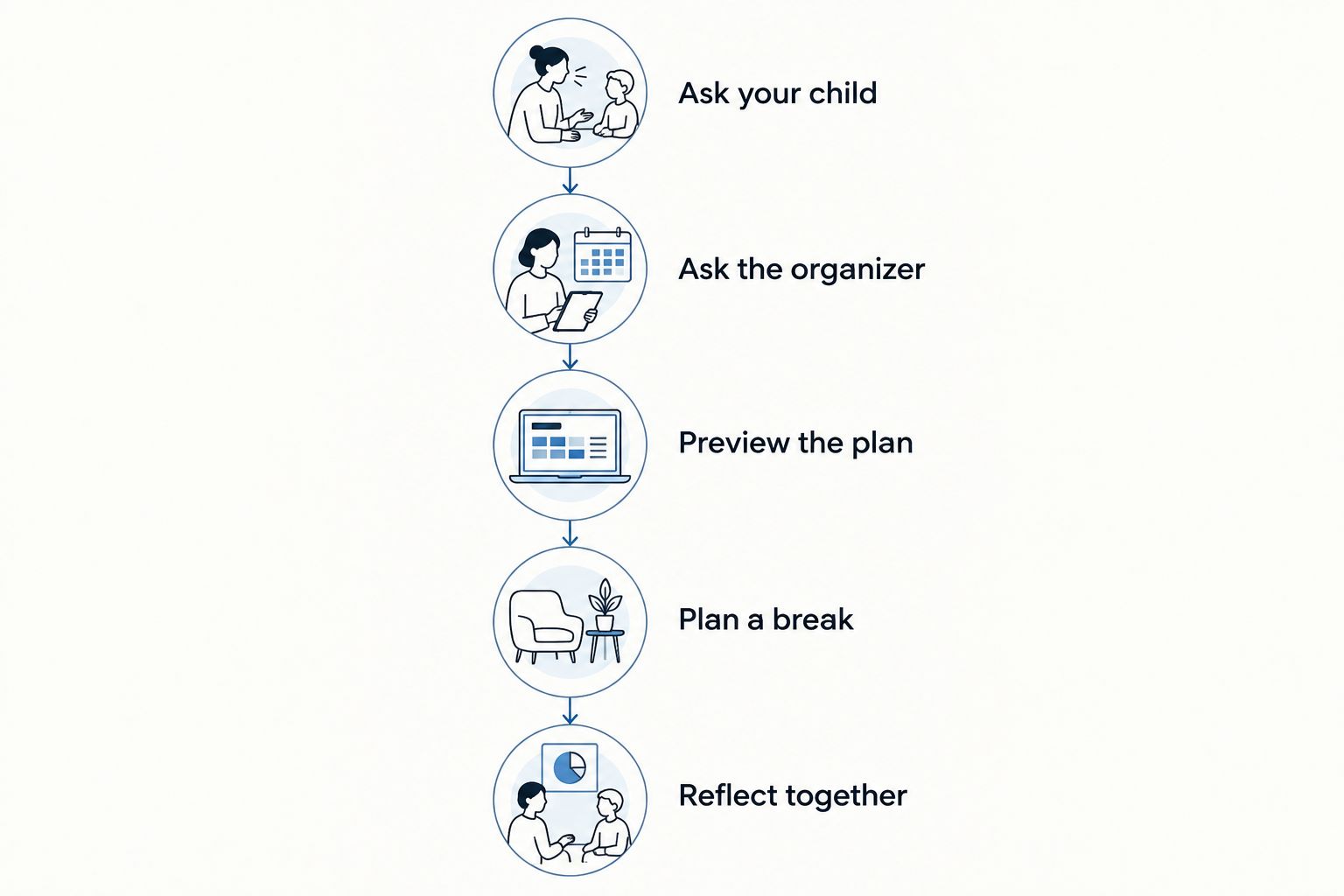
Use this sequence to make the experience understandable, while leaving your child room to change their mind. These are planning suggestions, not requirements for joining any particular program.
- Ask your child. Offer a concrete description of the activity. Ask what sounds interesting and what sounds uncomfortable; accept an answer that differs from yours.
- Ask the organizer. Explain your child's communication and support needs. Agree on what watching, joining, pausing, and leaving would look like.
- Preview the plan. Describe where the activity happens, who will help, and what comes next. Use the kind of explanation your child finds useful.
- Plan a break. Make sure your child knows how to request a pause. Confirm the organizer's response rather than assuming a break space or procedure exists.
- Reflect together. Afterward, ask what felt enjoyable or difficult. Include your observations, but do not substitute them for your child's account.
For an in-person Brooklyn activity, ask about arrival, waiting, bathrooms, and whether a caregiver can remain nearby. For an online activity, ask about camera expectations, turn-taking, materials, and caregiver involvement. These questions help you prepare without assuming either format is automatically easier.
How should you adapt the choice across ages 2–18?
Autism Learn & Play serves children ages 2–18, but that does not mean every class suits every age. Ask about the intended age range and activities for the specific session you are considering in 2026.
For toddlers and younger children
Start with what your child enjoys doing beside or with another person. Describe the actual activity rather than presenting an abstract goal such as becoming more social.
Ask how the organizer handles movement, transitions, and caregiver involvement. Do not interpret quiet observation as failure, and do not assume a young child can explain discomfort in words.
For school-age children
Invite your child to help choose the activity and identify a comfortable way to join. A shared project, game, or topic gives you something concrete to discuss beforehand.
Ask whether the facilitator supports different ways of contributing. Your child should not have to speak quickly or volunteer in front of everyone simply to be included.
For teenagers
Give your teenager a meaningful say in the decision, including the option to decline. Ask about interests, privacy, preferred company, and what kind of support would feel respectful rather than embarrassing.
Check that materials and conversations suit teenagers. Do not choose a younger activity solely because your teen communicates differently or needs additional support.
What online class details should you confirm?
Autism Learn & Play lists Social Skills Class as a 30-minute Zoom class and Conversation: 1 on 1 as a 1-hour Zoom class. The descriptions explain that the organization contacts families to finalize and book a slot after preferred course days are selected.
Neither duration tells you whether the experience fits your child. Before choosing, ask about the session's activities, age suitability, interaction format, breaks, and caregiver role. Confirm those details for the specific class you are considering in 2026.


The practical advantage is a defined online format; the limitation is that a listing cannot answer your child's individual fit questions. Use the contact form to ask Autism Learn & Play about those questions, or email info@autismlearnplay.org. Describe what your child enjoys and what support they need rather than asking only whether the class accepts shy children.
Does my child need to talk to participate?
Spoken conversation should not be your only measure of participation. Ask whether the group welcomes gestures, typing, pictures, or an augmentative and alternative communication device, often called AAC. Confirm how the facilitator includes those contributions rather than assuming all formats are supported.
Is individual support better than a group?
Individual support fits a different purpose from peer connection. Choose based on your child's goal and willingness to participate, not an assumed progression in which every child must complete individual sessions before joining others.
How will I know whether the group is helping?
Look for experiences your child values, not a more outgoing performance. Ask whether your child enjoyed anything, felt listened to, and wants to return; discuss persistent distress with the facilitator and a professional who knows your child.
FAQ
Is a social skills group right for a shy autistic child who wants friends?
A social skills group is a reasonable option when your child wants peer connection and the group’s expectations fit their needs. Ask about shared interests, communication access, and the option to observe or take breaks before choosing.
Does being shy mean my autistic child needs social skills therapy?
Shyness alone does not establish a need for therapy. Start with your child’s wishes and any difficulties affecting daily life, and discuss concerns with a qualified professional who knows your child.
Can my child watch instead of joining every activity?
Ask the organizer whether observation is an accepted form of participation. Agree on expectations before attending so your child is not surprised by pressure to join.
What should I ask before enrolling my autistic teenager?
Ask about age-respectful activities, participant interests, communication support, privacy, and your teenager’s role in choosing goals. Give your teen a meaningful opportunity to accept or decline the experience.
Is an online social skills class better than an in-person group?
Neither format is automatically better for your child. Compare screen demands, travel, sensory needs, interaction opportunities, and the support available in the specific session.
How long is the Social Skills Class at Autism Learn & Play?
The Social Skills Class is listed as 30 minutes and conducted via Zoom. Ask the organization about age suitability, participation expectations, and support needs before choosing the class.
What if my child does not want to go back?
Listen to your child’s refusal and ask what felt uncomfortable without making another visit a condition of being heard. Discuss possible changes with the organizer, then decide together whether a different activity is a better choice.
One last thing
Before choosing a group in 2026, write down what would make the experience worthwhile from your child's perspective. It might be sharing an interest, feeling welcome while watching, or meeting someone they want to see again.
A successful outing does not have to look sociable to an observer. Your child does not owe anyone eye contact, constant conversation, or a friendship on schedule. Leave room for connection to take a form that feels genuine to them.
Related guides
- Social skills games for autistic teens
- Family support groups for autism in Brooklyn
- Connecting online autism classes to in-person therapy