
Occupational therapy costs in Brooklyn depend on the provider’s fees, your child’s recommended care, and the coverage that applies to each visit. Get an individualized evaluation and treatment estimate before setting your budget. Ask whether assessments, reports, or other services are billed separately, and include travel and time away from work in your family’s planning.
- How much does occupational therapy cost in Brooklyn? Get a written estimate covering evaluation, treatment, and insurance responsibility.
- Autismlearnplay provides occupational therapy among its services for autistic children ages 2–18.
- Compare private therapy, insurance benefits, and school-based support by purpose—not just by payment route.
- Choose goals connected to your child’s everyday life, including play, self-care, school participation, and community outings.
Why this matters
A session quote alone does not tell you what your family will spend. You need to know what the appointment includes, how often the therapist recommends meeting, and which charges your insurance plan accepts.
For Brooklyn parents, the practical question is also whether appointments fit around school, siblings, travel, and your child’s energy. In 2026, build your plan around those everyday realities—not a schedule your family cannot sustain.
Autismlearnplay is a Brooklyn-based nonprofit providing therapy services, community programs, and online classes for autistic children ages 2–18. Keep the purpose of each service clear: a recreational class and an occupational therapy appointment are not interchangeable.
How much does occupational therapy cost in Brooklyn?
Your useful cost figure is the amount you are responsible for under a written care and payment plan. Ask the provider for an evaluation estimate, a treatment estimate, and an explanation of what each includes. Then confirm coverage directly with your insurer.
Start by identifying the route you are considering. These options serve different purposes, so compare their scope as well as their payment arrangements.
| Route | Best for | What to confirm | Limitation to understand |
|---|---|---|---|
| Private-pay occupational therapy | Families arranging care directly with a provider | Evaluation charges, treatment billing, reports, and payment terms | You are responsible for charges under the agreement you sign |
| Insurance-billed occupational therapy | Families using a health plan’s therapy benefits | Network status, authorization, deductible, copay, coinsurance, and visit rules | Having therapy benefits does not confirm coverage for a particular appointment |
| School-based occupational therapy | Eligible students who need support to access education | Evaluation findings, eligibility, and services included in the student’s plan | Educational support is not a substitute for every home or community goal |
| Early Intervention evaluation | Families with children younger than 3 years who have developmental concerns | Referral, evaluation, eligibility, and the services recommended | Eligibility and services require an individual determination |
For your 2026 comparison, record each provider’s answers in the same format. A quote without appointment length or billing details is not ready to compare with another quote.
What should a written estimate include?
Ask for the following information before agreeing to an evaluation or recurring appointments:
- Evaluation scope: What does the assessment include, and is the written report part of it?
- Treatment format: How long is the appointment, where does it happen, and who participates?
- Billing method: Is the charge per appointment, by time, or tied to a billed service?
- Additional work: Are caregiver meetings, school communication, or reports billed separately?
- Payment responsibility: What do you owe, when is payment due, and what happens if insurance denies a claim?
- Scheduling terms: What cancellation, rescheduling, or missed-appointment rules apply?
An estimate should also distinguish recommended care from services you have actually agreed to receive. You deserve time to understand both.
Why occupational therapy costs vary
The meaningful differences are the services being provided and the payment rules attached to them. Ask about these factors instead of assuming a higher charge means a better fit.
- Evaluation versus ongoing treatment. An assessment and a treatment visit involve different work. Request separate explanations of their scope.
- Appointment length and billing units. Compare like with like; an appointment label does not explain how the provider calculates the charge.
- Recommended frequency. Your total responsibility depends on the appointments you attend, not simply the quoted amount for a visit.
- Insurance rules. Network participation, deductibles, authorization, and benefit limits affect what the plan pays and what remains your responsibility.
- Included and separate services. Clarify whether written reports, caregiver discussions, and coordination with other professionals are included.
- Family logistics. Travel, parking, childcare for siblings, and time away from work belong in your household budget even when they do not appear on a therapy bill.
These are questions to resolve with the provider and insurer. They are not reasons to accept an unclear estimate.
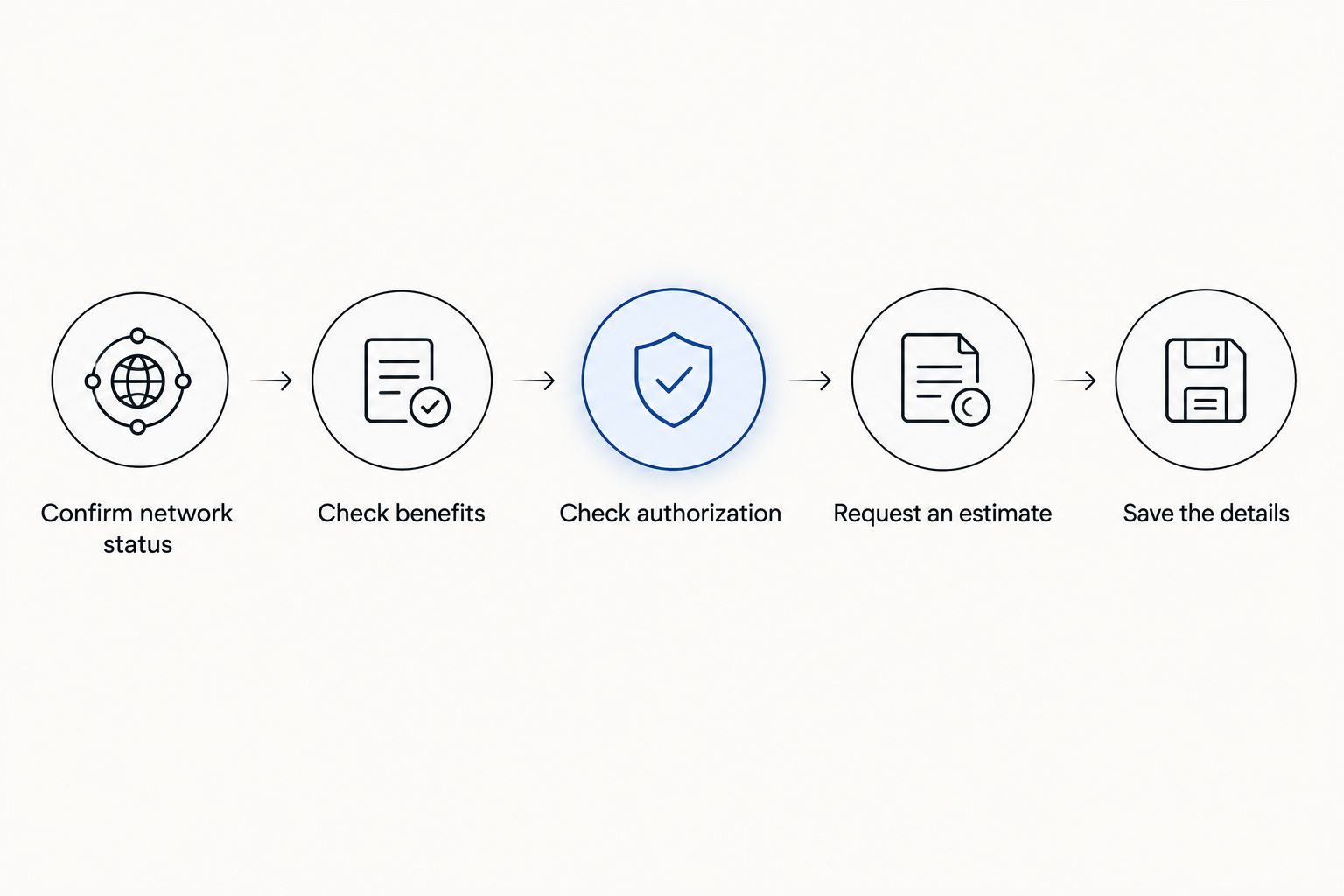
How to check your insurance before booking
Use your current 2026 plan documents and contact your insurer about the specific provider and proposed service. A directory listing is a starting point, not confirmation of how a claim will be handled.
- Confirm network status. Give the insurer the treating provider’s details and ask whether that provider participates under your exact plan.
- Check benefits. Ask whether the evaluation and proposed treatment fall under your occupational therapy benefits.
- Check authorization. Find out whether a referral, prior authorization, or supporting documentation is required before the appointment.
- Request an estimate. Ask what deductible, copay, or coinsurance applies and what information is needed to estimate your responsibility.
- Save the details. Record the date, reference number, and explanation you receive. Ask for written confirmation when possible.
Keep the provider’s estimate beside your insurance notes. If the answers conflict, resolve the difference before care begins rather than assuming the claim will settle it.
What if the provider does not bill your insurance?
Ask whether the practice supplies documentation you can submit for out-of-network reimbursement. Then ask your insurer whether your plan accepts those claims and what requirements apply.
A receipt or detailed bill is not a reimbursement guarantee. Understand your responsibility if the plan pays less than expected or rejects the claim.
Compare care around your child’s goals
A useful occupational therapy discussion starts with what your child wants or needs to do in daily life. Bring examples: getting dressed, handling classroom materials, joining play, or managing the sensory demands of an outing.
Ask the therapist how the evaluation will explore those concerns. The recommendation should connect the proposed work to your child’s participation, preferences, and support needs—not promise a particular outcome.
Ages 2–5: everyday routines and play
For a younger child, you might discuss play, dressing, mealtimes, or transitions between activities. Ask how caregivers participate and how the therapist responds when a child needs movement, a break, or a different way to communicate.
Do not assume a longer appointment is better. Ask how the proposed format fits your child’s attention, comfort, and daily routine.
Ages 6–12: school and community participation
For a school-age child, bring concerns from both home and school. You might want help understanding difficulties with classroom tools, managing belongings, or participating in a shared activity.
Ask how the therapist distinguishes a skill challenge from an environmental barrier. Changing an activity or its setup deserves consideration alongside practicing a task.
Ages 13–18: interests, independence, and choice
Include your teenager directly in the conversation. Preparing food, organizing materials, pursuing hobbies, and joining community activities are possible discussion topics—not a required checklist.
Ask what your teen wants support with and what they would prefer adults to change. Respectful care includes the young person’s priorities, not just adult expectations.
Can school-based occupational therapy replace private appointments?
School-based occupational therapy addresses educational access for eligible students; private care requires a separate decision about goals and payment. Under the Individuals with Disabilities Education Act, occupational therapy can be a related service when needed for an eligible student to benefit from special education.
Ask your child’s school team what concerns the evaluation addressed and what the educational plan includes. Do not assume that a school recommendation determines your health insurance benefits or that a private recommendation automatically becomes a school service.
For your 2026 planning, write down which goals belong to school participation and which concern home or community life. Share relevant information with professionals when you choose, while keeping each service’s purpose clear.
Is an occupational therapy evaluation separate from treatment?
An occupational therapy evaluation and ongoing treatment are different services, so ask whether they are billed separately. Confirm what the evaluation produces and whether you receive recommendations before committing to further appointments.
Ask when you will discuss the findings and how you can raise questions. A clear explanation should help you understand the proposed goals, appointment format, and review process.
What should you ask about community activities?
If your child’s goal involves making friends or enjoying outings, describe the actual activity you have in mind. A busy playground, a craft group, and a museum visit create different demands.
Ask an occupational therapist about preparation or adaptations relevant to your child. Separately, ask activity organizers about the environment and participation expectations; do not assume a community program provides therapy.
Useful questions include:
- Can my child observe before joining?
- What happens if my child needs a break or wants to leave?
- Can my child use their usual communication supports?
- What movement, sound, touch, or waiting does the activity involve?
- Is the activity appropriate for my child’s age and interests?
The goal is meaningful participation, not completing an outing at any cost to your child’s comfort. Leaving early can be a reasonable family decision.
Where Autismlearnplay fits in your search
Autismlearnplay is best suited to Brooklyn families seeking children’s therapy services alongside community programs and online classes. Occupational therapy is among its services for autistic children ages 2–18.
Ask about an individualized occupational therapy discussion through the website contact form or email info@autismlearnplay.org. Describe your child’s age, interests, daily challenges, and the questions you want answered about care and payment.
The nonprofit’s mix of services gives families several categories of support to ask about. The distinction matters: online classes and community activities do not establish the scope, billing arrangements, or suitability of an occupational therapy plan.
Before choosing any provider in 2026, confirm the proposed service, treating professional, family involvement, and financial terms directly. A program name alone cannot answer those questions.
FAQ
How much does occupational therapy cost in Brooklyn with insurance?
Your responsibility depends on your plan’s benefits, the provider’s network status, and the services billed. Confirm the deductible, copay or coinsurance, authorization requirements, and an individualized estimate before booking.
Is the first occupational therapy appointment an evaluation?
Ask the provider whether the first appointment is an evaluation, consultation, or treatment visit. Confirm what it includes, what documentation you receive, and how it is billed.
Does my child need private occupational therapy if they receive it at school?
School-based and private occupational therapy require separate decisions about purpose and need. Discuss your child’s educational, home, and community goals before deciding whether additional care is appropriate.
Can I get reimbursed for an out-of-network occupational therapist?
Reimbursement depends on your insurance plan and its claim requirements. Ask the insurer about out-of-network benefits and ask the provider what documentation they supply; documentation alone does not guarantee payment.
How often should my autistic child attend occupational therapy?
Appointment frequency should follow an individual evaluation and discussion of your child’s goals and needs. Ask how the recommendation will be reviewed and how it fits your family’s routine.
Are online autism classes the same as occupational therapy?
An online class is not automatically occupational therapy. Confirm the service’s purpose, the professional providing it, and whether it is part of an individualized therapy plan.
What should I bring to an occupational therapy consultation?
Bring your main questions, examples of daily activities your child finds difficult, and relevant records you choose to share. Include your child’s interests, communication preferences, and views about support.
One last thing
Ask this before comparing another quote: What will this plan help my child participate in, and how will we review whether it fits? The answer connects the financial decision to your child’s actual life.
Bring a favorite activity into that conversation. Enjoying a game with a sibling, joining an art activity, or taking part in a family outing gives you something more useful to discuss than a promise of general improvement.
Related guides
- Occupational therapy for autistic toddlers
- Occupational therapy activities for autism at home
- Family support groups for autism in Brooklyn
- Autism-friendly museums and attractions in NYC