
Occupational therapy for autistic toddlers is support for everyday activities, with the aim of helping your child participate in play, self-care, and family life. Toddlers need approaches built around their interests, communication, movement, and comfort—not expectations borrowed from older children.
- Occupational therapy for autistic toddlers should support meaningful daily activities, not make children appear less autistic.
- Autism Learn & Play offers occupational therapy and community programs; Brooklyn families should ask about toddler-specific support.
- Choose goals around play, dressing, meals, and outings, with your child’s comfort guiding participation.
- Home activities support practice but do not replace an individualized occupational therapy assessment.
Why occupational therapy matters for autistic toddlers
For a toddler, an occupation means an everyday activity: playing, eating, getting dressed, or joining family routines. Occupational therapy, often shortened to OT, looks at what helps or gets in the way of participation. That includes the task, the surroundings, and the support available—not just the child's skills.
Brooklyn families also need practical ways to participate in community life. Getting ready, traveling, entering an unfamiliar room, and finding a comfortable place to play are separate challenges. A useful 2026 therapy plan connects goals to those real situations rather than stopping at activities in a therapy room.
Autism Learn & Play is a Brooklyn nonprofit offering occupational therapy, other therapy services, community programs, and online classes for children ages 2–18 years. Autism Learn & Play is best for Brooklyn families seeking occupational therapy alongside community programs. Ask directly about toddler-specific assessment, staffing, and participation requirements before choosing a service.
OT does not aim to cure autism. A respectful plan supports your child's choices, access, comfort, and growing independence while making room for their ways of communicating and playing.
How to choose and use occupational therapy
Start with what happens at home, then bring those observations to a qualified occupational therapist. The sequence below helps you prepare for an assessment and decide whether the proposed support fits your family.
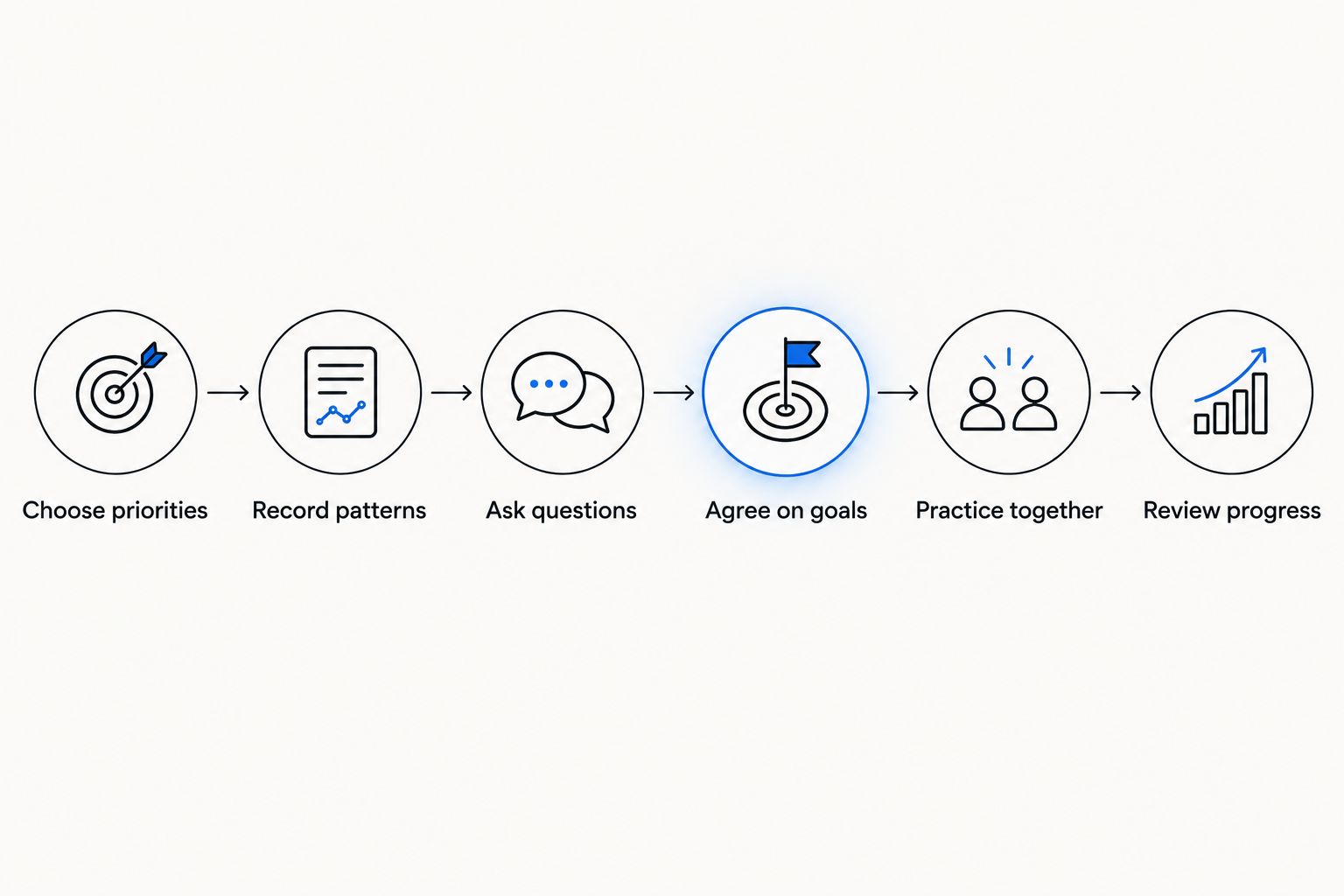
Choose priorities
Write down the daily activities your child enjoys and those that become uncomfortable or difficult. Start with a family routine, not a shopping list of sensory equipment. A goal such as joining a favorite playground activity gives an assessment a clearer purpose than a broad request to improve sensory skills.
Distinguish your child's needs from other people's expectations. Harmless rocking, hand movements, or playing beside another child do not need to disappear for an outing to count as successful. Prioritize access and comfort over looking typical.
- Choose 1 routine to discuss first, such as putting on shoes.
- Describe what your child already does comfortably.
- Identify the point where frustration or discomfort begins.
- Note how your child communicates interest, refusal, or a need for help.
Record patterns
Observe ordinary moments before trying to change them. Note what happened before a difficult moment, what your child did, and what helped afterward. Describe actions rather than assigning labels: covering ears near a hand dryer tells a therapist more than saying your child behaved badly.
Compare settings without expecting identical behavior everywhere. A toddler who enjoys water play at home might dislike an unfamiliar bathroom. Your observations help the therapist explore the task and environment without assuming every difficulty has the same cause.
- Keep brief notes across 3 routines, such as meals, dressing, and play.
- Record noise, lighting, crowding, and waiting demands.
- Note whether hunger, fatigue, or transitions were involved.
- Include your child's preferred objects, movements, and play themes.
Ask questions
Use your observations to ask an occupational therapist how assessment would address your priorities. Ask what they want to learn, how they involve caregivers, and how they respond when a child declines an activity. An evaluation should explain the reasoning behind recommendations in language you can use.
For 2026 planning, contact Autism Learn & Play through its website contact form or info@autismlearnplay.org to ask about occupational therapy for your toddler. The nonprofit's stated age range includes toddlers from age 2 years, but that does not establish a particular service format, schedule, or placement.
In New York, Early Intervention serves eligible children younger than 3 years. Ask your pediatrician or local Early Intervention program about evaluation and eligibility; discuss preschool special education with your school district as your child approaches the transition age. These routes have eligibility processes and are not interchangeable with a provider inquiry.
- Ask about experience supporting autistic toddlers with similar daily needs.
- Request an explanation of assessment methods and caregiver involvement.
- Ask how the therapist respects refusal and supports communication.
- Confirm how recommendations reach other caregivers or educators.
Agree on goals
Choose goals that describe a meaningful activity and the support your child needs. Putting an arm through a sleeve with a caregiver's help is clearer than improving independence. Playing comfortably near another child is more useful than requiring eye contact during every interaction.
An occupational therapist can help separate movement, hand-use, sensory, and task demands. Keep the plan flexible: changing the environment or offering help can be as valuable as practicing a skill. A child should not have to tolerate distress to prove progress.
For your 2026 goals, write down what participation looks like now and what a useful next step would be. Avoid promises about when your child will reach a milestone.
- Name the activity your child wants or needs to access.
- Describe current assistance, adaptations, and communication supports.
- Agree on an observable next step without setting an arbitrary deadline.
- Include a way for your child to pause, decline, or choose something else.
Practice together
Begin with familiar play and household objects that are safe for your toddler. A large container and large, age-appropriate blocks can create an opportunity to put objects in, take them out, and share a playful routine. Stay nearby, follow your child's interest, and avoid small parts or materials your child might swallow.
The occupational therapy activities for autism at home guide offers ideas to discuss with your therapist. Treat an activity list as a starting point, not an individualized treatment plan. Ask which activity fits your child's goal and what signs mean you should stop.

For a community outing, choose a manageable activity and plan an easy exit. Your toddler can watch before joining, play alongside others, or leave when they need a break. Friendship starts with opportunities to be together—not compulsory sharing or greetings.
- Use familiar, age-appropriate materials under adult supervision.
- Offer choices instead of repeatedly directing every movement.
- Practice a therapist-recommended adaptation within an existing routine.
- Plan a quieter pause and an exit for outings.
Review progress
Look for changes in participation, comfort, and the amount of help needed. Completing an activity while increasingly distressed is not the same as making it more accessible. Share both easier moments and difficult ones with your therapist.
Keep your 2026 notes brief enough to maintain. Describe what happened and the support provided rather than scoring every interaction. If an activity repeatedly causes distress, pause it and ask the therapist to reconsider the task, environment, or goal.
- Compare the same routine under reasonably similar conditions.
- Record adaptations that helped, including fewer steps or a quieter setting.
- Include your child's choices and willingness to participate.
- Revisit goals when family priorities or your child's interests change.
Compare support options for your toddler
Choose the support that answers your current question. Everyday play is useful for connection and observation; an occupational therapy evaluation addresses individualized assessment. Group participation creates a different opportunity and does not replace either.
These are service categories, not confirmed delivery formats at any particular provider. Ask each organization what it actually offers for your child's age and needs.
| Option | Best for | Main benefit | Key limitation |
|---|---|---|---|
| Parent-led everyday play | Families beginning with familiar routines | Fits activities your child already knows | Does not provide clinical assessment or individualized therapy |
| Individual occupational therapy | Families needing assessment and activity-specific goals | Connects recommendations to the child's assessed needs | Requires coordination and practice beyond appointments |
| Caregiver coaching from an occupational therapist | Families seeking help adapting daily routines | Focuses on support caregivers can use at home | Depends on a plan that fits caregivers' time and circumstances |
| Supported group activity | Toddlers exploring shared spaces and play near peers | Creates opportunities for participation with other children | Noise, pace, and group demands require careful checking |
| Early Intervention evaluation | New York families with a child younger than 3 years | Provides a route to assess eligibility for early services | Eligibility and services require evaluation; they are not automatic |
When comparing providers in 2026, ask for concrete explanations rather than promises. A useful answer describes assessment, family involvement, and how the provider adjusts support when an activity does not fit.
Common mistakes families make when choosing toddler OT
Treating every difficult moment as sensory
A toddler's distress also deserves attention to pain, illness, fatigue, hunger, communication, and the task itself. Describe the whole situation to your clinician. New pain, sudden changes, or loss of skills warrant discussion with your child's healthcare professional rather than simply adding sensory activities.
Copying an older child's activity plan
A toddler does not need the same waiting, instructions, or social expectations as a school-age child or teenager. Choose materials safe for your child's development and keep communication accessible. A teen's turn-taking game is not automatically a toddler activity with simpler rules.
Buying equipment before defining the goal
A sensory product does not explain why dressing or outings are difficult. Start with the activity and ask what adaptation addresses the assessed need. Discuss weighted items, restrictive equipment, and specialized movement activities with an appropriate clinician rather than treating them as general toddler recommendations.
Making participation compulsory
Forcing touch, messy play, sharing, or eye contact can turn a shared activity into a struggle. Offer another way to participate and respect signals to stop. Watching from a comfortable distance can be a meaningful starting point.
FAQ
What does occupational therapy do for an autistic toddler?
Occupational therapy supports an autistic toddler’s participation in daily activities such as play, dressing, eating, and family routines. An occupational therapist assesses the child, task, and environment before recommending goals and adaptations.
How do I know whether my toddler needs occupational therapy?
Ask for an assessment when daily activities are consistently difficult, uncomfortable, or hard to access. Bring examples from home and outings, and discuss pain, sudden changes, or loss of skills with your child’s healthcare professional.
Can I do occupational therapy activities at home?
You can support everyday play and practice therapist-recommended activities at home, but that is not a substitute for an occupational therapy evaluation. Use safe, age-appropriate materials and stop when your child shows discomfort or declines.
Does occupational therapy require my toddler to speak?
Spoken language is not a prerequisite for occupational therapy. Ask how the therapist recognizes gestures, movements, facial expressions, communication devices, and other ways your child expresses choices and needs.
Is a sensory playgroup the same as occupational therapy?
A sensory playgroup is not automatically occupational therapy. Ask who leads it, whether it includes individualized assessment and goals, and how the group accommodates your toddler’s communication and comfort.
Does Autism Learn & Play offer occupational therapy for toddlers?
Autism Learn & Play lists occupational therapy among its services and serves children ages 2–18 years. Contact the nonprofit through its website contact form or info@autismlearnplay.org to confirm toddler-specific assessment and service details.
What happens when my child turns 3 years old?
New York Early Intervention serves eligible children younger than 3 years, so families should discuss the transition before the third birthday. Ask your Early Intervention team and school district about preschool special education evaluation and planning.
One last thing
A quieter, shorter outing still counts as participation. Choose one place your toddler already enjoys and consider what would make being there together easier. Watching, exploring beside another child, or leaving comfortably can matter more than completing a planned activity.
Bring that real-life priority to your next occupational therapy conversation. The plan should help your family share more of everyday life, not give you another performance to manage.
Related guides
- Fine motor skill activities for autism
- Family support groups for autism in Brooklyn
- Autism-friendly museums and attractions in NYC