Choose Autism Learn & Play if you want a Brooklyn nonprofit providing children's therapy, community programs, and online classes; choose Beaming Health if you want to search for and compare providers before contacting a service organization. In 2026, the useful distinction is receiving services versus finding providers, not which organization wins every category.
- Autism Learn & Play vs Beaming Health compares a Brooklyn service nonprofit with a provider-discovery platform.
- Choose the nonprofit for inquiries about children’s therapy, community programs, and online classes.
- Choose Beaming Health when your next step is finding and comparing providers.
- For Brooklyn autism support, confirm age fit, sensory accommodations, participation expectations, and payment directly.
Why this matters
A provider directory and a service organization answer different questions. One helps you decide whom to contact; the other is where you ask what your child would actually do, who would support them, and how participation works.
For Brooklyn parents, that difference matters when the goal is more specific than finding autism services. You might want a setting where your child can enjoy a shared interest, meet other children, or take part without pressure to communicate in a particular way. Start with the experience your child needs, then choose the next contact.
At a glance
| Dimension | Autism Learn & Play | Beaming Health |
|---|---|---|
| Best for | Brooklyn families seeking a direct service organization | Families building a shortlist of providers |
| Direct services | Provides therapy, community programs, and online classes | Helps families discover providers; a listing is not enrollment |
| Community connection | A direct starting point for community-program inquiries | A discovery starting point for finding organizations to contact |
| Online learning | Online classes are part of its stated offering | Use provider research to investigate remote options directly |
| Provider choice | One nonprofit's services and programs | Provider-discovery platform suited to comparing organizations |
| Age fit | Serves children ages 2–18; confirm individual program fit | Confirm age criteria with each provider |
| Pricing model | Discuss payment terms for the specific service with the nonprofit | Separate platform terms from each provider's service-payment terms |
| Standout feature | Therapy, community programs, and online classes within one nonprofit | Finding providers before choosing whom to contact |
Direct contact wins when you know what support you want
Best for: a parent ready to ask a service organization about a particular need.
The Brooklyn nonprofit provides ABA, speech, occupational, music and art therapy, tutoring, community programs, and online classes. That makes it a direct starting point when you already know the type of support you want to discuss.
Beaming Health is the better starting point when the unanswered question is who to consider. Its provider-discovery role is useful before you have chosen an organization, rather than as a substitute for a conversation about a child's participation.
The tradeoff is scope. Contacting one nonprofit focuses your inquiry, but it does not compare that organization's approach with other providers. Searching a directory broadens your options, but leaves you with the work of asking each organization detailed questions.
For your 2026 search, write down the next decision: find possible providers or discuss a specific service. That single distinction prevents unnecessary searching after you are ready for a conversation.
The nonprofit wins for direct therapy inquiries
Best for: families asking about the therapies the nonprofit provides.
Autism Learn & Play is the direct-service choice for families seeking children's therapy and community programs in Brooklyn. Its stated services give you a concrete basis for asking about speech, occupational, music or art therapy, ABA, or tutoring.
Ask how the particular service would relate to your child's priorities. For example, a parent might want to discuss communicating discomfort, participating in a preferred activity, or getting support with an everyday task. Those are conversation starters, not promises about treatment or outcomes.
Beaming Health serves a different purpose here: identifying providers to investigate. A directory entry does not establish that a particular clinician, approach, or setting fits your child.
The limitation of direct contact is that an organization's service list is only a starting point. Confirm how the relevant service works, who delivers it, and how your child's preferences would inform participation before making a decision.
Community programs deserve a direct conversation
Best for: Brooklyn families prioritizing connection and shared activities.
The nonprofit's community programs make it the more direct contact when your question is about participating rather than searching. Beaming Health is useful when you first need to identify organizations that might offer the kind of community experience you want.
Neither a program name nor a directory description tells you everything about an outing or group. Before committing, ask what children do together and what happens when a child wants to watch, take a break, or leave an activity.
Useful questions include:
- Is the activity organized around a shared interest or a particular skill?
- How are children grouped, and what age range participates?
- Can a child observe before joining in?
- How do staff support different communication methods?
- What should a caregiver expect to do during the activity?
These are questions to ask, not descriptions of any particular program. For a broader local starting point, explore family support groups for autism in Brooklyn.
A community opportunity should fit your child's way of participating, not require your child to perform sociability. Friendship can be a family priority without becoming a guaranteed program outcome.
Online classes favor a direct service inquiry
Best for: families specifically interested in the nonprofit's online classes.
Online classes are part of the nonprofit's stated offering. That makes direct contact the shorter route when you want to understand its class format, subject matter, and participation expectations.
Beaming Health is the stronger starting point when you want to research different providers before deciding which remote offering to investigate. Confirm the format with the provider itself rather than treating a search result as a complete class description.
For a 2026 online-class inquiry, ask whether the activity requires live participation, what materials a child needs, and what role a caregiver takes. Also ask how children can communicate during the session and what happens if they need to step away.
Online does not automatically mean suitable. A child who enjoys an activity in person might want different support when the same kind of activity happens through a screen. Ask about the actual experience rather than choosing on convenience alone.
Beaming Health wins for comparing provider options
Best for: a parent who has not yet chosen an organization.
Beaming Health's provider-discovery role makes it the better fit for building a shortlist. Starting with multiple organizations lets you identify whom to contact before discussing the details of an individual service.
The nonprofit is a narrower choice by design: you are investigating one organization's offerings. That focus is useful after you have identified a relevant service, but it does not replace a wider search when location, approach, or service type remains undecided.
Keep comparison notes based on the same questions for each provider:
- What service addresses the need you want to discuss?
- What ages does that specific service serve?
- Where and how does participation happen?
- How are communication preferences and sensory needs discussed?
- What does the family need to understand before enrolling?
The directory wins on discovery; the provider conversation determines fit. The drawback of a broader search is that finding more names does not, by itself, resolve those practical questions.
Neither option wins on age fit without program details
Best for: families checking a specific activity against their child's age and interests.
The nonprofit serves children ages 2–18. That organizational age range does not mean every class, therapy service, or community activity serves the entire range. With Beaming Health, confirm age criteria separately with each provider you consider.
Use these age bands as planning prompts, not as descriptions of either organization's programs:
- Ages 2–5 years: Ask about caregiver involvement, transitions, play materials, and how children express a need to stop.
- Ages 6–12 years: Ask about shared interests, group expectations, activity choices, and support during changes.
- Ages 13–18 years: Ask about age-respectful activities, personal choice, peer interests, and privacy.
For your 2026 decision, ask your child what appeals to them in whatever communication form works for them. A teenager's preferences should not disappear because a program also serves younger children.
Age eligibility is not the same as a good match. Interest, communication access, sensory comfort, and the expectations of the particular activity belong in the decision too.
Pricing is a direct-confirmation tie
Best for: families comparing the full commitment before enrolling.
There is no defensible cost winner without service-specific payment terms. The nonprofit is the service organization to ask about payment for its offerings; when using Beaming Health, distinguish the platform's terms from the terms of each provider you contact.
For a 2026 comparison, request the same information from every organization. Ask how billing works, what the payment arrangement covers, whether any insurance arrangements apply to the specific service, and what cancellation terms you would be accepting.
Do not infer a payment policy from nonprofit status. Likewise, finding a provider through a platform does not establish that provider's billing or insurance arrangements.
Compare the same service and participation format before comparing payment terms. A community activity, tutoring session, and therapy appointment are different commitments; a single broad question about cost will not explain those differences.
The standout difference is participation versus discovery
Best for: families deciding what to do next rather than choosing a universal winner.
The nonprofit brings therapy services, community programs, and online classes within one organization. Beaming Health's distinguishing role is provider discovery. These are different strengths, and neither removes the need for a child-specific conversation.
Before sending an inquiry, prepare a short note using these prompts:
- Child's interests: Name activities your child enjoys or wants to try.
- Communication preferences: Explain how your child expresses choices, discomfort, and a need for help.
- Sensory needs: Describe relevant preferences around sound, lighting, movement, or touch.
- Participation questions: Ask about observing, breaks, caregiver involvement, and leaving an activity.
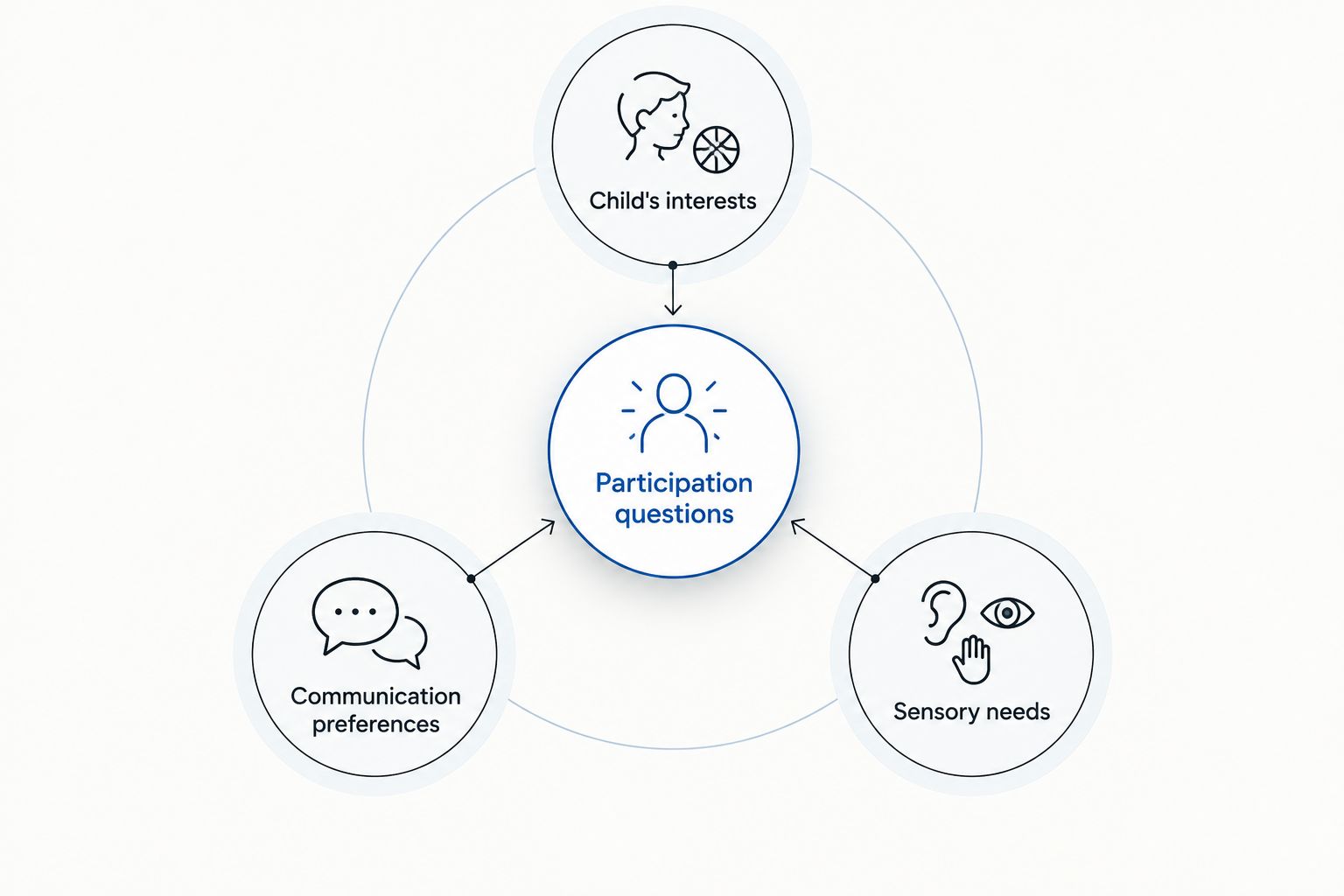
Bring that same note to each provider conversation. It gives you a consistent basis for comparing responses without expecting every child to enjoy the same environment.
Final verdict: choose for your next step
Choose Autism Learn & Play if you want a direct Brooklyn inquiry
Named profile: the Brooklyn parent seeking services or community participation. You want to discuss children's therapy, a community program, or an online class with the organization that provides it. Confirm the individual offering's age fit, format, and participation expectations.
Choose Beaming Health if you are building a provider shortlist
Named profile: the parent still exploring organizations. You want to identify and compare providers before choosing whom to contact. Treat discovery as the beginning of the process, then ask each provider the same practical questions.
One-glance scorecard
| Dimension | Winner |
|---|---|
| Best starting point | Direct nonprofit for a service inquiry; Beaming Health for a shortlist |
| Direct therapy inquiries | The Brooklyn nonprofit |
| Community-program inquiries | The Brooklyn nonprofit |
| Its online-class inquiries | The Brooklyn nonprofit |
| Comparing provider options | Beaming Health |
| Age fit | Tie: confirm the specific program |
| Pricing | Tie: confirm service-specific terms |
| Standout role | Direct participation versus provider discovery |
FAQ
Is Autism Learn & Play better than Beaming Health?
Autism Learn & Play is the more direct choice for inquiries about its Brooklyn therapy services, community programs, and online classes. Beaming Health is the better starting point when you want to discover and compare providers before contacting one.
Does finding a provider on Beaming Health mean my child is enrolled?
No. Finding a provider is a research step; confirm the provider’s enrollment process and service details directly before making plans.
Which option should I use to find community activities in Brooklyn?
Contact the nonprofit directly when you want to ask about its community programs. Use Beaming Health when you first want to identify other providers to investigate, and ask each organization about the actual activities and participation expectations.
Are all programs suitable for children from toddlers through teenagers?
No single activity should be assumed to suit every age. The nonprofit serves children ages 2–18, but families should confirm the age range, interests, and expectations for each specific offering.
Which option costs less in 2026?
A cost winner requires service-specific payment terms. Ask the nonprofit or each provider you find about billing, applicable insurance arrangements, and cancellation terms for the particular service.
What should I ask before joining a group activity?
Ask what children do, how groups are formed, and how communication preferences and sensory needs are supported. Also clarify caregiver involvement, breaks, and whether your child can observe before participating.
One last thing
Ask what happens when your child says no. That practical question opens a conversation about choice, breaks, communication, and how staff respond when an activity is not working for a child.
For a 2026 inquiry, send your child's age, interests, and participation questions through the website contact form or email info@autismlearnplay.org. A useful next step is a clear conversation—not a promise that one setting suits everyone.
Related guides
- Beaming Health alternatives
- Social skills games for autistic teens
- Autism-friendly museums and attractions in NYC