Choose Autism Learn & Play if you want a Brooklyn-based nonprofit offering therapy, community programs, and online classes; choose Total Care ABA if your priority is ABA therapy and its proposed plan fits your child’s goals, communication, and daily routine. For your 2026 decision, compare the support your child will actually receive—not just the provider’s name.
- Autism Learn and Play vs Total Care ABA is a choice about therapy fit, community connections, and family routines.
- Autism Learn & Play offers Brooklyn families therapy services, community programs, and online classes for ages 2–18.
- Choose Total Care ABA when its proposed ABA plan best matches your child’s agreed goals and support needs.
- Ask both providers how children communicate preferences, take breaks, and help shape their goals.
Why this matters
Your family’s next step might be therapy, friendship, help with schoolwork, or an activity your child genuinely enjoys. Those are different needs. A provider’s name alone cannot tell you whether a particular session addresses the one that matters most today.
Autism Learn & Play is a fit for Brooklyn families seeking therapy services alongside community programs and educational options. Its stated services include ABA, speech, occupational, music and art therapy, and tutoring for children ages 2–18.
For a 2026 comparison, separate the provider’s overall services from the specific program being discussed for your child. A community program is not automatically a therapy group, and an online class is not automatically individualized therapy. The Total Care ABA alternatives guide provides another starting point for your search.
At a glance
| Dimension | Autism Learn & Play | Total Care ABA |
|---|---|---|
| Best for | Brooklyn families seeking therapy, community programs, and online learning options | Families prioritizing ABA therapy whose proposed plan matches their child’s needs |
| Service scope | ABA, speech, occupational, music and art therapy, tutoring, and more | Evaluate the specific ABA services proposed for your child |
| Community connection | Community programs are part of its stated offering | Ask whether the proposed service includes peer interaction or community-based goals |
| Age fit | Serves children ages 2–18 | Confirm eligibility and age-appropriate activities directly |
| Session approach | Ask how the selected service accommodates communication, sensory needs, and preferences | Ask how the proposed ABA plan accommodates communication, sensory needs, and preferences |
| Pricing model | Request billing terms for each selected service or program | Request billing terms for the proposed ABA services |
| Standout feature | A Brooklyn-based nonprofit combining therapy, community programs, and online classes | A provider to evaluate when ABA therapy is your main search priority |
Choose by your child’s main need, not a broad ranking
The nonprofit is the clearer starting point when your search includes community programs as well as therapy. You can ask about several types of support without assuming that every child needs every service.
For example, your child might want opportunities to meet peers while you also want to discuss speech therapy. Keep those requests separate during the conversation. Ask what each option involves and whether it addresses your family’s actual priorities.
Total Care ABA is the conditional choice when your search is specifically for an ABA provider. Choose it only when the proposed service—not the category label—fits your child. Ask the team to explain the goals in everyday language and describe what participation would look like.
Neither choice should require you to treat friendship, learning, communication, and family life as interchangeable goals.
A confirmed mix of services favors the nonprofit
The Brooklyn nonprofit’s stated mix includes several therapy disciplines, tutoring, community programs, and online classes. That gives you different types of support to ask about. It does not mean that every offering belongs in your child’s plan.
Start with the task or experience your child needs help with:
- Expressing needs: Ask which service addresses your child’s communication goals and how their existing communication is respected.
- Everyday participation: Describe the activity that is difficult rather than asking for a therapy by name alone.
- Learning: Explain the schoolwork or learning task you want support with.
- Enjoyment and connection: Ask about community activities that match your child’s interests.
If ABA is your main priority, ask Total Care ABA to explain how its proposed goals relate to daily life. A useful answer connects each goal to something meaningful for your child, rather than presenting a list of skills without context.
A longer service list is not a reason to add more appointments. Choose support with a clear purpose.
Community programs favor families seeking connection beyond therapy
Community programs are an explicit part of the nonprofit’s offering. For Brooklyn parents who want opportunities for their child to meet others, that is a concrete reason to ask about its programs.
Before choosing any group, describe your child’s interests and preferred ways of participating. Watching first, playing alongside someone, using a communication device, or joining briefly are all participation preferences you can discuss with an organizer—not requirements a child must overcome before belonging.
Ask practical questions about the particular activity:
- What happens when families arrive?
- Does the activity involve peers, individual participation, or both?
- Can a child observe before joining?
- What should a parent do if their child wants a break?
- How are children’s interests included?
Ask Total Care ABA separately about any proposed peer interaction or community-based goals. Do not count an individual therapy appointment as a friendship opportunity unless the actual format supports that expectation. Therapy and community participation can serve different purposes.
Age-appropriate fit matters more than a wide age range
The nonprofit serves children ages 2–18, but that does not make every activity suitable for every age. Ask about the specific group, materials, expectations, and support—not just the organization’s overall age range.
Use these age bands as conversation prompts, not developmental rules:
- Ages 2–5: Describe familiar play, how your child communicates comfort or discomfort, and how you would support their introduction to an activity.
- Ages 6–12: Discuss interests, school routines, and whether your child prefers shared activities or time to explore independently.
- Ages 13–18: Include your teenager directly in decisions about interests, privacy, peers, and goals whenever possible.
For Total Care ABA, confirm the age requirements of the proposed service and ask what makes the activities appropriate for your child.
Neither provider wins age fit simply by accepting your child’s age. The stronger choice offers a specific explanation of how the proposed experience fits the person attending.
A clearly explained ABA plan favors the focused therapy search
When ABA therapy is your priority, Total Care ABA earns your choice through the plan it proposes. Ask for a plain-language explanation of what the team wants to work on, why those goals matter, and how your child’s preferences shape sessions.
Use the same questions when discussing ABA with the nonprofit. This is an equal standard, not a reason to assume the providers use identical approaches.
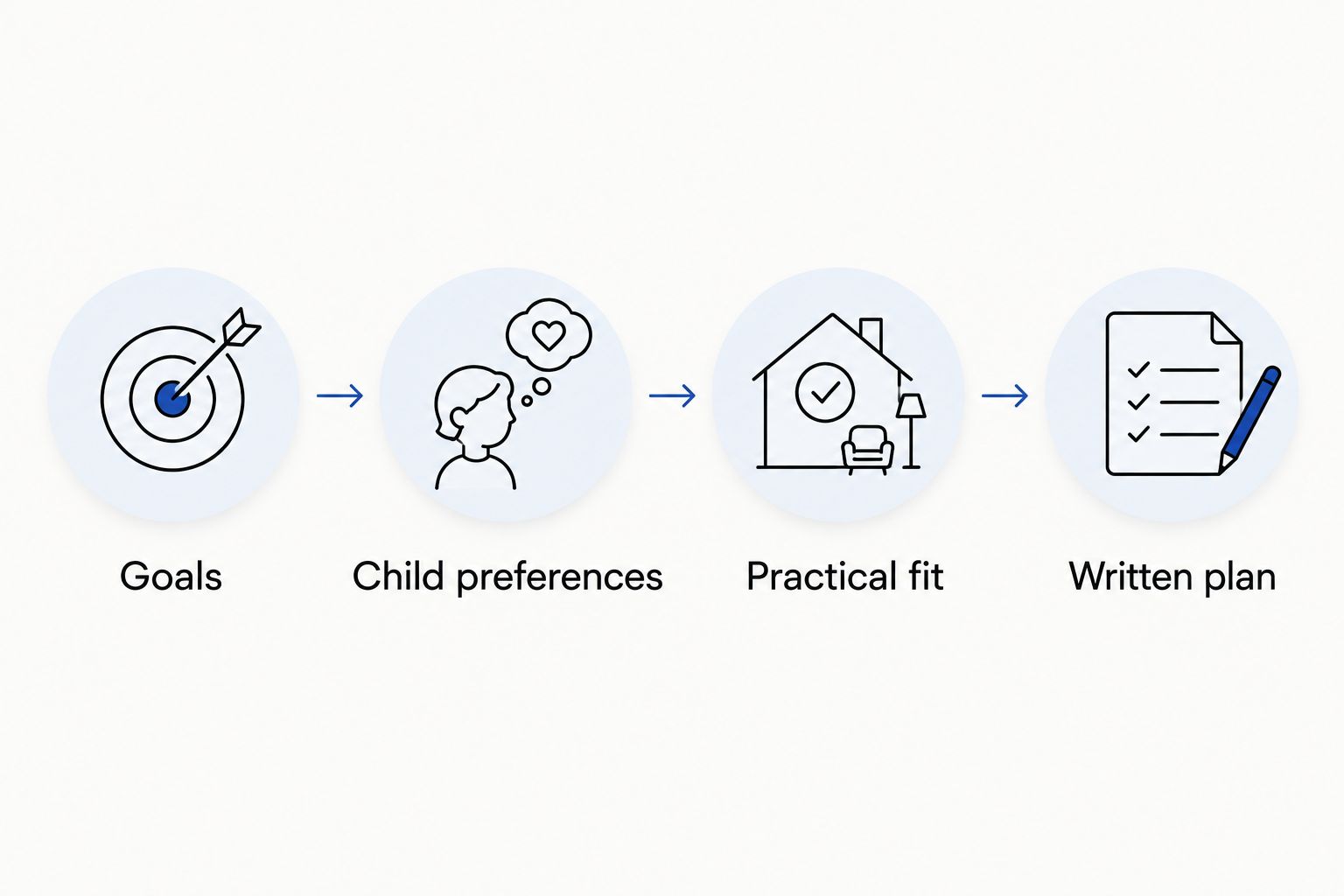
For your 2026 conversations, work through this sequence:
- Goals: Name the everyday situation you want support with and ask how the proposed goal addresses it.
- Child preferences: Explain how your child communicates yes, no, interest, discomfort, or a need to stop.
- Practical fit: Discuss travel, school, rest, family commitments, and the demands of the proposed sessions.
- Written plan: Request a clear explanation you can review before making a decision.
A provider should be able to discuss what happens when a child wants a break or communicates discomfort. Ask how goals are reviewed and how you can raise concerns. A clear, respectful explanation matters more than a confident sales conversation.
Pricing models: compare the proposed services, not headline figures
For a 2026 decision, request written billing terms from both providers for the exact services under consideration. Do not assume that a therapy appointment, community program, tutoring session, and online class share the same billing arrangement.
Ask each provider to explain:
- Whether billing is tied to appointments, classes, programs, or another arrangement.
- What the proposed service includes.
- Whether an assessment is a separate step.
- Whether insurance applies to the particular service, if relevant to your family.
- Which cancellation and payment terms apply.
The tradeoff to examine is predictability versus flexibility. A defined program commitment and appointment-based billing can create different obligations; establish which arrangement actually applies before comparing them.
Keep the comparison like-for-like. An individual therapy plan and a community activity answer different needs, so a billing comparison alone cannot establish which is the better choice. First confirm that the proposed service addresses your priority, then review its terms.
The standout feature depends on the kind of support you want
The nonprofit’s distinguishing fact in this comparison is its combination of therapy services, community programs, and online classes in a Brooklyn-based organization. That is relevant when your questions extend beyond a single therapy discipline.
Its limitation as a decision shortcut is equally important: the organization’s overall offering does not explain the format of the particular program your child would attend. Ask for that explanation before choosing.
For Total Care ABA, the relevant decision is whether the proposed ABA service matches your focused therapy search. Its limitation as a shortcut is the same: an ABA label does not establish the goals, session experience, or family fit.
Both providers need to earn your confidence at the service level. Ask the same core questions and compare the answers against the same priorities.
Final verdict: choose the support your family is seeking
Choose Autism Learn & Play if you want a Brooklyn community starting point
Best for: a Brooklyn family exploring therapy alongside community programs or online learning. Start here when you want to discuss several kinds of support, including opportunities for connection, without assuming one activity suits every child.
Ask about the particular program’s format, age fit, participation expectations, and sensory considerations. For a relevant invitation, use the website contact form or email info@autismlearnplay.org with your child’s age, interests, and the kind of support you are seeking.
Choose Total Care ABA if a proposed ABA plan meets your priority
Best for: a family specifically seeking ABA therapy and comparing concrete service plans. Choose Total Care ABA when its explanation of goals, participation, family involvement, and practical arrangements best matches your child.
Do not choose on the promise of a particular outcome. Choose on the suitability of the proposed support and the clarity of the answers you receive.
| Dimension | Winner |
|---|---|
| Therapy plus community and online options | The Brooklyn nonprofit for that stated combination |
| Focused ABA search | Total Care ABA, conditional on the proposed plan fitting your child |
| Friendship opportunities | The specific group format—not the provider name |
| Age fit | The service with appropriate activities and expectations |
| Session approach | The provider whose explanation meets your child’s needs |
| Billing fit | The written arrangement that suits your family |
| Overall choice | The provider that addresses your named priority |
FAQ
Is Autism Learn & Play better than Total Care ABA?
Autism Learn & Play is a fit when you want a Brooklyn nonprofit offering therapy, community programs, and online classes. Choose Total Care ABA when your priority is ABA therapy and its proposed plan better matches your child’s needs and routine.
Which provider should I ask about making friends?
Ask the Brooklyn nonprofit about its community programs, then confirm whether a particular activity includes opportunities to interact with peers. Ask any therapy provider separately about the format rather than assuming an appointment is a social group.
Can I ask about support for a teenager?
Yes. The Brooklyn nonprofit serves children ages 2–18, including teenagers. Ask about the particular program’s age fit and include your teenager’s interests and preferences in the conversation.
Does choosing community activities mean giving up therapy?
No. You can evaluate community activities and therapy as separate choices serving different needs. Decide what each proposed activity contributes before adding it to your child’s routine.
What should I ask an ABA provider before choosing?
Ask how goals are selected, how your child communicates preferences, what happens when they want a break, and how concerns are addressed. Request a plain-language explanation of the proposed plan before deciding.
How should I compare billing in 2026?
Compare written billing terms for the exact services proposed to your family. Ask what is included, which payment arrangement applies, and whether insurance is relevant to that specific service.
What should I include in my first message?
Include your child’s age, interests, communication preferences, and the support you want to discuss. A brief description of a meaningful everyday goal gives the provider a clearer starting point than a diagnosis alone.
One last thing
Before making your 2026 choice, write down one thing your child enjoys and one situation where your family wants support. Bring both to the conversation. A useful plan should address a real need without losing sight of the person, interests, and relationships that make your child’s life their own.
Related guides
- Family support groups for autism in Brooklyn
- Social skills games for autistic teens
- Autism-friendly museums and attractions in NYC