Best overall: the Center for Parent Information and Resources. Best for Brooklyn-specific guidance: INCLUDEnyc. Best for checking your legal rights: the U.S. Department of Education’s IDEA resources. These IEP advocacy resources for autism parents help you prepare for school meetings in 2026, understand your options, and ask for support that fits your child.
- The Center for Parent Information and Resources is the best starting point for understanding IEP advocacy resources for autism parents.
- INCLUDEnyc is the local choice for Brooklyn families seeking special education guidance.
- U.S. Department of Education IDEA resources explain federal rights; New York State Education Department resources add state requirements.
- Advocates for Children of New York is the specialist resource for education-rights concerns.
- NYC Public Schools resources help families understand local IEP procedures, but do not provide independent advocacy.
Why this matters
An individualized education program, or IEP, should connect your child’s educational needs with specific goals, services, and supports. An autism diagnosis alone does not tell the school what your child needs during a classroom lesson, a noisy lunch period, or a group activity.
Brooklyn parents also need somewhere to ask questions without feeling judged. Alongside school-focused resources, family support groups for autism in Brooklyn offer a separate starting point for exploring community connection.
For 2026 planning, keep the roles clear: a parent center explains, an official source establishes requirements, and a legal organization addresses education-rights questions. A community program can complement those resources, but it does not replace the school’s responsibilities.
Autism Learn & Play Inc. is for families seeking autism therapy, community programs, and online classes for children ages 2–18. Use an education-rights resource when your question concerns an IEP obligation or disagreement.
What makes the best IEP advocacy resource?
Choose your resource by the question you need answered—not by how much information it publishes. These criteria guide the recommendations:
- Role clarity: Does the resource explain rights, provide parent guidance, describe district procedures, or address legal concerns?
- Local relevance: Brooklyn families need New York requirements as well as federal information.
- Practical preparation: Look for explanations that help you organize records and ask focused questions.
- Child-centered support: Your child’s communication, sensory needs, interests, and preferences belong in the discussion.
- Clear boundaries: Educational information is not the same as individualized legal advice or representation.
For your 2026 meeting, start with the resource that matches your immediate task. Reading everything before asking a question is not a requirement.
IEP advocacy resources at a glance
| Resource | Best for | Standout value | Key limitation |
|---|---|---|---|
| Center for Parent Information and Resources | Understanding IEP fundamentals | Parent-oriented special education explanations and parent-center directory | National information needs a New York-specific companion |
| INCLUDEnyc | Brooklyn and NYC parent guidance | Local disability and special education information | Parent guidance does not establish a right to legal representation |
| U.S. Department of Education IDEA resources | Checking federal requirements | Official federal law and regulations | Legal language requires careful reading |
| New York State Education Department | Checking New York requirements | Official state special education guidance and regulations | Statewide material does not resolve an individual disagreement |
| Advocates for Children of New York | Education-rights concerns | NYC-focused education advocacy and legal information | Contacting the organization does not guarantee representation |
| NYC Public Schools | Understanding district procedures | Local explanations of evaluations, IEPs, and school processes | District information is not independent advocacy |
1. Center for Parent Information and Resources: best for IEP basics
The Center for Parent Information and Resources, often called CPIR, explains special education topics for families and maintains a directory of parent centers. Choose it when you need to understand the purpose of an evaluation, an IEP meeting, or a procedural safeguard before discussing your child’s situation.
Best for: Parents who want a clear foundation before approaching the school or a local organization.
Start with your actual question. If the school proposes a change in services, read about IEP development and parent participation rather than working through every available topic.
CPIR pros:
- Explains core special education concepts for parents.
- Helps families locate parent centers.
- Covers more than autism-specific concerns.
CPIR cons:
- National explanations do not replace New York requirements.
- Reading a resource does not provide individualized representation.
Verdict: Start here if IEP terminology is getting in the way of asking clear questions. Bring what you learn to a local resource rather than treating a national overview as the final answer.
2. INCLUDEnyc: best for Brooklyn parent guidance
INCLUDEnyc is a New York City organization that provides information and support to young people with disabilities and their families. Its special education focus makes it a relevant local starting point for Brooklyn parents who need help understanding school processes.
Best for: Families who understand the basics but need NYC-specific guidance.
Before contacting INCLUDEnyc, write down the school’s proposal, your concern, and the outcome you want to discuss. A focused question gives the conversation a useful starting point; you do not need to know every legal term.
INCLUDEnyc pros:
- Focuses on New York City families.
- Addresses disability-related education questions.
- Offers a local perspective beyond national summaries.
INCLUDEnyc cons:
- Guidance does not replace the school’s written decisions.
- Do not assume parent support includes legal representation.
Verdict: Choose INCLUDEnyc when your next step depends on understanding the NYC context. Ask which type of support fits your question before sharing extensive records.
3. Federal IDEA resources: best for checking legal requirements
The U.S. Department of Education’s Individuals with Disabilities Education Act resources provide the federal law, regulations, and related explanations. Use this source when you need to distinguish a legal requirement from a suggestion or someone’s personal experience.
Best for: Parents checking a specific federal obligation.
Under IDEA regulations, an IEP must be reviewed at least every 12 months. Reevaluation generally must occur at least once every 3 years, unless the parent and public agency agree it is unnecessary; these are different processes, not interchangeable meetings.
Federal IDEA resources pros:
- Provide authoritative federal requirements.
- Explain parent participation and procedural protections.
- Allow you to check the wording behind a claim.
Federal IDEA resources cons:
- Regulatory language is less approachable than parent guidance.
- Federal rules alone do not explain every New York procedure.
For this 2026 guide, the relevant federal sources are IDEA regulations 34 CFR §300.324 for IEP review and §300.303 for reevaluation. These rules apply to eligible children under IDEA, not automatically to every child with an autism diagnosis.
Verdict: Use the federal source to verify a rule, then ask how it applies to your child.
4. New York State Education Department: best for state requirements
New York State Education Department special education resources explain the state framework that applies alongside IDEA. They are especially useful when a national guide does not answer a New York-specific question about planning, procedures, or parent protections.
Best for: Families checking requirements that depend on New York rules.
For example, New York requires transition planning beginning with the first IEP in effect when a student turns 15 years old, or earlier if appropriate. The source is New York’s special education regulation 8 NYCRR §200.4(d)(2)(ix), which addresses transition content in the IEP.
NYSED pros:
- Provides official New York requirements.
- Connects families with state special education guidance.
- Helps distinguish state rules from general national advice.
NYSED cons:
- Statewide explanations do not settle an individual dispute.
- Regulations require careful attention to eligibility and context.
Verdict: Use NYSED when the answer depends on New York law. For teenagers, make transition planning part of the discussion about preferences, further education, employment, and life beyond school.
5. Advocates for Children of New York: best for rights concerns
Advocates for Children of New York focuses on education rights for New York City students. Its special education information is relevant when you need to understand rights or seek direction about an unresolved school concern.
Best for: Families whose question has moved beyond basic meeting preparation into a rights-related disagreement.
Describe what happened rather than assigning a legal label yourself. Identify the school’s decision, the records you have, and what remains unresolved; ask whether the organization can assist or direct you elsewhere.
Advocates for Children of New York pros:
- Focuses on NYC education rights.
- Publishes special education information for families.
- Addresses concerns beyond classroom activity ideas.
Advocates for Children of New York cons:
- An initial inquiry does not guarantee representation.
- General guidance cannot decide the facts of your child’s case.
Verdict: Contact this resource when you need direction on an education-rights concern. Keep school notices and correspondence together so you can explain the issue accurately without retelling every school experience.
6. NYC Public Schools: best for district procedures
NYC Public Schools publishes information about special education evaluations, IEPs, and related district processes. Use it to understand the school system’s stated procedures and identify the appropriate school-based next step.
Best for: Parents asking how a NYC school process works.
District information is useful for procedural questions, but the district is also responsible for making and implementing educational decisions. If you disagree with a decision, pair its explanation with an independent parent or rights resource.
NYC Public Schools pros:
- Describes local special education processes.
- Provides the district’s explanations of evaluations and IEPs.
- Helps parents frame procedural questions for school staff.
NYC Public Schools cons:
- Does not serve as your independent advocate.
- A general process description does not establish what your child needs.
Verdict: Use the district source for process questions, not as your only resource in a disagreement. Ask for clarification when a general explanation does not match the written information you received.
Turn resource advice into a useful meeting plan
You do not need a perfect binder to participate. Bring a clear picture of your child and a short list of questions that connect everyday experiences to school participation.
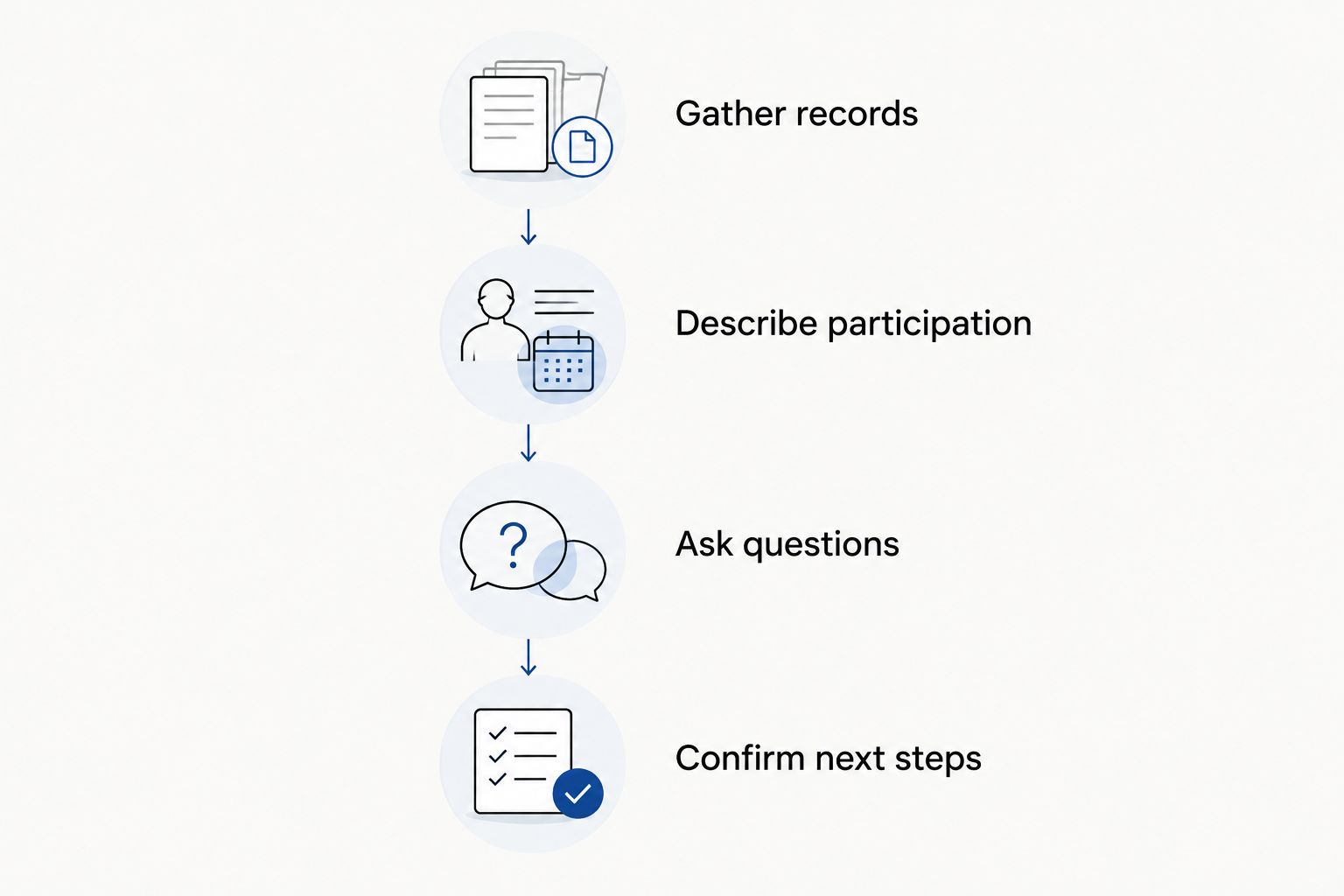
Gather records
Keep the current IEP, evaluations, progress reports, and relevant school messages together. Separate the school’s documented decisions from your notes so you can identify what needs clarification.
Describe participation
Explain what your child enjoys, how your child communicates, and where participation becomes difficult. Include friendships, play, group work, and outings—not only academic tasks.
Ask questions
Ask what support is proposed, when it will be provided, and how progress will be measured. If a goal is unclear, request an explanation using an everyday example.
Confirm next steps
Before the meeting ends, identify unresolved questions and who will respond. Keep your own written summary and compare it with the documents you receive afterward.
For children ages 2–5, questions often center on early learning, play, communication, and entry into school services. Children ages 6–12 need discussions grounded in their school day and peer participation. Teenagers ages 13–18 need an age-respectful voice in decisions about interests, support, and transition planning.
These age groups organize your preparation; they are not eligibility rules. Your child’s individual needs matter more than an age-based activity list.
How the resources are ranked
The 2026 ranking prioritizes understandable information, local relevance, practical preparation, and clear boundaries. CPIR comes first because it supplies the foundation; INCLUDEnyc adds local guidance; official federal and state sources verify requirements.
This is a ranking of roles, not a claim that one organization produces better outcomes. The resource you choose should answer the question in front of you.
Which IEP advocacy resource should you choose?
If you are unsure, start with CPIR and bring your Brooklyn-specific question to INCLUDEnyc. Use official federal or state sources to verify requirements, and seek education-rights guidance when a disagreement remains unresolved.
For community programs and therapy questions, Autism Learn & Play Inc. provides a different kind of support for children ages 2–18. Contact info@autismlearnplay.org to ask about its services; keep school-rights questions with the appropriate advocacy resource.
FAQ
What are the best IEP advocacy resources for autism parents in 2026?
The Center for Parent Information and Resources is the best starting point for IEP basics, and INCLUDEnyc is the local choice for Brooklyn guidance. Use federal IDEA and New York State Education Department resources to verify requirements.
Where should a Brooklyn parent start with an IEP question?
Start with INCLUDEnyc for local special education guidance. Write down your question and the school’s proposed decision before contacting the organization.
Is NYC Public Schools an independent IEP advocate?
No, NYC Public Schools is the school district, not an independent parent advocate. Use its resources for district procedures and an independent resource when you need another perspective.
How often does my child’s IEP need to be reviewed?
IDEA requires an IEP review at least every 12 months. That review is separate from reevaluation, which generally occurs at least every 3 years unless the parent and public agency agree it is unnecessary.
When does transition planning start in New York?
New York requires transition planning beginning with the first IEP in effect when the student turns 15, or earlier if appropriate. Discuss your teenager’s preferences and post-school goals with the IEP team.
Does an autism diagnosis automatically qualify my child for an IEP?
No, an autism diagnosis alone does not automatically establish IDEA eligibility. The school evaluation must determine whether your child meets the eligibility requirements and needs special education.
Can Autism Learn & Play Inc. replace an IEP advocate?
Therapy services, community programs, and online classes do not replace education-rights guidance. Autism Learn & Play Inc. provides those services for children ages 2–18; direct questions about IEP rights to a parent center or education-rights resource.
One last thing
Bring one example of when your child felt included—not just a list of difficulties. Describe the setting, the support, and what your child chose to do. That gives the team a concrete starting point for discussing access and participation without promising that one approach will work everywhere.
Related guides
- Social skills games for autistic teens
- AAC devices for autism
- Autism-friendly museums and attractions in NYC