
Best starting point for therapy alongside community programs: Autism Learn & Play. Best for classroom participation: school-based occupational therapy. Best for focused daily-living goals: individual outpatient occupational therapy. This 2026 guide compares a Brooklyn nonprofit and therapy settings so you can choose what fits your child—not simply the longest service list.
- For occupational therapy programs for autism Brooklyn families can compare, start with your child’s everyday priorities.
- Autism Learn & Play offers occupational therapy, community programs, and online classes for children ages 2–18.
- School-based occupational therapy addresses educational participation; outpatient and home-based services serve different needs.
- Ask about therapist credentials, sensory accommodations, caregiver involvement, and age fit before choosing.
Why this matters
Your child might need support getting dressed, using classroom materials, joining a playground activity, or managing an uncomfortable environment. Occupational therapy starts with participation in everyday life. The right program connects its activities to something your child wants or needs to do.
Choose a program around a meaningful daily goal, not an autism diagnosis alone. For Brooklyn families planning services in 2026, travel, school schedules, communication access, and room to take breaks belong in that decision too.
This shortlist ranks starting points by family need. School-based, outpatient, and home-based occupational therapy are service settings, not competing clinic brands; a child can receive support in more than one setting when appropriate.
What makes the best occupational therapy program?
Use these criteria before you compare names or request an appointment:
- Everyday relevance: Goals connect to activities such as dressing, classroom access, play, or community participation.
- Individual fit: The therapist considers your child's interests, communication, sensory preferences, and choices.
- Qualified care: Confirm the treating occupational therapist's New York license and relevant pediatric experience.
- Family partnership: Ask how caregivers share priorities and learn useful adaptations without turning home into another appointment.
- Practical access: Discuss location, transportation, scheduling, accessibility, and what happens when your child needs a break.
- Respectful goals: Support should expand comfort, access, and independence—not require eye contact or suppress harmless stimming.
A welcoming description is a start. Ask the provider to explain how these criteria would shape your child's actual session.
Brooklyn occupational therapy options at a glance
| Starting point | Best for | Standout feature | Key limitation |
|---|---|---|---|
| Autism Learn & Play | Families seeking therapy and community programs through one organization | Brooklyn nonprofit offering occupational therapy alongside other services | Confirm the occupational therapy format and individual fit directly |
| School-based occupational therapy | Accessing learning and classroom routines | Connects support to educational participation | Does not replace assessment of every home or community need |
| Individual outpatient occupational therapy | Focused daily-living priorities | Dedicated assessment and work on individualized goals | Skills and adaptations need a plan for use outside the session |
| Home-based occupational therapy | Routines tied closely to the home environment | Addresses tasks where they happen | Requires access to an appropriate home-visiting provider |
1. Autism Learn & Play: best for therapy and community interests
Autism Learn & Play is a Brooklyn-based nonprofit serving children ages 2–18 on the autism spectrum. Its services include occupational therapy, speech therapy, ABA, music and art therapy, tutoring, community programs, and online classes.
Autism Learn & Play is the best starting point on this shortlist for Brooklyn families seeking occupational therapy alongside community programs. That recommendation concerns the organization's stated service range, not a claim that every service is combined into one treatment plan.
Best for: Families who want to ask about everyday support and opportunities for connection within the same organization.
Autism Learn & Play pros:
- Occupational therapy is among its stated services.
- The organization serves children from early childhood through adolescence.
- Community programs and other therapy services give families additional topics to explore.
Autism Learn & Play considerations:
- Confirm the occupational therapy setting, evaluation process, and caregiver involvement directly.
- Do not assume an online class includes occupational therapy or individualized clinical treatment.
When you inquire in 2026, describe a routine rather than requesting a broad outcome such as “better sensory skills.” Explain what happens during dressing, a school transition, or a neighborhood outing, and ask how occupational therapy would address that situation.
Verdict: Hold a booking decision until the team confirms the occupational therapy service matches your child's needs.
2. School-based occupational therapy: best for classroom access
School-based occupational therapy focuses on a student's access to education and participation in school routines. Depending on assessed needs, that work can involve using materials, navigating routines, or adapting tasks and environments.
Start with your child's school team when the main concern happens during the school day. An autism diagnosis alone does not establish a particular school service; evaluation and the student's educational needs guide decisions.
Best for: Children whose main barriers involve learning activities and school participation.
School-based occupational therapy pros:
- Goals connect to the educational setting.
- The occupational therapist can collaborate with school staff.
- Support can include adaptations to classroom tasks or materials.
School-based occupational therapy considerations:
- Educational goals do not cover every family priority.
- The evaluation process determines the appropriate services and delivery approach.
For a younger child, describe difficulty joining a classroom activity rather than asking only for handwriting help. For a teen, bring concerns about managing materials, accessing assignments, or participating in school routines.
Verdict: Hold a separate clinic decision until you understand what the school evaluation addresses—and what remains outside it.
3. Individual outpatient occupational therapy: best for focused daily routines
Individual outpatient occupational therapy offers a clinical setting for assessment and work on personalized participation goals. Depending on the provider's expertise and the child's evaluation, those goals can involve dressing, play, motor tasks, or adapting to sensory demands.
The strongest reason to choose this setting is a clear connection between the session and daily life. Ask the therapist to explain that connection in ordinary language.
Best for: Families seeking a focused assessment of daily-living concerns beyond a classroom-only question.
Individual outpatient occupational therapy pros:
- Offers space to examine specific family priorities.
- Allows individualized task practice and adaptations.
- Can include caregiver guidance for routines outside appointments.
Individual outpatient occupational therapy considerations:
- Clinic activities differ from home, school, and community environments.
- Travel and appointment demands become part of the family's routine.
For your 2026 shortlist, ask how the therapist would approach a real example: a child who wants to join an art activity but finds the materials uncomfortable. Look for discussion of choice, accessible tools, and environmental adjustments—not a promise to eliminate every sensory preference.
Verdict: Hold enrollment until the provider explains the assessment, proposed goals, and connection to everyday activities.
4. Home-based occupational therapy: best for home-specific barriers
Home-based occupational therapy takes place where daily routines happen. When a suitable provider offers this setting, the therapist can consider the actual space, materials, and steps involved in a task.
That context matters when the concern is closely tied to a bathroom setup, clothing storage, play area, or household transition. Home-based therapy is a setting, not a guarantee of a particular method or outcome.
Best for: Families whose priority involves a specific home routine or environmental barrier.
Home-based occupational therapy pros:
- Uses the child's everyday environment.
- Allows direct discussion of household adaptations.
- Keeps caregiver questions close to the task being addressed.
Home-based occupational therapy considerations:
- You need a provider who serves your location in this setting.
- Home visits do not automatically provide opportunities to practice with peers.
Ask what space and caregiver participation the therapist expects. You should not need to guess whether a sibling can remain nearby, whether the therapist brings materials, or how your child's privacy will be respected.
Verdict: Hold a commitment until the provider confirms the home setting suits the goal and your family's boundaries.
Match the program to your child's age and priorities
Age helps frame your questions, but it does not replace an individual assessment. These examples are planning prompts, not developmental requirements.
Ages 2–5 years: everyday play and caregiving
Describe routines such as getting dressed, exploring play materials, or moving between activities. Ask how the therapist follows your child's communication and recognizes a need to pause.
Caregiver participation deserves a clear conversation. You need to know what support looks like between sessions without feeling responsible for delivering therapy all day.
Ages 6–12 years: school, interests, and friendships
Connect your questions to activities your child values, such as making something, joining a game, or managing a school routine. Ask whether the barrier involves the task, the environment, the materials, or the support provided.
For a community outing, discuss noise, waiting, bathrooms, transitions, and a comfortable exit plan. These are practical access questions, not tests your child must pass.
Ages 13–18 years: choice, privacy, and independence
Invite your teen to identify priorities and explain what feels difficult or unnecessary. Relevant goals can include organizing belongings, personal care, hobbies, and community participation.
Use age-respectful materials and language. A teen's interests should guide the discussion, even when a younger-looking activity appears on a program's general materials.
Prepare for a first conversation in 2026
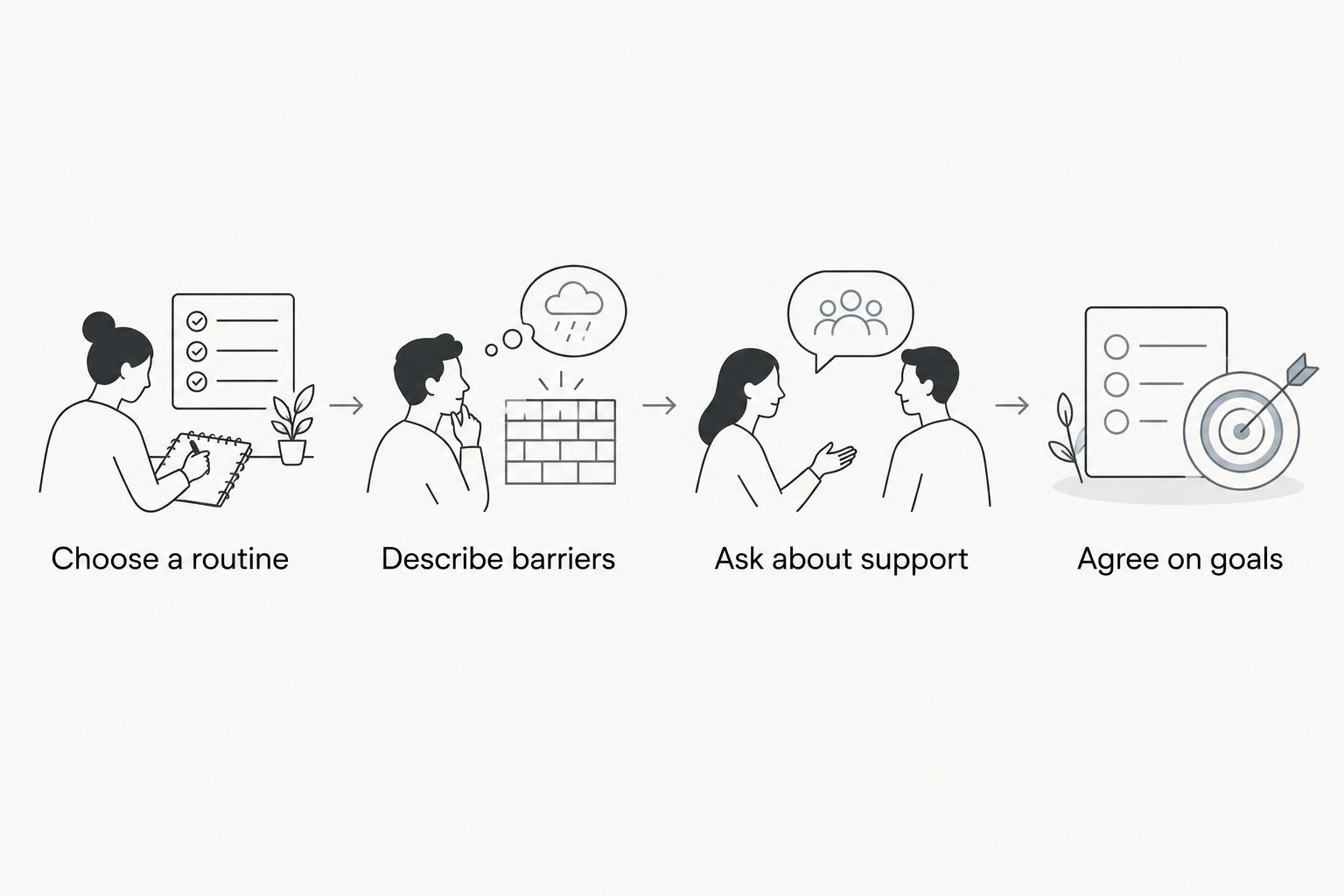
Bring a short description of one difficult routine and one activity your child enjoys. That gives the provider a useful starting point without requiring you to arrive with a treatment plan.
- Choose a routine: Describe what your child wants or needs to do.
- Describe barriers: Explain the environment, materials, communication, and signs of discomfort.
- Ask about support: Request an explanation of assessment, adaptations, and caregiver involvement.
- Agree on goals: Make sure proposed priorities respect your child's preferences and daily life.
Also ask how the therapist responds when your child declines an activity. A useful answer explains communication, adjustments, and breaks; it should not make participation depend on ignoring distress.
For questions about the nonprofit's services, use the contact form. Share your child's age, your main concern, and whether you are seeking therapy, community activities, or both.
How the options are ranked
The order follows distinct family needs: a broad service starting point, educational access, focused daily-living support, and home-specific routines. The criteria are goal relevance, individual fit, qualified care, family partnership, practical access, and respectful support—not claimed treatment success rates.
No setting wins every category. A program belongs on your shortlist only when the provider can explain how its service fits your child's priorities.
Which occupational therapy option should you choose?
Start with the setting connected to the activity your child wants to do. Choose a school-team conversation for classroom barriers, an outpatient assessment for focused daily-living concerns, or a home-based inquiry for routines tied to the household environment.
If you want to explore occupational therapy together with community programs, begin with the nonprofit listed first. Keep the therapy discussion separate from choosing an enrichment class so you understand the purpose of each service.
FAQ
What’s the best occupational therapy program for my autistic child in Brooklyn?
The best occupational therapy program fits your child’s daily priorities, communication, and sensory needs. Compare the setting, therapist qualifications, caregiver involvement, and practical access before choosing.
Does Autism Learn & Play offer occupational therapy?
Autism Learn & Play lists occupational therapy among its services for children ages 2–18 on the autism spectrum. Contact the organization to discuss the service format, assessment process, and fit for your child.
Is school-based occupational therapy the same as private occupational therapy?
No. School-based occupational therapy addresses educational access and participation, while private outpatient care can assess other daily-living priorities. The goals can overlap, but the settings have different purposes.
Can my autistic teenager start occupational therapy?
Yes, occupational therapy can address participation needs during adolescence. Ask for an assessment centered on your teen’s priorities, choices, privacy, and age-appropriate activities.
Can occupational therapy help my child join community activities?
Community participation can be an occupational therapy goal. Discuss the specific activity and barriers, such as materials, transitions, or sensory demands, rather than expecting a guaranteed social outcome.
Are online enrichment classes the same as occupational therapy?
No. A drawing, movement, or music class is not automatically occupational therapy. Ask who delivers the service, whether it includes an occupational therapy assessment, and how individualized goals are established.
What should I ask before booking occupational therapy in 2026?
Ask about the therapist’s license, assessment process, proposed goals, communication access, caregiver involvement, and response to distress. Describe a real routine so the discussion stays connected to your child’s everyday life.
One last thing
Ask what can change around your child—not only what your child should learn to do. A different tool, clearer routine, or quieter place to begin belongs in the conversation alongside skill practice. Your child's comfort and choices are part of meaningful participation.
Related guides
- How often should a child with autism attend occupational therapy?
- Occupational therapy activities for autism at home
- Is occupational therapy covered by insurance for autism?